Exhaust Fan and Microwave Guide: What to Know Before You Buy
Are you feeling overwhelmed trying to choose the right exhaust fan and microwave for your kitchen? You’re not alone—many people struggle with finding appliances that fit their space, cooking habits, and budget. The right choices can make a big difference in your daily cooking experience.
You’ll want to pick an exhaust fan that fits your kitchen layout and cooking habits, focusing on ventilation type—ducted for strong odors or ductless when venting isn’t possible.
For microwaves, consider size, cooking power, and installation style like countertop or built-in.
Look for energy-efficient models with useful features like variable power and sensor cooking. Matching your budget and installation needs will make a big difference.
Keep going to uncover smart tips and avoid common mistakes.
Key Takeaways
- Choose exhaust fans based on your kitchen size, cooking style, and whether you prefer ducted or ductless ventilation for the best performance.
- Select microwaves by considering their size, wattage, and type—like countertop, over-the-range, or built-in—to match your space and cooking needs.
- Prioritize exhaust fans with adjustable power, noise reduction, and easy maintenance to make your kitchen more efficient and comfortable.
- Look for microwave features such as sensor cooking, child lock, multiple power levels, and interiors that are easy to clean for added convenience and safety.
- Be smart with your budget by including installation costs, focusing on essential features, and choosing energy-efficient models to save money in the long run.
How to Choose the Right Kitchen Exhaust Fan
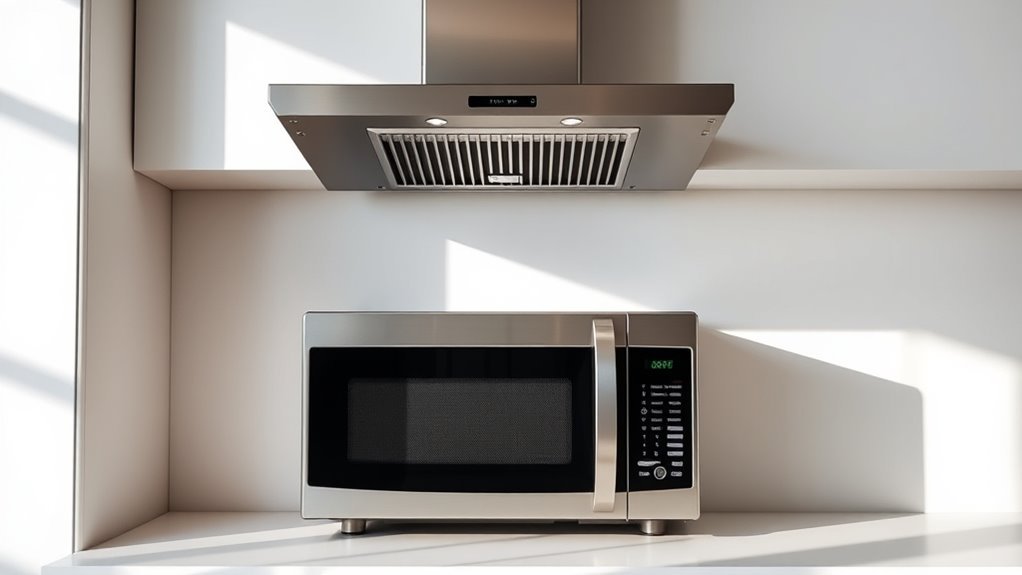
How do you pick the right kitchen exhaust fan for your space? First, consider the types available: wall-mounted, under-cabinet, or ceiling models. Each one suits different kitchen layouts, so choose one that fits your style and cooking area.
Next, think about the fan’s power, usually measured in cubic feet per minute (CFM). A higher CFM is better if you do a lot of heavy cooking or have a high-wattage microwave, since it handles more steam and odors.
You’ll also want a fan that clears the air efficiently without being too noisy. Check the noise level in sones — quieter fans make your kitchen more comfortable.
Finally, match the fan’s capacity with your kitchen size and how often you cook. This helps you avoid over- or under-ventilating. By understanding the types and considering your microwave wattage’s impact, you’ll find a fan that keeps your kitchen fresh and comfortable.
How to Choose the Right Kitchen Microwave
When selecting a kitchen microwave, you’ll want to focus on size, power, and features that match your cooking habits. First, consider microwave sizes: pick one that fits your available counter or built-in space without crowding your kitchen.
Compact models are great for small kitchens, while larger units offer more capacity for bigger dishes. Next, think about cooking functions. Basic microwaves handle reheating and defrosting, but if you like to grill, roast, or bake, look for models with convection or multi-stage cooking options.
Power levels also matter. Higher wattage means faster, more even cooking. Finally, check for easy-to-use controls and preset programs that match your typical meals.
Key Features to Look For in Kitchen Exhaust Fans
When you’re picking out a kitchen exhaust fan, one of the first things to think about is how powerful the ventilation is. You want to make sure it can handle all your cooking messes without breaking a sweat. A good rule of thumb is to consider the fan’s airflow capacity—so it clears out steam, smoke, and odors effectively.
Don’t forget about noise levels! Nobody wants a fan that sounds like a jet engine while you’re trying to enjoy a quiet dinner or have a chat. Look for models that come with noise reduction features—they’ll keep your kitchen peaceful even when the fan is running at full blast.
All in all, focusing on these key features will help you find a fan that’s both efficient and unobtrusive, making your cooking space more comfortable and enjoyable.
Ventilation Power Levels
Choosing the right ventilation power level for your kitchen exhaust fan ensures it effectively removes smoke, grease, and odors. When looking at ventilation types, think about how much airflow your space needs.
Too little power won’t clear the air well, while too much can be noisy or waste energy. Focus on airflow, measured in cubic feet per minute (CFM), which shows how much air the fan moves.
Keep these points in mind:
- Match CFM to your kitchen size and cooking habits.
- Variable power levels give you flexibility for different tasks.
- Higher CFM is better for heavy cooking with lots of smoke.
- Lower settings save energy during light use.
- Check if the ventilation type is ducted or ductless.
Choosing wisely helps keep the air clean without wasting energy.
Noise Reduction Features
Although powerful ventilation is essential, you don’t want your kitchen exhaust fan to drown out conversation or create constant background noise. When shopping, look for models that feature sound insulation to minimize disruptive fan noise. This can include specially designed motor mounts, insulated housings, or noise-dampening materials that absorb vibrations before they travel through your walls or ceiling.
Fans labeled with low sones ratings indicate quieter operation, which is a key factor if your kitchen opens into living or dining areas. You’ll also find adjustable speed settings helpful, allowing you to reduce fan noise when heavy ventilation isn’t necessary.
Essential Microwave Features You Should Know
Understanding essential microwave features helps you get the most out of this handy kitchen appliance. When choosing a microwave, it’s important to focus on safety and convenience to make your cooking easier and safer. Knowing what features to look for can save you time and improve your overall experience.
Focusing on key microwave features enhances safety, convenience, and overall cooking efficiency in your kitchen.
Here are five key features to keep in mind:
- Child Lock: This prevents accidental operation, making your microwave safer for everyone.
- Sensor Cooking: It adjusts the cooking time and power based on the food’s moisture, helping you get perfect results every time.
- Defrost Function: Safely thaws frozen foods without partially cooking them, saving you time and effort.
- Multiple Power Levels: Gives you control over cooking intensity, making it easier to prepare a variety of recipes.
- Easy-to-Clean Interior: Simplifies cleanup and keeps your microwave hygienic, so you spend less time on maintenance.
Energy Efficiency Tips for Exhaust Fans and Microwaves
Want to cut down on your energy bills? One easy way is to pick exhaust fans and microwaves that have an Energy Star rating. These appliances are designed to use less energy without sacrificing performance, so it’s a smart choice all around.
And it’s not just about choosing the right appliances—small habits can make a big difference too. For example, only turn on the exhaust fan when you really need it, instead of leaving it running all the time. When using your microwave, try to avoid overcooking food, which wastes energy and can even affect the taste.
Energy Star Ratings
How can you make sure your exhaust fan and microwave use less energy without sacrificing performance? Look for Energy Star ratings. These labels show products that meet strict energy efficiency guidelines, helping you save energy and money.
Choosing Energy Star-certified appliances means you’re opting for eco-friendly options that reduce your environmental impact and lower utility bills. It’s a smart move for both your wallet and the planet.
Here’s why Energy Star matters:
- Certified products use less electricity while still performing well
- They help reduce greenhouse gas emissions
- Energy Star fans and microwaves often have advanced features for efficiency
- You’ll save money over time thanks to lower energy use
- These eco-friendly options may qualify for rebates or incentives in some areas
Prioritize Energy Star ratings to make smarter, energy-conscious choices for your home.
Power Consumption Tips
Energy Star ratings set the foundation, but adopting specific power consumption habits can further cut energy use for your exhaust fan and microwave. First, check the power ratings before purchase—lower wattage models typically consume less energy without sacrificing performance.
Use your exhaust fan only when necessary, like during cooking that generates smoke or steam, to avoid wasting electricity. For microwaves, opt for shorter cooking times and avoid overusing high power settings.
Also, consider your home’s energy sources. If you have renewable options like solar, timing your appliance use during peak production can maximize efficiency. Regular maintenance, such as cleaning fan filters and microwave interiors, guarantees they run smoothly and consume less power.
These simple steps help you save energy and reduce your utility bills.
Comparing Types of Exhaust Fans: Which Ventilation Style Fits You?
What makes one exhaust fan better suited for your space than another? It all comes down to ventilation styles and fan materials. You’ll want to match the fan type with your kitchen layout, cooking habits, and aesthetic preferences to get the best performance.
Here are common ventilation styles to evaluate:
- Ducted Fans: Vent air outside and are great for strong odors and moisture removal.
- Ductless Fans: Use charcoal filters to recirculate air, which is perfect if external venting isn’t an option.
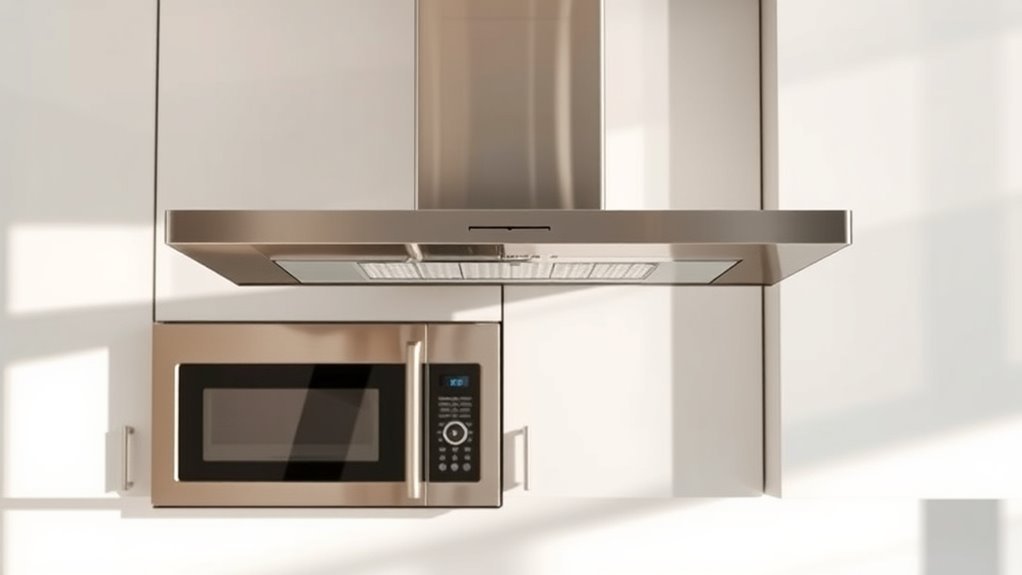
- Under-Cabinet Fans: Space-saving and fit beneath cabinets, often combined with microwaves.
- Ceiling-Mounted Fans: Ideal for large kitchens, providing powerful extraction.
- Inline Fans: Installed in ductwork, these are quieter and effective for long vent runs.
Fan materials like stainless steel or aluminum impact durability and maintenance. Choose a style that fits your space and lifestyle to keep your kitchen fresh and comfortable.
Microwave Types Compared: Countertop, Over-the-Range, and Built-In
Choosing the right exhaust fan often goes hand-in-hand with selecting the perfect microwave for your kitchen setup. When comparing microwave types, you’ll find countertop advantages like easy installation and flexible placement, making them ideal if you face space limitations.
Over-the-range models offer convenience by combining ventilation and microwave functions, saving valuable counter space while improving cooking efficiency. However, built-in microwaves provide a sleek look but come with disadvantages such as higher prices and installation challenges.
Over-the-range microwaves save space with combined ventilation, while built-in models offer style but cost more and are harder to install.
Built-in units may require professional help and design considerations to blend seamlessly with your cabinetry. Countertop units typically cost less and are easier to replace, while over-the-range options balance function and space well.
Ultimately, your choice depends on your kitchen layout, how you prioritize space, and your willingness to handle installation hurdles. Keep these factors in mind to pick a microwave that suits both your cooking needs and kitchen design.
Smart Budgeting for Kitchen Exhaust Fans and Microwaves
When you’re figuring out your budget for kitchen exhaust fans and microwaves, it’s a good idea to set a realistic one. Think about what features matter most to you and find that sweet spot between quality and price. Comparing different models and their prices can really help you get the best bang for your buck without going overboard.
And don’t forget about energy efficiency! Choosing energy-efficient appliances might cost a little more upfront, but they’ll save you money on your energy bills in the long run. So, it’s worth considering that balance between what you spend now and what you save later.
Setting a Realistic Budget
Although it might be tempting to splurge on high-end models, setting a realistic budget helps you get the best value without overspending. Use smart budgeting strategies and do some research to see what fits your financial plan.
Focus on balancing quality with affordability so you don’t regret your purchase later. Think about your must-have features instead of luxury extras that might not be necessary.
Consider these tips when setting your budget:
- Know your maximum spend limit before you start shopping
- Look up average prices for exhaust fans and microwaves
- Remember to include installation or extra accessory costs
- Prioritize essential features over fancy add-ons
- Leave a small buffer for unexpected expenses
Comparing Features and Prices
Setting a clear budget helps you compare kitchen exhaust fans and microwaves more effectively. It’s easier to focus on the features that matter most to you when you know what you’re willing to spend.
When doing price comparisons, look for essential features that match your needs. Avoid overspending on extras you don’t need. A simple feature check can help you find the best value for your money.
Prioritizing Energy Efficiency
When choosing kitchen exhaust fans and microwaves, focusing on energy efficiency can save you money over time while helping the environment. Look for models that use sustainable materials and have high Energy Star ratings to ensure long-term savings.
Investing in energy-efficient appliances means lower utility bills and a smaller carbon footprint. Here’s what to keep in mind:
- Look for Energy Star certification for verified efficiency.
- Choose exhaust fans with variable speed controls to optimize power use.
- Select microwaves with inverter technology for consistent, efficient cooking.
- Pick appliances made from sustainable materials for durability and eco-friendliness.
- Consider long-term savings over upfront costs to get the best value.
Installation Tips for Kitchen Exhaust Fans and Microwaves
Before you start installing your kitchen exhaust fan or microwave, make sure you have all the necessary tools and materials ready. Planning ahead helps ensure the process goes smoothly and safely.
When installing exhaust fans, pay close attention to the ductwork. Use smooth, straight ducts to keep airflow smooth and avoid sharp bends that can reduce ventilation. Sealing duct joints properly prevents air leaks and boosts efficiency.
For microwaves, secure the mounting bracket firmly to wall studs or cabinet frames to support the weight safely. Double-check electrical connections to make sure they meet local codes and match the appliance’s power needs.
Take your time measuring to leave proper space around both appliances. This allows for good ventilation and makes using them easier. Following these steps can help you avoid costly fixes later and keep your kitchen running well with great air quality.
Avoid These Common Mistakes When Buying Kitchen Exhaust Fans and Microwaves
Choosing the right kitchen exhaust fan and microwave can be tricky if you don’t know what to look out for. Avoiding common pitfalls will save you from buyer’s remorse and costly installation errors.
Don’t rush into your purchase without thinking about the size and capacity you need for your kitchen. Getting this wrong can lead to inefficient performance and frustration.
Pay attention to installation requirements, too. Skipping this step can cause expensive mistakes or the need to hire professionals later on.
Be careful with feature overload. Too many unnecessary features can make your appliances harder to use and drive up the cost.
Don’t forget to check noise levels. A noisy exhaust fan or microwave can make your kitchen less comfortable to work in.
Lastly, do some research on energy efficiency. Choosing energy-efficient models saves you money on long-term energy bills.
Frequently Asked Questions
How Often Should I Clean My Kitchen Exhaust Fan?
You should clean your kitchen exhaust fan every 3 to 6 months to keep it working well.
If you cook often or use a lot of grease, consider cleaning it more frequently—about once a month to every three months.
Regular cleaning helps prevent grease buildup, improves airflow, and lowers fire risks.
Don’t wait until you see dirt or smell odors—sticking to a regular schedule keeps your kitchen safer and your exhaust fan running smoothly.
Can a Microwave Cause Interference With Wi-Fi Signals?
Imagine your Wi-Fi signal as a delicate radio wave dancing through the air. Yes, your microwave can cause interference because it emits microwave radiation around the 2.4 GHz Wi-Fi frequency.
When the microwave runs, it can create noise that disrupts your Wi-Fi’s clear path, making your connection spotty or slow. So, if your internet acts up, try moving your router away from the microwave to keep those signals flowing smoothly.
What Is the Average Lifespan of an Exhaust Fan?
The average lifespan of an exhaust fan is about 10 to 15 years. To help it last longer, focus on regular maintenance like cleaning the filters and checking for blockages.
This not only boosts efficiency but also helps reduce fan noise, keeping your space quieter. If you neglect maintenance, your fan might wear out faster, leading to costly repairs or replacements sooner than you’d like.
Are There Any Health Risks Associated With Microwave Use?
You don’t need to worry much about health risks from microwave use if you follow basic microwave safety.
Microwaves use non-ionizing radiation, which means the radiation exposure is very low and doesn’t damage your cells like X-rays do.
Just make sure your microwave door seals properly and avoid standing too close for long periods.
Using it as intended keeps you safe and minimizes any potential radiation exposure.
Can I Use an Exhaust Fan and Microwave Simultaneously Without Electrical Issues?
Yes, you can use an exhaust fan and microwave at the same time without causing electrical issues, as long as your circuit can handle the combined load.
Just make sure the fan’s capacity and the microwave’s wattage don’t go over your circuit’s limit. This helps prevent any circuit overloads.
If you’re not sure about your circuit’s capacity, check your breaker’s rating or ask an electrician. Using both together is usually safe.
But always prioritize proper wiring and avoid overloading your home’s circuits to keep everything running smoothly.
Conclusion
Picture your kitchen filled with fresh air and the comforting hum of a perfectly timed microwave. Choosing the right exhaust fan and microwave isn’t just about appliances—it’s about creating a space where cooking feels effortless and enjoyable.
Focus on key features, energy efficiency, and smart budgeting. These choices will help you transform your kitchen into a haven of convenience and freshness.
Don’t rush—make decisions that breathe life into your culinary adventures with the right exhaust fan and microwave.