How to Clean Kitchen Sink: A Step-by-Step Guide
Many people struggle with keeping their kitchen sinks clean and hygienic. It’s a common frustration, especially with all the everyday mess and grime that can build up.
Luckily, with a few simple steps, you can make your sink sparkle and stay fresh.
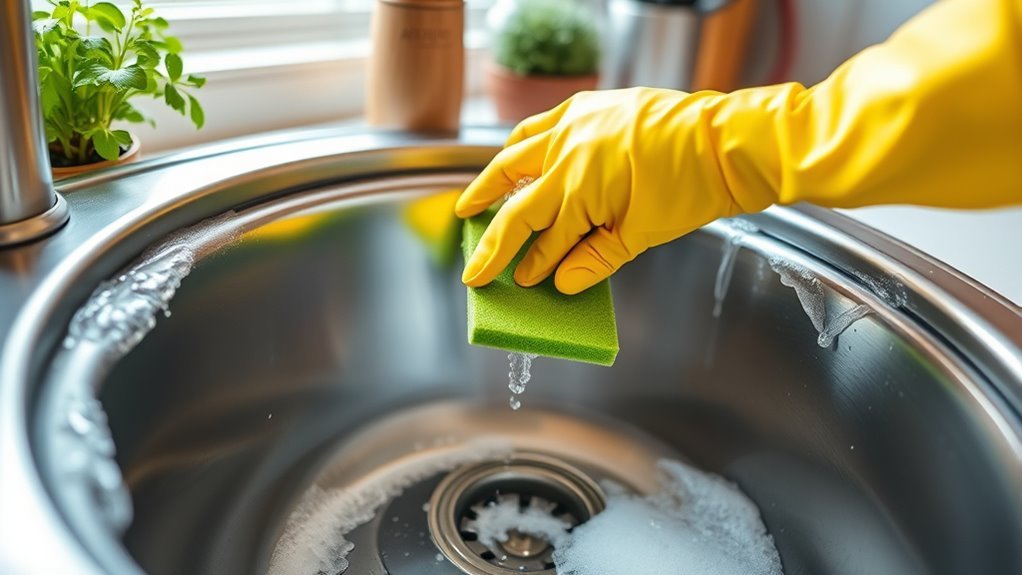
To clean your kitchen sink, start by clearing dishes and rinsing with warm water. Use a scrub brush or sponge with baking soda for stainless steel, scrubbing with the grain, or a gentle paste of baking soda and water for porcelain.
Apply vinegar to remove stains, then rinse and dry thoroughly. Disinfect with an eco-friendly spray, letting it sit before rinsing.
Avoid harsh chemicals and abrasive tools to protect the finish.
Keep your sink fresh and clog-free by following simple maintenance steps.
Investigate further tips to keep your sink sparkling and hygienic.
Key Takeaways
- Remove dishes and debris, then rinse the sink with warm water to get it ready for cleaning.
- Use baking soda and a soft sponge to gently scrub stainless steel or porcelain sinks without scratching.
- Apply a mixture of vinegar and water to tackle stubborn stains and disinfect the surface.
- Rinse everything thoroughly, then dry with a microfiber cloth and wipe down the faucets to prevent water spots and buildup.
- Keep your sink fresh by regularly flushing the drain with hot water, baking soda, and vinegar, plus using natural odor absorbers.
Gather Essential Cleaning Supplies
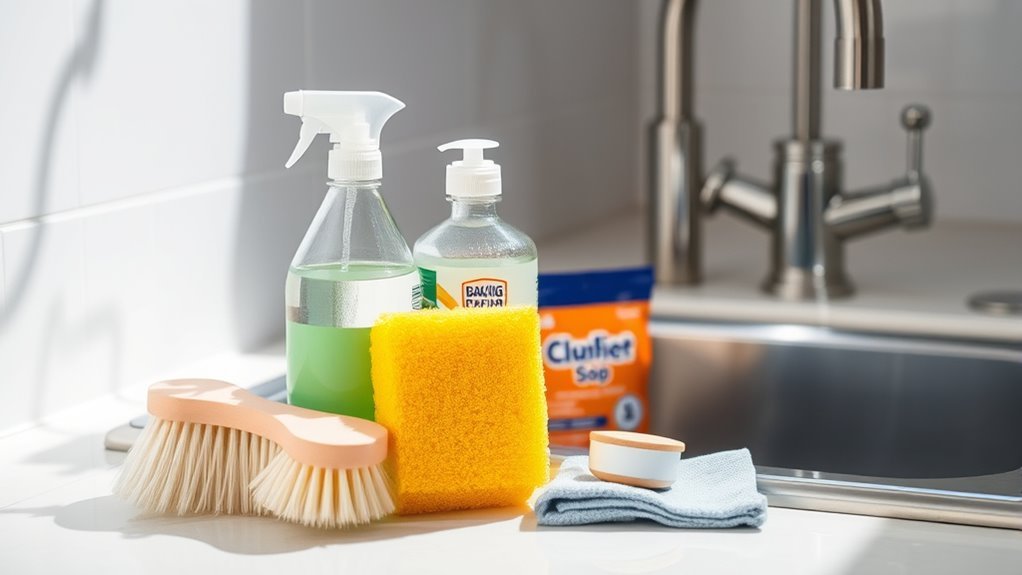
Before you start cleaning your kitchen sink, gather all the essential supplies you’ll need. Having the right tools ready makes the whole process smoother and quicker.
Start with a good scrub brush or sponge suited for your sink material. You’ll also want a soft cloth for wiping down surfaces afterward. Don’t forget gloves to protect your hands from harsh chemicals.
Use a scrub brush or sponge suited to your sink, plus a soft cloth and gloves for safe, thorough cleaning.
If you prefer eco-friendly options, think about using natural cleaning agents like baking soda, white vinegar, and lemon juice. These work well to break down grime without harming the environment or your health.
You can also find biodegradable sponges and brushes made from sustainable materials. Finally, grab a spray bottle for easy application of your chosen cleaner.
With these cleaning tools and eco-friendly options ready, you’ll be all set to tackle your kitchen sink effectively while minimizing your environmental impact.
Clear and Prep Your Kitchen Sink
Once you’ve gathered your supplies, clear out any dishes, food scraps, or debris from the sink to create a clean workspace. This step is essential for effective sink organization and makes sure you don’t miss any spots during cleaning.
Rinse the sink with warm water to loosen grime and prep the surface. Establishing regular cleaning schedules will help keep your sink fresh and hygienic.
Here’s a quick prep checklist to guide you:
| Task | Purpose | Tip |
|---|---|---|
| Remove dishes | Clear workspace | Use a drying rack nearby |
| Dispose scraps | Prevent clogging | Scrape into compost or trash |
| Rinse sink | Loosen dirt | Use warm water |
| Inspect drain | Check for blockages | Use a flashlight if needed |
| Wipe faucet area | Remove buildup | Use a microfiber cloth |
Following these steps guarantees your sink is ready for a thorough cleaning, keeping your kitchen clean and organized.
Clean Stainless Steel Kitchen Sinks
Start cleaning your stainless steel kitchen sink by rinsing it thoroughly with warm water to remove loose debris and grime. Next, sprinkle baking soda evenly across the sink’s surface.
Use a soft sponge or cloth to scrub gently in the direction of the grain, which helps prevent scratches. For stubborn stains or water spots, apply a mixture of vinegar and water, then rinse well.
Wipe your sink dry with a microfiber cloth to avoid water spots and restore shine. Regular stainless steel care includes avoiding harsh chemicals or steel wool, as these can damage the finish.
To keep your sink looking its best, do this cleaning routine weekly. It helps prevent buildup, keeps it hygienic, and maintains its sleek appearance.
Following these simple steps will ensure your stainless steel kitchen sink stays spotless and durable without extra effort.
Clean Porcelain and Ceramic Sinks
When it comes to cleaning your porcelain and ceramic sinks, it’s best to stick with gentle methods. That way, you can keep them looking shiny and new without scratching the surface. No need to use harsh scrubbers or strong chemicals that might do more harm than good.
If you notice stains starting to pop up, don’t worry. There are plenty of safe and effective ways to tackle them. You can often remove stains with simple household items like baking soda or white vinegar. It’s all about being gentle but persistent to keep your sinks looking their best.
Gentle Cleaning Methods
Although porcelain and ceramic sinks are durable, they need gentle cleaning to keep their smooth, glossy finish.
Avoid harsh abrasives that can scratch the surface. Instead, try natural cleaners like a paste made from baking soda and water. Use a non-abrasive sponge or cloth to apply it gently.
Eco-friendly solutions like white vinegar diluted with water also work well to remove grime and disinfect without causing damage. After cleaning, rinse thoroughly with warm water and dry with a soft towel to prevent water spots.
Removing Stains Effectively
Three simple ingredients can tackle even stubborn stains on your porcelain or ceramic sink. For effective stain removal, mix baking soda, white vinegar, and lemon juice. These natural cleaners break down grime without harming your sink’s surface.
Start by sprinkling baking soda over the stained area. Then, spray or pour vinegar to create a fizzing reaction. Let it sit for 10 minutes before gently scrubbing with a soft sponge.
For tough spots, apply lemon juice to help lift discoloration. Use a soft-bristled brush to avoid scratches. Rinse thoroughly with warm water after cleaning.
Repeat the process if stains persist. Finally, dry the sink with a microfiber cloth to prevent water spots. These steps will keep your sink spotless and shiny.
Remove Stains and Mineral Deposits From Your Kitchen Sink
When mineral deposits and stains build up in your kitchen sink, they can dull its appearance and harbor bacteria. To tackle these stubborn marks, start by applying a mineral solution specifically designed to break down buildup. You can make a simple one at home by mixing equal parts white vinegar and water. Soak a cloth in this solution and place it over the stained areas for 10-15 minutes. Then, scrub gently with a soft brush or sponge to lift the deposits without scratching the surface.
For stain prevention, rinse your sink thoroughly after each use to avoid mineral buildup. Wipe it dry with a clean cloth to keep moisture and stains at bay. Regularly treating your sink with this mineral solution not only removes existing deposits but also helps maintain a bright, clean surface. This keeps your kitchen sink looking fresh and inviting every day.
Get Rid of Sink Odors and Keep It Fresh
If your kitchen sink starts to smell, it’s usually because food particles or buildup are trapped in the drain. To get rid of those odors and keep your sink fresh, try some simple, natural deodorizing methods that target the source without harsh chemicals.
Kitchen sink odors often come from trapped food particles; natural deodorizing methods can freshen without harsh chemicals.
Start by flushing your drain with hot water regularly to wash away debris. Then, sprinkle baking soda down the drain followed by vinegar. This natural reaction helps break down grime and neutralize bad smells. You can also use lemon peels or coffee grounds as natural odor absorbers to mask unpleasant smells.
Here are some easy tips to keep your sink smelling nice: pour boiling water down the drain once a week to clear buildup, and do a deep clean with baking soda and vinegar once a month. Place lemon peels in the garbage disposal and run it to freshen things up. Keeping a small bowl of coffee grounds near the sink can also help absorb odors.
These simple steps will help your kitchen sink stay fresh and smell great.
How to Disinfect Your Sink Safely
Want to keep your sink germ-free without harming it? The key is picking disinfectants that are effective but also safe for your sink’s material. Don’t worry—using the right technique makes all the difference in killing germs without causing any damage. So, let’s walk through how to disinfect your sink safely and properly, step by step.
Choosing Safe Disinfectants
How do you pick a disinfectant that’s both effective and safe for your kitchen sink? Start by considering chemical safety and eco-friendly options to protect your health and the environment. Avoid harsh chemicals that can damage your sink’s surface or irritate your skin. Look for products labeled as non-toxic or biodegradable, and always read the instructions carefully.
Keep these points in mind when choosing a disinfectant:
- Opt for eco-friendly options like vinegar or hydrogen peroxide.
- Avoid bleach if you have a stainless steel sink to prevent corrosion.
- Check for EPA-approved disinfectants to guarantee effectiveness.
- Use gloves to protect your skin from chemical exposure.
Proper Disinfection Techniques
Three simple steps can guarantee your kitchen sink is disinfected safely and effectively. First, clear the sink of debris and wash it with warm, soapy water.
Next, apply a disinfecting spray or natural alternatives like vinegar or hydrogen peroxide evenly. Let it sit for at least 5 minutes to kill germs.
Finally, rinse thoroughly with clean water and dry with a clean cloth to prevent bacteria growth.
| Step | Action |
|---|---|
| 1 | Remove debris and wash |
| 2 | Apply disinfecting spray or natural alternatives |
| 3 | Let sit 5 minutes |
| 4 | Rinse thoroughly |
| 5 | Dry with a clean cloth |
Following these steps ensures your sink stays hygienic without using harsh chemicals.
Avoid Common Cleaning Mistakes That Damage Your Sink
Although cleaning your kitchen sink regularly is important, using harsh chemicals or abrasive tools can cause long-term damage. To keep your sink in good shape, always pick cleaning tools that match your sink’s material.
For example, avoid using steel wool on stainless steel or acidic cleaners on natural stone. These can scratch or etch the surface, leading to permanent damage.
Here are some common mistakes to watch out for:
- Using abrasive scrubbers that scratch the sink’s finish.
- Applying bleach or ammonia-based cleaners on delicate sink materials.
- Letting harsh chemicals sit too long, which can cause discoloration.
- Ignoring the manufacturer’s recommendations for cleaning products and methods.
Maintain Your Sink’s Shine With Regular Cleaning Tips
To keep your kitchen sink looking bright and fresh, clean it regularly with the right techniques and products. Consistent maintenance helps prevent buildup and keeps that shine intact, making your sink look new longer.
Avoid harsh chemicals; instead, opt for mild dish soap, baking soda, or vinegar. Wiping your sink dry after each use also helps prevent water spots and keeps it sparkling.
Here’s a quick guide to maintain your sink’s shine:
| Cleaning Tip | Purpose |
|---|---|
| Use mild soap | Gentle cleaning |
| Baking soda scrub | Removes stains |
| Vinegar rinse | Dissolves mineral deposits |
| Dry after use | Prevents water spots |
Prevent and Clear Tough Sink Clogs
Since kitchen sinks handle a lot of food scraps and grease, they can easily develop tough clogs if you don’t take preventative steps. Prioritizing drain maintenance helps you avoid blockages that disrupt your daily routine. To prevent and clear tough sink clogs, start by being mindful of what goes down the drain. Avoid pouring grease, coffee grounds, and large food particles into the sink.
Kitchen sinks can clog easily from food scraps and grease; preventing blockages starts with mindful drain habits.
Here are four effective clog prevention tips:
- Use a drain strainer to catch debris and clean it regularly.
- Flush the drain weekly with hot water and a mixture of baking soda and vinegar.
- Avoid chemical drain cleaners that can damage pipes; opt for natural solutions.
- If a clog forms, use a plunger or a drain snake to clear it promptly.
Frequently Asked Questions
Can I Use Bleach on My Kitchen Sink?
Yes, you can use bleach on your kitchen sink, but you should do it carefully to avoid damage.
For effective sink sanitization, dilute bleach properly and rinse thoroughly after use.
If you’re worried about harsh chemicals, consider bleach alternatives like vinegar, baking soda, or hydrogen peroxide.
These options also sanitize well and are gentler on your sink’s surface.
Always wear gloves and ensure good ventilation when cleaning.
How Often Should I Deep Clean My Sink?
How often should you deep clean your sink to keep it hygienic? Ideally, you should do a deep clean once a week to prevent grime and bacteria buildup. Regular cleaning helps keep your kitchen safe and fresh.
If you use your sink a lot or handle raw food often, consider deep cleaning twice a week. Staying consistent with this routine ensures your sink stays spotless and hygienic.
Are Natural Cleaners Effective for Sink Maintenance?
Yes, natural cleaners like a vinegar solution and baking soda are effective for sink maintenance. You can sprinkle baking soda in your sink, scrub gently, then rinse with a vinegar solution to remove grime and odors.
This combo acts as a natural disinfectant and deodorizer without harsh chemicals. You’ll find it eco-friendly, affordable, and safe for most sink materials, making it a great choice for keeping your kitchen fresh and clean regularly.
Can Sink Cleaning Damage Plumbing Fixtures?
Don’t worry—proper sink cleaning won’t damage your plumbing fixtures if you use gentle, non-abrasive products. In fact, regular plumbing maintenance, including careful cleaning, helps protect your fixtures from buildup and corrosion.
Avoid harsh chemicals or scrubbing pads that can scratch surfaces or wear down protective coatings. By choosing the right methods, you’ll keep your sink sparkling and your plumbing in great shape.
This way, you can ensure long-lasting fixture protection without any harm.
What’s the Best Way to Clean a Garbage Disposal?
The best way to clean a garbage disposal is to use a combination of natural cleaning methods.
Start by grinding ice cubes and coarse salt to scrub away buildup.
Next, add citrus peels like lemon or orange to freshen odors while running cold water.
Avoid harsh chemicals that can damage your disposal.
You can also pour baking soda followed by vinegar, let it fizz, and then rinse with hot water for a thorough clean.
Conclusion
Now that you know how to clean and care for your kitchen sink, keeping it spotless will be a breeze. With regular upkeep, your sink will shine like a freshly polished gem, making your kitchen feel inviting and fresh.
Just follow these simple steps, avoid common mistakes, and tackle clogs promptly. Your sink isn’t just a tool; it’s the heart of your kitchen.
Treat it well, and enjoy a clean, sparkling space every day. Proper cleaning of your kitchen sink will keep it looking its best and ensure it stays functional for years to come.