How to Organize Your Kitchen Cabinets: A Step-by-Step Guide
Many people struggle with keeping their kitchen cabinets organized. It’s easy for clutter to pile up, making it hard to find what you need and enjoy your space. If that sounds familiar, you’re not alone—getting your cabinets in order can feel overwhelming at first.
To organize your kitchen cabinets, start by emptying them completely and sorting items into keep, toss, or move categories. Clean the shelves and assess your space.
Group items by how often you use them and assign specific zones for baking, cooking, and storage. Use clear containers, labels, and vertical organizers like shelf risers or hooks to maximize space.
Keep frequently used items within easy reach and maintain your system regularly.
Keep going—you’ll find even smarter ways to optimize your kitchen’s flow.
Key Takeaways
- Empty your cabinets completely, clean everything thoroughly, and sort items into keep, toss, or move categories before you start organizing.
- Group items based on how often you use them and what they’re for, placing everyday essentials in the most accessible cabinets.
- Use storage solutions like adjustable shelves, pull-out drawers, clear containers, and labels to make the most of your space.
- Create activity zones for baking, cooking, and storage to help your kitchen workflow run smoothly.
- Keep things organized by doing regular checks, decluttering often, and using vertical or compact storage in tight spaces.
Empty and Assess Your Kitchen Cabinets
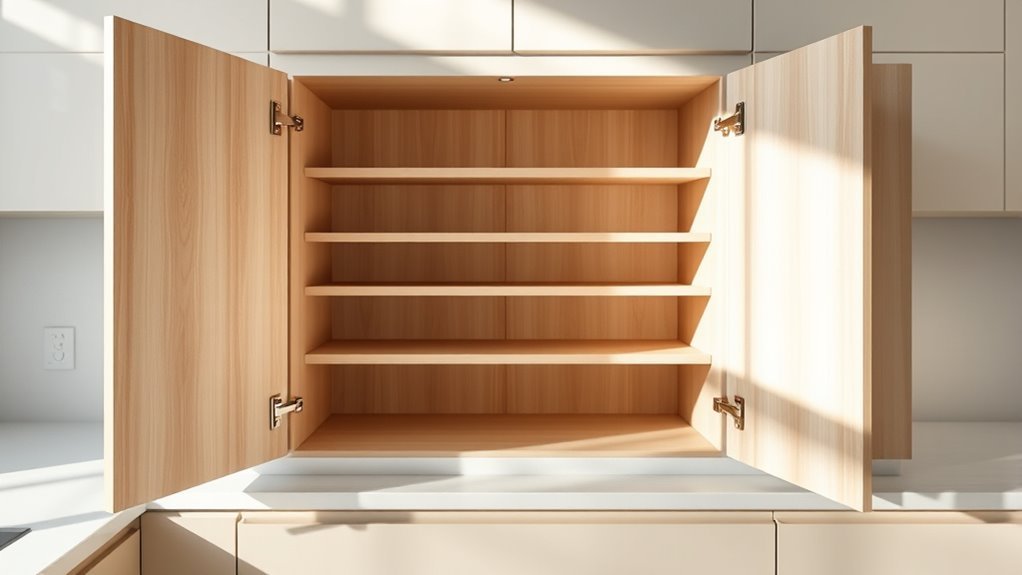
Before you start reorganizing, empty each kitchen cabinet completely. This helps you take a clear inventory so you know exactly what you have and how much space each item needs. As you remove everything, set aside any broken or expired items for disposal later.
Once the cabinets are empty, focus on cleaning. Wipe down shelves, corners, and doors to remove dust, crumbs, and grease buildup. A mild cleaner or a vinegar-water solution works well without damaging surfaces.
Dry the cabinets thoroughly to prevent moisture damage or mold growth. Taking the time to clean now ensures your organized kitchen starts fresh and hygienic. After cleaning, check the interiors for any damage or repairs needed, like loose hinges or worn shelf liners.
This assessment helps you plan your organizing strategy better. By emptying, inventorying, and cleaning your cabinets first, you set a solid foundation for an efficient and tidy kitchen.
Decide What to Keep, Toss, or Move
Every item in your kitchen cabinets deserves a purpose. Start by sorting your belongings into three groups: what you’ll keep, what needs to be tossed, and what should be moved elsewhere.
Use clear criteria to guide your decisions. Think about the item’s condition, usefulness, and expiration dates. Don’t forget to set aside sentimental items carefully—they’re worth keeping but might not belong in your everyday storage.
Here’s a simple table to help you categorize:
| Keep | Toss | Move |
|---|---|---|
| Frequently used cookware | Expired food or damaged items | Appliances used elsewhere |
| Good condition utensils | Broken or chipped dishes | Seasonal or specialty gadgets |
| Sentimental items saved | Outdated spices | Items better stored in pantry |
Group Kitchen Cabinet Items by Use and Frequency
Once you’ve sorted your items, group them by how often and for what purpose you use them. Start with everyday essentials like plates, glasses, and frequently used utensils, placing them in easily accessible cabinets. This placement helps you avoid wasting time during meal prep.
Next, cluster items used less often, such as specialty bakeware or serving dishes, in higher or less accessible spaces. Don’t forget about seasonal items—store holiday-themed dishes or summer BBQ tools separately and swap them in and out as needed to save space.
Grouping by frequency and function helps streamline your cooking routine and keeps your kitchen organized. Clearly categorizing your items makes better use of your cabinet space and reduces clutter, making meal prep more efficient and enjoyable.
Choose the Best Storage Solutions for Your Cabinets
Grouping your items by use and frequency provides a good starting point, but choosing the right storage solutions really takes your cabinet organization to the next level. First, take a look at your cabinet space to see what types of organizers will fit best.
Adjustable shelves, pull-out drawers, and lazy Susans can make your items easier to reach and help you use the space more efficiently. Pick storage solutions that match your kitchen’s style, blending functionality with a clean, cohesive look.
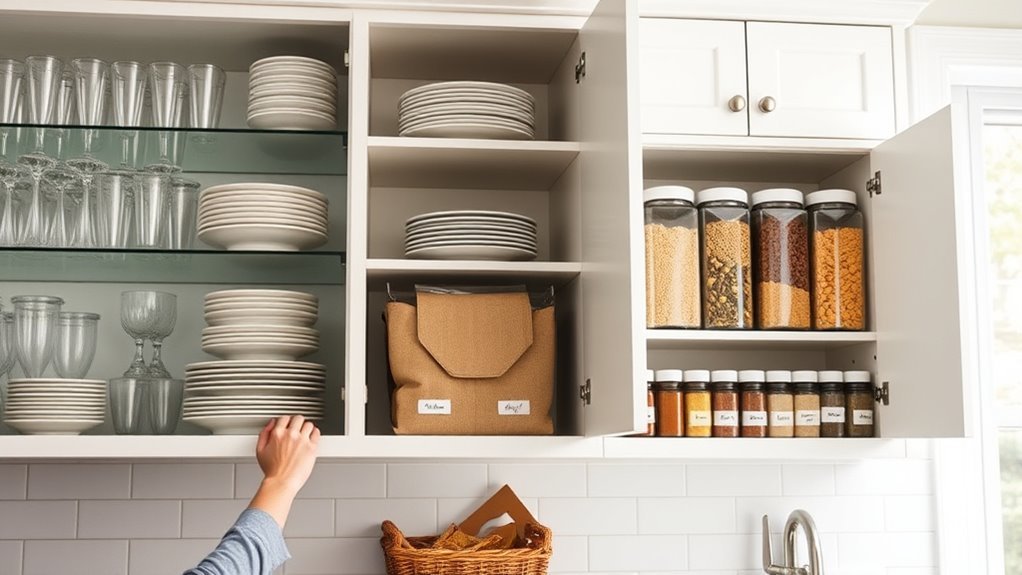
Clear containers and labeled bins make it simple to find what you need quickly and keep everything tidy. For small items like spices or packets, tiered racks or door-mounted organizers are great for keeping surfaces clutter-free.
Remember, the key is to match your storage solutions to your habits and the space you have. This way, everything has its own spot, making daily cooking and cleanup much smoother.
Maximize Vertical Space With Shelf Risers and Hooks
When you want to make the most of your cabinet’s height, shelf risers and hooks are simple yet effective solutions. Shelf risers create extra levels inside your cabinets, letting you stack dishes or pantry items without wasting vertical space.
By adding risers, you can easily access everything without knocking things over. For example, you can separate mugs on the top shelf and plates below without crowding.
Adding risers lets you access items easily and keeps mugs and plates neatly separated without crowding.
Hook placement is important too. Install hooks on the underside of shelves or on cabinet doors to hang measuring spoons, mugs, or small pots. This keeps items visible and frees up shelf space.
Make sure hooks are spaced to fit your items comfortably to avoid clutter or damage.
Together, shelf risers and hooks maximize your cabinet’s vertical space smartly, helping you organize more efficiently and keep everything within reach.
Use Clear Containers and Labels to Find Things Fast
Using clear containers is a game changer because they make it super easy to see what’s inside. No more digging around or guessing what’s at the bottom—you’ll know exactly what you have at a glance.
And don’t forget about labels! When they’re easy to read, it’s even quicker to grab what you need. Just a quick glance, and you’re good to go.
This simple trick can really make your kitchen more organized and save you time every day. It’s all about making things easy to find so you can focus on cooking and enjoying your space.
Benefits of Clear Containers
Although organizing kitchen cabinets can feel overwhelming, clear containers make it much easier to find your ingredients quickly.
One of the biggest benefits is that you can instantly see what’s inside without digging through boxes or bags.
This saves you time and cuts down on frustration, especially when you’re in a hurry to cook.
Clear containers also help you keep track of your inventory, so you know when to restock.
Using them supports your organizing goals by creating a uniform look that maximizes space.
When you follow these tips, your kitchen stays tidy, and everything has a designated spot.
Clear containers make meal prep simpler and keep your pantry looking good.
They help turn your kitchen into a more functional, pleasant space every day.
Effective Labeling Techniques
You’ll quickly notice that clear containers paired with well-designed labels make finding ingredients a breeze. To maximize efficiency, adopt smart labeling strategies that suit your style and needs.
Use creative tags like chalkboard labels, printed stickers, or color-coded tags to differentiate items at a glance. Make sure each label is legible and placed consistently—whether on the container lid or front—so you don’t waste time searching.
Consider including expiration dates or usage tips on your labels for added convenience. By combining clear containers with effective labeling techniques, you’ll keep your kitchen cabinets organized and user-friendly.
This system not only saves time but also helps prevent food waste and keeps your pantry looking neat.
Organize Pots, Pans, and Lids in Cabinets
When organizing pots, pans, and lids in your cabinets, start by grouping items by size and type to maximize space and accessibility. Nest your pans, stacking them from largest to smallest to save room and keep things tidy.
Use adjustable or pull-out shelves if you can to make reaching the back easier. For lids, consider installing a vertical rack or using a designated bin to keep them upright and easy to find. Avoid piling lids inside pots, which can create clutter and make it tough to grab what you need quickly.
Keep your most-used pots and pans at eye level or near your stove for convenience. If space is tight, hang a few on hooks inside the cabinet door or on a wall-mounted rack. With these tips, your kitchen will be more functional, and your cookware will be ready for any meal prep.
Create Functional Zones for Baking, Cooking, and Storage
First off, it’s a good idea to set aside dedicated cabinet spaces for baking, cooking, and storage. Think of it like giving each activity its own little zone—this way, everything you need for baking isn’t mixed up with your spices or pots. When you organize this way, it’s much easier to find what you’re looking for without digging through a jumble.
Next, try grouping your items based on how you use them. For example, keep all your baking supplies—like flour, sugar, and mixing bowls—together in one spot. Do the same for cooking tools, like spatulas, knives, and pots. This kind of setup helps your workflow flow smoothly, so you can get things done faster and with less hassle. Plus, it keeps your kitchen looking neat and clutter-free, making your cooking experience much more enjoyable.
Designate Specific Cabinet Areas
Assigning specific areas in your kitchen cabinets for baking, cooking, and storage makes meal prep easier and keeps everything within reach.
To get the most out of your cabinet layout, create zones that match your daily tasks. Adding storage accessories like pull-out shelves or baskets can really boost efficiency.
Baking Zone: Store mixing bowls, measuring cups, and baking sheets together near the oven or the counter you use most for baking.
Cooking Zone: Keep pots, pans, spices, and cooking utensils close to the stove for quick access during meal prep.
Storage Zone: Use this space for bulk items, extra dishes, and small appliances. Incorporate pull-out shelves or baskets to maximize space.
Group Items by Usage
Grouping items by usage helps you create clear, functional zones for baking, cooking, and storage that make your kitchen workflow smoother.
Start by gathering kitchen tools and cooking utensils near your stove for easy access while preparing meals. Keep pantry items and food storage containers together in one cabinet to simplify meal prep and cleanup.
Store everyday dishes close to the dishwasher and dining area for quick unloading and setting the table. Dedicate a spot for cleaning supplies under the sink or in a separate cabinet to avoid clutter.
Seasonal decor and less-used countertop appliances can go in higher or less accessible cabinets. By grouping items this way, you’ll reduce time spent searching and make your kitchen feel more organized and efficient.
Maintain Your Kitchen Cabinet Organization
Keep your kitchen cabinets organized by regularly tidying up and putting items back in their designated spots. This habit prevents clutter from building up and helps you maintain a neat, functional space.
To stay on top of kitchen maintenance, follow these simple steps:
- Schedule Monthly Checks: Take a few minutes each month to review your cabinets. Discard expired items and reorganize anything out of place. It keeps your inventory current and easy to access.
- Use Seasonal Organization Strategies: Rotate your seasonal cookware and ingredients. Store rarely used items out of the way during off-seasons to free up space for everyday essentials.
- Clean Cabinets Periodically: Wipe down shelves and organizers every few months. This helps prevent dust and spills from building up and keeps everything looking fresh.
Organize Kitchen Cabinets in Small or Limited Spaces
Regular maintenance helps you stay organized, but limited space can make this task more challenging. To make the most of small kitchen areas, start by decluttering and keeping only essentials.
Adopting a minimalist approach reduces clutter and frees up cabinet space. Use space-saving techniques like vertical storage—install shelves or hooks inside cabinet doors to maximize every inch.
Embrace minimalism and vertical storage to declutter and maximize your cabinet space efficiently.
Compact organization tools such as stackable containers and pull-out racks help you fit more without overcrowding. Consider multi-functional furniture, like a kitchen island with built-in storage, to add surface area and extra storage at the same time.
Creative solutions like magnetic strips for knives or spice jars mounted on walls can also free up cabinet space. By combining these strategies, you’ll turn cramped cabinets into an efficient, tidy kitchen that feels spacious and easy to maintain.
Frequently Asked Questions
How Often Should I Deep Clean My Kitchen Cabinets?
You should deep clean your kitchen cabinets every 3 to 6 months to keep them fresh and hygienic. Doing this regularly helps prevent grease, dust, and food particles from building up.
For maintenance, wipe down surfaces often with a mild cleaner and steer clear of harsh chemicals. It keeps your cabinets looking good without causing damage.
While you’re cleaning, take a moment to check for any damage or wear. Catching issues early helps you keep your cabinets in great shape longer.
What Are the Best Materials for Durable Kitchen Cabinet Liners?
Did you know that 60% of kitchen cabinet damage comes from moisture? For durable cabinet liner types, you’ll want materials with excellent moisture resistance like vinyl and rubber.
These liners help protect your cabinets from spills and humidity, keeping them in great shape longer. You might also consider polypropylene liners because they are durable and easy to clean.
Avoid paper or fabric liners since they absorb moisture and tend to wear out quickly.
Can I Organize Cabinets if I Have Children at Home?
Yes, you can definitely organize cabinets with children at home! Just make sure to prioritize safety by using locks or latches on lower cabinets that contain hazardous items.
Keep everyday dishes and snacks in easy-to-reach spots so kids can help themselves safely. Using clear bins or labels can also teach them where things belong.
This way, you keep things organized while making sure your kids stay safe and feel independent in the kitchen.
How Do I Prevent Pests in Kitchen Cabinets?
To prevent pests in your kitchen cabinets, start by identifying what types of pests are common in your area. Knowing what you’re dealing with helps you choose the right strategies.
Next, seal any cracks or gaps around cabinets and walls to block entry points. Store food in airtight containers to keep pests from getting to it.
Clean up spills immediately and wipe down shelves regularly. Keeping your cabinets dry and clutter-free makes them less inviting to pests.
Make a habit of checking your cabinets often for any signs of pests. Staying proactive is the best way to keep your kitchen pest-free and hygienic.
What Tools Are Essential for Installing Cabinet Organizers?
You’ll need a few essential cabinet tools for installing organizers: a drill, screwdriver set, measuring tape, level, and pencil for marking.
Don’t forget a stud finder to locate secure spots for mounting.
For installation tips, always measure twice to guarantee a perfect fit, use the level to keep shelves straight, and pre-drill holes to prevent wood splitting.
These tools and tips will make your installation smooth and sturdy.
Conclusion
Now that you’ve tackled your kitchen cabinets, you’re basically a home organization superhero! With everything perfectly sorted and easy to find, cooking will feel like a breeze. Even a gourmet chef would be jealous of your setup.
No more digging through clutter or losing lids. You’ll wonder how you ever lived without this level of order. Keep up the habit, and your kitchen will stay magically organized forever.
You’ve got this. Your cabinets will never look chaotic again, and your kitchen will be a joy to work in thanks to your organization skills.