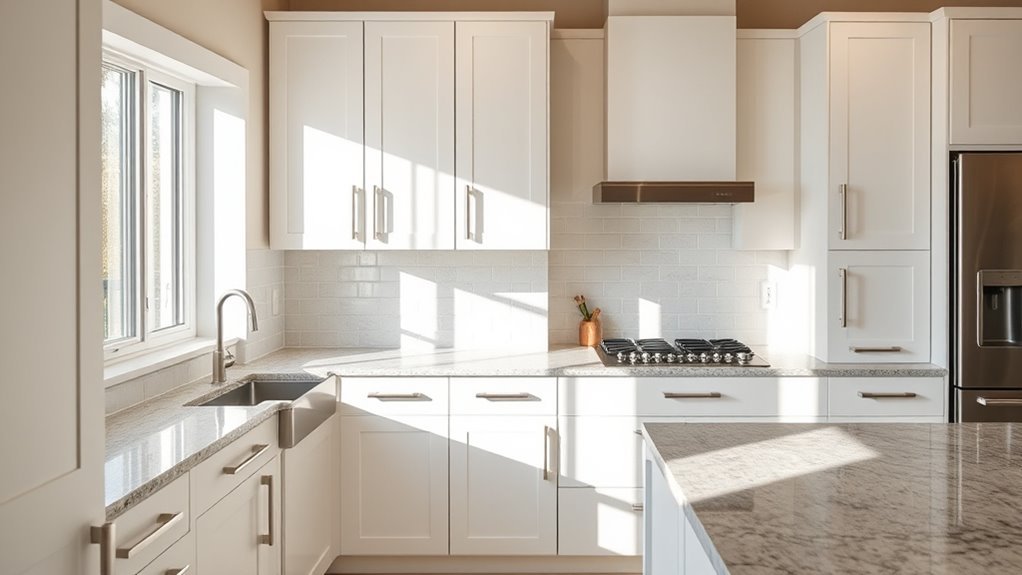
How Much for New Kitchen Cabinets? The Complete Answer
Thinking about updating your kitchen but feeling overwhelmed by the costs? You’re not alone—many people struggle with figuring out how much new kitchen cabinets will really set them back. It’s a big investment, and you want to make sure you get the best bang for your buck.
You can expect to pay between $100 and $500 per linear foot for new kitchen cabinets, depending on whether you choose stock, semi-custom, or full custom options.
Materials like solid wood cost more than MDF or particleboard, and styles or special finishes can increase prices.
Don’t forget about installation fees and potential hidden costs like delivery and assembly.
Planning your budget carefully will help manage expenses and get the style you want.
Keep exploring to find smart ways to save and plan effectively.
Key Takeaways
- Kitchen cabinet costs typically range from $100 to $500 per linear foot. Mid-range options usually fall around $200 to $300 per linear foot.
- Custom cabinets are designed to fit your space and style but tend to be more expensive. Stock cabinets are more budget-friendly, costing $60 to $200 per linear foot, though they have limited options.
- The material you choose also impacts the price. Solid wood cabinets are durable and on the pricier side, while MDF and particleboard are cheaper but less sturdy.
- Installation costs include mounting, wall prep, and moving appliances. These fees can add several hundred dollars to your overall budget.
- Don’t forget hidden costs like delivery, assembly, design consultations, and warranties. It’s smart to add a 10-15% cushion for unexpected expenses.
How Much Do Kitchen Cabinets Cost? A Quick Overview
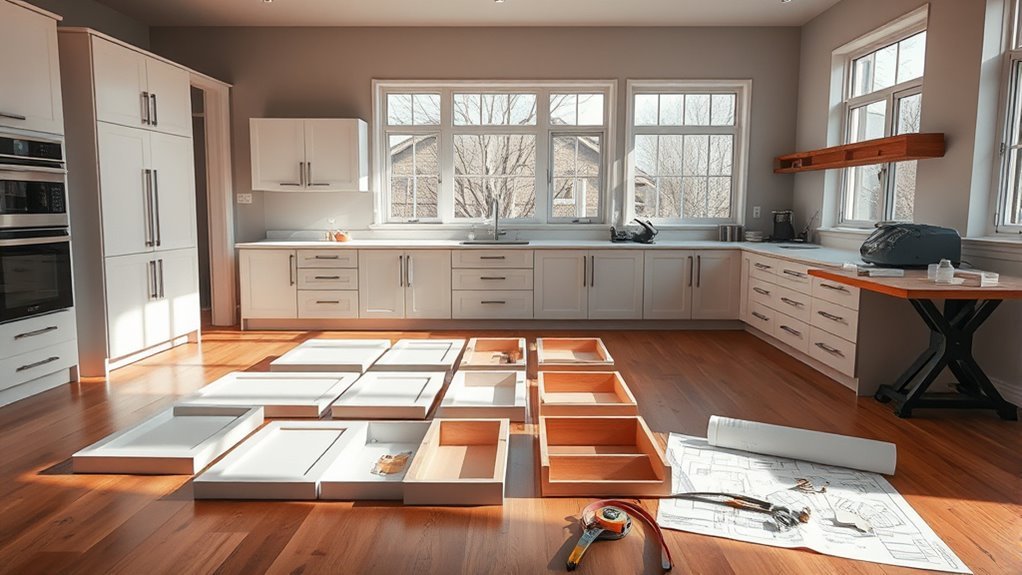
When planning your kitchen remodel, understanding how much kitchen cabinets cost is essential. Prices vary widely depending on styles, materials, and finishes you choose.
For example, shaker-style cabinets often offer a classic look at a moderate price, while more intricate designs can push costs higher. You’ll also notice that cabinet color trends influence pricing; popular hues like navy blue or matte black may come with a premium if they require special finishes or custom painting.
Generally, you can expect to spend between $100 and $500 per linear foot on cabinets. Mid-range options typically fall around $200 to $300 per linear foot, balancing quality and cost.
Expect to pay $100 to $500 per linear foot, with mid-range cabinets averaging $200 to $300.
Keep in mind, the quantity of cabinets, hardware choices, and installation fees will add to the total price.
Custom vs. Stock Kitchen Cabinets: What’s the Price Difference?
When you’re trying to decide between custom and stock kitchen cabinets, you’ll quickly see there’s quite a difference in price. Custom cabinets really depend on things like the materials you choose, the design you want, and the level of craftsmanship involved, so they tend to be more expensive. On the other hand, stock cabinets usually come in set price ranges, which makes them a more budget-friendly option and easier to compare.
Custom Cabinet Cost Factors
Although custom kitchen cabinets often cost more than stock options, they give you unmatched flexibility in design, materials, and finishes that are tailored to your needs. When planning your budget, think about custom design factors like unique dimensions, specialty features, and hardware choices, since these all affect the price.
The quality of materials makes a big difference in cost. Options like solid wood, exotic veneers, or durable plywood each come with different price points. You can also choose premium finishes or eco-friendly materials, but keep in mind these choices will increase the overall cost.
Labor-intensive craftsmanship and intricate detailing add to the final price as well. Ultimately, your investment reflects your vision and the level of quality you want. Knowing these factors helps you make smarter decisions and ensures your custom cabinets fit your kitchen and lifestyle perfectly.
Stock Cabinet Price Range
While custom cabinets offer personalized options, stock cabinets provide a more affordable and quicker solution for your kitchen remodel. Stock cabinets come pre-made in standard sizes and popular styles, making them a smart choice if you want budget-friendly options without sacrificing style.
Typically, stock cabinets cost between $60 and $200 per linear foot, depending on materials and finishes. Because they’re mass-produced, you’ll save on labor and manufacturing costs.
Stock cabinets are perfect if you want to stick to a tighter budget and still get durable, attractive cabinets. Just keep in mind that your design flexibility is limited compared to custom options.
Which Materials Drive Kitchen Cabinet Prices?
Since your kitchen cabinets take up a large part of the room, the materials you pick will really impact the overall cost. You’ll want to think about how durable the material is first—solid wood usually lasts longer but costs more, while MDF or particleboard are cheaper but less sturdy.
Finish options also matter; paint, laminate, or veneer each have different prices and maintenance needs. Keep environmental impact in mind too; sustainably sourced wood or recycled materials might cost more but are eco-friendly choices.
Color trends influence your choices and can affect the availability of finishes, so look for materials that match current styles. When comparing brands, see how they balance quality and price within your preferred design.
Don’t forget hardware like hinges and handles—they add to both cost and function. By weighing these factors, you can find materials that fit your budget and meet your kitchen’s needs.
How Your Kitchen Cabinet Style Affects Your Budget
Your choice of kitchen cabinet style really influences your overall budget. When you’re picking cabinets, think about how current trends, your aesthetic preferences, and functionality fit with your renovation goals. Different styles can cost more or less depending on materials and finishes.
Here’s how style impacts your budget:
- Traditional vs. Modern: Traditional cabinets usually have more detailed designs and need extra labor, which raises costs. Modern styles tend to have clean lines and simpler finishes, often saving money.
- Material finishes: Glossy, matte, or textured surfaces can vary in price based on what’s available and how complex the finish is.
- Color preferences: Custom colors or special stains usually come with a higher price tag compared to standard shades.
- Design functionality: Features like soft-close doors or built-in organizers add to the cost but can make your kitchen more user-friendly.
Estimating Costs by Kitchen Size and Layout
Because kitchen size and layout directly influence how much cabinetry you’ll need, they’re key in estimating your overall costs. Larger kitchens naturally require more cabinets, while smaller spaces might need clever storage solutions to make the most of the space.
Layout considerations, like cabinet spacing and design efficiency, also impact the price. An open layout may need fewer upper cabinets, while a galley kitchen requires smart storage solutions in tight spaces. Accessibility features like pull-out shelves or lower cabinets can add to costs but boost functionality.
Color choices and style trends also influence material options and finishes, affecting pricing. Sleek, modern designs might use more expensive materials, whereas classic styles can be more budget-friendly. Balancing these factors helps you estimate costs that match both your space and style preferences.
Installation Costs to Expect for New Kitchen Cabinets
When you’re getting ready to install new kitchen cabinets, it’s a good idea to understand how the labor costs are broken down. Usually, the main charges include the installation itself and any prep work needed beforehand. But keep in mind, there might be extra fees depending on your kitchen’s specific details—like if there’s a lot of old cabinetry to remove or tricky spaces to work around.
Timing can also play a big role in the overall cost. If the installation needs to be rushed or if it takes longer than expected, that can add to the price. So, it’s worth planning ahead and talking to your contractor about how long the job should take to avoid surprises.
Labor Charges Breakdown
Though material costs often grab the spotlight, labor charges are an essential part of the total expense for installing new kitchen cabinets. To get accurate estimates, you need to understand the key components involved.
First, removing the old cabinets can add to labor time and costs, especially if demolition gets tricky. Next, there’s preparation work like wall repairs, leveling, and making sure surfaces are ready for installation.
The core labor step is cabinet assembly and installation, which varies depending on cabinet complexity and kitchen size. Finally, finishing touches include adjustments, hardware installation, and cleanup.
Talking with your contractor about these details can help you secure a fair price. Being clear about what labor covers avoids surprises and ensures you get the value you expect.
Additional Installation Fees
Several additional installation fees can come up when you’re setting up new kitchen cabinets, so knowing what to expect helps you plan your budget better.
Depending on the installation, you might be charged for extra materials like mounting brackets, shims, or moldings. Some installers also charge for moving appliances or prepping uneven walls.
These fees vary based on how complex your kitchen is and the style of cabinets you pick. Here’s a quick rundown of common costs:
| Fee Type | Description | Typical Cost Range |
|---|---|---|
| Mounting Materials | Brackets, screws, anchors | $50 – $150 |
| Wall Preparation | Leveling walls, patching holes | $100 – $300 |
| Appliance Moving | Shifting sinks, stoves temporarily | $75 – $200 |
| Additional Trim | Crown molding, filler strips | $100 – $250 |
| Specialty Installation | Custom adjustments or features | $200 – $500 |
Timeframe Impact on Costs
Installation fees can vary not only based on materials and labor but also on how quickly you want your kitchen cabinets set up. When managing your project’s timeframe, keep these key points in mind because they can impact your costs:
- Rush Jobs: If you need your cabinets installed quickly, expect higher labor costs due to overtime or extra crews.
- Scheduling Flexibility: Booking during off-peak times might help you save money on installation.
- Project Complexity: Tight timelines can lead to rushed work or additional crews, which can raise your overall costs.
- Delays and Adjustments: Unexpected delays can extend your project and affect your budget.
Hidden Costs to Watch for When Buying Kitchen Cabinets
When you’re budgeting for new kitchen cabinets, it’s easy to focus on the sticker price and overlook extra expenses that can add up quickly. Hidden fees like delivery charges, assembly fees, and warranty costs often surprise buyers.
You might also face unexpected costs if you choose design consultations or opt for higher-quality materials that require more maintenance. Being aware of these potential expenses can help you plan a more realistic budget.
Here’s a quick rundown of common hidden costs:
| Cost Type | Description | Typical Range |
|---|---|---|
| Delivery Charges | Shipping and handling fees | $50 – $200 |
| Assembly Fees | Labor to assemble cabinets | $100 – $400 |
| Warranty Costs | Extended warranty purchases | $50 – $300 |
| Design Consultations | Professional design advice | $100 – $500 |
Keeping these costs and maintenance considerations in mind helps you avoid surprises and stay within your budget.
Where to Save Money on Kitchen Cabinets Without Sacrificing Quality
How can you cut costs on kitchen cabinets without giving up quality? Focus on smart choices that balance budget materials and smart labor options. Here’s how you can save:
- Choose budget materials like plywood instead of solid wood. It’s durable and less pricey.
- Opt for semi-custom cabinets rather than fully custom. They offer style variety without the high cost.
- Investigate DIY options for cabinet installation or painting. This can lower labor expenses.
- Reuse or refinish existing cabinet boxes. Replace just the doors and hardware for a fresh look at a fraction of the price.
Step-by-Step Kitchen Cabinet Budget Planning
Saving money on your kitchen cabinets starts with a clear budget plan. Begin by evaluating your kitchen’s size and layout to estimate the number of cabinets needed. Next, set a realistic overall budget based on your financial limits and desired cabinet quality.
Research average costs and prioritize must-have features to avoid overspending. Break down your budget into categories—materials, labor, and installation—to track expenses precisely.
Consider cost-saving options like choosing semi-custom cabinets or refinishing your existing ones. Don’t forget to include a contingency fund of about 10-15% for unexpected expenses.
Regularly review your budget as you gather quotes and make decisions, adjusting as necessary to stay on track. Following these steps helps you create a practical, detailed plan that manages costs without sacrificing your kitchen’s functionality.
This approach ensures you’re financially prepared before committing to your cabinet purchase and installation.
Choosing Kitchen Cabinets That Match Your Budget and Style
Although sticking to your budget is essential, you’ll want kitchen cabinets that reflect your personal style and complement your space. Finding the right balance means focusing on budget-friendly designs that don’t compromise on style versatility.
Balancing budget with style ensures your kitchen cabinets reflect your personality without sacrificing versatility.
Here’s how you can choose cabinets that fit both:
- Set a clear budget before shopping. This helps narrow your options and avoid overspending.
- Explore materials like laminate or MDF for finishes that are both affordable and stylish.
- Consider cabinet styles like shaker or flat-panel doors. They offer timeless looks and lots of versatility.
- Mix and match open shelving with closed cabinets. It’s a great way to add personality without extra cost.
Frequently Asked Questions
How Do I Maintain and Clean New Kitchen Cabinets?
To keep your new kitchen cabinets looking great, clean them regularly with a soft cloth and mild soap. Avoid harsh chemicals that can harm the finish.
Wipe up spills right away to prevent stains. For maintenance, check hinges and handles from time to time, and tighten screws as needed.
Every few months, applying a wood conditioner can help keep the finish looking fresh. With consistent care, your cabinets will stay beautiful and functional for years.
What Are the Most Durable Finishes for Kitchen Cabinets?
You’ll find that the most durable cabinet finish types include polyurethane, lacquer, and thermofoil. Polyurethane offers strong resistance to moisture and scratches, making it perfect for busy kitchens.
Lacquer dries hard and provides a smooth, tough surface but can be less heat-resistant. Thermofoil is highly durable and easy to clean but might peel over time.
When comparing durability, polyurethane often leads, especially for long-term wear and tear in your kitchen.
Can I Install Kitchen Cabinets Myself to Save Money?
You can save up to 30% by installing kitchen cabinets yourself if you follow smart cabinet installation tips. You’ll need basic DIY tools like a drill, level, and stud finder to do it right.
Be sure to measure carefully and secure cabinets to studs for stability. While it’s doable, don’t rush—careful planning prevents costly mistakes.
If you enjoy hands-on projects, tackling cabinet installation yourself is rewarding and budget-friendly.
How Long Do Kitchen Cabinets Typically Last?
Kitchen cabinet lifespan typically ranges from 15 to 50 years, depending on factors like material quality, usage, and maintenance.
If you choose solid wood and keep them clean and dry, your cabinets can last for decades.
Cheaper materials or heavy wear might shorten their lifespan.
You can extend their life by avoiding excessive moisture, repairing damage quickly, and refinishing surfaces when needed to keep them looking fresh.
Are Eco-Friendly Kitchen Cabinet Options More Expensive?
Yes, eco-friendly kitchen cabinet options often cost a bit more upfront because sustainable materials like bamboo or reclaimed wood can be pricier.
However, when you do a cost comparison, you might find long-term value in durability and environmental benefits.
Plus, choosing sustainable materials supports eco-conscious manufacturing.
You can balance your budget and green choices by exploring different brands or finishes, so you don’t have to sacrifice style or quality for sustainability.
Conclusion
So, you want new kitchen cabinets but dread the price tag? Funny how something meant to organize your space can so easily throw off your budget.
But don’t worry—you now have the know-how to choose wisely, avoid hidden costs, and find that sweet spot between style and savings.
Just remember, sometimes spending a bit more upfront on quality cabinets can save you headaches down the line.
Who knew that updating your kitchen cabinets could turn into such a budgeting adventure?