How to Unclog the Kitchen Sink: A Step-by-Step Guide
Dealing with a clogged kitchen sink is a common frustration many people face. It can disrupt your daily routine and leave you feeling stuck—literally! You’re not alone in this struggle, and the good news is there are simple, effective ways to clear it up.
To unclog your kitchen sink, start by removing visible debris and scooping out standing water.
Use a plunger with water to create suction and dislodge mild blockages. If that doesn’t work, try a natural drain cleaner like baking soda followed by vinegar.
For tougher clogs, remove and clean the sink trap or use a drain snake to reach deeper blockages.
Adopt simple habits to prevent future issues. Keep going to uncover more effective tips and when to get professional help.
Key Takeaways
- Keep an eye out for signs like slow drainage, gurgling sounds, or water pooling before you start fixing the clog.
- Grab essential tools such as a plunger, drain snake, and plumber’s wrench to help clear out the blockage effectively.
- First, clear away any visible debris and standing water from the sink to get ready for the unclogging process.
- Use different techniques like plunging the drain, cleaning the sink trap, or inserting a drain snake for deeper clogs.
- To prevent future issues, avoid pouring grease down the drain, use strainers, and do regular maintenance.
How to Tell If Your Kitchen Sink Is Clogged
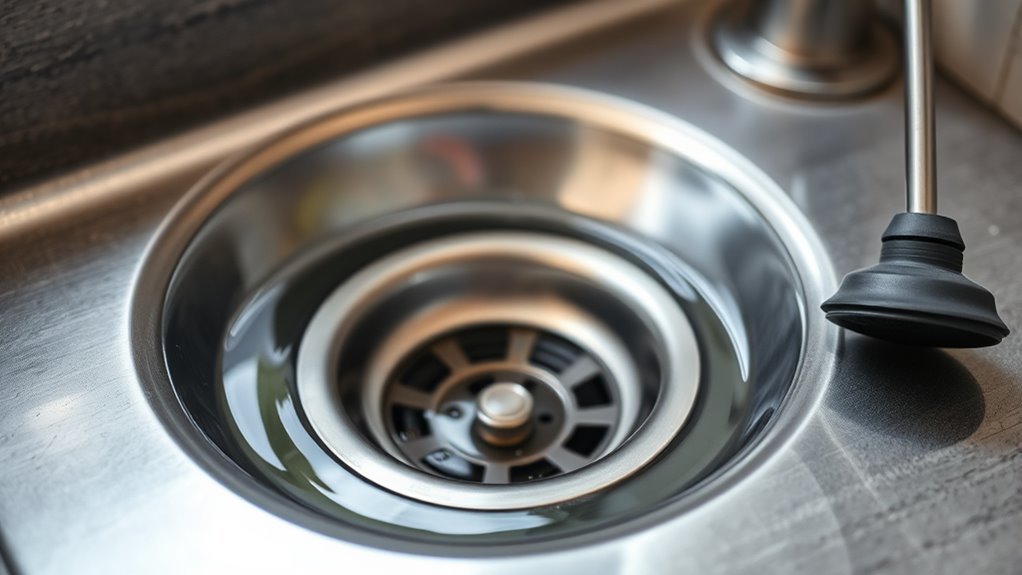
How do you know if your kitchen sink is clogged? One of the first signs is slow drainage. When water takes longer to go down, it usually means something is blocking the pipes.
You might also hear your sink gurgling—a bubbling or weird noise that happens when air struggles to move through the drain. This sound often signals trapped air caused by a partial clog.
Another clear sign is water pooling around the drain or backing up when you use the sink. If you’ve noticed foul odors coming from the drain, it could be buildup causing the clog.
Pay attention to these symptoms early so you can avoid bigger plumbing problems. Recognizing these signs quickly helps you tackle the issue before it gets worse.
If you notice slow drainage or your sink gurgling after running water, it’s time to act and unclog your kitchen sink.
Essential Tools for Unclogging Your Kitchen Sink
You’ll need a few essential tools to tackle a clogged kitchen sink effectively. Start with basic plumbing tools like a plunger and a plumber’s wrench. A cup plunger is perfect for sinks because it creates the suction needed to dislodge blockages.
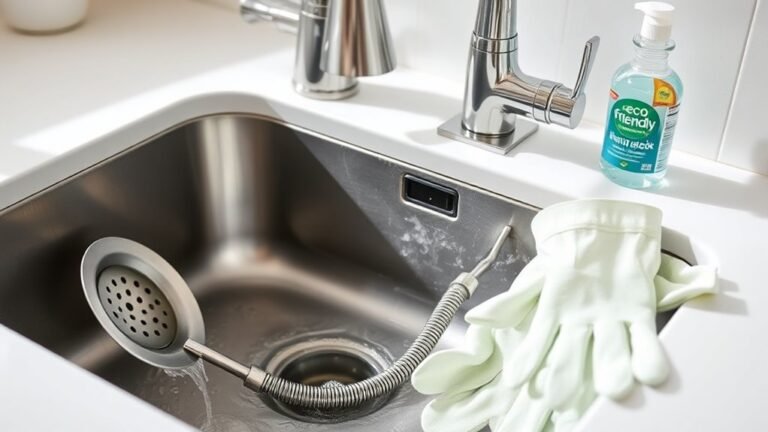
A plumber’s wrench helps loosen pipes if you need to access the trap beneath the sink. Keep a drain snake or auger handy to reach deeper clogs that plungers can’t clear.
For quick fixes, a wet/dry vacuum can come in handy for emergency unclogging by sucking out debris or water causing the blockage.
Additionally, gloves and a bucket are crucial to keep things clean and catch any water during the process. Having these tools ready makes it easier and faster to fix your clogged sink without unnecessary delays or damage.
Clear Visible Debris and Standing Water First
First things first, clear out any obvious debris or standing water from your sink. Removing these makes it easier to see what’s going on and prevents the clog from getting worse.
Once that’s done, grab a cup or small container and scoop out the standing water. This will give you a clearer view of the drain and make the next steps much easier. Oh, and don’t forget to wear gloves — it keeps things hygienic and protects your hands while you’re cleaning up!
Remove Large Food Particles
Before tackling any deeper clog issues, clear away large food particles and any standing water from the sink. Use your hands or a small strainer to remove visible chunks that might be blocking the drain.
If you have a food disposal, avoid putting large food scraps directly into it, as this can cause buildup and slow drainage. Instead, scrape plates into the trash before rinsing.
Adjusting your kitchen habits by regularly removing debris helps prevent clogs from forming. Make sure to dispose of greasy or fibrous materials properly since these often cause blockages.
Taking these simple steps keeps your sink clear and reduces the need for harsher unclogging methods later on. Removing large particles early makes the entire unclogging process smoother and more effective.
Scoop Out Excess Water
After clearing away large food particles, it’s important to remove any excess water remaining in the sink. Standing water can make it harder to see and access the clog, so start by scooping out the water with a small container or cup. Pour the water into a bucket or another sink to avoid spills.
This water removal step helps you clear visible debris effectively and prepares the area for deeper cleaning. Using this simple cleanup method guarantees you’re not working in a pool of stagnant water, which can be unpleasant and messy.
Removing the excess water also lets you spot any remaining food scraps or residue that could contribute to the clog. This makes your next steps more efficient and effective.
Use Gloves For Hygiene
While you’ve cleared visible debris and removed standing water, putting on gloves protects your hands from bacteria, sharp objects, and harsh cleaning chemicals. Following proper hygiene practices during unclogging keeps you safe and prevents infections.
Choose the right glove type depending on the task—latex, nitrile, or rubber gloves all offer different levels of protection and flexibility. Make sure your gloves resist punctures and chemicals.
Confirm they fit snugly so you can still move easily and maintain dexterity. Avoid touching your face or phone while wearing gloves to prevent contamination.
After you’re done, dispose of the gloves properly to avoid spreading germs. Always wash your hands thoroughly once the gloves are removed.
Wearing gloves is a simple step that helps protect your health while you deal with sink clogs efficiently.
Use a Plunger to Dislodge Mild Blockages
Grab a plunger and position it over the sink drain to create a tight seal. Make sure the plunger’s cup fully covers the drain opening to maximize suction. Fill the sink with enough water to cover the plunger’s cup, which helps boost pressure.
Use steady, controlled plunging motions—push down firmly, then pull up without breaking the seal. Repeat this several times, then quickly lift the plunger to see if the water drains. These plunger techniques often dislodge mild blockages caused by food particles or grease buildup.
Push and pull steadily without breaking the seal to clear mild blockages from your sink drain.
If the water still doesn’t drain, try repositioning the plunger and repeating the process. Regular use of a plunger can also help prevent blockages by stopping minor clogs from turning into bigger backups. Remember to clean the plunger thoroughly after each use to stay hygienic.
Using a plunger is a simple, effective first step before trying chemical or alternative drain cleaners.
Try a Baking Soda and Vinegar Drain Cleaner
One simple and natural way to clear a clogged kitchen sink is by using a baking soda and vinegar drain cleaner. This DIY solution is effective and eco-friendly, making it a great natural alternative for minor blockages. Here’s how you can do it:
- Pour 1/2 cup of baking soda directly into the drain.
- Follow it with 1/2 cup of white vinegar.
- Cover the drain with a plug or cloth to keep the reaction inside.
- Wait 15-20 minutes as the mixture fizzes and breaks down debris.
- Flush the drain with boiling water to clear out loosened gunk.
This method not only unclogs your sink but also helps reduce odors. Since it avoids harsh chemicals, you can use it regularly without damaging your pipes or the environment. Give this simple DIY solution a try before opting for more aggressive methods to keep your kitchen sink flowing smoothly.
When and How to Use Chemical Drain Cleaners Safely
You should only reach for chemical drain cleaners when natural methods just aren’t cutting it, and you’re pretty sure the clog isn’t caused by grease or solid objects. It’s really important to follow the instructions on the label carefully—don’t just guess or eyeball it. And definitely wear protective gear, like gloves and goggles, to protect yourself from burns or fumes.
Also, if your pipes are old or you tend to get clogs frequently, it’s best to avoid using chemicals altogether. They can sometimes cause damage to your pipes or make the problem worse in the long run. So, it’s good to be cautious and consider other options if you’re in doubt.
Safe Usage Guidelines
Although chemical drain cleaners can quickly dissolve clogs, you need to handle them carefully to avoid injury or damage to your pipes. To guarantee plumbing safety and protect your home, follow these safe usage guidelines:
- Always wear gloves and eye protection when handling chemicals.
- Read and follow the product instructions thoroughly before use.
- Avoid mixing different chemical cleaners to prevent dangerous reactions.
- Use chemicals sparingly and consider eco-friendly solutions as alternatives.
- Maintain good ventilation in the area to avoid inhaling fumes.
When To Avoid Chemicals
Whenever your sink clog involves persistent issues like recurring blockages or slow drainage despite using chemical cleaners, it’s best to avoid relying solely on chemicals. Natural remedies and alternative methods can be safer and often more effective.
If your pipes are old or damaged, steer clear of harsh chemical cleaners. They can cause corrosion or leaks. Instead, try options like baking soda and vinegar or mechanical tools such as a plunger or drain snake.
Remove and Clean the Sink Trap
Before you can clear any stubborn clogs, you’ll need to remove the sink trap, the curved pipe beneath your sink that catches debris. This step is essential for effective sink maintenance and helps prevent future blockages.
Here’s how to do it:
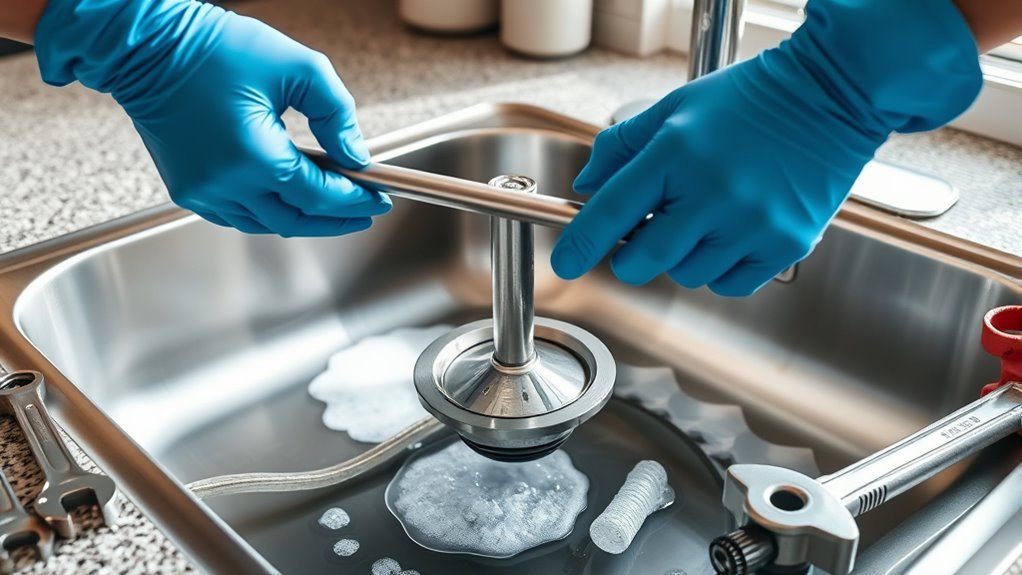
Place a bucket underneath to catch any water. Loosen the slip nuts on both ends of the trap using pliers or by hand. Carefully remove the trap and check for trapped debris or buildup.
Position a bucket below, loosen slip nuts, and remove the trap to inspect for debris or buildup.
Clean the trap thoroughly with a brush and warm soapy water. Reinstall the trap by tightening the slip nuts securely. Make sure the trap is installed properly to avoid leaks.
Use a Drain Snake to Clear Deep Kitchen Sink Clogs
Grab a drain snake to tackle clogs that lie deeper in your kitchen sink pipes. Unlike surface blockages, these stubborn clogs often come from common sources like grease buildup, food particles, and soap scum stuck farther down the drain.
Start by feeding the snake’s flexible coil into the drain slowly. Use steady pressure to push through the pipe, then rotate the handle to break up or hook the clog.
Once you feel resistance lessen, pull the snake out carefully to remove debris. If needed, repeat this drain snake technique until water flows freely.
Be sure to clean the snake after use to maintain its effectiveness. Using a drain snake not only clears tough blockages but also prevents the need for harsh chemicals, making it a practical tool for deep kitchen sink clogs.
Prevent Future Kitchen Sink Clogs With Simple Habits
Adopting a few simple habits can significantly lower the chances of your kitchen sink clogging again. Regular drain maintenance helps keep your pipes clear and prevents buildup that can cause blockages. Paying attention to what goes down your drain, especially when using your food disposal, is really important.
Simple daily habits and regular maintenance can prevent kitchen sink clogs and keep your pipes flowing smoothly.
Here are five habits to help you maintain a clog-free kitchen sink:
- Avoid pouring grease, oil, or coffee grounds down the drain because they solidify and cause clogs.
- Run cold water while and after using your food disposal to flush debris through the pipes.
- Use a drain strainer to catch food scraps and stop them from entering the drain.
- Regularly clean your drain with a mixture of baking soda and vinegar followed by hot water.
- Schedule periodic inspections or professional drain maintenance to catch issues early.
Key Warning Signs You Need a Professional Plumber
Even with good habits, some sink problems need more than DIY fixes. When you notice persistent slow drainage, foul odors, or water backing up, it’s time to call a professional plumber. Ignoring these signs can lead to costly damage or emergency plumbing services.
Common clogs might seem manageable, but if your efforts don’t clear the blockage, professional help is essential. Here’s a quick guide to help you recognize when to stop troubleshooting and make that call:
| Warning Sign | What It Means | How You Feel |
|---|---|---|
| Water backs up | Serious blockage | Frustrated |
| Persistent odors | Bacteria buildup | Uncomfortable |
| Slow drainage | Partial clog | Annoyed |
| Gurgling sounds | Ventilation issues | Worried |
| Frequent clogs | Plumbing system issue | Overwhelmed |
Don’t risk making the problem worse—call a professional to handle these key warning signs.
Frequently Asked Questions
Can Clogged Kitchen Sinks Cause Bad Odors Throughout the House?
Yes, clogged kitchen sinks can cause bad odors throughout your house. When food debris and grease build up, they create a breeding ground for bacteria, which leads to unpleasant smells.
Regular drain maintenance helps prevent these odors by keeping your pipes clear and clean. It’s important to address clogs quickly to keep your home smelling fresh.
Taking care of your sink not only keeps things smelling nice but also helps maintain a hygienic environment for you and your family.
Is It Safe to Pour Boiling Water Down the Kitchen Sink Drain?
Yes, you can pour boiling water down the kitchen sink drain, but do it carefully to keep your drain safe. Boiling water can help dissolve grease and clear minor clogs, especially if your pipes are metal.
If you have PVC pipes, avoid pouring boiling water often, as it might soften or damage them. Always pour slowly and in stages to protect your plumbing and keep your drain safe.
How Often Should I Clean My Kitchen Sink Drain to Prevent Clogs?
You should perform drain maintenance and routine cleaning at least once a month to prevent clogs. Regularly clearing debris, food scraps, and grease buildup keeps your kitchen sink drain flowing smoothly.
If you notice slow drainage or odors, clean it more often. Making this a habit saves you from tougher clogs later and keeps your plumbing in good shape.
Don’t wait for problems. Stay proactive with your drain maintenance to avoid bigger issues down the line.
Can Food Waste Disposals Help Reduce Kitchen Sink Clogs?
Yes, food waste disposals can help reduce kitchen sink clogs by grinding up food waste, preventing large particles from clogging your drain.
However, you’ve got to stay on top of disposal maintenance. Regularly run cold water while using it, avoid fibrous or starchy foods, and clean the disposal to prevent buildup.
Proper care guarantees your disposal works efficiently, keeping your sink flowing smoothly and reducing the chances of stubborn clogs forming.
What Are the Environmental Impacts of Using Chemical Drain Cleaners?
You might think chemical drain cleaners quickly solve clogs, but they often harm the environment. Unlike chemical alternatives, these harsh cleaners can pollute water and damage plumbing ecosystems.
If you want to protect nature, you should choose eco-friendly solutions like baking soda and vinegar or enzyme-based products. These options break down clogs gently without toxic residues, keeping your home and the planet safer in the long run.
Conclusion
Now that you know how to tackle your kitchen sink clog, don’t let it linger like a telegram waiting to be delivered.
Using simple tools and steps, you can clear most blockages yourself and keep your sink flowing smoothly.
Just remember, if the clog feels like a stubborn relic from the past, it’s time to call a professional plumber.
With these tips, you’ll keep your kitchen running like clockwork and prevent future clogs.