What Is a Prix Fixe Menu? A Complete Guide with Pricing & Benefits
A prix fixe menu is a fixed-price dining option where guests pay one set price for a specific number of courses, usually two to four. It offers a clear, straightforward choice, such as “three courses for $45,” which can simplify ordering and attract customers with a transparent value proposition. This style suits restaurant owners, managers, culinary students, and food enthusiasts looking to understand how prix fixe menus work and affect both the dining experience and business model.
You’ll learn how prix fixe menus generate interest with clear pricing, how to set profitable prices, and the benefits and challenges of offering them. The insights include practical tips for menu design and examples of prix fixe variations along with how they compare to à la carte or tasting menus.
Key Takeaways
- Price your prix fixe menu by balancing ingredient costs and perceived value, aiming for clear, attractive pricing like “three courses for $50.”
- Use prix fixe menus as a natural marketing hook with straightforward messaging that encourages reservations.
- Offer specially priced lower-cost prix fixe menus, such as $30 for three courses, to attract new customers to try your cuisine.
- Distinguish between prix fixe and tasting menus by course number and pacing; prix fixe tends to be shorter with fixed courses.
- Design prix fixe menus with varied options to appeal to different tastes while controlling food costs.
- Consider digital tools like Menubly to update and share your prix fixe menu quickly, making it more accessible.
What Is a Prix Fixe Menu and How It Works
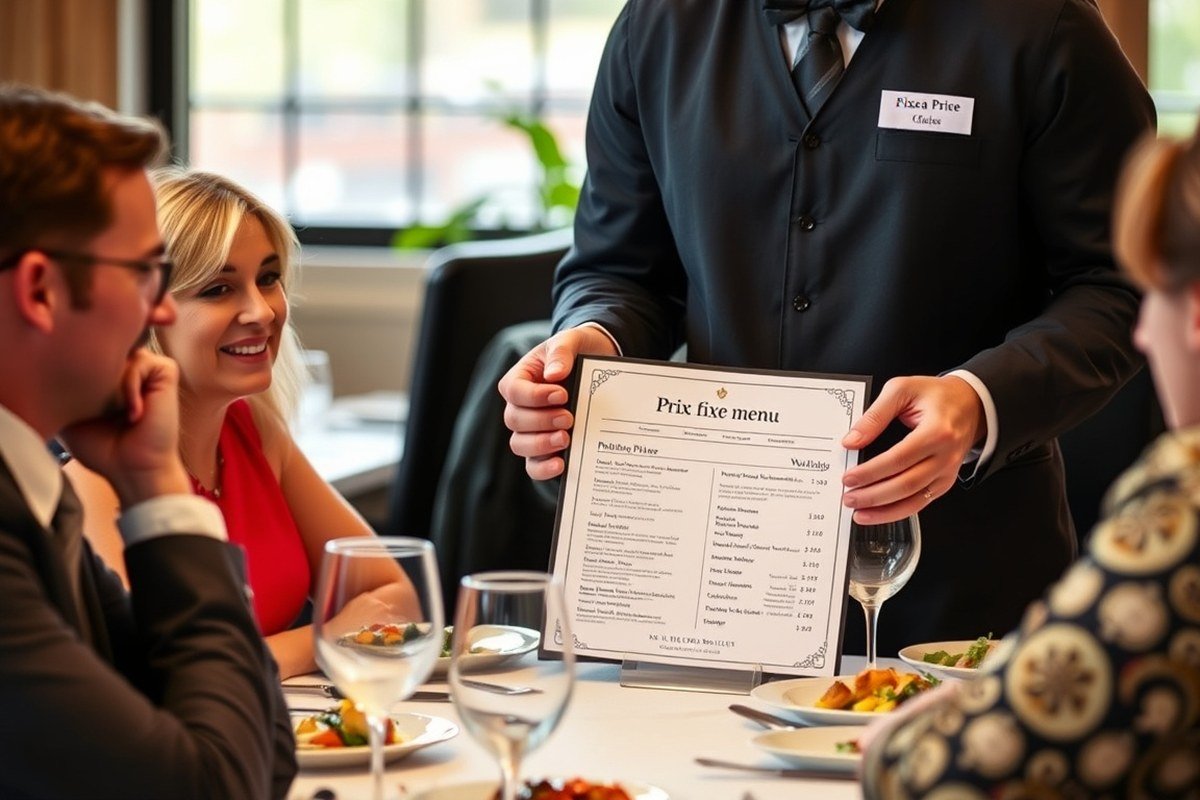
A prix fixe menu is a restaurant offering where guests pay one set price for a complete multi-course meal. The French term “prix fixe” means “fixed price,” which reflects that the entire meal is bundled together rather than pricing each dish separately. This fixed-price approach simplifies ordering and provides guests with a clear, upfront cost, fostering greater transparency and quicker decision-making at the table.
In practical terms, a prix fixe menu generally includes two to four courses, commonly presented as an appetizer, main course, and dessert. The restaurant offers a selection of dishes within each course, and diners choose one option per course, all included in the single set price. For example, a neighborhood restaurant might promote “3 courses for $39,” letting guests pick a salad, a steak, and ice cream, all for that price. No matter which dishes the customer selects from the offered choices, the price remains the same. This differs from an à la carte menu where each item is priced individually.
The operational concept behind a prix fixe menu helps streamline kitchen workflow by limiting menu complexity, allowing chefs to focus on fewer dishes simultaneously. It can also help manage food costs more effectively because the expected ingredient usage is more predictable. When designing a prix fixe, it’s important to balance appealing options in each course with portion sizes and ingredient costs. For instance, the total ingredient cost for a three-course meal might aim to stay around 30-35% of the fixed price to maintain a profitable margin after labor and overhead.
The prix fixe menu concept dates back to the late 1800s when French chef Auguste Escoffier refined it at the Grand Hotel in Monte Carlo. This style of menu soon became synonymous with French dining and remains popular globally. Prices can vary widely depending on the restaurant’s positioning. Modern examples range from casual places offering three courses for under $40 to fine dining venues where prix fixe menus can reach $165 per person or more, often paired with options for wine or cocktail pairings.
Besides traditional dinner menus, prix fixe formats can target specific dining occasions such as pre-theater menus, seasonal chef’s menus, or lunch specials. This flexibility allows restaurants to use prix fixe menus to highlight certain dishes or control guest flow during busy times. Staff training plays a key role in the success of a prix fixe menu because well-informed servers can effectively explain the menu and upsell drinks or extras, increasing overall check averages.
Different types of prix fixe menus might incorporate tasting elements, where a set number of small courses are served in a controlled sequence with deliberate pacing. However, not all prix fixe menus are tasting menus; many maintain standard portion sizes and allow more guest choice within each course. The clear fixed price and structured presentation make prix fixe menus a straightforward marketing tool by offering a simple message: a full meal at one price, encouraging bookings and creating a sense of value.
How to Price a Prix Fixe Menu for Profit and Appeal

To price a prix fixe menu correctly, first figure out the total cost of ingredients for the priciest meal option. Then, divide this cost by your target food cost percentage, usually set between 25% and 35%, to fix a profitable menu price. This approach keeps your costs in check and ensures the most costly dish stays profitable.
To price your prix fixe menu effectively, start by listing each course’s ingredients and calculating their costs for the most expensive option across all courses. Adding those together gives you the maximum food cost per diner. Dividing this by your target food cost percentage sets a minimum prix fixe price. This ensures your profit margin covers overhead, labor, and other expenses, keeping your operation financially sound.
- List menu components: Identify each dish available for every course in your prix fixe menu, including appetizers, mains, sides, and desserts.
- Calculate ingredient costs: Add up the cost of all ingredients for the most expensive dish in each course, using your supplier prices or recent invoices.
- Sum total food cost: Add those ingredient costs across all courses to get the highest total food cost per meal.
- Set target food cost percentage: Choose a percentage between 25% and 35% based on your restaurant’s pricing strategy and market segment.
- Calculate base menu price: Divide the total food cost by your target food cost percentage (expressed as a decimal). For example, if total food cost is $27 and your target food cost is 30% (0.30), calculate $27 ÷ 0.30 = $90.
- Adjust for additional costs: Consider adding a set price for beverages if included or adjust for labor and overhead if needed.
- Test and refine pricing: Monitor customer response and cost variations; adjust prices or menu offerings seasonally to maintain profits.
Calculate pricing based on your highest-cost menu combination to avoid losing money on any option in your prix fixe menu.
Types of Prix Fixe Menus and Common Variations
Prix fixe menus come in various styles to suit different dining experiences and restaurant goals. These include straightforward multi-course meals, elaborate tasting menus, menus that change with the seasons, and options with tiered pricing to attract a diverse clientele. Some special event menus like those during Restaurant Week also follow prix fixe formats to simplify service and attract new guests.
Classic Three-Course Menus
The most common type of prix fixe menu is the classic three-course format, usually including an appetizer, a main course, and a dessert. This style typically features 2 to 4 choices per course and is priced between $30 and $80. It works well for holidays and special occasions, providing guests with a satisfying meal while streamlining kitchen operations.
Restaurants benefit from this format because it balances guest choice with predictable plating and portion control. This predictability helps manage food costs and boosts efficiency during busy service periods. Promoting a classic prix fixe menu with a clear theme, like a holiday special, encourages group dining and can increase overall spend.
Tasting and Multi-Course Experiences
Tasting menus are a type of prix fixe offering with 5 to 12 or more small courses, priced between $75 and $300 or higher. Unlike classic three-course menus, tasting menus provide no choices; the chef determines every dish. This format suits fine dining environments where the goal is to showcase creativity and culinary techniques, often featuring locally sourced or seasonal ingredients.
Tasting menus help create memorable dining experiences through a carefully curated progression of flavors and textures. They require skilled kitchen staff and precise timing, as courses arrive in sequence and in smaller portions. A restaurant focused on a chef-driven experience might keep this prix fixe menu as a permanent offering, such as a 10-course evolving tasting menu.
Seasonal and Special Event Menus
Seasonal prix fixe menus rotate every few weeks or months to feature fresh, in-season ingredients and align with local farming cycles. These menus usually have 3 to 5 courses and range from $35 to $90 in price. This style helps restaurants promote farm-to-table concepts while generating excitement with regularly changing dishes.
Special event menus include offerings during holidays or Restaurant Week. Restaurant Week menus typically have 2 to 3 courses priced between $20 and $45 to attract new diners. These events often involve fixed menus that are simpler for the kitchen to produce while drawing large crowds. Seasonal and event fixation also provide natural social media and email marketing content to boost visibility.
- Seasonal Prix Fixe: Highlights fresh, local ingredients with frequent rotations
- Holiday Specials: Limited-time menus aligned with events like Thanksgiving or Valentine’s Day
- Restaurant Week Menus: Affordable, fixed-price offerings designed to attract new customers
- Weeknight Prix Fixe: Simplified menus to increase traffic on slower nights
- Special Occasion Menus: Customized prix fixe for weddings, anniversaries, and large groups
Clear naming of these menus, such as “Summer Prix Fixe” or “Winter Tasting Menu,” guides guests on what to expect and helps promote the restaurant effectively.
Tiered Pricing Models
Tiered prix fixe menus give guests options at different price points by varying the number or type of courses. These can range from 2 to 5 courses, with prices starting as low as $25 and going above $100. This approach broadens appeal by accommodating different budgets and appetites.
Restaurants can offer a base prix fixe menu and add premium courses or upgrades for an additional charge. For example, a three-course tier might cost $40, while adding a fourth course with a seafood dish raises the price to $60. This flexibility encourages upselling while maintaining a controlled menu structure.
Tiered options work well for casual dining spots and fine dining establishments alike, helping to fill tables during off-peak hours or boost revenue on busy nights. Menu design should clearly explain the pricing differences so guests understand their choices and the value offered at each tier.
Benefits of Offering a Prix Fixe Menu to Restaurants
Offering a prix fixe menu provides several operational advantages for restaurants. It streamlines kitchen workflow by limiting dish variety during service, which reduces preparation complexity and shortens cooking times. This design allows chefs to plan inventory more accurately, minimizing food waste. Also, service staff can deliver orders more efficiently since they are guiding guests through a predetermined selection, reducing table turnaround time especially on busy nights. However, ensuring the menu is carefully crafted for execution is essential to reap these benefits; an overly complex prix fixe can hamper speed instead of improving it.
Financially, prix fixe menus can improve profitability when priced strategically. By grouping multiple courses at a fixed price, restaurants can increase average guest spend and manage food costs with greater precision. For example, using common ingredients across courses lowers overall expenses while maintaining menu variety. Proper price research and aligning the menu’s perceived value with the dining experience encourages higher sales volume and repeat business. Recent trends show some establishments shifting exclusively to prix fixe offerings, citing improved revenue consistency against à la carte alternatives.
- Reduces kitchen preparation time and simplifies inventory management
- Enables predictable staffing and faster table turnover
- Facilitates targeted ingredient purchasing and limits waste
- Increases average check size with bundled multi-course pricing
- Showcases culinary skills through a curated set of dishes
- Supports brand positioning and attracts diners seeking a complete experience
From a marketing perspective, prix fixe menus create a strong value proposition that can attract new customers and encourage reservations. Restaurants can promote special prix fixe events or seasonal menus to differentiate themselves and build a loyal customer base. Since guests know exactly what to expect, the format reduces decision fatigue and improve the overall dining experience. Highlighting fresh, high-quality ingredients and exceptional service alongside prix fixe offerings supports a premium brand image. Strategic pricing and menu updates aligned with customer preferences keep the concept fresh and appealing over time.
Challenges and Disadvantages of Prix Fixe Menus
Prix fixe menus often limit customer choice, which can be a double-edged sword. While the structured dining experience appeals to some guests, others may feel restricted, especially if they have dietary restrictions or strong preferences. To address this, restaurants should consider offering separate prix fixe menus tailored to vegetarians, vegans, or allergen-free diners, helping maintain inclusivity without complicating the main menu.
Operationally, prix fixe menus simplify kitchen workflow, but they can also lead to food waste if customers skip courses or if portions don’t match actual consumption. Careful portion control and offering smaller, well-balanced courses reduce waste and keep diners satisfied. This balance also minimizes staff confusion about orders, particularly during busy services or large group bookings. Employing digital tools like QR code menus streamlines ordering and reduces errors, improving the overall dining flow.
Pricing a prix fixe menu too high or too low can deter diners. You can mitigate this by thoughtfully pricing courses based on ingredient costs, preparation time, and average diner expenditure. Transparency about what each course includes helps manage expectations. Some establishments use prix fixe menus during lunch as a “happy hour” style promotion, creating value-driven experiences that attract a different customer segment without alienating their regular diners.
- Offer flexibility by allowing substitutions for certain courses to accommodate allergies or preferences.
- Create separate menus for special diets rather than trying to accommodate all requests in one menu.
- Use portion control techniques to reduce food waste and maintain consistent plating.
- Implement technology like QR codes to simplify order management and speed up service.
- Price the menu reflecting ingredient costs and perceived value without alienating price-sensitive guests.
- Consider a prix fixe menu especially for busy times or large groups to ease kitchen workload.
- Clearly communicate the structure and components of the menu to avoid guest confusion and dissatisfaction.
Limited flexibility is often the biggest customer complaint about prix fixe menus. Offering choices within each course or allowing guests to customize one or two items helps maintain the curated experience while reducing frustration. Maintaining good communication between front-of-house and kitchen staff is essential here, servers should be trained to explain options and accommodate reasonable requests efficiently.
Test your prix fixe menu with a small group first to identify potential problems with pacing, portion size, and guest satisfaction before a full rollout.
Prix Fixe vs À La Carte vs Tasting Menus: Key Differences
Prix fixe, à la carte, and tasting menus each highlight unique dining styles suited to varied customer tastes and restaurant aims. Prix fixe menus fix the cost for a set number of courses, simplifying choices and letting guests enjoy a prearranged meal. À la carte menus give diners the freedom to pick each dish individually, which offers flexibility but can feel less unified. Tasting menus feature a series of small, chef-curated dishes that display culinary skill and usually come at a premium price due to their special presentation.
Understanding these differences helps you decide which menu style fits your restaurant’s concept, kitchen workflow, and target audience. Prix fixe menus streamline ordering and pacing, making them suitable for occasions where guests want a leisurely but well-structured meal. À la carte works best when offering wide customization and variety, while tasting menus appeal to food enthusiasts seeking a memorable, multi-course journey.
| Menu Type | Pricing | Customer Experience | Flexibility | Restaurant Benefits |
|---|---|---|---|---|
| Prix Fixe | Fixed price for all courses | Clear, concise, leisurely meal with set courses | Moderate – limited choices within courses | Easier menu planning, predictable revenue, efficient service |
| À La Carte | Price per individual dish | Fully customizable meal with individual selections | High – complete freedom to choose dishes | Attracts variety seekers, flexible inventory management |
| Tasting Menu | Usually higher fixed price for multi small courses | Exclusive, creative, often experimental culinary journey | Low – usually no substitutions or changes | Showcases chef skills, improve restaurant’s reputation |
Many restaurants offer a prix fixe menu alongside an à la carte menu, letting guests pick whatever suits their mood. Integrating global or fusion flavors into a prix fixe menu can draw customers seeking unique experiences. The prix fixe format also works well for celebrations or special events, where guests expect a memorable meal paced comfortably over multiple courses.
While a prix fixe tasting menu takes things further by focusing on exclusivity and chef creativity, it also demands careful kitchen coordination. The main value of prix fixe menus lies not only in presentation but also in managing costs and delivering consistent quality. Marketing these menus effectively helps attract curious diners and encourages them to try a new, well-curated dining experience.
How to Design and Promote an Effective Prix Fixe Menu
Designing and promoting an effective prix fixe menu means carefully selecting harmonious courses, pairing the right drinks, setting appealing prices, regularly updating offerings, and actively marketing your set menu. Each step helps create a cohesive dining experience that attracts guests and encourages repeat visits.
Choosing Courses and Balancing Flavors
Start by choosing three to five courses that flow well together but avoid overwhelming diners. Typically, you want an appetizer, a main dish, and a dessert, with optional interludes like salads or palate cleansers. To balance flavors, feature a mix of textures and tastes, like a light starter, a rich main, and a refreshing dessert, to maintain interest from start to finish.
Consider overlapping ingredients in different courses to simplify prep and reduce waste while keeping dishes distinctive. Highlight chef specials and seasonal produce to provide variety and local appeal. Avoid repeating heavy or similar flavors back to back. This planning not only improve the dining experience but streamlines kitchen operations.
Incorporating Drink Pairings
Beverage pairings add value and improve the prix fixe experience. Offer a curated selection of drinks, such as wine flights or cocktail pairings, that complement each course. This keeps ordering simple for guests and increases check averages. You can price drink pairings separately or include a pairing option as an add-on to the meal.
Limiting choices to a few expertly selected options ensures quality control and staff confidence in recommendations. Some restaurants include non-alcoholic pairings like sparkling water or artisanal sodas to accommodate all guests. Proper pairing should improve flavors without overpowering the food.
Marketing and Promotion Strategies
Promote your prix fixe menu with clear, attractive presentation and stories that highlight unique elements like seasonal ingredients or chef’s special recipes. Use pictures, and print or digital menus that depict the set courses alongside drink options. Calling attention to the fixed price aspect helps customers understand the value. Here are several ways to market your prix fixe offerings:
- Feature the prix fixe prominently on your website and reservation platforms
- Use social media to showcase behind-the-scenes content or diner reviews
- Offer limited-time prix fixe specials tied to holidays or events
- Train front-of-house staff to explain and upsell the prix fixe confidently
- Include signature dishes within the prix fixe to increase appeal
- Use email newsletters to announce seasonal menu changes
- Provide sampling events or previews to generate buzz
Consistent messaging and visible menu placement help customers understand the simplicity and benefits of choosing a prix fixe meal over à la carte.
Menu Refresh and Seasonal Updates
Revising your prix fixe menu every three to four weeks keeps customers engaged and allows you to feature seasonal ingredients at their peak. Regularly updating dishes motivates guests to return and offers your kitchen team an opportunity to innovate and optimize inventory use.
Use inventory management systems or platforms that let you update menu items and prices quickly with minimal downtime. Seasonal updates also enable you to respond to supplier availability and adjust portions or plating as needed to optimize food costs and reduce waste. A well-maintained prix fixe menu reflects current culinary trends and customer preferences, helping your restaurant stay competitive and relevant.
Global Prix Fixe Menu Examples and Cultural Variations
Prix fixe menus appear worldwide, each reflecting unique culinary traditions and service styles. Examples include the French table d’hôte, Japanese kaiseki, Spanish menú del día, and Indian thali. These menus provide a curated dining experience with set courses and fixed prices, offering insight into local culture and history.
French Table d’Hôte and Classic Prix Fixe
The classic prix fixe menu, also known by the term table d’hôte, originates from French dining traditions in the late 1800s. Designed for efficiency and hospitality, it features a set number of courses with limited choices per course, usually appetizer, entrée, and dessert. This structure allows chefs to highlight seasonal French ingredients while maintaining cost control.
Many fine dining restaurants today, such as Le Bernardin, use prix fixe menus to showcase premium ingredients with consistent quality. Le Bernardin’s use of fresh fish and meticulous French technique has earned it multiple Michelin stars, demonstrating the prestige a well-executed prix fixe menu can convey.
Japanese Kaiseki Formal Tasting Menu
Kaiseki is a traditional multi-course Japanese prix fixe meal that emphasizes seasonal ingredients and artistic presentation. Unlike Western prix fixe menus, kaiseki can include from 5 to 15 courses, each carefully balanced for flavor, texture, and color. The goal is to create harmony throughout the dining experience.
Kaiseki menus are highly structured and often change daily based on ingredient availability, demonstrating a close connection to Japanese seasonal cycles and regional specialties. A kaiseki meal may include dishes like sashimi, soup, grilled fish, and a steamed course, served in a precise order.
Spanish Menú Del Día Offerings
The menú del día is a popular Spanish prix fixe option, typically offered for lunch at a set price between $10 and $20. It usually consists of three courses: a starter, main dish, and dessert or coffee, with limited daily options for each course. This style reflects Spain’s casual dining culture and emphasis on accessible, fresh meals.
This model benefits both customers seeking value and restaurateurs aiming to control inventory and kitchen workflow. Variations depend on the region, with Mediterranean coastal areas favoring seafood dishes and inland regions offering hearty meat-based entrees.
Indian Thali Platter Style Menus
Thali menus present a fixed-price platter containing a variety of small portions representing different courses and flavors. Typical thalis feature rice, bread, lentils, vegetables, condiments, and a dessert, all arranged on one large plate or serving tray. This style suits Indian dining customs of sampling diverse dishes in one meal.
The thali’s composition changes by region and season, with South Indian thalis including coconut chutneys and sambar, while North Indian versions may highlight rich curries and breads like naan. Pricing varies widely, from modest street vendors to upscale restaurants offering gourmet thali experiences. The table below summarizes key characteristics of these global prix fixe examples:
| Menu Type | Typical Courses | Price Range | Cultural Focus | Example Dishes |
|---|---|---|---|---|
| French Table d’Hôte / Prix Fixe | 3 (Appetizer, Entrée, Dessert) | $30 – $100+ | French cuisine, seasonality | Fresh fish, sauces, classic desserts |
| Japanese Kaiseki | 5 – 15 courses | $50 – $200+ | Seasonal, artistic presentation | Sashimi, grilled fish, soup, steamed dishes |
| Spanish Menú del Día | 3 (Starter, Main, Dessert/Coffee) | $10 – $20 | Regional ingredients, casual dining | Salad, paella, flan |
| Indian Thali | Multiple small portions on one plate | $5 – $30 | Diverse flavors, regional variations | Rice, dal, vegetables, chutneys, dessert |
Each menu reflects the dining culture and history of its region, showing how prix fixe concepts adapt worldwide. Incorporating these examples provides inspiration to design menus that connect closely with local tastes and operational goals.
Keep in mind that prix fixe menus require precise ingredient planning to avoid waste and ensure all courses maintain high quality throughout service.
Your First 30 Days: A Quick-Start Plan for a Prix Fixe Menu
Launching a prix fixe menu can boost your restaurant’s appeal and streamline service. Follow these steps to create and test your menu within the first month.
- Week 1: Analyze your current menu sales data to identify popular dishes that fit well in a set menu. Success means picking items guests already enjoy that can be grouped affordably.
- Week 2: Design a prix fixe menu with 3 to 4 courses, including options that balance cost and kitchen efficiency. You’ll know it works when ingredient overlap reduces waste.
- Week 3: Price your menu based on food cost targets and desired profit margins. Check that your price appeals locally by comparing competitors’ prix fixe offerings.
- Week 4: Train your front-of-house staff to explain the prix fixe choices clearly and handle questions. Confirm readiness by tracking customer feedback and order accuracy.
- After launch: Promote your prix fixe menu via social media and in-house signage, then monitor sales and guest satisfaction for adjustments. Positive sales trends and repeat orders show success.
Frequently Asked Questions
What Defines a Prix Fixe Menu in a Restaurant Setting?
A prix fixe menu includes a predetermined number of courses combined into a single price, removing the need to price items separately. This clear and simple option can draw diners by presenting a straightforward deal like “3 courses for $50.
How Does a Prix Fixe Menu Help in Restaurant Marketing?
It acts as a clear promotional message, such as “Three courses for $55,” that encourages bookings by offering fixed value. This helps restaurants attract diners looking for predictable pricing and a full meal experience.
Can a Prix Fixe Menu Be Adjusted Seasonally?
Yes, restaurants frequently update prix fixe menus to feature seasonal ingredients and specials. This keeps the menu fresh and appealing, often encouraging repeat visits for new dishes within the fixed price structure.
Is a Prix Fixe Menu Suitable for Small or Casual Restaurants?
Yes, casual and neighborhood eateries often use prix fixe menus (like “3 courses for $39”) to simplify options and pricing, making it easy for diners to choose while increasing table turnover.
What Is the Origin of the Prix Fixe Menu Concept?
Auguste Escoffier, a French chef in the late 1800s, is often credited with creating the first prix fixe menu to streamline French dining and offer set meals at fixed prices.
How Can Digital Tools Aid in Managing a Prix Fixe Menu?
Tools like Menubly allow restaurants to build and update prix fixe menus digitally with features such as QR code sharing and branded designs, improving customer interaction and menu management.
Wrapping Up
Offering a prix fixe menu gives your restaurant a structured way to showcase your food and manage costs. Start by selecting dishes that balance customer favorites with efficient prep. Tweak your pricing and promotion as you learn what your patrons prefer. This focused approach can make your menu a key part of your business strategy.