30 Inch Gas Cooktops Guide: What to Know Before You Buy
Thinking about upgrading your kitchen with a 30 inch gas cooktop? You’re not alone—many home chefs struggle to find the perfect balance of performance, safety, and style.
With so many options out there, it’s easy to feel overwhelmed.
When choosing a 30 inch gas cooktop, consider your budget, burner layout, and heat output measured in BTUs.
Look for safety features like flame failure and reliable ignition systems.
Decide on a durable, easy-to-clean finish such as stainless steel or glass, and guarantee proper installation with adequate ventilation.
Energy efficiency and user reviews can guide your choice.
If you want to find the perfect balance of performance, style, and safety, keep exploring the details that make each model unique.
Key Takeaways
- Set a clear budget and read user reviews to make sure the cooktop is reliable and easy to use before you buy a 30 inch gas cooktop.
- Choose burner configurations and sizes based on how you cook. This helps with versatility and ensures even heat distribution.
- Check the BTU ratings to find the right balance between high heat for fast cooking and low heat for simmering control.
- Prioritize safety features like flame failure technology, auto shutoff sensors, and control locks to keep things safe.
- Pick durable materials like stainless steel or glass, and follow maintenance tips to keep your cooktop lasting and easy to clean.
Choosing the Best 30 Inch Gas Cooktop: Key Factors
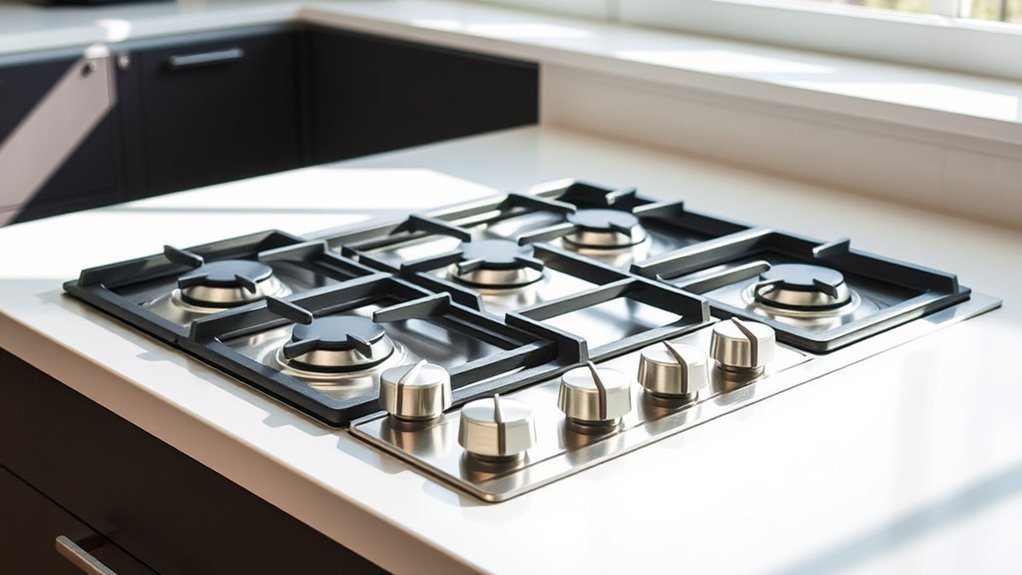
When choosing the best 30 inch gas cooktop, you’ll want to focus on several essential factors that affect performance and convenience. First, consider your budget carefully. 30 inch gas cooktops come in a range of prices, so setting a clear budget helps narrow your options.
Don’t overlook user reviews, as they provide real-world insights into reliability and ease of use. Pay attention to comments about durability, ignition systems, and how easy cleaning is. Also, think about the cooktop’s build quality and safety features, which impact long-term satisfaction.
User reviews reveal crucial details on durability, ignition, cleaning ease, build quality, and safety features.
Energy efficiency is another key factor. A model that uses gas efficiently can save you money over time. Finally, make sure the controls are intuitive and the design complements your kitchen style.
Balancing your budget with honest user feedback will help you find a cooktop that matches your needs without surprises. This approach guarantees you’ll get a reliable, convenient appliance that suits your cooking habits perfectly.
Burner Configurations for 30 Inch Gas Cooktops
When it comes to 30-inch gas cooktops, you’ll notice they come with a variety of burner layouts, all designed to suit your cooking style. Some models feature different burner sizes—like smaller ones perfect for simmering or larger ones that can handle boiling water quickly. It’s like having the right tool for every cooking job right at your fingertips.
And don’t forget about those specialty burners! They add an extra layer of versatility, making it easier to tackle specific techniques or recipes. Whether you’re searing, wok cooking, or creating delicate sauces, these burners can really elevate your cooking game.
Common Burner Layouts
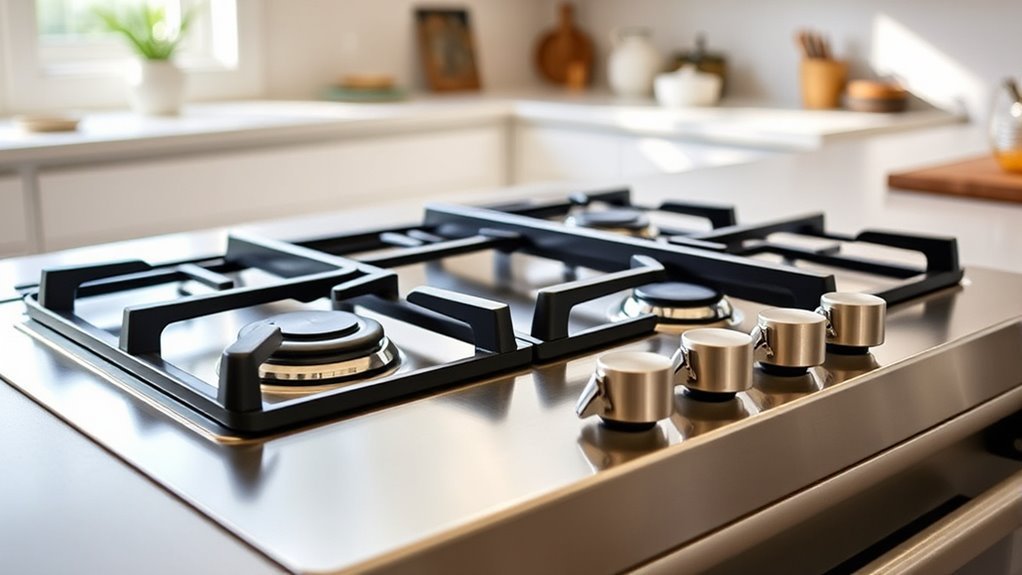
Most 30 inch gas cooktops have four burners arranged to maximize space and efficiency. Picking the right layout can boost burner performance and match your cooking style.
Here are three common burner setups:
- Standard Grid – Burners are evenly spaced in a square pattern. This gives balanced heat and makes it easy to access all pots at once.
- Staggered Layout – Burners are offset. This lets larger pots fit comfortably without crowding, making your workspace more efficient.
- Front-Centered – The main burner is front and center for quick access. Secondary burners are positioned to the sides, great for frequent use.
Each layout balances space and burner efficiency differently. Think about how you cook to find the best fit for your kitchen.
Burner Size Variations
Three burner sizes typically appear on 30 inch gas cooktops, giving you flexibility for different cooking tasks. You’ll usually find small, medium, and large burners, each designed for specific heat outputs. Small burners are great for simmering sauces or melting chocolate with low heat.
Medium burners handle most everyday cooking needs, making them versatile. Large burners deliver high heat, perfect for boiling water quickly or stir-frying.
Choosing the right burner size affects efficiency, helping you use energy effectively without overheating your cookware.
When burners match your pots and pans, you save gas and cook more evenly. Understanding these size options helps you pick a layout that fits your cooking style and boosts performance in your kitchen.
Specialty Burner Options
Several specialty burner options can boost your 30-inch gas cooktop’s versatility and performance. Picking the right configuration helps you handle a wider range of cooking tasks with precision.
1. Wok Burner
Designed for high heat and quick flame distribution, a wok burner is great if you love stir-frying or Asian dishes. It delivers intense, concentrated heat that standard burners can’t match.
2. Simmer Burner
This burner provides low, steady heat, making it perfect for delicate tasks like melting chocolate or simmering sauces without burning them.
3. Dual Burner
Combining two flame sizes in one, a dual burner allows you to switch easily between high and low heat depending on what you’re cooking.
Adding these specialty burners ensures your 30-inch gas cooktop can meet all your culinary needs efficiently.
Heat Output Explained: BTUs and Cooking Power
You’ll want to get a good grasp of BTU measurements so you can really understand your cooktop’s heat output. It’s like knowing how powerful the burners are, which helps you cook more efficiently and save energy at the same time.
Let’s take a closer look at how different BTU levels match up with your cooking needs, so you can pick the right cooktop that works best for you.
Understanding BTU Measurements
BTU, or British Thermal Unit, measures the heat output of your gas cooktop and directly affects cooking speed and temperature control. Understanding BTU measurements can help you make smarter choices when comparing models.
Here’s what you need to know about BTU comparison and its impact:
- Higher BTUs mean faster boiling and searing, which is great for quick cooking tasks.
- Lower BTUs offer better temperature control for delicate simmering and slow cooking.
- BTU ratings can vary a lot, so comparing them helps you find a cooktop that matches your cooking style.
BTUs and Cooking Efficiency
Understanding how heat output translates to cooking efficiency can help you get the most from your gas cooktop. BTUs affect cooking temperatures and flame control, which impact heat distribution and energy use.
Efficient burners maintain steady heat, making it easier to handle various cooking techniques and recipes. Your personal preferences also matter when choosing the right BTU range for your needs.
Proper maintenance tips can keep your cooktop performing consistently and help you save energy over time.
| Factor | Impact on Cooking Efficiency |
|---|---|
| Cooking Temperatures | Precise control helps improve recipe results |
| Heat Distribution | Even heat minimizes hot spots |
| Energy Consumption | Efficient burners reduce wasted energy |
Matching BTUs To Needs
Selecting the right heat output for your gas cooktop means matching BTUs to your cooking style and kitchen needs. BTUs measure how much heat a burner produces, so understanding your preferences helps you choose efficiently. Consider these factors:
- Cooking styles: If you often sear or stir-fry, higher BTUs give you quick, intense heat. For slow simmering or delicate sauces, lower BTUs offer better control and help prevent burning.
- Heat sensitivity: If you’re sensitive to temperature swings, look for burners with adjustable, moderate BTUs to keep the heat steady.
- Kitchen size and ventilation: Smaller kitchens might need lower BTUs to avoid excessive heat buildup and ensure proper airflow.
Safety Features to Look For in 30 Inch Gas Cooktops
When choosing a 30 inch gas cooktop, you’ll want to prioritize safety features that protect your kitchen and family. Look for cooktops with flame failure technology that automatically cuts off gas if the flame goes out, preventing dangerous gas leaks.
Safety sensors and auto shutoff functions add extra layers of protection by detecting irregular heat or gas flow and turning off the cooktop. For child safety, control locks are essential to keep little hands from accidentally turning burners on.
Check the ignition systems for reliable and safe starts without sparking hazards. Consider surface materials that resist heat and are easy to clean, reducing the risk of burns or fire.
Even heat distribution helps prevent hotspots that can cause accidents. Always verify safety certifications from reliable organizations to confirm your cooktop meets strict safety standards.
These features combined give you peace of mind while cooking every day.
Installation Requirements for 30 Inch Gas Cooktops
When you’re installing your 30-inch gas cooktop, it’s important to make sure there’s enough ventilation and clearance around it. This helps keep everything safe and running smoothly.
Also, double-check that the gas supply connection follows your local standards. If your cooktop needs electrical hookups, be sure those are taken care of correctly too. Paying attention to these little details can make a big difference in how well your cooktop works and how safe it is to use.
Ventilation and Clearance Needs
Make certain you provide adequate ventilation and clearance when installing a 30-inch gas cooktop to maintain safety and peak performance. Proper air circulation prevents gas buildup and guarantees efficient combustion. Here are key points to consider for ventilation and clearance needs:
- Ventilation Types: Choose between downdraft, under-cabinet, or wall-mounted range hoods based on your kitchen layout and ventilation capacity.
- Clearance Requirements: Follow manufacturer guidelines requiring at least 30 inches of clearance above the cooktop and 6 inches from combustible side surfaces.
- Installation Tips: Ensure unobstructed airflow by avoiding enclosed spaces around the cooktop and install ventilation systems with adequate CFM ratings for your cooktop’s BTU output.
These steps help you meet safety standards while optimizing your cooktop’s functionality.
Gas Supply Connection Standards
Proper gas supply connection is essential for the safe and efficient operation of your 30-inch gas cooktop. Before installation, verify gas line compatibility to ensure your existing supply matches the cooktop’s requirements, whether natural gas or propane.
Using the correct type and size of gas line helps prevent leaks and keeps the pressure consistent. Follow the manufacturer’s installation guidelines carefully, as they specify needed fittings, shutoff valves, and connection methods.
It’s best to use a flexible gas connector approved for cooktops. This makes future maintenance easier and safer. Don’t attempt any modifications yourself—improper connections can compromise safety and performance.
Electrical Requirements and Safety
Although gas cooktops mainly use gas to operate, they still need electrical connections for features like ignition and lighting. To install them safely, you should follow wiring standards and safety rules carefully. Proper grounding of the appliance is crucial to prevent electrical hazards and protect your home. Some models even have gas leak detection systems that depend on electricity.
When installing your 30-inch gas cooktop, keep these key points in mind:
- Check the circuit requirements in the user manual to match your home’s electrical system.
- Make sure the appliance is properly grounded to avoid shocks or malfunctions.
- Follow maintenance tips for electrical parts to keep everything safe and reliable.
Following these steps helps ensure your cooktop runs safely and efficiently.
Cooktop Materials: Stainless Steel vs. Other Finishes
When choosing a 30-inch gas cooktop, the material finish plays a key role in both style and maintenance. Stainless steel benefits make it a popular choice: it offers a sleek, modern look that complements most kitchens, resists heat and corrosion, and stands up well to everyday wear. Plus, stainless steel’s neutral tone blends easily with other appliances, giving you flexibility in your kitchen design.
However, alternative finishes like black glass, porcelain enamel, or matte metal can offer unique aesthetics and may suit specific decor styles better. These finishes often resist fingerprints and smudges more effectively than stainless steel, which can show streaks if not wiped properly. When deciding, consider how the finish will match your kitchen’s overall look and how much effort you’re willing to invest in upkeep. Both stainless steel and alternative finishes have their strengths, so choose the one that fits your style and lifestyle best.
Maintaining and Cleaning Your 30 Inch Gas Cooktop
Choosing the right finish for your cooktop affects not only how it looks but also how you’ll care for it every day. Proper maintenance helps keep your 30 inch gas cooktop looking good and working safely. Set up a schedule that includes daily cleaning and occasional deep cleaning. Use cleaning products suitable for your cooktop’s finish to avoid damage and tackle stubborn stains quickly.
Here are three key tips for maintaining your gas cooktop:
- Preventative care: Use cookware that won’t scratch the surface and consider burner covers to keep grime from building up.
- Cleaning tips: Wipe up spills immediately with non-abrasive cleaners and soft cloths. For tough stains, soak removable parts before gently scrubbing.
- Gas line safety: Regularly check connections and make sure the gas line is secure to prevent leaks or hazards.
Following these habits will help your cooktop last longer and keep your cooking safe and efficient every day.
Energy Efficiency and Cost of 30 Inch Gas Cooktops
Since gas cooktops offer instant heat control, they usually use energy more efficiently than electric models, which can save you money over time. Precise flame adjustments help you avoid wasting energy by heating unnecessarily, leading to noticeable savings.
This efficiency means your operating costs generally stay lower compared to some electric options. When shopping for a 30-inch gas cooktop, look for models with sealed burners and efficient gas use to maximize these savings.
While the initial cost might be higher than electric cooktops, the long-term expenses tend to balance out because of lower energy consumption. Plus, gas prices tend to fluctuate less than electricity rates in many areas, making expenses more predictable.
Top Brands and Models of 30 Inch Gas Cooktops in 2024
Several top brands dominate the 30-inch gas cooktop market in 2024, offering models to suit different cooking styles and budgets. When choosing, consider brand reputation, user reviews, and energy ratings to ensure efficiency and reliability. Don’t forget to look at warranty options and customer support quality to avoid future hassles.
Top brands lead the 30-inch gas cooktop market with reliable, efficient models suited for every budget and cooking style.
Here are three standout models to check out:
- GE Profile PGP3030SLSS. Known for sleek design, strong energy ratings, and solid installation services.
- Bosch NGM5656UC. Praised for excellent user reviews, competitive pricing, and responsive customer support.
- Samsung NA30N7755TS. Offers robust warranty options, modern aesthetics, and efficient energy use.
Matching Your 30 Inch Gas Cooktop to Kitchen Style and Layout
Your 30-inch gas cooktop should complement both the style and layout of your kitchen to create a cohesive and functional space. Start by evaluating your kitchen aesthetics—whether modern, rustic, or transitional—to ensure design harmony.
Choose finishes and colors that support color coordination, tying your cooktop seamlessly into the existing palette. Keep an eye on current style trends to pick a cooktop that feels fresh without clashing with your overall decor.
Layout compatibility is essential; consider how your cooktop fits within your countertop and cabinetry setup for the best workflow. Measure carefully to confirm the appliance fits well, making sure it aligns with other elements like your oven or range hood.
Frequently Asked Questions
Can I Convert a 30 Inch Gas Cooktop to Propane?
Yes, you can convert a 30-inch gas cooktop to propane. You’ll need a propane conversion kit that’s designed specifically for your model. These kits usually include new orifices and instructions for adjusting the burners.
Make sure to follow the manufacturer’s guidelines carefully, or it’s a good idea to hire a professional. This helps ensure safety and that everything works properly.
Proper burner adjustments are really important to avoid issues like yellow flames or inefficient cooking when switching from natural gas to propane.
What Warranty Coverage Is Typical for 30 Inch Gas Cooktops?
You’ll typically find a warranty duration of one to two years for 30 inch gas cooktops, covering parts and labor. Notably, about 65% of manufacturers offer limited extended warranties on key components like burners or ignition systems.
Keep in mind warranty limitations often exclude damage from improper installation or misuse. Always read the fine print so you know exactly what’s covered and for how long before making your purchase decision.
Are 30 Inch Gas Cooktops Compatible With Smart Home Systems?
Yes, many 30 inch gas cooktops come with smart technology features that let you control them through your smartphone or voice assistants. You can often find options like Wi-Fi or Bluetooth built in.
This makes it easy to monitor your cooking settings remotely and get alerts while you’re busy. But keep in mind, not all models have these smart features, so be sure to check the product details carefully.
How Loud Are the Ignition Systems on 30 Inch Gas Cooktops?
Ignition noise on 30 inch gas cooktops is usually a gentle tap dance rather than a rock concert. Most cooktops use either spark or glow bar ignition systems, and you’ll find the noise level pretty mild—just a quick clicking sound when you turn the knob.
If you’re sensitive to noise, the glow bar ignition tends to be quieter than spark ignition systems, letting you start cooking without the extra racket.
Can I Use a 30 Inch Gas Cooktop Outdoors?
You can use a 30 inch gas cooktop outdoors, but you’ll want to keep outdoor safety in mind. These cooktops aren’t always made for outdoor conditions, so wind, rain, or uneven surfaces can affect how they work and could be risky.
Make sure you have good ventilation, a stable spot to place it, and protection from the weather. Using a model specifically rated for outdoor use will give you better cooking results and keep you safer while cooking outside.
Conclusion
Choosing a 30 inch gas cooktop means investing in a kitchen companion that’s both powerful and stylish. While it might require some thoughtful planning during installation and maintenance, the benefits easily outweigh these small efforts.
With the right burner setup, safety features, and energy efficiency, you’ll enjoy cooking with confidence and ease. So, take your time picking the perfect model because choosing a 30 inch gas cooktop is a small step toward a kitchen that truly feels like home.