What Is a Heat Pump Dryer? The Complete Answer
Many people struggle with high energy bills and drying clothes that take forever. If you’re tired of wasting time and money on traditional dryers, you’re not alone.
Luckily, there’s a smarter, more efficient option: a heat pump dryer.
A heat pump dryer recycles warm air to dry your clothes efficiently and gently, saving up to 60% on energy compared to traditional dryers. It pulls moisture from your laundry, reuses heat without venting it outside, and protects fabrics by drying at low temperatures.
You’ll cut costs, preserve colors, and reduce your environmental impact.
It does need regular maintenance and a higher upfront cost, but its benefits are worth exploring further for your laundry routine.
Key Takeaways
- A heat pump dryer recycles warm air to dry clothes efficiently by capturing and reusing heat during the drying cycle.
- It operates at lower temperatures, which helps preserve fabric texture and prevents shrinkage, all while reducing energy use by 50-60%.
- Moisture is condensed and drained away, making it an eco-friendly drying option without venting heat outside.
- It’s great for delicate fabrics like cotton and synthetics, using smart sensors to prevent over-drying and fabric damage.
- Maintenance mainly involves regular filter cleaning, emptying water containers, and checking the condenser periodically.
- The initial cost might be higher, but it’s balanced out by the long-term savings on energy bills.
What Is a Heat Pump Dryer and How Does It Work?
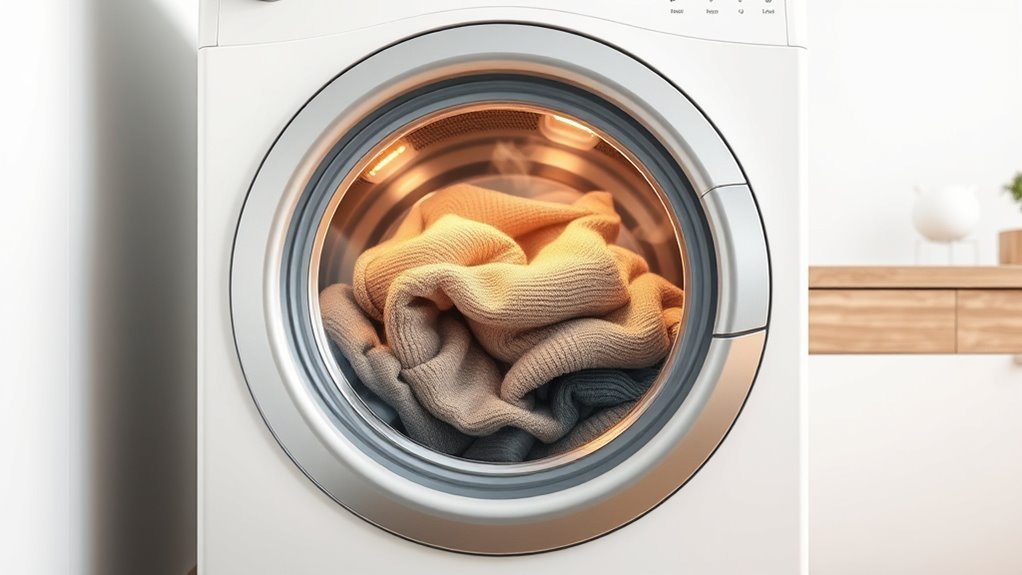
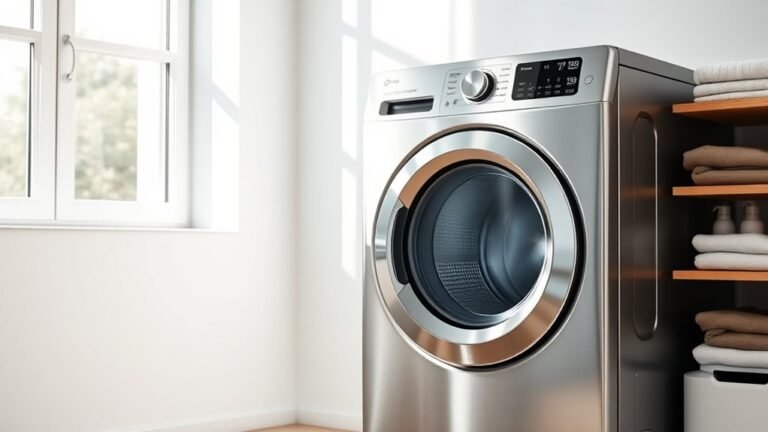
Although heat pump dryers may seem complex, they work by recycling heat to dry your clothes efficiently. Instead of using traditional energy sources like electric coils or gas flames, these dryers rely on a heat pump system that captures and reuses warm air during the drying cycle.
When you start a drying cycle, the dryer heats the air and passes it through your wet clothes. The moisture evaporates, and the damp air is then pulled into the heat pump. Here, the heat is extracted and recycled back into the drum, while the moisture is condensed and drained away.
Because the heat pump continuously reuses the same warm air, it reduces the need for extra energy. Understanding this process helps you see how a heat pump dryer combines smart technology with an innovative energy source to dry your laundry without wasting power.
How Does a Heat Pump Dryer Save Energy Compared to Traditional Models?
How exactly does a heat pump dryer save energy compared to traditional models? Unlike conventional dryers that vent hot air outside and constantly generate new heat, heat pump dryers recycle warm air within the system.
Heat pump dryers save energy by recycling warm air instead of venting heat outside like traditional models.
This process drastically reduces energy consumption by capturing and reusing heat, which supports effective energy conservation. You’ll notice this difference in your electricity bills because heat pump dryers operate at lower temperatures and maintain efficiency throughout the drying cycle.
This approach not only minimizes wasted energy but also improves cost efficiency over time. By relying on a closed-loop system, the dryer avoids expelling heated air, unlike vented models that lose heat continuously.
As a result, you use less power to achieve the same drying results, making it a smarter choice for your home and wallet. If you want an appliance focused on reducing energy use without sacrificing performance, a heat pump dryer is the way to go.
What Are the Main Benefits of Using a Heat Pump Dryer?
By recycling heat and cutting energy use, heat pump dryers offer several advantages beyond just lowering your electricity bill. You’ll enjoy impressive energy efficiency, meaning your dryer uses less power without sacrificing performance. This saves you money and helps reduce your environmental footprint.
Another benefit is the gentle drying process, which helps keep your clothes looking good over time. Heat pump dryers operate at lower temperatures, preventing damage and shrinking. Plus, they often have smart sensors that adjust drying time so you don’t waste energy on over-drying.
To keep your heat pump dryer running smoothly and efficiently, follow simple maintenance tips like regularly cleaning the lint filter and condenser. These steps ensure good airflow and heat transfer, helping your dryer perform at its best and last longer.
Are Heat Pump Dryers Gentler on Clothes and Colors?
Since heat pump dryers operate at lower temperatures than traditional dryers, they put less stress on your clothes and colors. This gentle drying process helps your garments keep their texture and shape over time. You’ll notice your clothes feel softer and last longer because the reduced heat prevents fibers from breaking down as quickly.
Color preservation is another big advantage. High heat in conventional dryers often causes colors to fade or bleed, but heat pump dryers use milder conditions. This keeps your clothes vibrant and looking fresh. So, you can enjoy bright, vivid colors wash after wash without worrying about dullness.
Which Clothes Work Best in a Heat Pump Dryer?
When it comes to heat pump dryers, it’s best to pick fabrics that can handle gentle, low heat without any fuss. Cotton, synthetics, and blends usually do just fine. It’s always a good idea to peek at your care labels first—just to double-check that your clothes are safe to dry with low heat. Following these tips helps keep your clothes looking great and in good shape for longer!
Ideal Fabric Types
Heat pump dryers work best with fabrics that can handle lower drying temperatures and longer drying times. You’ll find that cotton blends, delicate fabrics, and synthetic materials all respond well to this gentle drying method.
These fabric types benefit from the heat pump dryer’s ability to reduce energy consumption while maintaining drying efficiency. Because they operate at lower temperatures, they minimize moisture retention and help your clothes dry thoroughly without overheating.
This careful fabric care preserves colorfastness and prevents damage, making it ideal for items prone to fading or shrinking. By choosing suitable fabrics, you’ll protect your garments and enjoy the eco-friendly advantages of heat pump drying technology.
Care Label Recommendations
Choosing the right fabrics for a heat pump dryer is important, but paying attention to care labels will help you get the best results. When sorting laundry, always check the care label symbols to see if a garment is safe for tumble drying.
Look for a square with a circle inside—this indicates the item can be tumble dried. Dots inside the symbol represent heat settings: one dot means low heat, perfect for heat pump dryers.
Avoid drying clothes with a crossed-out circle, as it means no tumble drying. Following fabric care instructions prevents damage and keeps your clothes in good shape.
How Much Can You Save on Utility Bills With a Heat Pump Dryer?
Thinking about cutting down your utility bills? A heat pump dryer might just be the way to go. Unlike traditional dryers, these use way less energy, so you end up saving quite a bit each month. It’s pretty impressive how much of a difference it can make over time.
When you consider the long-term benefits, it’s clear why more folks are making the switch. Not only do you save money on your energy bills, but you’re also doing your part for the environment. So, if you’re looking for an upgrade that pays off in the long run, a heat pump dryer is definitely worth considering.
Energy Efficiency Comparison
Although traditional dryers use a lot of electricity, switching to a heat pump dryer can cut your utility bills by up to 50-60%.
This is because heat pump dryers recycle heat with advanced technology, which greatly lowers energy use compared to standard models.
When you compare efficiency ratings, heat pump dryers consistently come out on top, showing they’re better at saving energy.
They also run at lower temperatures, which helps save power and keeps your clothes in good shape.
By choosing a heat pump dryer, you’re investing in a device that maximizes energy efficiency without sacrificing how well it dries.
This means you’ll notice savings on your electricity bills and do your part to reduce environmental impact.
Average Cost Savings
Since heat pump dryers use much less energy than traditional models, they can significantly lower your utility bills. You’ll notice savings starting from your very first drying cycle.
On average, a heat pump dryer uses about 50% less electricity than conventional dryers. This could save you around $100 or more each year, depending on how often you dry clothes and your local energy rates.
These savings add up quickly if you do laundry often. Plus, since they operate at lower temperatures, heat pump dryers waste less energy, helping to lower your monthly bills.
Long-Term Financial Benefits
Beyond just saving on your energy bills upfront, a heat pump dryer offers some serious long-term financial benefits. When you do a quick cost analysis, it’s clear this appliance is a smart investment over time.
Here’s why you can save more with a heat pump dryer:
- It uses up to 50% less electricity compared to traditional dryers.
- That means smaller monthly utility bills, saving you money every month.
- Plus, less wear and tear on the machine means it lasts longer and costs less to replace.
- Many models also qualify for energy rebates or incentives, which can help lower your initial purchase price.
What Maintenance Does a Heat Pump Dryer Need?
To keep your heat pump dryer running efficiently, you’ll need to perform regular maintenance tasks. Start by cleaning the filter after every load to prevent lint buildup, which can block airflow and reduce drying performance.
Check and adjust the temperature settings monthly to avoid overheating or under-drying your clothes. Also, make sure to empty the water container after each use or verify that the drainage system is clear to prevent water overflow.
Cleaning the condenser unit every few months helps keep the heat exchange process working at its best. Lastly, inspect the dryer drum and seals every six months for signs of wear and tear to prevent energy loss.
| Maintenance Task | Frequency |
|---|---|
| Filter Cleaning | After every load |
| Temperature Settings | Monthly check |
| Water Container Empty | After every load |
| Condenser Cleaning | Every 3 months |
| Drum & Seal Inspection | Every 6 months |
Following these simple steps will help your heat pump dryer perform well and last longer.
How Much Does a Heat Pump Dryer Cost? Is It Worth It?
You might be curious about how much a heat pump dryer costs and whether it’s worth the investment. Usually, these dryers are priced higher than traditional ones, but they can really save you money on energy bills in the long run.
Price Range Overview
Heat pump dryers usually cost between $800 and $1,500, depending on the brand, capacity, and features. When thinking about price, consider factors like brand reputation and warranty terms.
Look at drum size and drying capacity, as well as advanced features like smart controls or sensors. Energy efficiency ratings are also important to keep in mind.
If you’re on a tighter budget, there are cheaper options, but they might have fewer features or smaller capacities. Still, investing in a quality heat pump dryer can be smart for reliable performance and energy savings.
Keep in mind that the initial price varies, so think about which features matter most to you before making a decision. This way, you’ll find a heat pump dryer that fits both your needs and your budget.
Value and Savings
While the upfront cost of a heat pump dryer might seem higher compared to traditional models, it often pays off through significant energy savings over time. When you do a cost analysis, you’ll find these dryers use up to 50% less energy, which noticeably cuts your electricity bills.
The lower energy impact not only benefits your wallet but also makes your laundry routine more eco-friendly. Although the initial investment is greater, the long-term savings and efficiency make it worth it—especially if you dry clothes often.
Key Features to Consider When Buying a Heat Pump Dryer
Although choosing the right dryer might seem straightforward, several key features can greatly impact your satisfaction and energy savings with a heat pump dryer. To get the most from your purchase, focus on these essentials:
Choosing the right heat pump dryer involves key features that boost satisfaction and energy savings.
- Energy Ratings: Look for high energy efficiency ratings. They indicate lower electricity use, which saves you money over time.
- Drying Capacity: Match the dryer’s capacity to your household’s laundry load. Picking the right size helps avoid multiple cycles or wasted energy.
- Drying Programs: Check for versatile drying programs that suit different fabrics and drying needs. This ensures your clothes are cared for properly.
- Maintenance Features: Easy-to-clean filters and condensers will keep your dryer running efficiently and help extend its lifespan.
How Does a Heat Pump Dryer Compare to Other Drying Options?
When you compare a heat pump dryer to traditional vented or condenser models, you’ll see big differences in energy efficiency and running costs. Heat pump dryers use advanced technology that recycles heat, cutting energy use by up to 50%. This makes them more eco-friendly and easier on your wallet over time.
Here’s a quick comparison:
| Dryer Type | Energy Efficiency | Operating Cost |
|---|---|---|
| Heat Pump Dryer | Very high, up to 50% savings | Low |
| Condenser Dryer | Moderate | Moderate |
| Vented Dryer | Low | High |
Vented dryers push hot air outside and use more energy, while condenser models trap moisture but still consume more power than heat pump dryers.
If saving energy and lowering costs matter to you, heat pump dryers offer the most advanced drying technology and value.
Frequently Asked Questions
Can a Heat Pump Dryer Be Used in Cold or Humid Climates?
Yes, you can use a heat pump dryer in cold or humid climates. You’ll enjoy its energy efficiency since it recycles heat instead of venting it outside, saving you money.
However, drying time might be a bit longer in very cold or humid conditions because the machine works harder to remove moisture. Still, it’s a great choice if you want to reduce energy bills and have reliable drying regardless of the weather.
Are Heat Pump Dryers Compatible With Smart Home Systems?
Yes, heat pump dryers are compatible with smart home systems, so you can control them remotely through your smart devices. You can start, stop, or monitor your drying cycles from your phone, making laundry much more convenient.
Plus, when they’re integrated with your smart home setup, you can optimize energy use by scheduling runs during off-peak hours or automatically adjusting settings. This helps you save energy and money while enjoying the convenience of connected appliances.
How Noisy Is a Heat Pump Dryer During Operation?
You’ll find a heat pump dryer is generally quieter than traditional models, producing minimal noise during operation.
While it may run slightly longer due to its energy efficiency, the drying time is balanced by its gentle, low-heat process.
This means you won’t be disturbed by loud sounds, making it ideal for open living spaces.
You’ll appreciate how it saves energy without sacrificing a peaceful environment.
Do Heat Pump Dryers Require Special Installation or Ventilation?
You won’t need a spaceship to install a heat pump dryer! These dryers don’t require special ventilation like traditional ones, making installation simpler and more flexible.
Just guarantee you follow the manufacturer’s installation requirements to maintain energy efficiency.
You can usually set them up in spaces without external vents, saving you from costly ductwork.
Can Heat Pump Dryers Handle Large Bedding or Bulky Items?
Yes, you can dry large bedding or bulky items in a heat pump dryer, but it might take longer than with conventional dryers. These dryers focus on energy efficiency, so they use lower temperatures and longer drying times to protect your fabrics and save energy.
To get the best results, avoid overloading the drum. Consider splitting heavy loads to ensure even drying and maintain that energy-efficient performance.
Conclusion
Choosing a heat pump dryer is like planting a sturdy tree in your garden. You invest a bit more upfront, but over time, you enjoy shade, fresh air, and savings.
It gently cares for your clothes, acting like a nurturing gardener while saving energy and extending fabric life.
By understanding its benefits and maintenance, you’re not just drying clothes—you’re cultivating efficiency and sustainability in your home.
Making the switch to a heat pump dryer transforms laundry day into a breeze and a bright spot in your routine.