How Tall Is a Kitchen Counter? The Complete Answer
Are you tired of bending or stretching awkwardly while working in your kitchen? You’re not alone—many people struggle with finding the perfect counter height for comfortable cooking and cleaning. The right height can make a huge difference in your daily routine.
A standard kitchen counter is typically 36 inches tall, which fits most cooking and prep tasks comfortably. However, your ideal height might vary depending on your height and the tasks you do.
Bakers may prefer around 34 inches, while washing dishes might be easier with a taller counter up to 38 inches.
Adjustable and custom options also help improve comfort and safety. Keep exploring to find the perfect height that suits your kitchen style and daily needs.
Key Takeaways
- Standard kitchen counters are usually 36 inches tall, making them suitable for most cooking and food prep tasks.
- Counter height can range from 30 to 42 inches, depending on specific needs or design preferences.
- Adjustable and custom-height counters help improve ergonomics and comfort by fitting individual users and tasks better.
- Having the right counter height reduces strain and lowers injury risk by promoting a natural posture while working.
- To find your ideal counter height, measure from the floor to your wrist when your arm is at a 90-degree bend.
Standard Kitchen Counter Heights
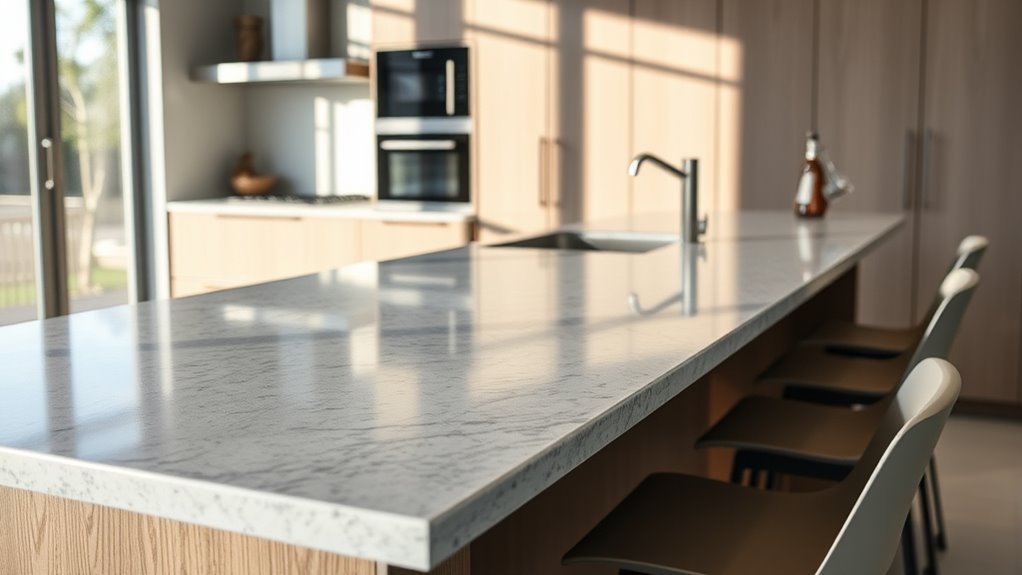
Most kitchen counters are 36 inches high, which works well for most people when cooking and prepping food. This standard height makes it comfortable and efficient to chop, mix, and prepare without straining your back.
Whether you like sleek modern styles or cozy farmhouse looks, the 36-inch height fits nicely with many design choices. It’s a versatile option that suits various kitchen aesthetics.
Countertop materials like granite, quartz, or laminate don’t change the height but do affect the look and durability of your workspace. Some custom kitchens might tweak counter heights for specific needs, but sticking with 36 inches usually ensures everything fits together smoothly.
How Kitchen Tasks Affect Kitchen Counter Height
While 36 inches suits most kitchen activities, different tasks might need adjustments in counter height to make things more comfortable and efficient. When you’re chopping vegetables or preparing meals, a standard height works fine, but if you bake often, customizing the height can really help.
For example, a slightly lower counter around 34 inches can make mixing or rolling dough easier and less tiring. On the flip side, if you spend a lot of time washing dishes or working with heavy pots, raising the counter to 38 inches can help you avoid bending over too much.
Adjusting counter height based on your main kitchen tasks ensures you work comfortably and reduce fatigue. Think about what you do most—whether prepping, cooking, or cleaning—and pick a height that fits your needs.
This personalized approach makes your kitchen more functional and enjoyable every day.
Why Kitchen Counter Height Affects Your Comfort
Because you spend a lot of time at your kitchen counter, its height directly impacts your comfort and posture. When the counter matches what feels good for you, tasks like chopping, mixing, and plating become much easier.
If the counter is too high or too low, it can cause strain in your shoulders, back, or wrists, leading to discomfort over time. This discomfort can slow you down and make cooking feel more like a chore than a pleasure.
Choosing the right counter height helps you maintain a natural stance, so you can work longer without getting tired. Since your comfort depends on your height and the tasks you do most, it’s important to consider these factors when picking or customizing your counter.
A well-fitting counter boosts both your enjoyment and productivity in the kitchen, making your cooking experience more comfortable and efficient.
How Kitchen Counter Height Impacts Ergonomics and Safety
Having the right kitchen counter height makes a big difference in how comfortably and safely you can work. When your counters are the perfect height, it helps you avoid unnecessary strain and makes cooking or prepping much easier.
On the flip side, if your counter is too high or too low, it can cause you to adopt awkward postures. Over time, this can lead to discomfort or even injury. So, it’s really worth paying attention to the height of your counters to keep things safe and ergonomic while you’re in the kitchen.
Ergonomic Benefits Of Proper Height
Adjusting your kitchen counter to the right height can really help reduce strain on your back, neck, and shoulders while you prepare meals.
When your counter supports proper ergonomic alignment, you keep a natural posture, which helps minimize muscle fatigue. This means you can work comfortably for longer periods without feeling sore.
Having the right height also makes you feel more comfortable by preventing you from hunching or stretching awkwardly. Whether you’re chopping, mixing, or washing, the ideal counter height lets you move safely and efficiently.
Safety Risks From Incorrect Height
Getting the right kitchen counter height not only boosts comfort but also prevents serious safety risks. When your counters are too high or too low, you might strain your back, shoulders, or wrists, increasing the chance of injuries.
Poor height preferences can cause you to awkwardly reach or bend, leading to slips, cuts, or dropping items. For example, chopping on a counter that’s too tall can make controlling your knife harder, raising the injury risk.
On the other hand, a too-low counter forces you to hunch over, which can cause fatigue and make you less attentive. Matching counter height to your body helps you keep proper posture, improving safety and reducing accidents.
Common Kitchen Counter Height Variations
Several common kitchen counter height variations can suit different needs and preferences. Typically, standard kitchen counters are around 36 inches tall, which balances comfort for most tasks.
However, counter height trends have introduced variations to accommodate specific uses and user heights. For example, some counters are built lower, around 30 inches, which is great for sitting tasks or accessibility.
On the other hand, taller counters, sometimes up to 42 inches, work well as bar or serving areas. These variations also reflect kitchen design styles—modern kitchens may favor sleek, taller counters, while traditional kitchens stick to standard heights for familiarity.
When planning your kitchen, think about how you’ll use the space daily and who will be using it most. Adjusting counter height can boost comfort, efficiency, and safety.
Counter Height Variations by Kitchen Design
While kitchen counter heights can vary a lot, your design style really influences what works best. Different counter styles reflect current trends and can impact height choices to make your space both functional and stylish.
For example, modern kitchens often prefer taller counters to boost workflow efficiency. Traditional setups usually stick to standard heights to keep things visually balanced.
Material choices also matter. Thicker slabs like granite or quartz can raise the overall counter height, so adjustments might be needed for ergonomic comfort. Space is another big factor—smaller kitchens may use varied counter heights to make the most of the space without feeling crowded.
Best Counter Heights for ADA Accessibility
Because accessibility is vital in kitchen design, choosing the right counter height ensures everyone can use the space comfortably. For ADA accessibility, the standard counter height is typically 34 inches or lower to accommodate wheelchair users.
This height allows enough knee clearance underneath, usually about 27 inches, so you can approach and use the counter with ease. When planning accessible designs, following these universal standards makes the kitchen functional for people with different mobility needs.
You’ll also want to keep counters no deeper than 24 inches in accessible areas so reaching items isn’t a struggle. Incorporating these guidelines helps create a kitchen that’s both practical and inclusive.
Adjustable vs. Custom Counter Heights: Which Is Right for You?
When it comes to counter heights, adjustable options are great because they give you flexibility for different tasks or if multiple people use the space. You can easily change the height to suit what you’re doing, whether it’s chopping, baking, or just chatting with family.
On the other hand, custom heights are all about tailoring the space perfectly to your needs. If you have a specific way you like to work in your kitchen, custom counters can make everything feel just right.
Think about how you use your kitchen daily—do you need versatility, or do you want a space that’s perfectly suited to your routines? Picking the right counter height can really make a difference in how comfortable and efficient your cooking and prep work feels.
Benefits of Adjustable Counters
When you want a kitchen counter that adapts to different tasks and users, adjustable counters offer unmatched flexibility. Their flexible design lets you easily change the height to suit cooking, chopping, or serving, ensuring comfort and efficiency.
Whether you’re tall, short, or working with kids, adjustable counters accommodate varied user preferences without permanent modifications. This adaptability makes them ideal for multi-user households or those who love experimenting with new kitchen setups.
Plus, adjustable counters can evolve with your needs over time, saving you from costly renovations. By choosing adjustable counters, you gain a versatile workspace that promotes ergonomic posture and reduces strain, making your kitchen more functional and enjoyable every day.
Advantages of Custom Heights
Although adjustable counters offer great flexibility, custom-height counters provide a tailored solution that fits your specific needs and kitchen style. One major benefit is designing a workspace that matches your comfort level, reducing strain during food prep or cooking.
You can optimize ergonomics by choosing a height that fits your stature or preferred tasks, making your kitchen feel natural and efficient. Custom solutions also blend aesthetics seamlessly with functionality, ensuring your counters complement your cabinetry and appliances.
Unlike adjustable units, custom heights give you a permanent, sturdy surface without mechanical parts to adjust or maintain. By opting for custom-height counters, you invest in a kitchen setup that truly reflects your lifestyle and makes everyday use easier.
Choosing Based on Kitchen Use
Deciding between adjustable and custom counter heights really depends on how you use your kitchen. If your activities vary or you have multiple people with different heights, adjustable counters give you that flexibility. They can easily adapt to each person’s needs, making meal prep more comfortable for everyone.
But if your kitchen use is pretty consistent and you have specific preferences, custom counter heights might be better. They can be tailored exactly to your ergonomic needs, helping you work more efficiently during meal prep.
Think about how often you cook, who uses the space, and if quick adjustments matter to you. Choosing between adjustable and custom heights comes down to matching your kitchen’s function with your lifestyle.
How to Measure Your Ideal Kitchen Counter Height
How do you find the perfect height for your kitchen counter? Start by thinking about your ideal measurements and what feels comfortable for you.
Measure from the floor to your wrist when your arm is bent at a 90-degree angle. This height usually makes food prep easier and more comfortable.
Remember, your kitchen counter height should match your personal needs, not just standard sizes. Everyone’s different!
Here’s a quick reference table to help guide you:
| User Height (ft/in) | Ideal Counter Height (in) | Notes |
|---|---|---|
| 5’0″ – 5’4″ | 34 | Best for shorter users |
| 5’5″ – 5’9″ | 36 | Most common height |
| 5’10” and above | 38 | Great for taller users |
Use this as a starting point, but don’t hesitate to adjust until it feels right. The most important thing is that your kitchen works for you.
Tools and Tips for Installing the Right Kitchen Counter Height
Before you start installing your kitchen counter, gather the right tools to ensure precise measurements and a smooth setup. Essential counter height tools include a tape measure, level, pencil, and a sturdy saw if you need to trim the countertop. A drill and screws will help secure the counter firmly in place.
When installing, double-check your measurements before cutting to avoid costly mistakes. Use the level often to make sure your counter stays perfectly horizontal, preventing uneven surfaces that can cause problems later. Remember to consider the thickness of your countertop material when setting the height because it affects the final working surface level.
Also, don’t rush. Take your time to align everything accurately. If you’re installing over cabinets, make sure they are firmly attached and level before placing the countertop. Using these tools and tips, you’ll achieve a professional, comfortable kitchen counter height tailored to your needs.
Frequently Asked Questions
What Materials Are Best for Durable Kitchen Counters?
You’ll want materials like granite and quartz for durable kitchen counters. Granite has the benefit of resisting heat and scratches, making it great for heavy use.
Quartz is known for its durability because it’s non-porous. That means it won’t stain or harbor bacteria and requires less maintenance.
Both materials offer long-lasting beauty and strength, so you can cook and clean without worrying about wear and tear over time.
How Do I Clean and Maintain Different Countertop Surfaces?
To clean and maintain your countertops, use gentle, non-abrasive cleaners to ensure proper care.
For surface protection, avoid harsh chemicals on materials like granite or quartz and always wipe up spills quickly.
Use cutting boards and trivets to prevent scratches and heat damage.
Regularly seal natural stone surfaces to keep them looking fresh.
Can Kitchen Counters Increase Home Resale Value?
Ever noticed how the right counter height can be a silent charm on buyers? Yes, kitchen counters can boost your home’s resale value. They’re more than just surfaces; they’re key resale factors that influence first impressions.
When you choose the right height and quality materials, you create a functional, stylish space that appeals to many. So, investing in your kitchen counters isn’t just practical. It’s smart for your home’s future worth.
What Are Popular Countertop Color Trends?
You’ll find popular countertop color trends leaning toward neutral tones like whites, grays, and soft beiges, which blend well with various kitchen styles.
Popular countertop finishes include matte, polished, and honed surfaces, giving you options for texture and shine.
Mixing countertop color combinations, such as dark countertops with light cabinetry or vice versa, creates appealing contrast.
Don’t hesitate to investigate quartz or granite with subtle veining to keep your kitchen stylish and timeless.
How Much Does Countertop Installation Typically Cost?
Think of countertop installation like planting a garden. You need to prepare the soil (your budget considerations) before you see the blooms.
Typically, you’ll spend between $1,500 and $4,000, depending on materials and labor. If you go with granite or quartz, expect higher costs, while laminate keeps things more budget-friendly.
Conclusion
Choosing the right kitchen counter height might seem simple, yet it profoundly shapes your daily comfort and safety. While standard heights offer convenience, customizing your counter can transform your kitchen into a perfectly tailored workspace.
Don’t settle for what’s typical when you can have what’s ideal. By measuring carefully and considering your unique needs, you turn an ordinary surface into an ergonomic haven.
This way, your kitchen counter height becomes not just practical but also a reflection of your personal style. Knowing the right height makes all the difference in creating a space that’s both functional and comfortable.