How to Unclog Kitchen Sink: A Step-by-Step Guide
Dealing with a clogged kitchen sink is a common frustration that many of us face. It can slow down your day and even cause unpleasant odors to linger. You’re not alone—most people struggle with this at some point and want quick, effective solutions.
If your kitchen sink is draining slowly or smells bad, start by blocking any overflow holes and using a plunger with water to create a good seal. If that doesn’t work, try pouring half a cup of baking soda followed by vinegar, let it sit for 15 minutes, then flush with hot water.
For tougher clogs, a drain snake can help. Avoid harsh chemicals unless necessary, and you can learn more ways to fix and prevent these blockages ahead.
Key Takeaways
- Use a plunger with water covering the cup, block the overflow, and plunge steadily to dislodge the clog.
- Pour half a cup of baking soda followed by half a cup of vinegar. Wait 15 minutes, then flush with hot water.
- Remove and clean the P-trap to clear trapped debris causing slow drainage or blockage.
- Avoid pouring grease, large food scraps, or coffee grounds down the drain to prevent future clogs.
- If natural methods don’t work, carefully use commercial drain cleaners following the safety instructions or call a professional plumber.
Signs Your Kitchen Sink Is Clogged
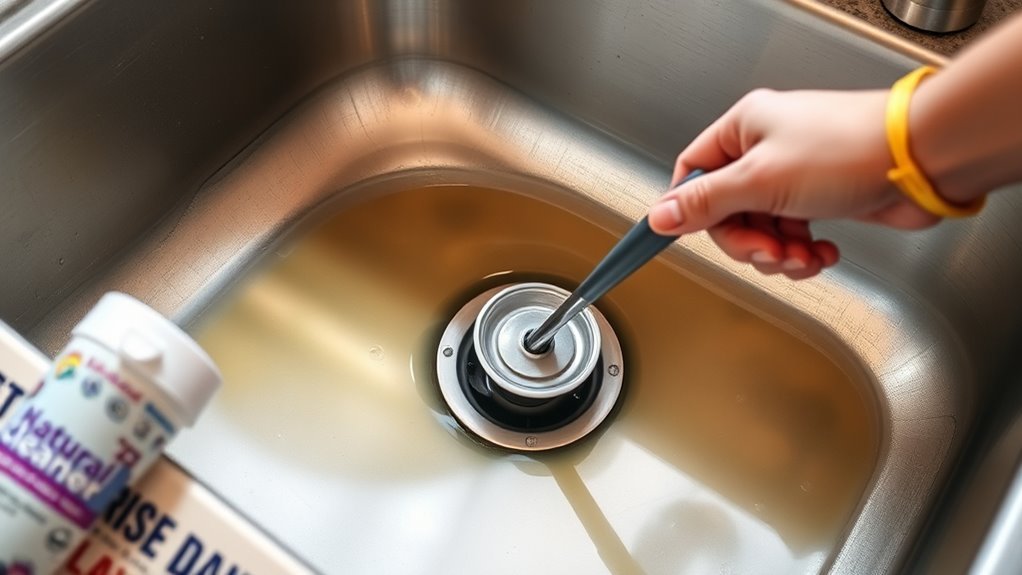
How can you tell if your kitchen sink is clogged? You’ll notice water draining slowly or pooling in the basin. Sometimes, unpleasant odors rise from the drain, signaling trapped debris. Gurgling sounds when draining also point to blockages.
These signs often come from common causes like food scraps, grease buildup, and soap residue inside the pipes. Recognizing these early helps you avoid bigger plumbing problems. Regular drain maintenance, like running hot water after use and avoiding pouring grease down the drain, can prevent clogs.
You should also clear out trapped food particles to keep water flowing smoothly. When you see any of these warning signs, it’s time to take action and fix the issue. Catching clogs early saves you from costly repairs and keeps your kitchen running smoothly.
Essential Tools and Ingredients for Kitchen Sink Clogs
A few essential tools and ingredients can make unclogging your kitchen sink much easier and more effective. Having the right items on hand not only speeds up the process but also helps maintain proper drain health and keeps your plumbing safe.
Here’s a quick guide to what you’ll need:
| Tool/Ingredient | Purpose |
|---|---|
| Plunger | Creates suction to dislodge clogs |
| Drain Snake | Reaches deep blockages |
| Baking Soda | Natural cleaner and deodorizer |
| Vinegar | Breaks down grease buildup |
| Rubber Gloves | Protects hands for safety |
Using these tools properly can help minimize damage to your pipes and avoid harsh chemicals that might harm your plumbing. Regular drain maintenance with baking soda and vinegar can prevent future clogs, saving you both time and money.
Make sure to wear gloves and follow instructions carefully to keep everything running smoothly.
What Causes Kitchen Sink Clogs
Having the right tools makes fixing a clogged kitchen sink much easier, but knowing what causes these blockages can help you prevent them. Most clogs happen because of grease buildup and food particles sticking to your pipes over time.
When you pour grease down the drain, it cools and solidifies, trapping debris and slowing water flow. Foreign objects like small utensils or bits of packaging can also get stuck, causing blockages.
Poor drain design might be part of the problem, as it can allow debris to build up in hard-to-reach spots. Pipe damage such as cracks or corrosion can create rough surfaces where clogs develop more easily.
Regular plumbing maintenance helps catch these issues early and keeps your sink draining smoothly. By keeping grease out of the drain, avoiding flushing foreign objects, and scheduling routine checks, you’ll reduce the risk of stubborn clogs and costly repairs.
How to Use a Plunger to Clear Kitchen Sink Clogs
Before you dive in, it’s a good idea to prepare the sink first. Block any overflow openings so water doesn’t escape and add enough water to cover the cup of your plunger. This way, you’ll get the best seal and more effective plunging.
When you start plunging, use steady, controlled pushes. Don’t go too hard—just enough pressure to create a good seal and build up pressure behind the clog. Keep at it with these gentle, consistent plunges.
If the clog doesn’t loosen after a few tries, don’t get discouraged. Sometimes it takes a bit more troubleshooting or trying other methods to get your sink flowing smoothly again.
Preparing The Sink
You’ll often find that properly preparing your sink makes plunging much more effective when clearing clogs. Before you start, take a moment to set the stage for success by following these simple steps:
- Remove any standing water to prevent dilution of pressure.
- Clear out debris or dishes from the sink so you can access it easily.
- Plug the overflow drain (if your sink has one) with a wet cloth to create better suction.
- Make sure your plunger is clean and free of grease to keep a good seal.
Adding these steps to your sink maintenance and cleaning routine helps prevent stubborn clogs and improves your plunging results. Taking a few minutes to prepare now will save you time and hassle later, and keep your kitchen sink flowing smoothly.
Proper Plunging Technique
Start by positioning the plunger correctly over the drain to create a tight seal. Apply steady plunger pressure, making sure no air escapes. Use a consistent plunging rhythm—push down firmly, then pull up sharply without breaking the seal. Repeat this motion 15-20 times to loosen the clog.
This technique forces water and air through the pipes, helping break up blockages. Focus on maintaining good pressure and rhythm for the best results. If water drains slowly, plunge a few more times before moving on.
Troubleshooting Persistent Clogs
Although plunging often clears minor blockages quickly, some clogs need more effort and the right technique to get rid of. If your kitchen sink stays clogged, don’t give up. Try these plumbing tips to improve your drainage.
First, make sure the sink’s overflow hole is sealed tightly to create proper suction. Next, block any nearby drains to put more pressure on the clog. Then, plunge with steady, forceful pushes instead of quick jerks.
Finally, repeat the process a few times if needed. This helps water gradually move the blockage out of the pipe. These steps can help you clear stubborn clogs more effectively.
How to Unclog Your Sink With Baking Soda and Vinegar
Mixing baking soda and vinegar creates a powerful natural reaction that breaks down grime and clears minor clogs in your kitchen sink. Start by pouring half a cup of baking soda down the drain, then add half a cup of vinegar.
The fizzing reaction helps loosen buildup, thanks to the vinegar reactions and baking soda benefits. Let it sit for 15 minutes, then flush with hot water to clear debris.
Here’s a quick comparison to understand why this combo works so well:
| Substance | Role in Cleaning | Key Benefit |
|---|---|---|
| Baking Soda | Abrasive and alkaline | Breaks down grease |
| Vinegar | Acidic and reactive | Dissolves mineral buildup |
| Reaction | Fizzing and bubbling | Dislodges clogs |
This natural method avoids harsh chemicals and keeps your pipes clear effectively.
How to Clear Blockages From the P-Trap
To clear blockages from the P-trap, start by placing a bucket underneath to catch water and debris.
Loosen the slip nuts on both ends of the trap using pliers or your hand. Carefully remove the P-trap and clear out any clogs inside.
Rinse the pipe thoroughly before putting it back in place, making sure all connections are tight to prevent leaks.
Regularly checking and cleaning the P-trap keeps your sink draining smoothly and helps avoid costly plumbing repairs.
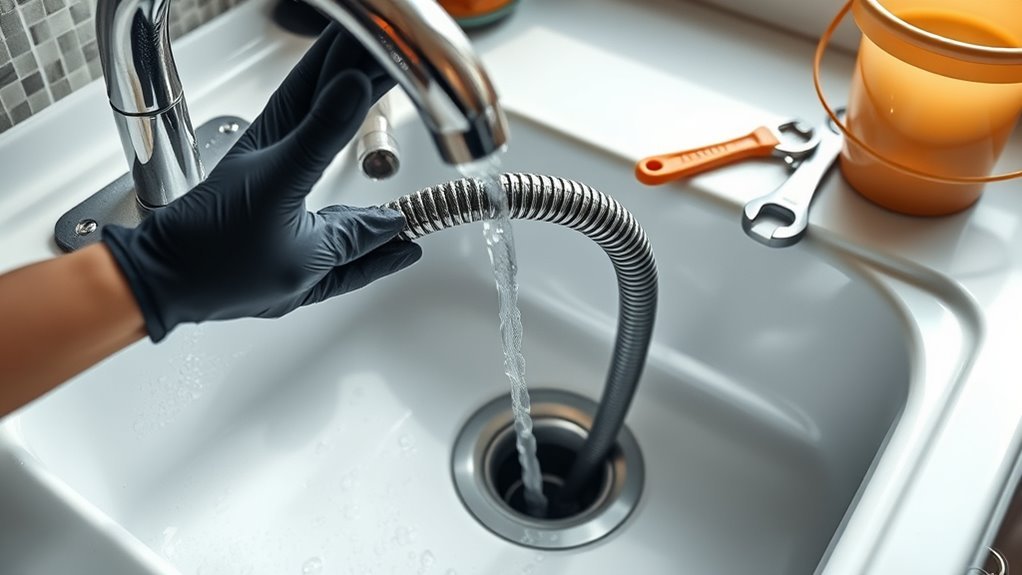
How to Use a Drain Snake for Tough Kitchen Sink Clogs
Grab a drain snake when stubborn clogs resist clearing by traditional methods. This tool offers several drain snake benefits, including reaching deep blockages that a plunger or manual removal can’t fix.
To use it effectively, first insert the coiled end into the drain slowly until you feel resistance. Then, rotate the handle clockwise to break up or hook the clog. Use gentle pushing and pulling to dislodge debris.
Avoid forcing the snake, as this can damage your pipes. Once you feel the blockage clear, carefully retract the snake while rotating to bring out debris. Finally, run hot water to flush any remaining residue.
Using a drain snake not only saves time but also prevents the need for harsh chemicals, making it a practical and eco-friendly choice for tough kitchen sink clogs.
When to Safely Use Commercial Drain Cleaners
Although natural methods and tools like drain snakes often work well, there are times when you might need to use commercial drain cleaners to tackle stubborn clogs. You should only consider these products after trying drain cleaner alternatives and when the clog persists. Always follow safety precautions to protect yourself and your plumbing.
Use commercial drain cleaners when:
- The clog is deep and won’t clear with a plunger or snake.
- You’ve ruled out mechanical blockages or physical debris.
- The product specifically suits kitchen sink drains.
- You wear gloves and eye protection, working in a well-ventilated area.
Avoid mixing different cleaners or using them repeatedly, as this can damage pipes. Commercial cleaners contain strong chemicals, so use them sparingly and only as directed. If you’re unsure, consider calling a professional to prevent harm to your plumbing or health.
How to Prevent Future Kitchen Sink Clogs
After dealing with stubborn clogs using commercial cleaners, focusing on prevention can save you time and hassle down the road. Start by adopting regular drain maintenance habits.
Avoid pouring grease, coffee grounds, and large food scraps into your sink, as these quickly build up and cause blockages. Use a strainer to catch debris before it enters the drain.
If you have a food disposal, run cold water while operating it to help flush particles through the pipes effectively. Periodically, flush your drain with a mixture of baking soda and vinegar followed by hot water to break down buildup naturally.
Also, avoid using harsh chemicals too often, as they can damage your pipes. By staying consistent with these simple steps, you’ll minimize the chances of clogs forming and keep your kitchen sink draining smoothly for the long term.
Regular attention to drain maintenance is key to preventing frustrating blockages.
Troubleshooting Stubborn Kitchen Sink Clogs
When simple fixes don’t clear your kitchen sink clog, it’s time to troubleshoot more stubborn blockages. Start by checking for deeper obstructions in the drain or trap. Use a flashlight to inspect and a plumber’s snake to reach clogs beyond the P-trap.
If that doesn’t work, consider these steps to tackle tough clogs while supporting clog prevention and plumbing maintenance:
- Remove and clean the P-trap to clear out trapped debris.
- Use a wet/dry vacuum to suck out hidden blockages.
- Apply a natural enzymatic drain cleaner to break down organic buildup.
- Inspect the vent pipes for blockages that can cause slow drainage.
Regular plumbing maintenance helps prevent clogs from becoming stubborn. By addressing tough blockages promptly and maintaining your pipes, you’ll keep your kitchen sink flowing smoothly and avoid costly repairs.
Frequently Asked Questions
Can a Clogged Kitchen Sink Cause Health Issues?
Yes, a clogged kitchen sink can cause health issues if you don’t take care of it quickly. When the drain isn’t clear, bacteria and mold can grow in the standing water or trapped food debris.
This can lead to bad odors and even make you sick. Regular plumbing maintenance helps stop these problems before they get worse.
How Do I Know if My Kitchen Sink Clog Requires a Plumber?
If your sink clog feels like a never-ending flood disaster, it’s time to call a plumber. When plungers and other plumbing tools don’t do the trick, and water backs up stubbornly or drains painfully slow, you’re past DIY.
Also, if you notice foul odors or hear gurgling sounds, don’t wait. Professional help is essential. You want to avoid a minor clog turning into a full-blown kitchen nightmare!
Are There Eco-Friendly Alternatives to Commercial Drain Cleaners?
Yes, you can use natural remedies like baking soda and vinegar to clear clogs without harsh chemicals. Pour half a cup of baking soda down the drain, then add half a cup of vinegar.
Let it fizz for 15 minutes, then flush with hot water. You can also prevent future clogs by regularly flushing your drain with boiling water and avoiding grease buildup.
These eco-friendly options work well and help protect your pipes and the environment.
Can Food Disposal Units Contribute to Sink Clogs?
Yes, food disposal units can contribute to sink clogs if you don’t practice proper food disposal maintenance. Grease, fibrous vegetables, and starchy foods often cause clogs by sticking inside pipes or the unit itself.
To prevent this, avoid putting hard bones or coffee grounds down the disposal. Make sure to run plenty of cold water while using it.
Regular cleaning helps keep your disposal and pipes clear, which reduces the risk of clogs.
How Often Should I Clean My Kitchen Sink Drain?
You should clean your kitchen sink drain every one to two months to keep it running smoothly. Regular sink maintenance tips include flushing the drain with hot water and using natural cleaners like baking soda and vinegar to break down buildup.
If you notice slow drainage, increase your drain cleaning frequency. Staying consistent helps prevent clogs and keeps your sink smelling fresh, saving you time and avoiding costly repairs down the line.
Conclusion
Just like a skilled detective solves a mystery, you can tackle your kitchen sink clog with patience and the right tools. Remember, every clog has a cause and a solution—whether it’s a simple plunger job or a baking soda and vinegar mix. Stay proactive, and you’ll keep your sink flowing smoothly, avoiding the frustration of stubborn blockages.
After all, a clear sink means a happier kitchen and a happier you. Using the right techniques to unclog your kitchen sink can save you time and money. Whether you try natural remedies or mechanical tools, addressing the clog promptly is key.
So don’t hesitate to take action. With a little effort, you can easily unclog your kitchen sink and restore its normal flow. Keeping your sink clear is essential for a stress-free and efficient kitchen experience.