Your Guide to Microwave Oven Convection Oven Combination: Choosing With Confidence
Finding the perfect appliance for quick, versatile cooking can be challenging—many people struggle with juggling multiple devices or sacrificing space. You’re not alone; choosing the right microwave-convection oven combo can make a big difference in your kitchen.
You can confidently choose a microwave-convection oven combo by understanding how both functions work together—microwaves speed up cooking while convection delivers even, crispy results. This combo saves kitchen space, offers versatile cooking options, and streamlines your meal prep.
Look for models with precise controls, preset programs, and safety features.
Keep in mind, it may take some practice to perfect your recipes and fit in your kitchen.
Exploring further will help you match the oven to your needs perfectly.
Key Takeaways
- Combination ovens blend microwave speed with convection’s even cooking for faster, high-quality meal prep.
- Choose based on your cooking habits: focus on speed with microwave or texture with convection functions.
- Look for features like precise temperature control, preset programs, safety locks, and spacious interiors with adjustable racks.
- They’re perfect for reheating crispy leftovers, baking, roasting, and cooking frozen meals efficiently while saving space in your kitchen.
- When selecting a combo microwave-convection oven, consider your kitchen layout, cleaning challenges, and the initial learning curve.
Should You Choose a Microwave, Convection, or Combo Oven?
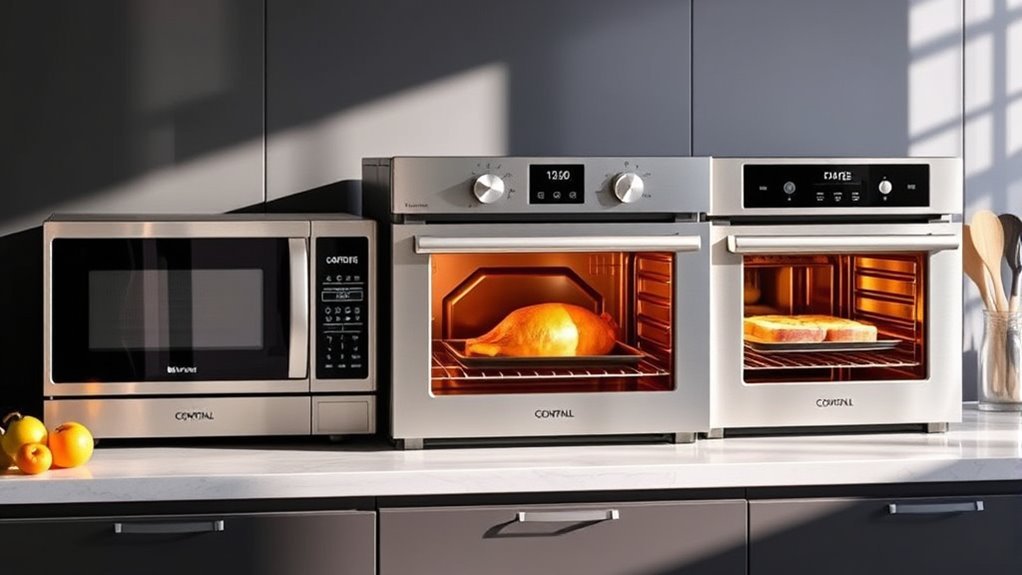
How do you decide which oven fits your kitchen best? You’ll want to weigh the microwave advantages and convection benefits to make the right choice.
Microwaves heat food quickly and efficiently, perfect for reheating meals or defrosting without drying out your food. They’re compact, easy to use, and save you time during busy days.
On the other hand, convection ovens offer even cooking by circulating hot air, giving you crispy edges and evenly baked dishes. This makes them ideal if you love roasting or baking with professional results.
If you often prepare meals that require browning or a crisp texture, convection benefits are hard to beat. Choosing between the two depends on your cooking habits.
If you prioritize speed and convenience, microwaves serve you well. But if you want better cooking quality and versatility, a convection oven might suit you better.
Either way, understanding these core strengths helps you pick what fits your kitchen and lifestyle.
How Do Microwave and Convection Ovens Work Together?
You’ll see that the microwave heats food really fast by causing water molecules inside it to vibrate, which generates heat. On the other hand, the convection oven works by circulating hot air around the food, helping it cook evenly and giving it a nice, crispy outside.
When you use both together, they actually work pretty well as a team. The microwave cuts down on cooking time, while the convection oven helps with browning and crisping the food’s exterior. Knowing how these two methods work side by side can help you make the most of your combo oven and get great results every time.
Microwave Heating Mechanism
Combining microwave and convection technologies lets you enjoy faster cooking without sacrificing that crispy, browned finish. The microwave heating mechanism uses a frequency, usually around 2.45 GHz, to excite water molecules inside your food.
This rapid molecular movement generates heat evenly and quickly, making it more efficient than traditional ovens. When you use a microwave-convection combo oven, the microwaves penetrate the food, heating it from the inside out, while the convection system handles the outside texture.
This synergy cuts down overall cooking time without sacrificing quality. You’ll notice your meals cook faster because the microwave frequency targets moisture directly, making this combo a handy tool for reheating and cooking fresh dishes.
Convection Cooking Process
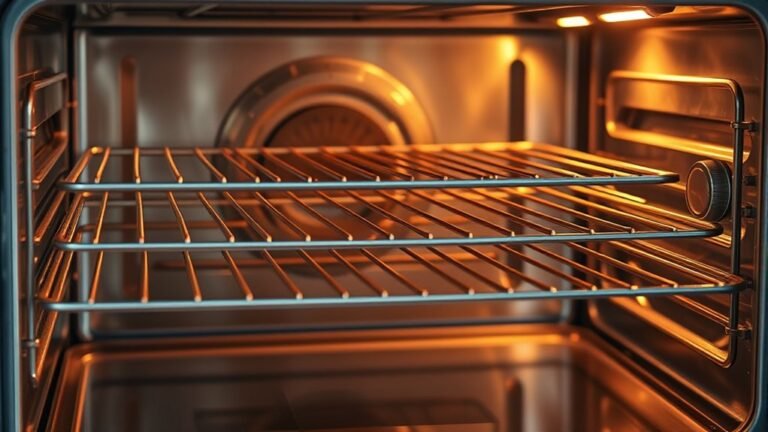
Although microwave and convection ovens use different methods to cook food, they work together seamlessly in a combination oven. When you use convection cooking, the oven creates convection heat that surrounds your food with hot air.
A built-in fan circulates this air evenly, making sure your food cooks consistently and browns nicely. This airflow helps create a crispy exterior and cooks food all the way through without drying it out.
Meanwhile, the microwave heats food quickly from the inside. When you combine both, you get the speed of microwave cooking along with the even, thorough heat of convection.
This means you can bake, roast, or crisp your meals faster and with better texture. It’s a convenient, versatile appliance that makes cooking easier and more efficient.
Benefits of Microwave-Convection Ovens
A microwave-convection oven offers several key benefits that make cooking faster, easier, and more versatile. First, it maximizes space efficiency by combining two appliances into one compact unit, freeing up valuable kitchen counter or cabinet space. This means you don’t have to sacrifice precious room for multiple devices.
Second, it boosts your cooking versatility. You can quickly heat leftovers with microwave power or bake and roast with convection heat, all in the same appliance. This flexibility lets you prepare a wide range of dishes without switching gadgets.
Plus, many models allow you to use both functions simultaneously, speeding up cook times while achieving that perfect crispy finish. With this combination, you get the convenience of microwaving and the quality results of convection baking, making meal prep more streamlined and enjoyable.
Ultimately, a microwave-convection oven adapts to your cooking style and kitchen needs, making it a smart investment for any home cook.
Best Uses for Microwave-Convection Ovens
When you want to save time without sacrificing quality, a microwave-convection oven really shines in its versatility. It combines the speed of microwave cooking with the even baking and crispiness that convection offers. It’s great for a variety of kitchen tasks.
Save time and enjoy quality cooking with the versatile microwave-convection oven’s perfect blend of speed and crispiness.
Here are some of the best ways to use your microwave-convection oven:
- Reheat leftovers quickly with microwave power while keeping their texture crispy through convection baking.
- Bake cookies, cakes, or bread with even heat distribution for perfect results.
- Cook frozen meals faster without losing flavor or moisture.
- Roast vegetables or meats evenly and get that nice golden finish.
Must-Have Features in Microwave-Convection Ovens
Choosing the right microwave-convection oven means focusing on features that boost efficiency and improve cooking results. You’ll want essential functionalities like precise temperature control and multiple cooking modes, which let you switch between microwave, convection, or a combination seamlessly.
This flexibility guarantees your meals cook uniformly and quickly. A user-friendly design is just as crucial—look for intuitive controls, clear displays, and easy-to-clean interiors that simplify your cooking experience.
Features such as preset cooking programs tailored for common dishes can save you time and guesswork. Don’t overlook safety functions like automatic shut-off and child locks, especially if you have kids at home.
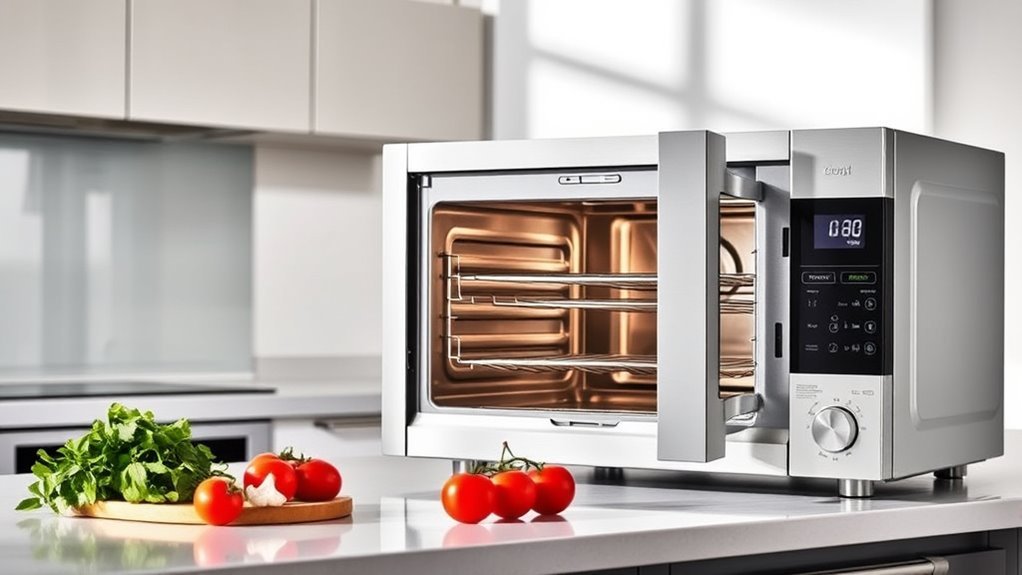
Furthermore, a spacious interior with adjustable racks can accommodate various dish sizes without compromising performance. Prioritizing these must-have features helps you get the most from your microwave-convection oven, making everyday cooking more convenient and enjoyable.
Comparing Microwave-Convection Models: Features and Performance
Although microwave-convection ovens share common features, you’ll find significant differences in performance and functionality across models. When comparing options, focus on energy efficiency to save on utility bills and cooking versatility to handle everything from baking to reheating. User reviews can reveal real-world insights about reliability and maintenance tips, helping you avoid common pitfalls.
Microwave-convection ovens vary widely—prioritize energy efficiency, versatility, and user feedback for the best choice.
Consider these factors as you compare:
- Brand comparisons to identify trusted manufacturers with strong warranties and support
- Price ranges that fit your budget without sacrificing essential features
- Size options to match your kitchen space and cooking needs
- Cooking times for various modes, ensuring quicker meal preparation
Space and Energy Considerations for Combo Ovens
Because combo ovens combine microwave and convection functions, they require careful thought about space and energy use in your kitchen. Choosing a combo oven can save you space, especially if your countertops or cabinets are limited.
Instead of juggling two appliances, a single unit offers both functions. This frees up valuable room for other kitchen essentials and makes your setup more efficient.
In terms of energy savings, combo ovens usually use less power than running a microwave and convection oven separately. They switch between modes to optimize cooking times, which cuts down on energy use.
This not only helps lower your utility bills but also reduces your environmental footprint. To get the most benefits, look for models with energy-saving features like auto shut-off and good insulation.
Drawbacks of Microwave-Convection Ovens
While microwave-convection ovens offer convenience, they come with some drawbacks you should consider before buying. Many users report limitations in cooking consistency, as these combos may not perform as evenly as separate appliances. You might also face performance issues when switching between microwave and convection modes, which can affect your meal results.
Here are key drawbacks to keep in mind:
- Size constraints: These ovens can be bulky, making installation challenging in smaller kitchens.
- Maintenance concerns: Cleaning dual-function systems often requires more effort and attention.
- Energy efficiency: Combining two functions might lead to higher energy use compared to single-purpose ovens.
- User experiences: Some owners find the learning curve steep and controls less intuitive.
Tips for Using Your Microwave-Convection Oven Like a Pro
If you want to get the most out of your microwave-convection oven, mastering a few key techniques will really improve your cooking results. Start by understanding what each function does best: use microwave mode for quick reheating and convection mode for baking or roasting.
You can also combine both modes to speed up cooking while still getting even browning. Experiment with techniques like crisping foods in convection after microwaving, or defrosting first with the microwave then finishing with convection. Always preheat the oven when using convection to get consistent results.
Make sure to use microwave-safe cookware and avoid metal when microwaving. Explore recipe ideas that work well with this combo appliance—think casseroles, roasted vegetables, and baked goods. Adjust cooking times and temperatures based on your oven’s manual, and keep an eye on your food during those first few uses.
With practice and these tips, you’ll be cooking like a pro in no time. Enjoy versatile, delicious meals with ease!
Deciding If a Microwave-Convection Combo Fits Your Kitchen
Wondering whether a microwave-convection combo is the right addition to your kitchen? Start by evaluating your kitchen layout and cooking habits. This combo appliance saves space by combining two functions in one, which is great if you have limited counter or cabinet room.
Think about how often you bake or roast compared to just reheating. If you enjoy different cooking styles, this unit might be a good fit for you.
Ask yourself these questions:
- Does your kitchen layout allow for easy access and ventilation?
- Do you need both microwave speed and convection’s even cooking?
- Are you trying to reduce appliance clutter?
- How often do you prepare meals that require convection baking or roasting?
Frequently Asked Questions
How Do I Clean and Maintain a Microwave-Convection Oven?
To clean and maintain your microwave-convection oven, use gentle cleaning techniques like wiping the interior with a damp cloth and mild detergent. Avoid abrasive cleaners to protect the surfaces.
Regularly check and clean the fan and vents to prevent buildup. This helps keep your oven running smoothly and efficiently.
For maintenance, test the door seal and replace any worn parts promptly. Doing these tips will help your oven last longer and work better.
Are Microwave-Convection Ovens Safe for Children to Use?
Like walking a tightrope, child safety with microwave-convection ovens requires balance. Yes, these ovens can be safe for children if you guarantee proper cooking supervision.
Teach them how to use the controls carefully and explain the importance of avoiding hot surfaces. Always be nearby to step in if needed.
Can I Use Metal Cookware in a Microwave-Convection Oven?
You can use metal cookware safely in the convection oven mode of your microwave-convection oven, as it offers even heating and browning benefits.
However, avoid metal in the microwave mode because it can cause sparks and damage.
Always check your oven’s manual for specific metal cookware safety guidelines.
What Warranty Options Are Typically Available for Combo Ovens?
You’ll typically find standard warranty coverage lasting one year on combo ovens, covering parts and labor for defects. Many brands also offer extended plans that let you protect your investment beyond that period, often including repair services and sometimes even replacement options.
It’s smart to check what each warranty covers specifically so you don’t get caught off guard. Extended plans give you peace of mind and can save you money on future repairs.
Do Microwave-Convection Ovens Require Special Electrical Outlets?
Microwave-convection ovens usually don’t require special electrical outlets, but it’s a good idea to check the energy requirements just to be sure. Most models run on standard 120-volt outlets, so they’re pretty easy to plug in.
However, some high-powered units might need a 240-volt outlet, so it’s worth double-checking. Always review the outlet specifications in your oven’s manual before installation to make sure everything matches up.
If your kitchen’s electrical setup isn’t compatible, you might need an electrician to install the right outlet. That way, you can use your oven safely and efficiently without any worries.
Conclusion
Choosing a microwave-convection combo oven means upgrading your kitchen efficiency. Did you know these ovens can cook meals up to 40% faster than traditional ovens? Imagine cutting your cooking time almost in half while enjoying crispy, evenly baked results.
With their versatility and time-saving power, these ovens fit perfectly in busy households like yours. So, if you want to cook smarter and save space, a microwave-convection combo oven is a confident, practical choice you won’t regret.