What Is the Temp of a Freezer? The Complete Answer
Ever wonder if your freezer is working its best? Many people struggle with keeping their food fresh and safe, especially when they’re unsure about the right temperature. You’re not alone—maintaining the perfect freezer setting can be tricky.
You should keep your freezer at 0°F (-18°C) for ideal food safety and preservation. This temperature slows bacterial growth, maintains freshness, and prevents freezer burn.
Make sure to avoid frequent door openings and never put hot food inside. Regularly check with a thermometer and keep door seals tight for consistent cold.
If your freezer’s too warm or cold, food quality suffers.
Want to learn how to keep your freezer running efficiently and when to get expert help?
Key Takeaways
- The ideal freezer temperature is 0°F (-18°C) to keep your food fresh and safe.
- Keeping it between 0°F (-18°C) and 5°F (-15°C) helps slow down bacteria and enzyme activity.
- Opening the door often or putting in hot food can cause temperature swings and make your freezer work harder.
- Regularly checking the temperature and making sure your freezer is well insulated helps keep things steady and saves energy.
- Setting the right temperature prevents spoilage, freezer burn, and helps your food last longer.
What Is the Ideal Freezer Temperature?
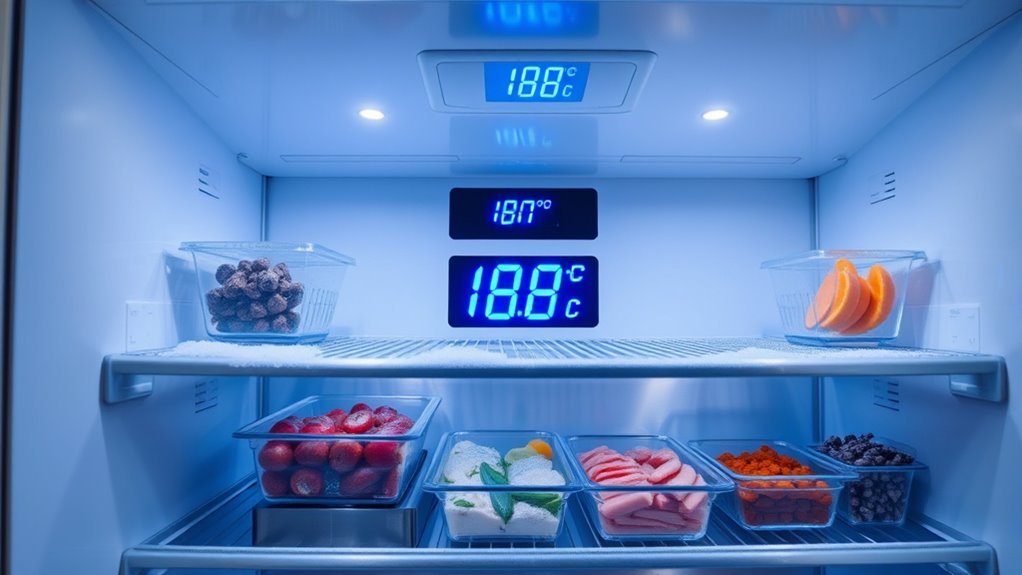
Although freezer models vary, you should set your freezer temperature to 0°F (-18°C) for ideal food preservation. This temperature slows down enzyme activity and bacterial growth, keeping your food fresh longer. Good freezer insulation is key to maintaining this temperature.
Proper insulation helps prevent temperature fluctuations that can cause thawing and refreezing, which degrade food quality. Avoid opening the door frequently or putting hot food inside, as these actions cause temperature spikes.
Modern freezers with advanced insulation use less energy and keep a steady temperature, ensuring your food stays safe and tastes better. If your freezer’s insulation is damaged or lacking, you might notice frost buildup or uneven cooling. This indicates temperature fluctuations.
Why Does Freezer Temperature Matter for Food Safety?
Keeping your freezer at the right temperature is really important for food safety. If it’s too warm, bacteria can start to grow, and that can make your food unsafe to eat. No one wants that surprise when they go to enjoy their favorite frozen treat or meal!
Plus, maintaining the proper freezer temperature helps keep your food tasting fresh and looking good. When the freezer is too warm, the quality can suffer, and the food might get freezer burn or spoil faster.
And here’s a bonus — freezing food correctly actually helps extend its shelf life. That way, you can store things longer without worrying about wasting them. It’s all about keeping your food safe, tasty, and ready to enjoy whenever you want!
Preventing Bacterial Growth
Because freezing slows down bacterial activity, keeping your freezer at the right temperature is key for food safety. When your freezer stays at or below 0°F (-18°C), bacterial growth almost stops, so your food stays safe longer.
Temperatures above this allow bacteria to multiply, which increases the risk of foodborne illnesses. That’s why it’s important to check your freezer regularly and make sure it doesn’t get too warm.
| Temperature Range | Effect on Bacterial Growth |
|---|---|
| 0°F (-18°C) or below | Bacterial growth halts |
| 0°F to 32°F (0°C) | Bacterial growth slows |
| Above 32°F (0°C) | Bacteria multiply quickly |
| Room temperature | Rapid bacterial growth |
Keep your freezer at the right temperature to prevent bacteria from growing and to keep your food safe.
Maintaining Food Quality
Freezer temperature doesn’t just stop bacteria. It also helps preserve the quality of your food. Keeping your freezer at the right temperature helps maintain food texture and flavor, so your meals stay delicious and enjoyable. If the temperature fluctuates or is too high, ice crystals can form and damage the food’s cells, ruining the texture.
To keep your food at its best, make sure to:
- Set your freezer at 0°F (-18°C) or lower
- Avoid opening the door too often to prevent warm air from getting in
- Store food in airtight packaging to prevent freezer burn
- Regularly check the temperature with a reliable freezer thermometer
Extending Shelf Life
Although freezing doesn’t kill all bacteria, it slows their growth considerably. This helps extend your food’s shelf life and keeps it safer to eat for longer periods.
Setting your freezer to the right temperature, usually 0°F (-18°C), is essential for effective food preservation. When the temperature is too high, bacteria and molds can still multiply slowly.
This reduces shelf life and increases the risk of spoilage. On the other hand, maintaining a steady, low temperature preserves texture, flavor, and nutrients while preventing freezer burn.
How to Check Your Freezer Temperature Correctly
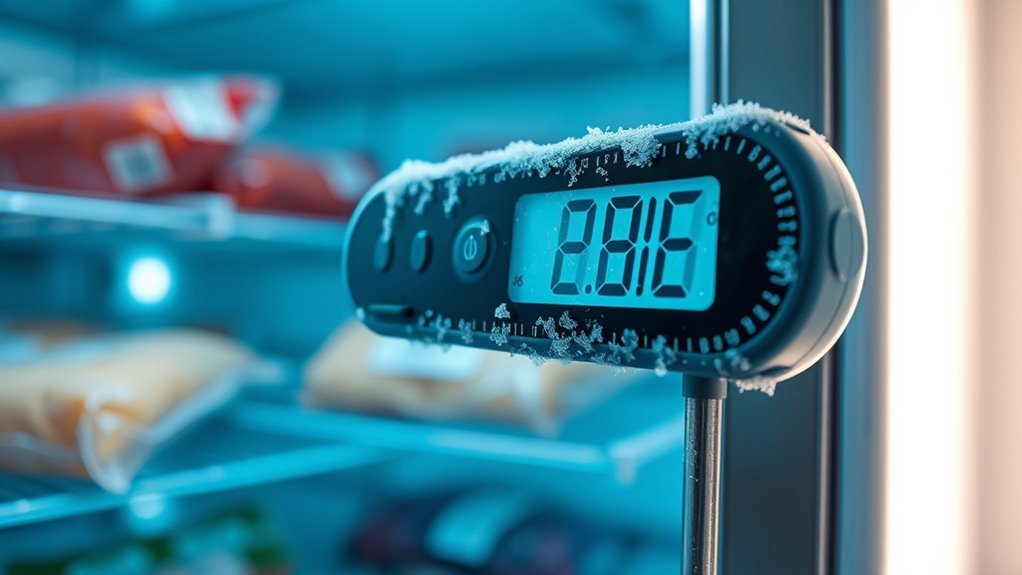
How do you make sure your freezer is at the right temperature? Proper temperature monitoring is essential for keeping your food safe and fresh. First, choose the right thermometer—digital or dial thermometers work well.
Place the thermometer in the center of the freezer, away from walls or food, to get an accurate reading. Wait a few hours before checking so the thermometer can stabilize.
Here’s how to check your freezer temperature correctly:
- Use a reliable thermometer designed for freezing temperatures.
- Position it in the middle, not near the door or vents.
- Avoid opening the freezer during measurement to prevent temperature swings.
- Check the temperature regularly, especially after power outages or moving food.
What Happens If Your Freezer Is Too Warm or Too Cold?
If your freezer is too warm, your food can spoil quicker and might not stay fresh for as long. It’s like, if it’s not cold enough, bacteria can grow more easily, which isn’t great for your food’s safety or taste.
But if you set it too cold, you might end up with freezer burn on your items, which can ruin the texture and flavor. Plus, it wastes energy because your freezer has to work harder to stay that cold all the time. So, it’s all about finding that sweet spot to keep your food safe and fresh without wasting energy.
Effects Of Warm Temperatures
When your freezer runs too warm, food can spoil faster and lose its texture and flavor. Temperature fluctuations let warm air in, causing frost to melt and refreeze. This cycle hurts your food’s quality and safety.
You might notice ice crystals melting and refreezing, which creates freezer burn. Meat and vegetables can become mushy or slimy, and bacterial growth may increase because the cold isn’t consistent. All of this shortens how long your frozen foods last.
Warm air also makes your freezer work harder, raising energy costs and risking mechanical problems. To keep your food safe and fresh, maintain a stable, cold temperature. Avoid opening the door too often, which lets warm air in. Monitoring your freezer’s temperature helps prevent these issues and keeps your food in good shape.
Risks Of Excessive Cold
Although keeping your freezer cold is essential for preserving food, setting the temperature too low can cause problems just as quickly as letting it get too warm. When your freezer is excessively cold, frost buildup becomes a major issue. This frost can coat the interior, reducing storage space and forcing your freezer to work harder to maintain the temperature.
That extra effort puts unnecessary strain on your compressor, which can shorten its lifespan. Plus, overly cold settings can cause some foods to freeze too hard, affecting their texture and quality. So, while it’s important to keep things cold, avoid turning your freezer down too much.
Aim for the ideal temperature range to prevent frost buildup and compressor strain. This way, your freezer runs efficiently, and your food stays fresh.
Energy Efficiency Concerns
Since your freezer’s temperature directly affects how much energy it uses, setting it too warm or too cold can lead to higher electricity bills and less efficiency. When it runs colder than needed, it wastes energy by overcooling.
If it’s too warm, your food might spoil faster, making you run the freezer harder to keep up, which uses more power. To save energy and keep your freezer working well, try these tips:
- Keep the temperature around 0°F (−18°C) for a good balance.
- Avoid opening the door too often to keep the temperature steady.
- Make sure the door seals are tight so cold air doesn’t leak out.
- If your freezer isn’t frost-free, defrost it regularly to stay efficient.
Getting the temperature right saves energy and keeps your freezer running smoothly.
Best Freezer Temperature Settings for Different Foods
To keep your food fresh and safe, you’ll want to set your freezer to the ideal temperature for each type of item. For most freezer food storage, the best setting is 0°F (-18°C), which stops bacterial growth and preserves quality.
Some foods benefit from slight adjustments. For example, ice cream stays best at around -10°F (-23°C) to keep it creamy without becoming too hard. Meats and poultry freeze well at 0°F, ensuring long-term freshness.
Vegetables should be blanched and frozen at 0°F to retain nutrients and texture. Fish, especially fatty kinds like salmon, freezes best at -10°F to prevent spoilage and freezer burn.
Using good freezing techniques, like airtight packaging and avoiding temperature fluctuations, helps maintain food quality across all types. By adjusting your freezer’s temperature based on these guidelines, you’ll maximize shelf life and taste for every food.
Making these small tweaks will turn your freezer into a reliable tool for preserving your groceries and keeping everything fresh longer.
How to Adjust Your Freezer Temperature Properly
To keep your food fresh and safe, it’s best to set your freezer temperature somewhere between 0°F and 5°F. First, find the temperature control dial or the digital panel—whatever your freezer has. Then, make small adjustments and keep an eye on the actual temperature using a thermometer.
It’s easy to make mistakes here, like turning the dial too cold or just guessing without checking the thermometer. So, take your time and double-check the temperature to make sure everything stays properly preserved.
Ideal Freezer Temperature Range
Setting your freezer to the best temperature range ensures your food stays fresh and safe longer. Aim for a temperature between 0°F (-18°C) and 5°F (-15°C). This range helps prevent temperature fluctuations that can lead to spoilage or freezer burn.
Using proper freezing techniques also helps preserve the texture and nutrients of your food. Keep these tips in mind: avoid opening the door too often to reduce temperature swings. Store food in airtight containers to prevent moisture loss.
Don’t overload the freezer, as proper air circulation maintains a consistent temperature. And be sure to use a freezer thermometer to check that your settings stay accurate.
Steps To Adjust Settings
Start by locating the temperature control dial or digital panel inside your freezer. If it’s a dial, you’ll usually see numbers indicating colder or warmer settings. For digital panels, you can directly set the desired temperature.
Adjust the settings gradually, and give it 24 hours between changes to allow proper temperature calibration. Using a digital thermometer inside the freezer helps verify the internal temperature accurately.
This way, you can ensure your adjustments are effective and that the freezer stays at the ideal range, around 0°F (-18°C). Avoid making drastic changes all at once, as it can disrupt the freezer’s performance.
Regularly check the temperature with a digital thermometer to make sure your freezer keeps the right temperature. This helps keep your food safe and fresh.
Common Temperature Adjustment Mistakes
Although adjusting your freezer’s temperature might seem simple, many people make common mistakes that can impact its efficiency and the safety of your food.
To keep your freezer running smoothly, it’s important to avoid temperature calibration errors and other user mistakes.
Here are some key pitfalls to watch out for:
- Changing the temperature setting without letting the freezer stabilize first.
- Relying only on the built-in thermostat instead of using a separate thermometer for accuracy.
- Adjusting the temperature too drastically at once, which can stress the appliance.
- Ignoring the manufacturer’s guidelines for your specific model.
Tips for Maintaining the Right Freezer Temperature Efficiently
To keep your freezer running effectively, check its temperature regularly and make adjustments when needed. These simple maintenance tips help preserve your food and save energy at the same time.
Avoid overloading the freezer because good air circulation keeps the temperature steady. Also, ensure the door seals tightly to prevent cold air from escaping. If you notice ice buildup, defrost the freezer manually to keep it working efficiently.
Keep the freezer away from heat sources like ovens or direct sunlight to reduce strain on the appliance. These small steps make a big difference in maintaining the right freezer temperature effortlessly.
Here’s a quick guide to help you stay on top of freezer maintenance:
| Task | Frequency | Energy Saving Benefit |
|---|---|---|
| Check temperature | Weekly | Ensures the freezer stays at the right temperature |
| Clean door seals | Monthly | Prevents cold air leaks |
| Defrost freezer | As needed | Keeps cooling power at its best |
| Avoid overfilling | Always | Promotes proper airflow |
| Keep away from heat | Always | Cuts down on energy use |
Freezer Temperature Myths You Should Ignore
Keeping your freezer at the right temperature involves more than just following maintenance tips—you also need to separate fact from fiction. Many temperature misconceptions can lead you to set your freezer incorrectly or worry unnecessarily. Let’s clear up some common freezer myths you should ignore.
First, it’s not true that colder always means better. Setting your freezer too cold wastes energy without preserving food longer. Second, you don’t need to wait 24 hours after adjusting the temperature; modern freezers stabilize much faster. Third, frost buildup doesn’t always mean your freezer is too cold. It can result from other issues like door seals.
Finally, storing hot food immediately won’t ruin your freezer. It may raise the internal temperature briefly but won’t cause lasting damage. Avoid falling for these freezer myths to keep your appliance efficient and your food safe.
Understanding these temperature misconceptions helps you maintain the perfect freezer environment effortlessly.
How Seasonal Changes Affect Your Freezer Temperature
When temperatures change with the seasons, your freezer’s performance can be affected more than you might think. In colder months, if your freezer is in an unheated area, its thermostat might not cycle properly because the surrounding air is already chilly. This can cause temperature swings inside, sometimes making it warmer than it should be.
During hot summer months, your freezer works harder to keep a steady temperature. This puts extra strain on the compressor and can increase energy use. Your freezer’s insulation plays a key role in reducing these seasonal effects.
Well-insulated freezers keep a stable internal temperature even when outside temperatures change. Poor insulation, on the other hand, lets external heat or cold influence the inside more directly. To help your freezer, avoid placing it near heat sources or in drafty, unheated spots.
Regularly monitoring your freezer’s temperature allows you to catch any seasonal fluctuations early. This helps keep your frozen food safe and fresh all year round.
When to Call a Professional for Freezer Temperature Issues
If your freezer struggles to maintain the right temperature despite your efforts to adjust settings and check seals, it’s time to call a professional. Persistent temperature fluctuations can signal deeper problems like compressor issues or faulty temperature sensors that need expert diagnosis. You might also notice excessive frost buildup or irregular cooling cycles, which affect energy efficiency and food safety.
Don’t hesitate to schedule professional maintenance checks if you experience:
- Frequent power outages impacting freezer function
- Damaged or worn door seals causing cold air leaks
- Insulation problems reducing cooling effectiveness
- Strange noises or inconsistent compressor performance
Addressing these issues early prevents costly repairs and keeps your freezer running efficiently. A technician can also verify your system handles seasonal changes without compromising temperature stability, protecting your stored food year-round.
Frequently Asked Questions
Can Freezer Temperature Affect the Texture of Ice Cream?
Yes, freezer temperature can definitely affect ice cream consistency and cause texture changes.
When your freezer is too warm, the ice cream melts slightly and refreezes, creating ice crystals that make it grainy.
If it’s too cold, the ice cream can become too hard and lose its creamy texture.
Keeping your freezer at an ideal temperature helps maintain that smooth, creamy texture you love in your ice cream every time.
How Long Can a Freezer Keep Food Frozen During a Power Outage?
During a power outage, your freezer can keep food safely frozen for about 24 to 48 hours if it’s full and the door stays closed. The fuller your freezer, the longer it maintains its cold temperature.
To protect food safety, avoid opening the door frequently, since warm air speeds up thawing. If the power’s out for longer, check for ice crystals or cold spots before deciding to refreeze or cook the food.
Does Opening the Freezer Door Frequently Impact Its Temperature?
Yes, opening your freezer door frequently definitely impacts its temperature. Each time you open it, cold air escapes and warm air rushes in, causing temperature fluctuations inside.
This makes the freezer work harder to stay cold, which can reduce its efficiency. To keep things running smoothly and your food safe, try to limit how often and how long you open the door.
Doing this helps prevent unnecessary temperature changes and keeps your freezer working properly.
What Is the Difference Between Frost-Free and Manual Defrost Freezers?
Imagine opening a freezer that never glistens with ice crystals—that’s the frost-free convenience you get. Frost-free freezers automatically prevent ice buildup by circulating air, so you don’t have to worry about manual defrost maintenance.
On the other hand, manual defrost freezers require you to periodically shut them down and chip away at ice buildup yourself. You get less convenience but often a more energy-efficient, quieter machine.
Can Freezer Temperature Affect the Lifespan of the Appliance?
Yes, freezer temperature can affect your appliance’s lifespan. Keeping your freezer at the right temperature helps prevent overworking the compressor, which reduces wear and tear.
Make sure to follow freezer maintenance tips like checking the seals, defrosting if needed, and avoiding frequent temperature changes.
Conclusion
Keeping your freezer at the right temperature is essential, especially since the FDA recommends 0°F (-18°C) to keep food safe and fresh.
Did you know that food stored above 5°F (-15°C) can spoil up to 50% faster? Regularly checking and maintaining your freezer’s temperature helps keep your food fresh and safe.
It’s not just about food—you’re also protecting your health and saving money. So, stay on top of your freezer’s temperature.
Remember, keeping your freezer at 0°F (-18°C) is key to proper food storage and safety.