How Deep Are Kitchen Base Cabinets? The Complete Answer
Feeling overwhelmed by the many choices when designing or updating your kitchen? You’re not alone. Many people struggle with figuring out the perfect cabinet depth to maximize space and functionality.
Kitchen base cabinets are typically 24 inches deep, giving you a perfect balance between workspace, storage, and appliance fit. Depth can vary from 12 to 30 inches depending on your kitchen’s layout and needs. Shallower cabinets free up space, while deeper ones hold larger items.
Measuring carefully and aligning cabinet depths improves your kitchen’s look and functionality.
If you want to optimize storage, design, and budget considerations, there’s more to investigate about cabinet depth choices and installation tips.
Key Takeaways
- Standard kitchen base cabinets are usually 24 inches deep, which offers a good balance between workspace comfort and fitting appliances.
- The depth of base cabinets can vary from 12 to 30 inches to better suit different storage needs and space constraints.
- When measuring depth, make sure to include the wall to cabinet front, the countertop overhang, and the toe kick space for accuracy.
- Choosing the right cabinet depth can improve how your kitchen feels and functions, making it easier to access storage and creating a smooth visual flow.
- Keep in mind that deeper cabinets will cost more in materials and labor, and might need plumbing or electrical adjustments to fit properly.
What Is the Standard Depth of Kitchen Base Cabinets?
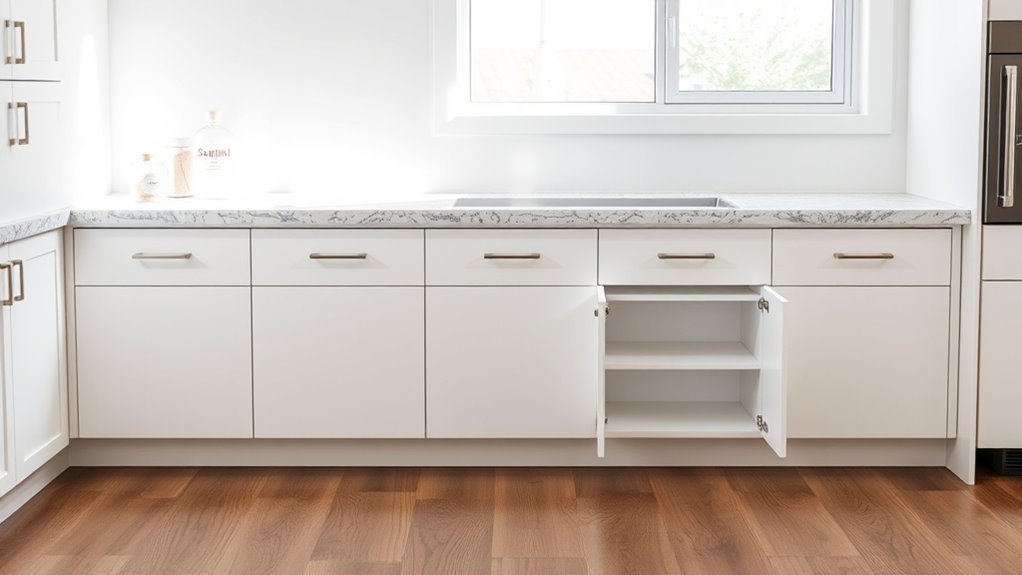
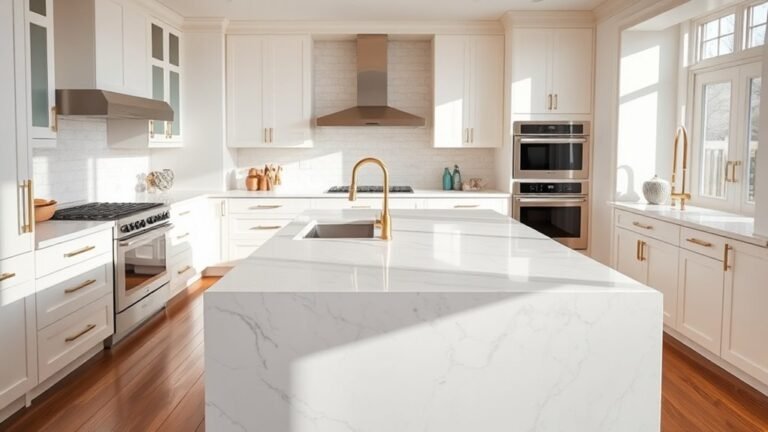
When planning your kitchen layout, knowing the standard depth of base cabinets is essential. Most base cabinets are typically around 24 inches deep.
This measurement provides enough space for countertops and appliances while keeping your workspace comfortable. Understanding these standard sizes helps you pick the right cabinet styles that match your design and functional needs.
Adequate depth ensures countertop space and appliance fit while maintaining a comfortable, functional kitchen workspace.
Whether you prefer shaker, flat-panel, or custom styles, the base cabinet depth usually stays consistent. This ensures compatibility with countertops and kitchen appliances. Some styles might offer deeper or shallower options, but sticking to the standard depth simplifies installation.
Choosing 24 inches deep for your base cabinets makes things easier. It offers plenty of room for drawers, shelves, and pull-outs without crowding your kitchen. This standard depth also helps create a streamlined, cohesive look across all your cabinets.
Common Kitchen Base Cabinet Depths and Why They Vary
Many kitchen base cabinets come in depths beyond the standard 24 inches to suit different needs and spaces. You’ll find cabinets ranging from 12 to 30 inches deep, each designed with specific purposes in mind.
Shallower cabinets can improve movement in tight kitchens, while deeper ones offer extra storage for larger items. When choosing your cabinet depth, think about how easily you can reach the back without straining.
Deeper cabinets may look sleek but can become less functional if items get lost in the back. A deeper cabinet can also create a bolder, more substantial look, which might add to your kitchen’s style.
On the other hand, shallower cabinets keep the kitchen feeling open and airy. Balancing these factors will help you pick a depth that matches your kitchen’s style and your everyday comfort.
How to Measure Kitchen Base Cabinets Correctly
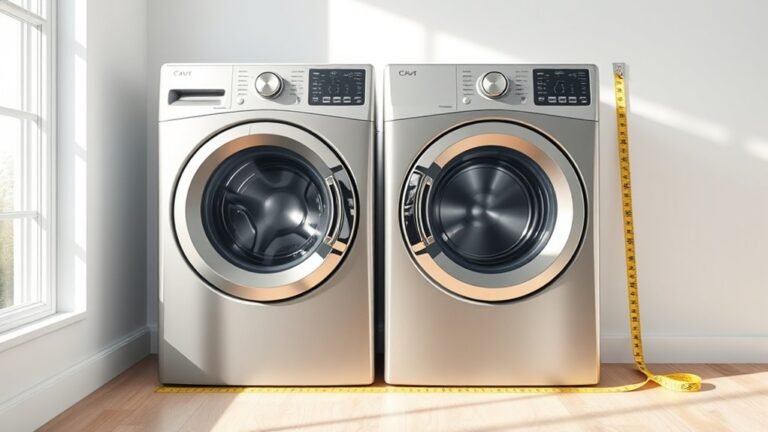
Choosing the right depth for your kitchen base cabinets is important, but knowing how to measure them correctly guarantees you get the perfect fit. Start by clearing the area where the cabinets will go and use a reliable tape measure.
Measure from the wall’s back edge to the front where the cabinet face will sit. Keep in mind depth considerations like countertop overhang and any protrusions from appliances or plumbing.
Measure from the wall’s back edge to the cabinet front, accounting for countertop overhang and appliance protrusions.
Use consistent measuring techniques: always measure in inches, record your numbers precisely, and double-check each measurement.
When measuring existing cabinets, measure from the wall to the cabinet’s front edge and note any variations in depth along the run. Also, consider the toe kick space below the cabinet, which affects overall cabinet depth.
Why Cabinet Depth Is Key to Your Kitchen Design
Because cabinet depth directly affects both functionality and aesthetics, it plays an essential role in your kitchen design. When you choose the right depth, you improve ergonomics by making sure countertops and cabinets are within comfortable reach and suit your work habits. If the depth is too deep or too shallow, it can lead to awkward movements or strain when cooking and cleaning.
Beyond comfort, cabinet depth influences how your kitchen looks. Properly scaled cabinets keep the space feeling balanced and help create clean lines, boosting the overall design. They also prevent the kitchen from feeling bulky or cramped, making the space look open and inviting. Matching cabinet depth with your layout creates a smooth flow between appliances, countertops, and storage.
How Cabinet Depth Impacts Storage Capacity and Usability
Your kitchen cabinet depth directly affects how much you can store and how easily you can access your items. Deeper cabinets give you more space for bulky cookware, while shallower ones keep essentials within easy reach.
Choosing the right depth can improve your storage solutions and make your kitchen more user-friendly. It’s all about finding the balance that works best for your habits and needs.
Here’s a quick look at how depth impacts storage and usability:
| Cabinet Depth | Storage Capacity |
|---|---|
| Standard (24 inches) | Holds most pots and pans |
| Shallow (12-15 inches) | Perfect for spices and plates |
| Deep (30+ inches) | Fits large appliances and bulk items |
Deeper cabinets increase storage but may need pull-out shelves or organizers to stay practical. Shallow cabinets are easier to access but limit what you can store.
Balancing depth with your kitchen habits ensures you get the right storage solutions and usability upgrades. This way, your kitchen fits your lifestyle perfectly.
How Kitchen Base Cabinet Depth Influences Appliance Fit and Countertops
When you adjust the depth of your kitchen base cabinets, it directly impacts how appliances fit and how your countertops align. Getting the depth right helps ensure your appliances will fit and your workspace looks balanced. Here’s what to keep in mind:
- Appliance Compatibility: Deeper cabinets can better accommodate larger appliances like built-in ovens or dishwashers. Shallower ones might limit your options or mean you need custom solutions.
- Countertop Overhang: Standard cabinet depths usually allow for a typical countertop overhang, giving extra workspace and protecting cabinet edges. Changing the depth affects how far your countertop extends beyond the cabinet face.
- Seamless Integration: Matching cabinet depth with appliances creates a flush, professional look and prevents gaps or protrusions that look awkward.
Tips for Maximizing Space in Kitchen Base Cabinets of Different Depths
Adjusting the depth of your kitchen base cabinets affects more than just appliance fit and countertop alignment. It also influences how you use the interior space.
To maximize space in shallower cabinets, try smart storage solutions like pull-out trays and tiered racks. These keep items accessible without crowding the space.
Use pull-out trays and tiered racks to keep items accessible and organized in shallower cabinets.
Vertical organization is key. Add adjustable shelves or stackable containers to make the most of the height inside. It’s a simple way to keep things tidy.
For deeper cabinets, avoid wasted space at the back by installing sliding drawers or lazy Susans. These bring items forward and make them easier to reach.
Vertical dividers work great for storing baking sheets and cutting boards upright, freeing up horizontal space. It’s a simple trick that makes a big difference.
No matter the depth, clear bins and labeled baskets help group similar items. This makes retrieval quick and keeps everything organized.
With these tips, you can turn every inch of your kitchen base cabinets into functional storage. They’ll suit your cooking style and help keep your kitchen clutter-free.
Custom Kitchen Base Cabinet Depth Options and When to Choose Them
Choosing the right depth for kitchen base cabinets can really influence both how your kitchen looks and how well it works. When standard sizes don’t quite fit your space or needs, custom sizing is a smart choice. Here are three depth options to consider:
- Maximize Storage in Small Spaces: If your kitchen is tight, go for shallower custom cabinets around 15-18 inches. This frees up walkways without losing essential storage.
- Accommodate Larger Appliances: For bigger cookware or built-in appliances, deeper cabinets of 24-30 inches give you the extra space you need, making your kitchen more functional.
- Enhance Work Surface Area: Custom depths can extend your countertop, giving you more prep space. This is especially helpful if standard 24-inch cabinets feel cramped.
How to Match Base Cabinet Depth With Upper Cabinets
When you’re trying to match your base cabinets with your upper cabinets, it’s important to look at the standard depths. This way, everything will look balanced and put together. When the cabinet profiles align, your kitchen will have a seamless look and be much more functional. Let’s take a closer look at how these measurements work together to create a cohesive kitchen design.
Standard Depth Comparisons
Matching the depth of your base cabinets with your upper cabinets creates a balanced and functional kitchen layout. Standard base cabinets are usually 24 inches deep, while upper cabinets are typically 12 inches deep. Here’s how to compare them effectively:
- Base Cabinets (24 inches): These provide plenty of storage and support the countertop overhang, which usually extends 1 to 1.5 inches beyond the cabinet face.
- Upper Cabinets (12 inches): Designed for easy access and organization, they keep your frequently used items within reach without making the space feel crowded.
- Shallow or Deeper Options: Some kitchens opt for 15-inch deep upper cabinets for more storage, or 21-inch base cabinets to accommodate larger appliances.
Knowing these standard depths helps you keep a cohesive look and make the most of your kitchen’s functionality.
Aligning Cabinet Profiles
When planning your kitchen layout, aligning the depth of your base cabinets with your upper cabinets helps create a seamless and polished look. Make sure to measure both cabinet depths carefully before installing.
Typically, base cabinets are around 24 inches deep, while upper cabinets range from 12 to 15 inches. To keep the profile consistent, consider using shallower base cabinets or deeper upper cabinets to match their fronts exactly.
This creates a unified visual flow and prevents awkward overhangs or recessed fronts. Remember, profile consistency isn’t just about looks; it also affects countertop space and storage accessibility.
How Kitchen Base Cabinet Depth Affects Your Remodeling Budget
When you go for deeper kitchen base cabinets, you’ll notice that the material costs tend to go up because you’re using more wood and hardware. It’s pretty straightforward — bigger cabinets mean more supplies.
Plus, you’ll probably see the labor and installation fees increase too. Since larger cabinets take a bit more time and effort to fit perfectly, your contractor might charge a bit extra.
Getting a handle on these factors early on can really help you plan your remodeling budget more accurately and avoid surprises along the way.
Material Costs Variation
Although deeper kitchen base cabinets offer more storage, they also increase material costs quite a bit. When you pick a deeper cabinet, several cost factors come into play, especially related to material types and how much you need.
Here’s what you should think about:
- Material Types – Solid wood, plywood, or MDF all come at different prices. Deeper cabinets need more of these materials, which pushes up the cost.
- Hardware and Accessories – Larger cabinet boxes need longer slides, bigger hinges, and more shelving, which all add to the expenses.
- Waste and Overages – With more material used, there’s a higher chance of waste during cutting, leading to extra purchases.
Labor and Installation Impact
Increasing the depth of your kitchen base cabinets doesn’t just raise material costs. It also impacts labor and installation expenses.
Deeper cabinets require more precise installation techniques, which can extend the time professionals spend on your project. This added complexity often leads to higher labor costs because installers need to carefully align cabinets for stability and a proper fit, especially in tight spaces.
Modifications to plumbing or electrical setups may also be necessary to accommodate the extra depth, further affecting labor costs. If you opt for custom or semi-custom cabinets with unusual depths, expect installers to spend extra time adjusting and securing them.
Being aware of these factors helps you budget accurately and avoid surprises during your kitchen remodel.
Frequently Asked Questions
What Materials Are Best for Durable Kitchen Base Cabinets?
You’ll want to choose wood options like hardwood or plywood for your kitchen base cabinets because they offer excellent strength and durability. Plywood, in particular, resists warping and holds screws well, making it a great choice.
Metal finishes add a sleek, modern look while providing extra durability against scratches and moisture. If you’re on a budget, laminate is a solid option because it resists stains and scratches, helping your cabinets stay looking great for years.
How Often Should Kitchen Base Cabinets Be Cleaned or Maintained?
Think of your kitchen base cabinets like a car—regular care keeps them running smoothly. You should clean them weekly to prevent grime buildup and perform a deeper maintenance check every few months.
Wiping spills promptly and checking hinges or handles can prevent damage and keep everything working properly. These simple steps help your cabinets stay durable and look fresh.
Sticking to a consistent cleaning schedule will save you from costly repairs down the line. Your cabinets will thank you for the extra care!
Can Kitchen Base Cabinets Be Installed on Uneven Floors?
Yes, you can install kitchen base cabinets on uneven floors by using cabinet leveling techniques. You’ll want to use shims or adjustable feet to make sure the cabinets sit perfectly level.
This not only prevents structural issues but also keeps your doors and drawers functioning smoothly.
Exploring flooring solutions like self-leveling compounds before installation can make the process easier and improve overall stability.
Don’t skip these steps if you want a professional-looking finish.
What Are the Best Cabinet Styles for Small Kitchens?
You might be surprised, but the best cabinet styles for small kitchens are minimalist designs and open shelving. They save space and keep your kitchen feeling airy and uncluttered.
Minimalist cabinets with sleek lines help reduce visual bulk, making the space feel bigger. Open shelving allows you to access essentials quickly and showcase stylish dishware.
Together, these styles create a functional, inviting space that maximizes every inch without overwhelming your kitchen’s limited footprint.
How Do Cabinet Door Types Affect Kitchen Functionality?
Cabinet door styles really affect how your kitchen works by changing how easy it is to get to things, clean, and use space efficiently.
For example, flat-panel doors look sleek and are super easy to wipe down, while shaker doors add some texture but might trap dirt a little more.
Sliding doors are great for saving space in smaller kitchens, making your setup more functional.
Picking the right door style helps you move around your kitchen smoothly and keep it looking good with less effort, so think about how you use your space before making a choice.
Conclusion
Think of your kitchen base cabinets as the foundation of a sturdy bridge. How deep they are supports the entire flow of your space. Choosing the right depth ensures your kitchen works smoothly, just like a well-built bridge carries traffic without a hitch.
By understanding and measuring cabinet depth carefully, you’re not just picking storage. You’re creating a kitchen that balances style, function, and comfort. This makes your cooking space feel natural and easy to use.
When it comes to kitchen base cabinets, depth matters. It impacts how everything fits and how comfortable you feel working in your kitchen. Getting it right helps turn your space into a place where everything falls perfectly into place.