How Did Hell’s Kitchen Get Its Name? The Complete Answer
Are you curious about the story behind Hell’s Kitchen’s fiery name? Many people struggle with understanding how this gritty neighborhood got its nickname. If you’ve ever wondered about its tough history, you’re not alone.
You’ll find Hell’s Kitchen got its fiery name from decades of harsh living conditions and fierce immigrant rivalries shaping a gritty urban neighborhood. Tough tenements, rowdy street gangs, and fierce survival struggles made the area feel like a boiling “kitchen.”
Over time, despite crime and hardship, strong community resilience defined the neighborhood’s spirit. Its name captures that unyielding toughness and working-class roots.
Stick around, and you’ll uncover how this tough past evolved into today’s vibrant neighborhood.
Key Takeaways
- Hell’s Kitchen got its name from the neighborhood’s tough living conditions and rowdy street gangs in early urban tenements.
- The “kitchen” metaphor reflects the area’s intense daily hustle and the “heat” of both cooking and street life.
- Immigrant laborers, mainly Irish and German, faced harsh conditions, which added to the neighborhood’s gritty reputation.
- Crime and rival immigrant gangs helped shape Hell’s Kitchen’s identity as a tough, resilient working-class area.
- Despite gentrification, the name sticks around as a symbol of the neighborhood’s fierce spirit and historic struggles.
Where Is Hell’s Kitchen?
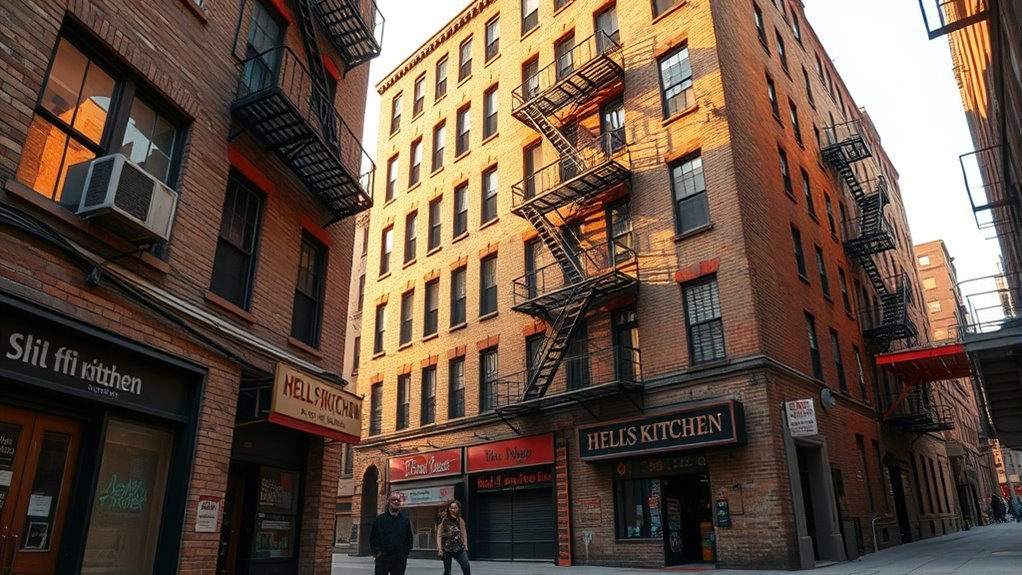
Although Hell’s Kitchen might sound like a fiery place, it’s actually a lively neighborhood in Midtown Manhattan, New York City. It’s located between 34th Street to the south and 59th Street to the north, from Eighth Avenue to the Hudson River.
Over the years, this area has grown and changed a lot. It went from being gritty and rough to a vibrant, sought-after community. Today, you can see how urban development has transformed it into a dynamic neighborhood.
Once gritty and rough, the area has evolved into a vibrant, dynamic community through urban development.
When you walk through Hell’s Kitchen now, you’ll notice a mix of old tenements and sleek new buildings. This blend tells a story of resilience and change, blending history with modern city life.
The neighborhood’s energy is contagious. Its diverse residents and constantly evolving landscape give Hell’s Kitchen a unique character that’s truly part of New York City’s fabric.
Hell’s Kitchen Before It Had a Name: Early History and Development
Before Hell’s Kitchen got its notorious name, the area was a patchwork of farmland, marshes, and small settlements where hardworking immigrants began to build their lives. During the early settlement period, you’d find mostly Irish and German immigrants carving out homes and workplaces amid the rough landscape. They brought with them strong communities that laid the foundation for neighborhood growth.
As more people arrived, the area transformed from scattered farms into a bustling urban neighborhood. You’d see tenements rising alongside small businesses, creating a tightly knit community despite the tough living conditions. The neighborhood’s growth was fueled by its proximity to the docks and industrial jobs, attracting waves of workers seeking opportunity.
This phase set the stage for Hell’s Kitchen’s unique character before it earned the name that would later capture its gritty reputation. Understanding this early history helps you appreciate how the neighborhood evolved from humble beginnings into the vibrant area it is today.
Popular Stories Behind Hell’s Kitchen’s Name
The tough conditions and close quarters of Hell’s Kitchen’s early days gave rise to colorful tales explaining its fiery name. When you look into these popular stories, you’ll find urban legends filled with grit and tenacity, showing the neighborhood’s resilience during tough times.
Historical anecdotes often mention rowdy tenements and fierce street gangs, reflecting the demographic shifts and neighborhood changes that shaped Hell’s Kitchen’s identity. These stories highlight the neighborhood’s rough-and-tumble past.
You’ll also see the name’s cultural significance echoed in art, from gritty novels to bold murals that capture the area’s spirit. The culinary evolution plays a subtle role too—the kitchen metaphor nods to both the heat of cooking and the hustle of daily life here.
Understanding these stories helps you see that Hell’s Kitchen isn’t just a name. It’s a symbol of endurance and change, embodying the layered history and vibrant energy that continue to define this iconic New York neighborhood.
When Did “Hell’s Kitchen” First Appear in Print?
Ever wonder when “Hell’s Kitchen” first showed up in print? It’s a pretty interesting question because looking back at its earliest mentions can really tell us a lot about how the name made its way into the public eye.
If you dive into old newspapers and archives, you’ll find clues about when and how the term started to gain popularity. It’s like piecing together a little history lesson on a neighborhood’s colorful past!
Earliest Documented Usage
Although many stories surround the origin of Hell’s Kitchen, you won’t find the name in print until the late 19th century. The earliest documented usage appears in historical references from the 1880s, marking the start of its official recognition.
Before that, various early terms described the area, but “Hell’s Kitchen” stuck because of its vivid imagery and local reputation. It really became part of the neighborhood’s identity during this time.
Here’s a quick look at some of the earliest mentions:
| Year | Source Type | Reference Detail |
|---|---|---|
| 1881 | Police Report | Mention of “Hell’s Kitchen” |
| 1885 | City Directory | Neighborhood listed by name |
| 1887 | Local Memoir | Description of rough conditions |
| 1889 | Historical Text | First print appearance noted |
| 1890 | Urban Chronicle | Term used in everyday speech |
These early references help solidify the term’s place in New York’s lexicon.
Historical Newspaper Mentions
Early mentions of Hell’s Kitchen in police reports and city directories set the stage for its appearance in newspapers. When you look into newspaper archives from the late 19th and early 20th centuries, you’ll see how the term gradually entered public discourse.
These early print mentions gave readers a historical context, often highlighting the neighborhood’s rough reputation and dense immigrant population. Newspapers used “Hell’s Kitchen” to describe crime scenes, labor strikes, and community events.
This helped solidify the name in popular culture. By tracing these references, you get a clearer picture of how the nickname evolved from informal slang to an established label.
How Immigrant Communities Influenced Hell’s Kitchen’s Name
You know, a lot of the tough labor conditions that immigrants went through really shaped what Hell’s Kitchen became known for. It wasn’t just about the work itself, but also the daily struggles and hardships they faced trying to make a life here.
And then, there were all these clashes and conflicts between different communities in the area, which only made things more intense. These cultural clashes added to the neighborhood’s rough reputation, making it feel even more formidable.
Immigrant Labor Conditions
When immigrant communities settled in Hell’s Kitchen, they brought not only their cultures but also grueling labor conditions that shaped the neighborhood’s tough reputation. You’d see workers enduring long hours in factories, docks, and construction sites, often with little regard for labor rights.
The cramped living conditions they faced only added to the neighborhood’s rough image. Families squeezed into overcrowded tenements, struggling to make ends meet while fighting for basic protections.
You can’t separate Hell’s Kitchen’s name from this reality. Its tough, unforgiving environment was a direct result of these hardships. Understanding this helps you see how the fight for labor rights and better living conditions became central to the community’s identity and, ultimately, to Hell’s Kitchen’s infamous nickname.
Cultural Clashes and Conflicts
The harsh labor conditions in Hell’s Kitchen didn’t just affect workers. They also fueled tensions between different immigrant groups competing for jobs and resources.
You’d see how cultural identity became both a source of pride and conflict. Communities fought to protect their traditions while trying to survive.
These clashes shaped the neighborhood’s reputation, with rivalries sometimes sparking violence. But underneath that, you’d also find remarkable community resilience.
Immigrant groups built tight-knit networks and created support systems to help them get through hardships. This mix of pride and struggle gave Hell’s Kitchen its fiery nickname.
It’s a place where diverse identities clashed but also coexisted. Understanding these conflicts helps you see why Hell’s Kitchen earned its name and how its immigrant roots defined its character.
Was a Hell’s Kitchen Bar Behind Its Fiery Name?
Although many stories try to explain Hell’s Kitchen’s fiery name, one popular theory points to a bar that once stood in the neighborhood. The Hell’s Kitchen Bar was infamous for its rowdy atmosphere, heated brawls, and constant tension among patrons.
You can imagine the place as a tinderbox, where tempers flared quickly, giving rise to the neighborhood’s Fiery Origins. Locals and visitors alike would witness fights breaking out over trivial matters, making the bar a symbol of the area’s volatile spirit.
If you investigate this theory, you’ll see how the Hell’s Kitchen Bar came to represent the neighborhood’s rough-and-tumble reputation. The bar wasn’t just a watering hole; it embodied the fiery clashes and raw energy that defined Hell’s Kitchen during that time.
Gangs and Crime’s Impact on Hell’s Kitchen
Because gangs and crime thrived in Hell’s Kitchen for decades, the neighborhood earned a fierce reputation that shaped its identity. You’d see how gang violence and organized crime intertwined with the poverty effects that gripped the area, creating deep social struggles.
This criminal reputation wasn’t just a label. It reflected the harsh historical context residents faced daily. Yet, despite these challenges, the community’s resilience stood strong.
The criminal reputation revealed the harsh realities residents faced, yet their resilience remained unbroken.
You can see how Hell’s Kitchen’s cultural identity emerged from this mix of hardship and solidarity. Over time, urban development sparked a neighborhood transformation that gradually reduced crime’s grip.
Still, understanding this past helps you appreciate how Hell’s Kitchen evolved from a crime-ridden area to a vibrant community. Recognizing the role of gangs and crime in its history shows how social struggles and resilience together shaped its unique character today.
What Hell’s Kitchen’s Name Tells Us About Its Tough History
You’ll notice that the name “Hell’s Kitchen” gives us a pretty good idea of what the neighborhood was like in the past. It’s a name that hints at its rough and tumble history, filled with crime and poverty. Back in the day, this area was known for being a tough place to live, especially for immigrant communities trying to get by.
That name really tells a story about how difficult life was there, and how people had to struggle just to survive. By understanding where the name comes from, you can get a better sense of the neighborhood’s gritty, resilient past.
Origins of The Name
When you hear the name Hell’s Kitchen, you might picture a gritty, unforgiving neighborhood. That’s exactly what its name reflects. The origins of the name reveal its raw, unpolished past and show how it grew alongside the city.
Understanding how the name evolved helps you get why it’s so culturally significant. It originally described the tough conditions and intense atmosphere residents faced every day.
Here’s what the name tells you: It symbolized a place where life was harsh and survival was a daily challenge. The name also captured the fierce spirit and resilience of the community.
Finally, it marked a district known for its working-class roots and unyielding character. The name Hell’s Kitchen tells a vivid story of endurance and identity.
Historical Crime and Poverty
The name Hell’s Kitchen doesn’t just hint at a tough spirit. It points to a history marked by crime and poverty that shaped the neighborhood’s identity. When you walk these streets, you’re stepping through a past riddled with a crime legacy and relentless poverty cycles. This harsh reality forged a community known for grit and survival rather than comfort.
| Aspect | Impact |
|---|---|
| Crime Legacy | Frequent gang violence |
| Poverty Cycles | Generational economic hardship |
| Law Enforcement | Struggled to control crime |
| Social Services | Limited resources |
| Community Response | Self-reliance and toughness |
Understanding this helps you appreciate Hell’s Kitchen beyond its name. It reveals a deep-rooted history of endurance.
Immigrant Community Struggles
Although Hell’s Kitchen got its name from its tough conditions, its immigrant residents faced unique struggles that shaped the neighborhood’s character. You’ll see how their resilience built a strong community despite everything.
Life here wasn’t easy. Overcrowded tenements packed families into cramped, unsanitary spaces. Limited job opportunities meant many had to take low-paying, dangerous work.
Discrimination and prejudice kept immigrants isolated, but they leaned on each other for support. The name “Hell’s Kitchen” isn’t just about crime or poverty; it’s a story of people fighting hardship with incredible strength.
This resilience laid the foundation for a vibrant, close-knit community that still defines Hell’s Kitchen today. Understanding these struggles helps you appreciate its tough but proud heritage.
How Hell’s Kitchen’s Image Has Changed Over Time
As you explore Hell’s Kitchen today, you’ll notice a neighborhood that’s far from the gritty reputation it once had. The gentrification impact is clear: old tenements have been replaced by modern apartments, and trendy restaurants now line the streets.
This shift has attracted a diverse crowd, transforming the area into a vibrant and desirable place to live. You’ll also see how the nightlife evolution has played a major role in changing perceptions.
Once known for rough bars, Hell’s Kitchen now boasts chic lounges, theaters, and live music venues that draw locals and tourists alike. While remnants of its tough past remain, the neighborhood’s image has softened considerably.
You can experience a blend of historical grit and contemporary flair, making Hell’s Kitchen a unique part of New York City that continues to evolve without losing its character.
Why Hell’s Kitchen’s Fiery Name Still Matters Today
Even with its modern charm, Hell’s Kitchen hasn’t lost the fiery spirit that gave it its name. The neighborhood’s cultural significance remains strong, shaping its identity and community pride. The fiery name still matters today because it reflects more than just history; it captures the resilience and grit that define the area.
Here’s why Hell’s Kitchen’s name holds modern meaning you should know:
- It symbolizes the neighborhood’s toughness, reminding you of the hardworking people who built it.
- The name attracts visitors seeking authentic experiences, blending past struggles with today’s vibrant arts and food scenes.
- It fuels local storytelling, helping you connect with the area’s unique heritage and ongoing transformation.
Frequently Asked Questions
What Are the Main Attractions in Hell’s Kitchen Today?
In Hell’s Kitchen today, you’ll find a lively nightlife scene with trendy bars and clubs that keep the energy high.
You can enjoy a variety of cultural events, like theater performances and art exhibitions, which show off the neighborhood’s creative vibe.
Don’t miss the diverse dining options, from cozy cafes to upscale restaurants.
Plus, the nearby Hudson River Park offers great outdoor activities.
You’ll never run out of things to explore in Hell’s Kitchen!
How Has Real Estate in Hell’s Kitchen Evolved Recently?
You’ve seen gentrification trends reshape Hell’s Kitchen recently, boosting housing prices considerably. Developers have transformed old industrial spaces into luxury apartments, attracting young professionals and artists.
As a result, affordable housing has declined, and the neighborhood feels more upscale. If you’re looking to invest or move here, expect a competitive market with steadily rising costs.
This growth reflects Hell’s Kitchen’s increasing appeal and ongoing urban renewal.
What Public Transportation Serves Hell’s Kitchen?
You’ve got subway access so convenient it feels like the trains come every second, serving Hell’s Kitchen through several nearby lines like the A, C, E, and 1 trains.
Plus, bus routes crisscross the neighborhood, making it easy for you to hop on and off wherever you need.
Whether you’re commuting or exploring, the public transportation options here keep you connected to the rest of Manhattan and beyond without any hassle.
Are There Famous Movies Filmed in Hell’s Kitchen?
Yes, you’ll find plenty of famous movies filmed in Hell’s Kitchen, making it a hotspot for film locations. Its gritty streets and iconic skyline have attracted filmmakers for decades.
When you explore the area, you might even spot some celebrities, as actors and crews often work on location here.
What Dining Options Are Popular in Hell’s Kitchen Now?
You’ll find Hell’s Kitchen buzzing with dining options that follow the latest gastronomic trends while honoring local favorites. From trendy fusion spots serving inventive dishes to cozy diners offering classic comfort food, there’s something for every craving.
Don’t miss the vibrant food markets and rooftop bars where chefs experiment with bold flavors. You’ll enjoy a mix of casual eats and upscale dining, making Hell’s Kitchen a hotspot for food lovers seeking variety and quality.
Conclusion
Now that you’ve uncovered Hell’s Kitchen’s fierce past, you might wonder why its fiery name still sticks with us. It’s more than just a label; it’s a story of survival, grit, and transformation.
Behind that tough exterior, there’s a neighborhood that refused to be tamed. It’s a place that has fought through adversity and kept evolving.
So next time you hear “Hell’s Kitchen,” remember it’s a name that challenges you to look deeper. Beyond the flames, it’s a legacy that’s still burning bright.