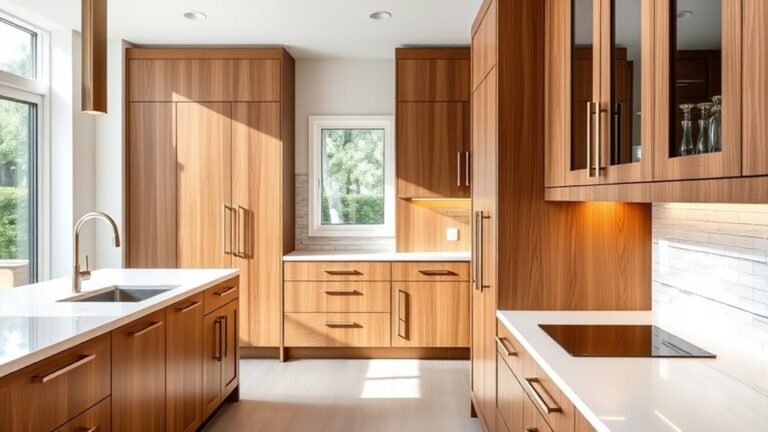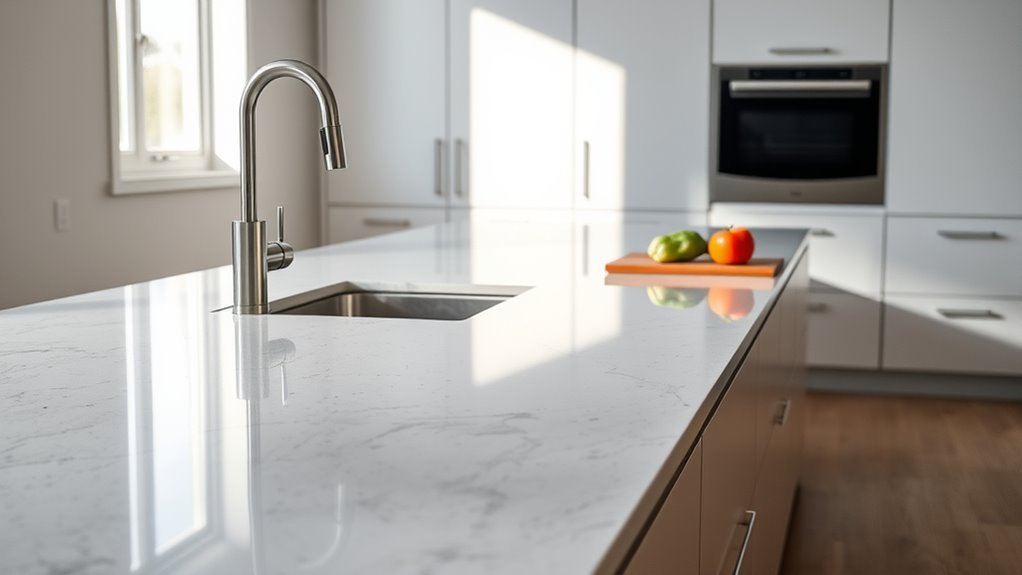
How Deep Is a Kitchen Counter? The Complete Answer
Feeling stuck trying to figure out the perfect kitchen counter depth? You’re not alone—many people struggle with choosing the right size that balances workspace, comfort, and style.
Luckily, understanding standard measurements can make this decision much easier.
A kitchen counter is typically 24 inches deep, giving you enough workspace without causing strain or awkward stretching. Islands often measure deeper, around 36 inches, to provide extra prep area.
Depending on your style or kitchen size, counters can range from 20 to over 30 inches deep.
Adjusting depth can boost comfort, fit appliances better, and affect storage options.
If you want to fine-tune your kitchen’s design and function, there’s plenty more to investigate.
Key Takeaways
- Standard kitchen counter depth is usually about 24 inches from the wall to the front edge. This size balances workspace and how easy it is to reach everything.
- Kitchen islands tend to have deeper counters, around 36 inches, to give you more prep space and room for seating.
- Counter depth can change based on style. Traditional counters are about 24 inches, farmhouse styles often go over 30 inches, and modern designs are closer to 20 inches.
- To measure counter depth, use a tape measure from the wall to the front edge. Clear the area first and check at different points for accuracy.
- Custom depths can make your kitchen more functional. They help fit specific appliances, improve ergonomics, and match your style preferences.
Why Kitchen Counter Depth Matters
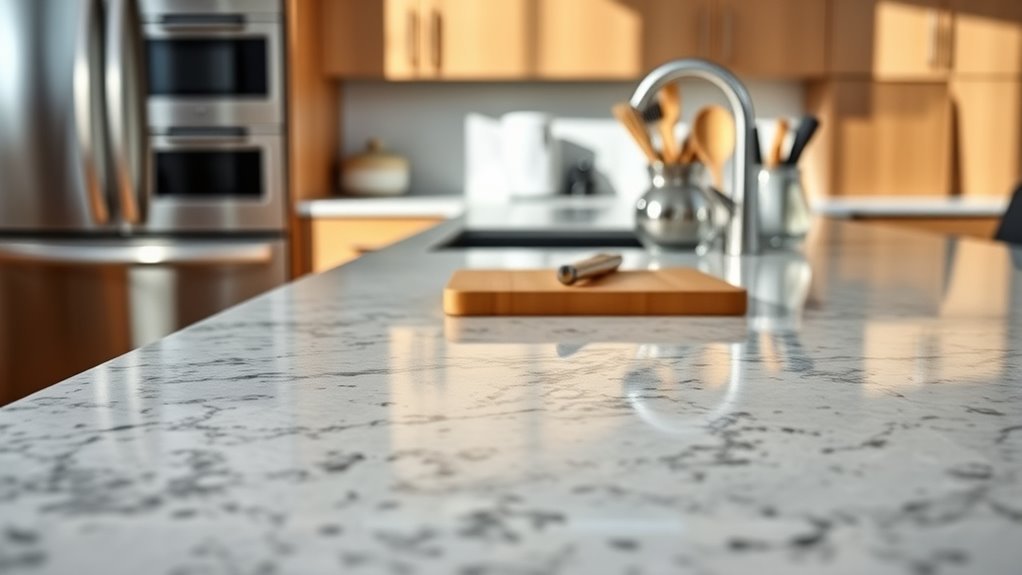
Although kitchen counter depth might seem like a minor detail, it plays an essential role in your cooking and workspace efficiency. When you consider counter ergonomics, the right depth makes sure you can comfortably reach all areas without straining your back or arms.
If the counter is too deep, you might find yourself stretching awkwardly, which can lead to discomfort during meal prep. On the other hand, a shallow counter limits your workspace, making it harder to organize ingredients and utensils effectively.
Design aesthetics also depend heavily on counter depth. The depth influences how your kitchen looks and feels, balancing functionality with style.
A well-proportioned counter complements your cabinets and appliances, creating a cohesive and inviting environment. By choosing the right depth, you improve both usability and visual appeal, making your cooking experience smoother and more enjoyable.
What Is the Standard Kitchen Counter Depth?
Choosing the right kitchen counter depth really affects how comfortable and efficient your workspace feels. The standard kitchen counter depth is usually 24 inches from the wall to the front edge.
This size strikes a good balance, giving you plenty of prep space while keeping everything within easy reach. It also supports ergonomic design principles that help reduce strain during cooking.
Plus, a 24-inch depth lets you choose from various materials like granite or laminate without overwhelming your kitchen layout.
Here’s a quick reference table for standard kitchen counter depths:
| Counter Type | Standard Depth (inches) |
|---|---|
| Base Counters | 24 |
| Kitchen Islands | 36 |
| Wall Counters | 24 |
Base and wall counters typically stay at 24 inches for the perfect reach, while islands are often deeper to maximize workspace.
Sticking to these standards helps you create a functional and comfortable kitchen that fits your needs.
Kitchen Counter Depth Variations by Style
Kitchen counter depths can vary a lot depending on your chosen style, so understanding these differences helps you customize your space. Counter style variations affect both how it looks and how it functions, so thinking about both aesthetics and practicality ensures your kitchen works and looks great.
Here are some common styles and their typical depths:
- Traditional counters are usually around 24 inches deep, giving a good balance between workspace and room for appliances.
- Custom or farmhouse styles might go beyond 30 inches, providing more surface area for prep and adding rustic charm.
- Modern minimalist counters are often slimmer, sometimes just 20 inches, creating sleek lines and an open feel without losing utility.
Typical Kitchen Island Counter Depths
Typical kitchen island counter depths usually range between 36 and 48 inches, giving you plenty of room for cooking, dining, and socializing. When planning your kitchen design, choosing the right depth helps ensure your island fits your space and lifestyle perfectly.
A deeper island, closer to 48 inches, offers extra prep space and comfortably fits seating. On the other hand, a shallower one around 36 inches keeps the area open and makes it easier to move around.
Your choice of counter materials also affects the depth. Heavy materials like granite or quartz might need sturdier support if your island is on the deeper side. Lighter materials give you more flexibility without structural concerns.
Counter material choice impacts island depth; heavier surfaces require stronger support for deeper designs.
Think about how you’ll use your island—whether for meal prep, dining, or gathering. This will help you pick the ideal depth that balances function and style in your kitchen.
How Kitchen Counter Depth Affects Appliance Fit
When you’re picking out appliances for your kitchen, it’s a good idea to think about the standard counter depth. Usually, counters are around 24 inches deep, which lines up pretty well with many common appliances. So, if your counters are around that depth, you’ll likely find appliances that fit just right without any hassle.
But if your counters are deeper or shallower than that, you’ll want to keep that in mind. You might need to look for appliances designed to fit those particular dimensions to ensure everything looks good and functions properly in your space.
Standard Counter Depths
Most standard counters measure about 24 inches deep, which impacts how well your appliances fit into the space. This depth provides a comfortable working surface and fits common appliance sizes.
When choosing your counter materials and considering design trends, keep in mind how the depth affects both usability and appearance. It’s an important detail for your kitchen layout.
Counter materials like granite or quartz usually come in slabs cut to fit the 24-inch depth, making installation easier. This consistency simplifies your planning.
Popular design trends often favor this depth for a sleek, uniform look across kitchens. It helps create a cohesive style that feels polished and balanced.
A standard depth also ensures appliances like microwaves and mixers sit flush and don’t overhang. This maintains a smooth, functional kitchen flow.
Understanding these points helps you plan a kitchen that’s both stylish and practical.
Appliance Size Compatibility
Two feet of counter depth is key in how your appliances fit and work in your kitchen. When choosing appliances, it’s important to check their dimensions carefully to make sure they fit on your countertop without crowding it.
Proper clearance is especially important for appliances like microwaves, mixers, or coffee machines, which need space to operate safely and easily. If your counter is too shallow, bigger appliances might overhang or block your workspace, making things less efficient.
On the other hand, deeper counters give you more surface area but can limit the types of appliances that sit flush with the cabinets. By matching your appliance sizes with your counter depth and ensuring enough clearance, you’ll create a kitchen that’s both functional and harmonious.
This setup supports your cooking and prep activities effortlessly, making your kitchen a more enjoyable space to work in.
How to Measure Your Existing Kitchen Counter Depth
Want to get an accurate idea of your kitchen counter depth? It’s pretty straightforward—just grab a tape measure and a notepad to keep track of your numbers.
Start by placing the tape measure against the wall behind your counter, then extend it out to the front edge of the counter. Take your time to get a steady, accurate reading. Once you have the measurement, jot it down in your notepad so you won’t forget it.
That’s it! Just a few simple steps, and you’ll know exactly how deep your counter is before making any tweaks or shopping for new fixtures.
Tools Needed
Measuring your kitchen counter depth only needs a few simple tools you probably already have at home. To get accurate results, gather reliable measuring tools made for this purpose. While depth gauges give more precision, basic tools usually work fine for most kitchens.
Counter templates can be helpful if you’re planning to replace or customize your countertop later. Installation equipment isn’t necessary for measuring but can be useful if you need to make adjustments afterward.
Here are the essential tools you’ll need:
- Tape measure or ruler for straightforward depth measuring
- Depth gauges for more precise measurements
- Counter templates if you plan to design or replace your counter
With these tools ready, you’ll be set to measure your existing kitchen counter depth accurately.
Measuring Step-by-Step
Gathering your tools is just the start. You’ll want to approach measuring your kitchen counter depth methodically for the best results.
First, clear the counter of any items to get an accurate reading. Use a tape measure, place the end firmly against the wall or backsplash, then extend it straight to the front edge of the countertop.
Record this measurement carefully, as it reflects the total depth, which can vary depending on counter materials and design.
To check your kitchen’s ergonomics, measure at multiple points along the counter, especially if it has curves or overhangs.
This helps ensure your measurements match how you use the space daily.
Finally, compare your numbers to standard depths to see if adjustments or replacements are needed for your kitchen.
When Should You Customize Kitchen Counter Depth?
Three main reasons might prompt you to customize your kitchen counter depth: maximizing space in a small kitchen, accommodating specific appliances, or enhancing ergonomic comfort. Opting for a custom counter depth lets you tailor your kitchen to fit your unique needs, ensuring both style and function.
Consider customizing your counter depth if you want to:
- Save space in a compact kitchen by choosing shallower countertops that don’t overwhelm the room.
- Fit appliances with unusual sizes, like oversized sinks or cooktops, that standard depths can’t properly accommodate.
- Improve ergonomic design by adjusting countertop depth to your height and reach, reducing strain during food prep.
Tips for Choosing the Right Kitchen Counter Depth
Choosing the right kitchen counter depth can really change how your kitchen works and how much you enjoy cooking. Start by looking at your layout and how much workspace you need.
If you often prep big meals, a deeper counter might be better, but just make sure it doesn’t make things hard to reach. Think about the materials too—things like granite or quartz can cost more if you cover a larger area.
Balancing durability and cost is important. Also, consider your height when choosing the depth. Your counter should be comfortable to work at without causing strain.
Most standard depths go well with typical counter heights, but if you’re taller or shorter, customizing both can help keep things comfortable.
Finally, check where your appliances and sink will go. Make sure the depth you choose lets you work smoothly without clutter.
How Kitchen Counter Depth Influences Storage and Cabinets
When you’re deciding between standard and custom kitchen counter depths, it really impacts how much storage space you’ll have. If you go for a deeper counter, you might end up with bigger cabinets, which is great for storage. But on the flip side, those extra inches can make accessing things a bit trickier.
On the other hand, sticking with standard depths keeps things straightforward and predictable. It makes planning your cabinets easier and ensures everything stays accessible without much fuss. So, thinking about how you use your kitchen and how much storage you need can help you find that perfect balance between space and convenience.
Standard Versus Custom Depth
Standard kitchen counters are usually 24 inches deep, but you can go beyond that with custom depths that suit your needs.
Choosing between standard and custom design affects your kitchen’s functionality and comfort.
Custom depths can make your workspace more ergonomic by allowing you to work more comfortably.
This is especially helpful if you’re taller or like having extra prep space.
When deciding, consider how much counter space you need for cooking and appliances.
Think about your height and reach to find what feels natural for you.
Also, look at your overall kitchen layout to see if a deeper counter fits without crowding.
Custom counters give you more flexibility, making your kitchen truly your own.
Keep ergonomic factors in mind to create a workspace that’s efficient and comfortable every day.
Impact on Cabinet Storage
Although deeper kitchen counters provide more workspace, they can significantly impact your cabinet storage options. When you opt for a larger counter depth, the cabinets below might need to be adjusted in size or layout to keep storage efficient.
This change can also affect your counter height, as well as the depth of drawers and shelves. You might even need custom cabinetry to make everything fit and work well together.
| Counter Depth | Cabinet Depth | Storage Impact |
|---|---|---|
| 24 inches | 24 inches | Standard storage |
| 25 inches | 24 inches | Slight overhang |
| 27 inches | 25 inches | Reduced back storage |
| 30 inches | 28 inches | Custom cabinet needed |
| 36 inches | 34 inches | Maximized workspace |
Choosing carefully helps balance workspace and storage efficiently.
Non-Standard Kitchen Counter Depths: Trends and Tips
If you want your kitchen to stand out, exploring non-standard counter depths can offer both style and functionality. Adjusting counter depth lets you customize your workspace for better ergonomics and efficiency while boosting aesthetic appeal.
By varying depths, you can create multi-use surfaces that match your style and complement modern materials. This flexibility helps you design a space that’s both beautiful and practical.
Varying counter depths creates versatile surfaces that blend style with modern materials for a beautiful, practical kitchen.
When considering non-standard depths, keep these tips in mind:
- Balance counter height with depth for comfortable use and a functional layout.
- Choose materials that are durable and stylish across different depths.
- Use deeper counters for prep areas and shallower ones for serving or display zones.
This approach enhances your kitchen’s look and usability. Customizing depth supports various tasks and personal comfort, making your space more inviting.
You’ll enjoy a kitchen that reflects your lifestyle while embracing innovative design trends. Overall, it ensures your kitchen is both stunning and highly functional.
Frequently Asked Questions
What Materials Are Best for Kitchen Countertops?
You’ll want to choose materials that combine style and function. Granite offers natural beauty and heat resistance, making it great for busy kitchens.
Quartz is durable and resists scratches and stains, so it stays looking good with less effort. Both options are long-lasting, but if you want low maintenance, quartz is the way to go.
Ultimately, your choice depends on your kitchen’s look and how much upkeep you’re comfortable with.
How Do I Maintain and Clean Kitchen Counters?
Keeping your kitchen counters sparkling is like giving your space a daily fresh start. For effective countertop care, wipe surfaces with a gentle cleaner and a soft cloth to avoid scratches. Use mild soap and warm water for routine cleaning, and avoid harsh chemicals that could damage the finish.
Can I Install Kitchen Counters Myself?
Yes, you can handle a DIY installation of kitchen counters if you’re comfortable with basic tools and measurements. Just make sure you have the right countertop tools like a jigsaw, clamps, and a level to get a precise fit.
Take your time cutting and securing the counters, and double-check your measurements before you start. If you run into trouble, watching tutorial videos can help you feel more confident throughout the process.
What Is the Average Cost of Kitchen Countertop Installation?
You can expect average countertop pricing for installation to range between $2,000 and $5,000, depending on several factors. These include the material you choose, the size of your kitchen, and any extra customization or prep work needed.
Keep in mind that granite or quartz will cost more than laminate. By understanding these factors, you can better budget and plan your kitchen countertop installation without surprises.
How Long Do Kitchen Countertops Typically Last?
Think of your kitchen countertop lifespan like a well-loved book—it can last 15 to 30 years or more if you treat it right. Factors affecting durability include the material you pick, how often you use it, and how well you maintain it.
Just like that book, a granite countertop can endure daily wear, while laminate might show its age sooner. So, keep up with care, and your countertop will serve you well for decades.
Conclusion
When planning your kitchen, keep in mind that the standard counter depth is about 25 inches, but customizing it can make a big difference.
Studies show that 70% of homeowners prefer slightly deeper counters for extra prep space and comfort.
By choosing the right depth, you’ll improve both functionality and style. This ensures appliances fit perfectly and storage works for you.
Don’t settle—tailor your kitchen counters to fit your unique needs and cooking habits. When considering how deep a kitchen counter is, remember that the typical depth is around 25 inches.
But customizing the depth can really enhance your space and make it more practical for everyday use.