How Much to Redo a Kitchen? The Complete Answer
Are you dreaming of a kitchen makeover but feeling overwhelmed by how much it might cost? You’re not alone—many people struggle with figuring out the true expense of a kitchen redo. Understanding the costs can help you plan better and avoid surprises along the way.
Redoing your kitchen typically costs between $10,000 and $50,000 or more, depending on your kitchen’s size, materials, labor, and any layout changes.
Choosing cabinets, countertops, and flooring greatly impacts your budget, while structural work can increase costs. Skilled labor is essential for plumbing and electrical tasks, so factor that in.
Setting a clear budget and prioritizing upgrades helps avoid overspending.
Keep exploring to understand how these choices affect your remodel.
Key Takeaways
- Kitchen remodel costs usually range from $10,000 to over $50,000, depending on the size, materials, and complexity.
- Your choice of materials, especially cabinets and countertops, has a big impact on the overall budget. Cabinets alone can make up to 30% of the total cost.
- Labor costs for plumbing, electrical work, and installation are significant and vary based on how complex the project is and the skills needed.
- Changing the layout or doing structural work like moving plumbing or adding support beams can really drive up the costs.
- To keep things on track, prioritize your must-haves, set aside a contingency fund of 10-15%, and keep an eye on your expenses to avoid surprises.
How Much Does a Kitchen Remodel Typically Cost?
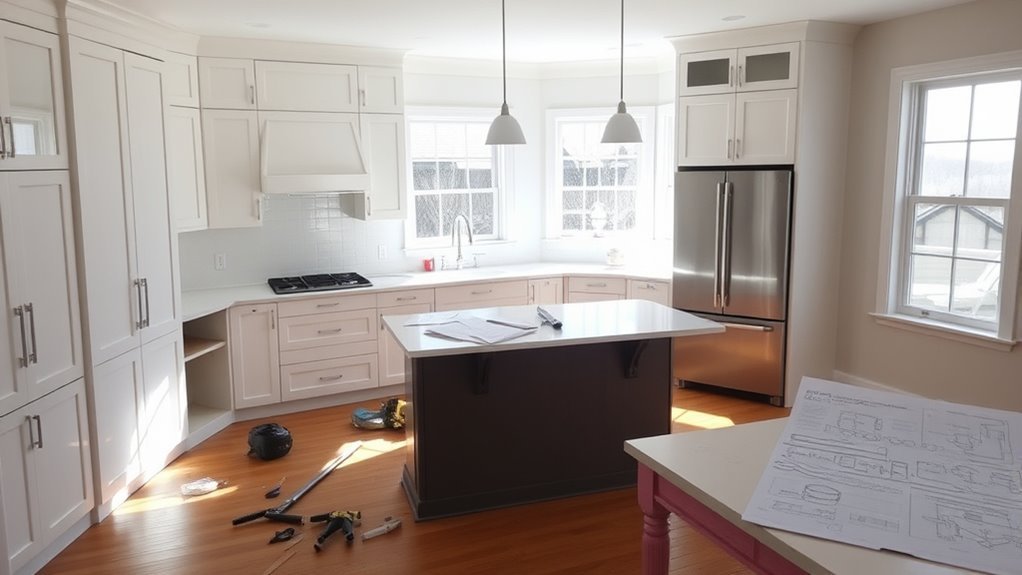
A typical kitchen remodel can cost anywhere from $10,000 to $50,000 or more, depending on the scope and materials you choose. When planning your project, keep in mind that your kitchen size plays a major role in the overall cost. Larger kitchens require more materials and labor, which can quickly raise expenses.
On the other hand, smaller kitchens usually mean a more manageable budget. Your renovation timeline also affects the cost. If you rush the project or need a quick turnaround, you might pay extra for expedited work or materials.
Conversely, a well-planned, extended timeline allows you to shop around for deals and schedule contractors efficiently, potentially saving money.
Key Factors Affecting Kitchen Remodel Costs
When you’re thinking about remodeling your kitchen, the materials you pick can really affect how much you end up spending. Some materials are more expensive than others, so it’s worth considering what fits your budget and style.
Labor and installation costs are also a big part of the overall price. These fees can vary depending on the complexity of the work and the professionals you hire. So, it’s a good idea to factor these into your planning to get a clearer picture of your total budget.
Material Choices Impact
Although your kitchen’s design is important, the materials you pick really impact the overall cost of your remodel.
When choosing materials, think about both durability and style. High-end options like granite or hardwood are attractive and last a long time but come with a higher price.
Lighter options like laminate or engineered materials are easier on the budget but may not be as durable or visually striking.
| Material Type | Cost Impact |
|---|---|
| Granite/Quartz | High, durable, stylish |
| Laminate | Low, less durable |
| Hardwood | Medium-high, classic look |
Making smart choices helps you stay within your budget while creating the kitchen vibe you want.
Labor and Installation
Material choices set the tone and price of your kitchen remodel, but labor and installation often take up a big part of the budget.
Labor costs vary based on where you live, how complex the project is, and the experience of the contractors you hire.
Skilled labor is essential for tasks like plumbing, electrical work, and cabinetry installation, so cutting corners here can lead to costly mistakes.
Installation fees also add up, especially if you have custom cabinets or high-end appliances that need specialized fitting.
Get detailed quotes that separate labor costs from materials so you know exactly where your money is going.
How Kitchen Layout Changes Impact Your Budget
When you decide to change your kitchen layout, keep in mind that structural adjustments can really add up in cost. Moving things like plumbing and electrical systems isn’t always straightforward, and it can make the whole project more complicated and expensive.
Getting a handle on these factors beforehand can help you set a realistic budget. That way, you’ll be better prepared to create the kitchen you want without any surprises along the way.
Cost of Structural Changes
Changing your kitchen layout can really impact your renovation budget, especially if it involves structural changes. Moving walls or removing load-bearing elements means you need to keep the building’s safety in mind.
A professional assessment is essential to ensure that any modifications won’t compromise the structure. Design choices also matter—adding support beams or reinforcements can add to your costs.
Unexpected issues often come up during structural work, so it’s smart to have a contingency fund set aside. Understanding how these changes affect safety and design helps you plan your budget better and avoid surprises during your remodel.
Impact on Plumbing And Electrical
Because plumbing and electrical systems are often fixed in place, shifting your kitchen layout can quickly increase costs. When you move sinks, dishwashers, or refrigerators, expect plumbing upgrades to reroute water lines and drains. These changes require permits and skilled labor, which add to your budget.
Likewise, electrical adjustments come into play if you relocate outlets, lighting, or appliances. Upgrading wiring to meet current codes or adding circuits can also drive up expenses. If you stick close to existing plumbing and electrical points, you’ll save money and avoid complex work.
But if your new design demands significant repositioning, prepare for higher costs tied to rerouting and system upgrades. Understanding these impacts helps you plan a realistic budget and avoid surprises.
How Cabinet Choices Influence Your Kitchen Remodel Budget
Cabinet choices can make or break your kitchen remodel budget, often accounting for up to 30% of the total cost. When picking cabinet styles, you’ll find that modern, shaker, or traditional designs each come at different price points.
The cabinet materials you select—like solid wood, plywood, or MDF—also heavily influence costs. To save money, consider budget-friendly options such as stock or semi-custom cabinets instead of fully custom ones, which can quickly increase expenses.
Don’t overlook storage solutions; built-in organizers or pull-out shelves add convenience but may raise your price. Your color choices and hardware options also impact the final tally, with premium finishes and designer handles costing more.
If sustainability matters, eco-friendly options like bamboo or reclaimed wood might cost a bit more upfront but offer long-term value. Balancing these factors helps you control expenses while achieving the kitchen look and functionality you want.
Countertop Costs and Material Options for Kitchen Remodels
When you’re thinking about remodeling your kitchen, one of the big decisions is picking the right countertop material. It’s not just about looks—your choice can really affect your budget and how you use your kitchen every day.
Popular Countertop Materials
Choosing the right countertop material can really impact the look and budget of your kitchen remodel. You’ll want to consider durability, style, and maintenance before making a decision. Here are four popular options to help you visualize:
- Quartz offers great benefits with low maintenance and a wide range of color options. It’s perfect if you want durability plus style.
- Granite remains popular thanks to its natural texture differences and timeless appeal.
- Marble adds elegance and unique veining, but it does require more maintenance.
- Laminate and recycled materials are eco-friendly choices at a lower cost. Butcher block and concrete styles add warmth and industrial flair respectively.
Each material fits different needs, so pick one that matches your lifestyle and design preferences.
Cost Comparison By Material
The material you choose for your countertops directly impacts the overall cost of your kitchen remodel. Balancing style with durability helps you pick the best option for your budget and design.
Here’s a quick cost comparison of popular countertop materials:
| Material | Cost per sq. ft. | Notes on Aesthetics & Longevity |
|---|---|---|
| Granite | $40 – $100 | Classic look, excellent longevity |
| Quartz | $50 – $120 | Modern appeal, durable, low maintenance |
| Laminate | $10 – $40 | Budget-friendly, wide design variety |
Choosing granite or quartz can elevate your kitchen’s look and offer lasting value. Laminate keeps costs low but may not be as durable long-term.
Consider these factors to make sure your remodel matches your vision and budget.
Durability And Maintenance
Although countertop materials vary widely in cost, their durability and maintenance needs often play a bigger role in long-term satisfaction. To guarantee your kitchen’s longevity, think about how each material handles daily wear and what upkeep it needs.
Here are some key maintenance tips to help you choose:
- Granite is scratch-resistant and heat-tolerant but needs annual sealing to prevent stains.
- Quartz is non-porous and low-maintenance, but avoid harsh chemicals to keep its shine.
- Laminate is budget-friendly and easy to clean but can scratch or be damaged by heat.
- Butcher block feels warm and can be repaired, but it needs regular oiling to prevent drying and cracking.
What to Expect When Upgrading Kitchen Appliances
When upgrading kitchen appliances, you’ll quickly notice how much they can impact both your budget and daily routine. New appliances often come with improved energy efficiency, which can lower your utility bills over time but might increase your upfront costs. You’ll want to balance these savings against your initial investment.
Many modern appliances include smart features like Wi-Fi connectivity, touchscreen controls, and remote monitoring. These add convenience and can streamline your cooking, but they may also raise the price.
Expect installation to take some time, especially if you’re switching to larger or more complex units. You might need electrical or plumbing adjustments, which can add to expenses.
Ultimately, upgrading appliances can transform your kitchen’s functionality and energy use, making it a worthwhile part of your remodel budget. Just plan carefully to match your choices with your lifestyle and financial goals.
Flooring Options and Their Cost Impact in Kitchen Remodels
Upgrading your appliances can set the tone for your entire kitchen remodel, but flooring often has an even bigger impact on style and durability. When choosing flooring materials, you need to consider installation costs, aesthetics, durability, and your budget carefully.
Here are four common options to think about:
- Hardwood offers timeless beauty and high long-term value. It comes with higher installation costs and requires some maintenance.
- Tile is durable and moisture-resistant, making it a good fit for kitchens. However, it can feel cold and hard underfoot.
- Vinyl is budget-friendly and easy to install. It mimics other materials well but may not hold up as well over time.
- Laminate is affordable and versatile in looks. It’s easy to clean but can be vulnerable to water damage.
Each flooring option influences your kitchen’s look and how long it lasts. Pick one that matches your style and how much wear you expect.
Prioritizing Kitchen Remodel Upgrades for Best Value
Since kitchen remodels can get costly quickly, you’ll want to focus on upgrades that deliver the most value for your investment. Start by prioritizing essential upgrades like improving cabinetry, updating countertops, and installing efficient lighting. These changes not only improve functionality but also boost your kitchen’s appeal if you plan to sell.
Staying aware of current design trends helps you choose features that won’t feel outdated soon, such as sleek hardware, smart appliances, or minimalist backsplashes. Avoid splurging on overly personalized details that may not add lasting value.
Instead, invest in timeless materials and finishes that blend style with durability. Plumbing and electrical upgrades should also rank high on your list since they impact safety and performance.
Budgeting Tips to Avoid Overspending on Your Remodel
A clear budget is your best tool to keep kitchen remodel costs in check and prevent overspending. By using smart budgeting strategies, you can enjoy your new kitchen without stressing over money.
Start by outlining your total available funds, then use these cost-saving tips to stay on track:
Begin by determining your total budget, then apply cost-saving tips to maintain financial control throughout your remodel.
- List must-haves versus nice-to-haves: Focus on spending on essentials first.
- Research material prices: Compare options to find affordable yet quality products.
- Set aside a contingency fund: Reserve about 10-15% for unexpected expenses.
- Track expenses regularly: Update your budget as you make purchases to avoid surprises.
Following these steps will help you stay in control of your remodel expenses and avoid common pitfalls. Remember, sticking to your budget means making informed choices and prioritizing what truly matters in your kitchen update.
This approach ensures your renovation is both beautiful and financially manageable.
When to Hire Professionals vs. DIY to Save Money
Keeping your budget on track means knowing when to handle tasks yourself and when to call in experts. Start by doing a skill assessment: if you’re comfortable with basic tasks like painting or installing shelves, you can enjoy the DIY benefits of saving money and having control over your project timeline.
However, when facing design complexity or electrical and plumbing work, professional expertise becomes essential to guarantee safety and compliance with codes.
Conduct a cost analysis comparing DIY materials and tools versus hiring pros. Remember, some tasks may seem cheaper DIY but can lead to costly mistakes.
Also, consider safety considerations; risky jobs are better left to licensed professionals to avoid accidents and legal issues.
Frequently Asked Questions
How Long Does a Typical Kitchen Remodel Take?
A typical kitchen remodel takes about 6 to 12 weeks, depending on your layout and budget. If you’re making big changes to the layout, expect more time for plumbing and electrical work.
Sticking to a simpler update can help speed things up. Delays often happen if unexpected issues come up or if you choose custom materials.
Planning carefully and setting a realistic timeline will help you stay on track and avoid frustration.
What Permits Are Needed for a Kitchen Remodel?
As you sketch your new kitchen layout, imagine city inspectors nodding at your plans. You’ll need permits for electrical work, plumbing considerations, and structural changes.
Moving sinks or adding outlets requires official approval to keep everything safe and up to code. Don’t forget permits for gas lines if you’re installing a new stove.
Checking local regulations early saves headaches later and guarantees your remodel flows smoothly, just like your dream kitchen.
How to Choose the Right Kitchen Lighting?
To choose the right kitchen lighting, focus on styles that match your space and needs. Combine ambient, task, and accent lighting for a balanced look.
Don’t forget to pick energy-efficient bulbs like LEDs. They save money and last longer, making your kitchen brighter and more cost-effective.
Choose fixtures that complement your kitchen’s design, whether it’s modern, traditional, or farmhouse style. This helps create a cohesive look.
Test different brightness levels and colors to find what feels most comfortable. This way, your kitchen becomes a space you’ll love cooking in.
Can I Live in My Home During the Remodel?
Yes, you can live in your home during the remodel, but you’ll need to focus on kitchen safety and plan your living situation carefully. Expect dust, noise, and limited access to your kitchen, so set up a temporary cooking space somewhere else.
Keep hazardous tools and materials out of reach, especially if you have kids or pets. If the remodel is really extensive, you might want to consider staying somewhere else temporarily to avoid stress and stay safe.
What Are Eco-Friendly Options for Kitchen Remodeling?
You can paint your kitchen green by choosing sustainable materials like bamboo cabinets or recycled glass countertops. These options cut down on waste and last as long as a sturdy oak.
Pair them with energy-efficient appliances that sip power instead of guzzling it. This helps lower your bills and reduce your carbon footprint.
Don’t forget low-VOC paints and LED lighting to keep your space fresh and bright while staying eco-friendly. You’ll love the perfect mix of style and sustainability.
Conclusion
Redoing your kitchen can vary widely, but did you know the average remodel costs around $25,000? Keeping key factors like layout, cabinets, and countertops in mind helps you stay on budget.
Prioritizing upgrades and deciding when to DIY versus hiring pros can save you big. With smart planning, you’ll get the kitchen you want without overspending.
By understanding the costs involved in a kitchen remodel, you can enjoy the process without financial stress. A well-planned project makes your kitchen both functional and beautiful.