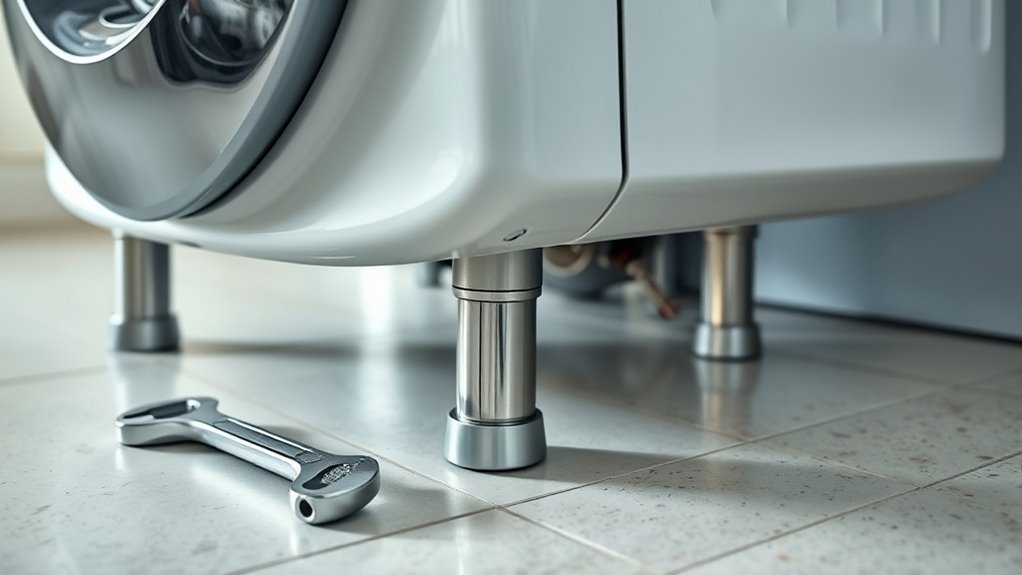
How to Level a Washing Machine: A Step-by-Step Guide
Are you tired of your washing machine wobbling, making loud noises, or not cleaning your clothes properly? You’re not alone—many people struggle with leveling their washer to keep things running smoothly.
You level your washing machine by first unplugging it and using a carpenter’s level to check for any tilt from front to back and side to side.
Adjust the feet by turning them clockwise or counterclockwise until the machine is perfectly balanced, tightening locking nuts afterward to secure stability. This reduces shaking, noise, and wear on parts.
If your washer still vibrates or moves, there are extra tips and steps you can investigate to fix it.
Key Takeaways
- Use a carpenter’s level on top of the washer to check if it’s even front-to-back and side-to-side.
- Adjust the washing machine’s feet by turning them clockwise or counterclockwise until it’s level.
- Once you’ve got it balanced, tighten any locking nuts on the feet to keep everything stable during use.
- Place anti-vibration mats under the washer to help reduce shaking and keep it from moving during cycles.
- Keep checking the level regularly and adjust the feet as needed to make sure your washer works properly and stays in good shape.
Signs Your Washing Machine Needs Leveling
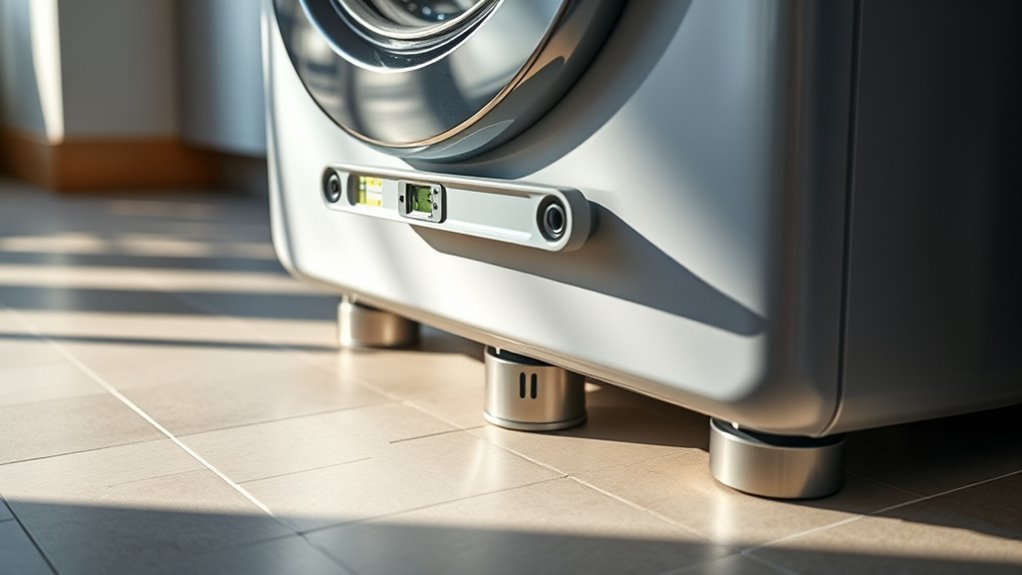
If your washing machine shakes excessively or makes loud banging noises during a cycle, it probably needs leveling. These signs often point to poor washing machine stability caused by an uneven floor or unbalanced legs.
Excessive shaking or loud banging during cycles often means your washing machine needs leveling for better stability.
When your machine isn’t level, it can vibrate wildly, causing noise and even damaging internal parts over time. You might also notice it “walking” or slowly creeping forward during use. This happens because the uneven floor prevents the appliance from sitting firmly, reducing its ability to absorb vibrations.
Clothes may come out wetter than usual too, since the drum can’t spin properly when the machine leans to one side. Pay attention to these warning signs early. Ignoring them can lead to more serious issues like leaks or motor wear.
Ensuring your washing machine sits level improves stability, prolongs its lifespan, and keeps your laundry routine smooth and quiet.
Tools You’ll Need to Level Your Washing Machine
To level your washing machine just right, you’ll want to gather a few handy tools first. A spirit level is pretty much a must-have because it helps you see if everything’s perfectly flat. An adjustable wrench is also useful for making those small adjustments to the feet.
If you want to make the job even easier, consider grabbing some optional accessories like shims or a tape measure. They can really come in handy for getting things just right. Before you dive in, it’s a good idea to gather everything you might need so you’re all set to go.
Essential Leveling Tools
Although leveling a washing machine might seem straightforward, having the right tools makes the process much easier and ensures accuracy. Without proper tools, you risk common mistakes like uneven adjustments or misreading the surface, which can impact your appliance’s performance.
To master effective leveling techniques, you’ll want to gather a few essentials. Here are the must-have tools for the job:
- Carpenter’s level: Ensures your machine sits perfectly horizontal and vertical.
- Adjustable wrench: Lets you tweak the feet securely without slipping.
- Measuring tape: Helps confirm spacing and alignment with surrounding surfaces.
Using these tools, you’ll avoid errors and complete the leveling smoothly, setting your washing machine up for ideal use.
Optional Helpful Accessories
While the essential tools cover the basics, certain accessories can make leveling your washing machine faster and more precise.
Leveling mats and vibration pads help reduce movement and noise, keeping your machine stable during use.
Adjustable feet let you fine-tune the height, making sure everything is just right. Machine stabilizers lock everything in place once you’ve leveled the washer.
| Accessory | Purpose | Benefit |
|---|---|---|
| Leveling Mats | Provide a stable base | Prevent slipping |
| Vibration Pads | Absorb vibrations | Reduce noise and wear |
| Adjustable Feet | Raise or lower the machine’s height | Enable precise leveling |
| Machine Stabilizers | Lock the machine in place | Keep the washer stable |
Using these optional accessories ensures your washing machine stays balanced. This can help prolong its lifespan and improve overall performance.
Clearing and Moving Your Washing Machine Before Leveling
Before you start leveling your washing machine, you’ll want to clear the area around it and carefully move the appliance away from the wall. Making space ensures you can access the machine’s feet easily and helps prevent damage to nearby objects or walls.
Moving safely is really important to avoid injury or strain, especially since washing machines can be heavy and awkward to handle.
Moving your washing machine carefully helps prevent injury and strain due to its heavy and awkward weight.
Here are some tips for preparing the space and moving your washing machine safely:
- Unplug the machine and disconnect the water hoses to prevent leaks or electrical hazards.
- Clear the floor of rugs, cords, or other obstacles that could cause tripping or slipping.
- Use a dolly or ask for help to lift and move the machine gently, keeping proper posture to protect your back.
Checking the Current Level of Your Washing Machine
Once you’ve moved your washing machine and cleared the area, the next step is to check its current level. Start by placing a carpenter’s level on top of the washer. Check from front to back and side to side to see if the bubble is centered.
This simple test helps you determine if your machine is perfectly level or if adjustments are needed. An unlevel washing machine can cause poor water balance during cycles, leading to excessive vibration or noise.
This imbalance can also affect washer stability and may damage internal components over time. Pay close attention to any tilt or unevenness, as even a slight lean can impact performance.
How to Adjust Washing Machine Feet for Leveling
First off, find the adjustable feet on your washing machine—they’re usually at each corner. Grab a level tool and place it on top of the machine to see if it’s sitting evenly. Once you’ve got that, you can start turning the feet to raise or lower each corner until the bubble on the level is right in the middle. Easy peasy!
Identifying Adjustable Feet
Adjustable feet are the main parts that keep your washing machine stable and level. Before you start leveling, you need to find these feet first. Usually, they’re at each corner of the machine’s base and can be turned by hand or with a wrench.
Look for threaded bolts or legs that move up and down to change the height. You’ll also see rubber or plastic pads at the bottom, which help grip the floor and absorb vibrations. Locking nuts might be there to hold the feet in place once you’ve adjusted them.
Recognizing these parts makes it easier to adjust the feet confidently without guessing. Once you find them, you’re all set to fine-tune your washer’s stability and stop it from shaking or making noise during cycles.
Using a Level Tool
After locating the adjustable feet on your washing machine, grab a level tool to check how even the machine sits. You can use different types of level tools, like a bubble level, digital level, or laser level.
Place the level on top of the washing machine, first front to back, then side to side. This helps you see which feet need adjustment.
Turn the adjustable feet clockwise or counterclockwise to raise or lower them until the bubble is centered or the digital reading indicates level. Keep checking with the level after each adjustment.
Once your washing machine is perfectly level in both directions, tighten any locking nuts on the feet. This will keep it stable during use.
How to Use a Level Tool to Check Washing Machine Level
Using a level tool is the easiest way to make sure your washing machine sits perfectly even. Place the level on top of your machine, checking both front-to-back and side-to-side. This helps you see exactly which feet need adjustment and avoids common mistakes like assuming the floor is level or just relying on your eyes.
A level tool ensures your washing machine sits perfectly even, avoiding guesswork and floor assumptions.
Follow these quick steps for effective leveling:
- Put the level in the center of the washing machine’s top surface.
- Look at the bubble in the vial; it should be centered between the lines.
- Notice which side or corner is off and adjust the matching feet accordingly.
Can’t Adjust Your Washing Machine Feet? Try This
Once you’ve identified which feet need tweaking with the level tool, you might find some washers are stubborn or won’t budge. If your washing machine feet resist turning, first unplug the machine for safety. Then, gently rock the washer back and forth to relieve any pressure on the feet.
Sometimes debris or rust can cause them to seize, so use a cloth to clean around the feet and apply a small amount of lubricant if needed. If the feet still won’t adjust, check if they have locking nuts. Loosen these nuts before trying to turn the feet again.
These leveling techniques can really improve washing machine stability. Finally, if your feet are damaged or worn, consider replacing them to make sure your machine sits firmly and level. Following these steps will help you overcome stubborn feet and keep your washing machine stable for peak performance.
Tips to Prevent Washing Machine Vibration and Noise
Three simple adjustments can drastically reduce your washing machine’s vibration and noise. By focusing on vibration reduction and noise control, you can enjoy a quieter laundry room and extend your machine’s lifespan.
Start by making sure your washing machine is perfectly level. An uneven base causes unnecessary shaking. Next, check the floor beneath the washer—placing a sturdy, anti-vibration mat can absorb excess movement.
Finally, avoid overloading your machine. Unevenly distributed clothes create imbalance and loud noises. Use an anti-vibration mat under your machine for better vibration reduction.
Balance loads evenly to minimize noise and shaking. Tighten all bolts and inspect suspension springs regularly. Follow these tips consistently to keep your washing machine running smoothly and quietly.
Paying attention to these small details can make a big difference in noise control and overall washing machine performance.
When to Call a Professional for Washing Machine Leveling
How do you know when it’s time to call a professional for washing machine leveling? If you’ve tried adjusting the feet and your machine still vibrates excessively, makes loud noises, or won’t stay balanced during cycles, it’s a good sign you need expert help.
A professional assessment can uncover issues you might miss, like uneven flooring, damaged suspension springs, or internal problems that need washing machine repair.
Also, if you notice water leaks or the machine shifts position despite your efforts, don’t hesitate to call a technician.
Trying to fix complex problems without the right tools or knowledge could make things worse.
Professionals have the experience and equipment to level your washing machine accurately and ensure it runs smoothly and safely.
Getting a professional help saves you time and prevents unnecessary damage, keeping your appliance in top shape.
When in doubt, trust a pro to handle washing machine leveling.
How to Keep Your Washing Machine Level Over Time
If you’ve called a professional to level your washing machine, keeping that balance over time is just as important as the initial adjustment. Staying level helps prevent excessive vibration, reduces wear and tear, and keeps your machine running smoothly.
Maintaining your washing machine’s level is crucial to prevent vibration and ensure long-lasting performance.
To do this effectively, check the feet regularly. Every few months, make sure they’re still firmly in place and haven’t shifted. This quick check can save you from bigger issues down the line.
Avoid overloading your washer. Putting too much in can cause uneven spinning, which leads to imbalance and more vibration. Keep the load balanced for the best results.
You can also use vibration reduction pads. Place these under each foot to absorb shocks and help keep your machine stable, especially on uneven floors.
Frequently Asked Questions
Can an Unlevel Washing Machine Damage My Floors?
Yes, an unlevel washing machine can damage your floors. When your machine isn’t properly balanced, it causes vibration issues that can lead to excessive shaking.
Over time, this can wear down your floor protection, especially on hardwood or laminate surfaces. It might cause scratches, dents, or even cracks.
To protect your floors and keep your washer running smoothly, make sure it’s level and stable. This helps minimize those damaging vibrations.
Is It Necessary to Unplug the Washing Machine Before Leveling?
Yes, you should unplug your washing machine before leveling it. Taking safety precautions is essential to avoid any electrical hazards while adjusting the machine.
Unplugging guarantees you won’t accidentally start it or get shocked while working. Always consider electrical safety first to protect yourself and your appliance.
Once you’ve finished leveling, you can plug it back in and resume using it safely without risking damage or injury.
How Often Should I Check if My Washing Machine Is Level?
You’ll want to check if your washing machine is level about every six months to keep things running smoothly. Think of it as giving your appliance a little spa day during your maintenance routine.
Using leveling tools during these checks helps prevent unnecessary vibrations and wear. If you notice any unusual noises or movements, don’t wait—grab those tools and make adjustments.
This will help keep your machine happy and efficient.
Will Leveling Improve My Washing Machine’s Cleaning Performance?
Yes, leveling your washing machine can boost its cleaning efficiency. When your machine’s properly balanced, it reduces excessive vibration during cycles.
This vibration reduction helps the drum spin more smoothly, allowing clothes to move freely and get cleaner. Plus, it prevents wear and tear on parts, so your washer works better and lasts longer.
Can I Level My Washing Machine on Carpeted Floors?
Yes, you can level your washing machine on carpeted floors, but you’ll want to check how thick and soft your carpet is.
Try adjusting the machine’s feet carefully and place a sturdy, flat board or anti-vibration pads underneath to create a solid base.
These carpet considerations help prevent unevenness and reduce vibration. Without them, your machine might wobble or shift.
Make sure the foundation is stable for the best performance.
Conclusion
Now that you know how to spot the signs, gather your tools, and adjust your washing machine’s feet, you’re all set to level your washing machine with confidence. Keep checking the level to make sure it’s perfectly balanced.
Prevent vibrations and keep your machine stable by making small adjustments as needed. Maintaining proper leveling can extend your washing machine’s lifespan.
If adjusting the feet feels tricky or confusing, don’t hesitate to call a professional. Staying proactive with your washer’s leveling can save you trouble down the line.
Stay steady, stay proactive, and keep your laundry routine running smoothly. A level washing machine means less noise, less wear, and more peace of mind.