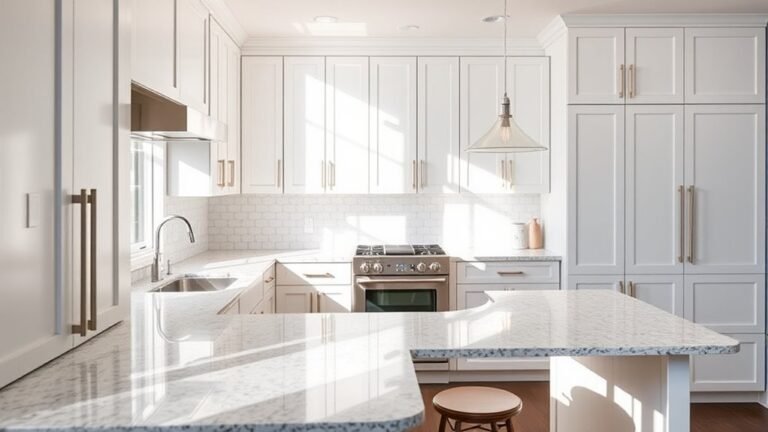
How to Clean White Kitchen Cabinets: A Step-by-Step Guide
Cleaning white kitchen cabinets can feel like a never-ending task, especially when stains and grime start to dull their bright, fresh look. You’re not alone—many people struggle with keeping their cabinets spotless and looking new.
But don’t worry, with a few simple steps, your cabinets can stay stunning and clean.
To clean your white kitchen cabinets, start by removing contents and dusting with a dry cloth.
Mix mild dish soap with warm water in a spray bottle, then wipe cabinets with a soft microfiber cloth.
For stubborn stains, use a baking soda paste or a magic eraser gently.
Avoid harsh chemicals like bleach to protect finishes.
Regular cleaning and occasional polishing keep cabinets bright and fresh.
Keep following for detailed tips on tough grime, hardware care, and maintenance schedules.
Key Takeaways
- Remove all items from cabinets and wipe off loose dust before cleaning. This ensures full surface access and helps prevent damage.
- Use a mild dish soap mixed with warm water and a soft microfiber cloth for gentle, effective cleaning.
- For stubborn stains, apply a baking soda paste or a magic eraser. Always test on hidden areas first to avoid damage.
- Clean your white cabinets weekly and wipe spills immediately to keep them bright and prevent grime buildup.
- Polish the hardware every few months and seek professional help for deep stains, peeling paint, or warped panels.
Why White Kitchen Cabinets Need Special Cleaning
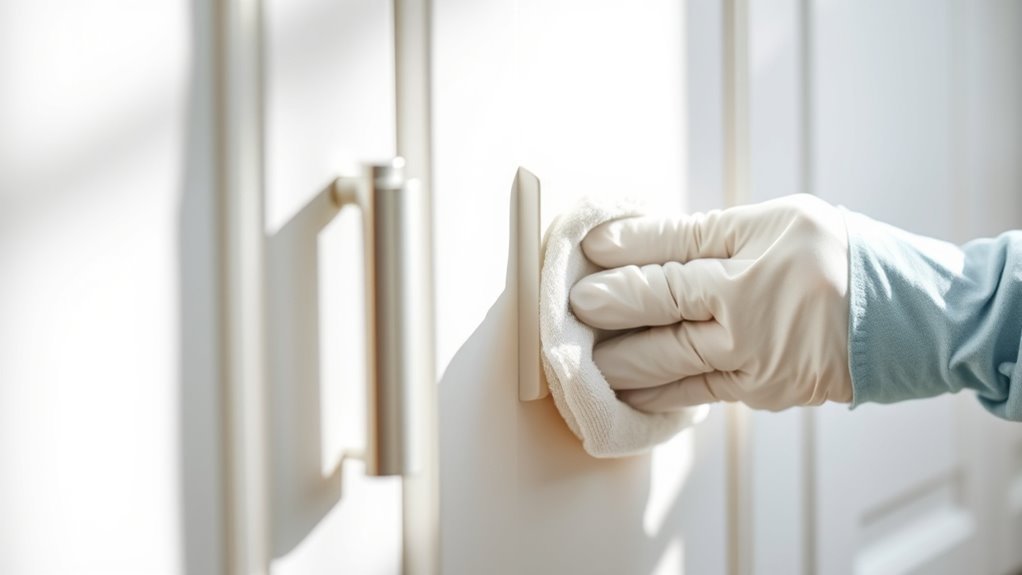
Because white kitchen cabinets show dirt and stains more easily than darker colors, they require special cleaning attention. You’ll notice fingerprints, grease splatters, and dust stand out on white surfaces, so keeping them spotless means paying closer attention to cabinet maintenance.
If you don’t clean regularly, those marks can build up and become harder to remove, dulling the pristine look you want. Adjusting your cleaning frequency is key. You might need to wipe down your cabinets every few days instead of once a week to prevent grime from settling in.
Being consistent with this routine helps preserve their brightness and extends their lifespan. With white cabinets, a little extra care goes a long way in maintaining that fresh, inviting kitchen feel. Prioritizing cabinet maintenance guarantees your white cabinets stay a shining centerpiece rather than looking worn or neglected over time.
What You’ll Need to Clean White Cabinets
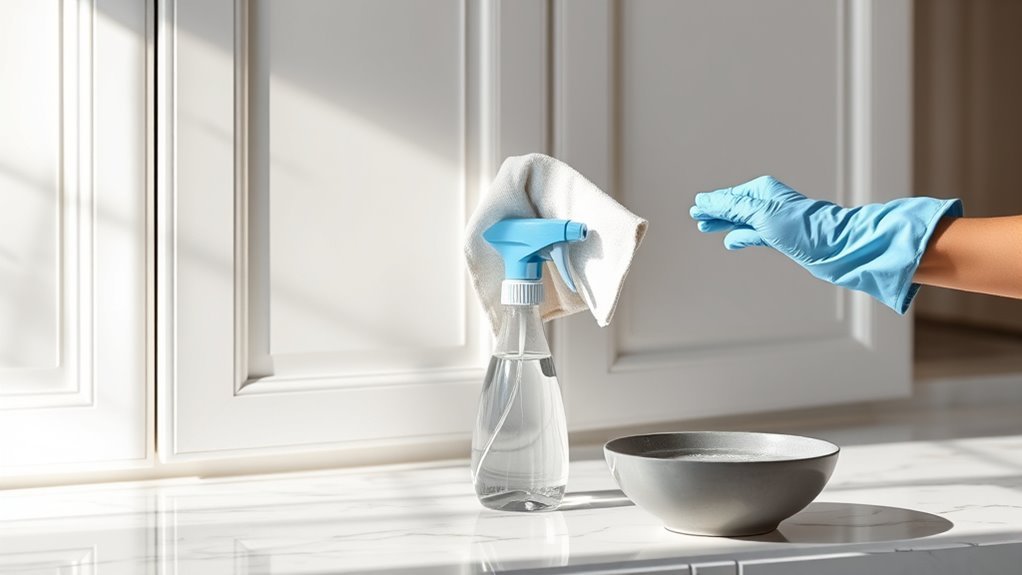
To clean white kitchen cabinets effectively, you’ll need a few essential supplies that tackle dirt without damaging the finish. Start with gentle cleaning tools like soft microfiber cloths and non-abrasive sponges to avoid scratching the surface.
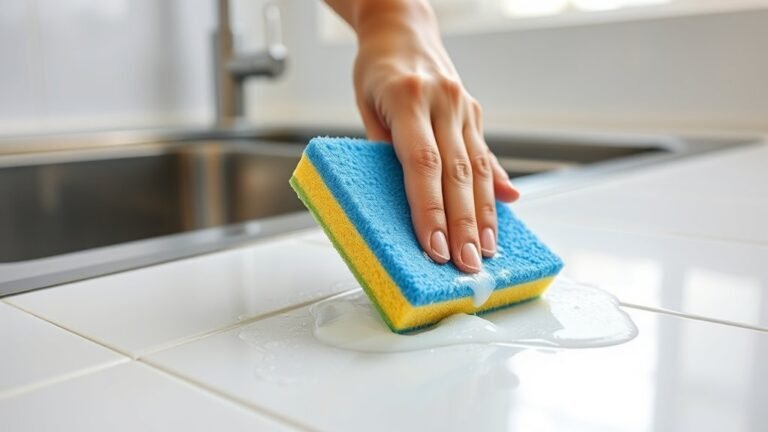
Use a mild dish soap mixed with warm water as your primary cleaning solution. For tougher spots, a baking soda paste works well without harsh chemicals. Keep a spray bottle handy to apply your solution evenly, and have a dry cloth ready to wipe down cabinets after cleaning to prevent water damage.
In addition to these cleaning tools, consider using a soft-bristled toothbrush for crevices and detailed areas. Having gloves protects your hands from prolonged exposure to cleaning agents. Following these maintenance tips regularly will keep your cabinets looking fresh and prevent buildup.
With the right supplies, you’ll make your cleaning routine efficient and safe for your white kitchen cabinets.
How to Prepare Your Cabinets for Cleaning
Once you’ve gathered your cleaning supplies, it’s important to get your cabinets ready before you start wiping them down. Begin by removing everything from the cabinets to avoid damaging your items and to access all surfaces. This also gives you a chance to see how your cabinet organization is doing—spot anything out of place or cluttered? It’s a great time to reorganize if needed.
Next, wipe away any loose dust or crumbs with a dry cloth. Keep in mind, how often you clean will determine how detailed this prep needs to be. If it’s been a while, spend a little extra time here. Finally, open the cabinets and let them air out for a few minutes to help reduce moisture during cleaning.
Effective Cleaning Solutions for White Cabinets
Although white cabinets brighten your kitchen, they also show dirt and stains more easily, so choosing the right cleaning solution is crucial. You’ll want to avoid harsh chemicals that can damage finishes or fade paint. Instead, consider eco-friendly alternatives that are gentle yet effective. Simple mixtures like warm water, mild dish soap, and a splash of white vinegar work well without leaving residue.
DIY cleaners are a great option, too. For example, baking soda mixed with water creates a mild abrasive paste perfect for tackling surface dirt without scratching. Always test your solution on a hidden area first to make sure it won’t harm the cabinet’s finish.
Avoid bleach or ammonia-based products since they can discolor white cabinets over time. By using these safe, eco-friendly alternatives and DIY cleaners, you’ll keep your cabinets bright while caring for the environment and your home.
How to Remove Grease and Grime
Want to get rid of grease and grime on your white cabinets? The key is using the right degreasing solutions that clean effectively but won’t damage the finish. You don’t need anything too harsh—just gentle products that do the job.
When it comes to scrubbing, soft cloths or sponges are your best friends. They help lift stubborn dirt without scratching or harming the surface. Just take it slow and be gentle—you’ll be surprised at how well a mild approach works.
Let’s look into some practical ways to clean your cabinets thoroughly but safely. After all, a clean kitchen is a happy kitchen!
Effective Degreasing Solutions
Anyone tackling white kitchen cabinets knows that grease and grime can quickly dull their bright finish. To restore that clean look, you need effective degreasing agents that cut through buildup without damaging surfaces. You don’t always have to rely on harsh chemicals—natural alternatives can work wonders too.
Here are three top solutions to try:
- Dish soap and warm water: A classic degreasing agent that’s gentle yet effective for routine cleaning.
- Vinegar and baking soda: This natural alternative breaks down stubborn grease and deodorizes your cabinets.
- Commercial degreasers: For tougher grime, choose products labeled safe for painted or laminated surfaces.
Using these options will help you remove grease effectively while preserving your cabinets’ finish.
Safe Scrubbing Techniques
When you’ve chosen the right degreasing solution, the next step is knowing how to scrub your white kitchen cabinets without causing damage. Use microfiber cloths because they’re soft yet effective at lifting grime without scratching surfaces.
Apply your degreaser to the cloth, not directly on the cabinet, to control the amount and prevent streaking. For stubborn grease, gently rub the area using gentle abrasives like baking soda mixed with a bit of water.
Always test this paste on a hidden spot first to verify it won’t harm the finish. Avoid harsh scrubbing or abrasive pads, which can dull or scratch your cabinets.
After scrubbing, wipe away any residue with a clean, damp microfiber cloth, then dry thoroughly to keep your cabinets looking bright and fresh.
Tackling Stubborn Stains on White Cabinets
Stubborn stains on white kitchen cabinets can be frustrating, but you don’t have to replace or repaint to restore their shine. Effective stain removal starts with choosing the right cleaning products and techniques suited for your cabinet’s finish.
Stubborn stains on white kitchen cabinets don’t require replacement—choose the right cleaning methods to restore their shine.
Here’s how to tackle those tough spots:
- Use a Baking Soda Paste: Mix baking soda with water to make a paste. Gently apply it to the stain and let it sit for 10-15 minutes before wiping away with a damp cloth. This mildly abrasive paste lifts grime without damaging surfaces.
- Try a Magic Eraser: Dampen a magic eraser and lightly rub it on the stain. It works wonders on marks caused by grease or crayon, but be careful not to over-scrub.
- Apply a Commercial Stain Remover: Pick a product made for kitchen cabinets. Test it on a hidden area first to make sure it won’t dull the finish, then follow the instructions carefully.
Protecting Delicate Finishes on White Kitchen Cabinets
Although white kitchen cabinets brighten up your space, their delicate finishes need careful protection to stay looking great. Be mindful of the finishing techniques used, since some can be more sensitive to cleaning products or moisture.
Avoid harsh chemicals or abrasive tools that might strip or dull the surface. Instead, opt for gentle cleaners recommended specifically for your cabinet’s finish.
Applying protective coatings is another smart way to guard against everyday wear and tear. These create a barrier that resists stains, moisture, and fingerprints, helping your cabinets last longer.
If your cabinets don’t already have a protective layer, consider talking to a professional about adding one. Just make sure it won’t damage the existing finish.
Cleaning Hardware and Handles on White Kitchen Cabinets
When you’re cleaning the hardware and handles on your white kitchen cabinets, it’s a good idea to pick the right cleaning solution. You want something that will get rid of dirt and grime without damaging the finish. Take your time to carefully remove all the dirt so your hardware stays looking fresh and new.
Once everything’s clean, give the hardware a nice polish to bring back its shine. This little step can really make your cabinets stand out and give your kitchen a fresh, polished look.
Choosing Cleaning Solutions
Since hardware and handles on white kitchen cabinets attract grease and grime, you’ll want to pick cleaning solutions that effectively cut through buildup without damaging the finish. Opting for natural cleaners and eco-friendly options keeps your kitchen safe and fresh while being gentle on surfaces. Here are three great choices:
- Mild dish soap mixed with warm water is a simple, effective natural cleaner that won’t harm finishes.
- Vinegar and water solution is an eco-friendly option that breaks down grease without harsh chemicals.
- Baking soda paste is perfect for tackling tougher grime gently without scratching hardware.
Avoid abrasive cleaners or harsh chemicals, as they can dull or damage your cabinet hardware over time. Choose solutions that clean well and preserve your kitchen’s look.
Removing Dirt and Grime
Choosing the right cleaning solutions helps you succeed in removing dirt and grime from your cabinet hardware and handles. Start by wiping handles with a soft cloth dipped in warm, soapy water for effective dirt removal.
For stubborn grime, use a gentle brush or an old toothbrush. Regular cleaning prevents grime buildup and keeps your hardware looking fresh.
| Cleaning Tool | Purpose | Frequency |
|---|---|---|
| Soft cloth | Basic cleaning | Weekly |
| Warm, soapy water | Dirt removal | Weekly |
| Old toothbrush | Stubborn grime | As needed |
| Mild detergent | Deep cleaning | Monthly |
| Microfiber cloth | Drying | After cleaning |
Stick to these steps to keep your white kitchen cabinet hardware clean and grime-free.
Polishing for Shine
Although cleaning removes dirt, polishing your white kitchen cabinet hardware and handles restores their shine and makes them look better. Polishing is an important part of cabinet care that helps your fixtures look their best and last longer.
To keep your hardware shining, follow these simple steps:
- Pick a polish that suits your hardware, like brass or stainless steel.
- Gently apply the polish with a soft cloth, using circular motions.
- Buff the hardware with a clean, dry cloth to bring out the shine.
Remember to polish your cabinet handles every few months or when they start to look dull. Regular polishing keeps them bright and helps prevent buildup, making your kitchen feel fresh and inviting.
How Often Should You Clean White Kitchen Cabinets?
Regularly cleaning your white kitchen cabinets keeps them looking fresh and prevents buildup of grease and grime. To keep their bright appearance, aim to clean once a week with a mild detergent and a soft cloth. This helps remove everyday dirt and stops stains from settling in.
Wipe spills immediately to avoid permanent marks, and steer clear of harsh chemicals that can damage the finish. Every month, do a deeper clean by paying attention to corners and hardware where grease tends to gather.
If your kitchen gets a lot of use, you might want to clean more often, like twice a week. If you cook less, cleaning every two weeks should do the trick. Sticking to this routine helps keep your cabinets looking pristine and extends their lifespan, making your kitchen a more enjoyable space for years to come.
When to Consider Professional Cleaning or Repainting
If your cabinets have deep damage, like cracks or peeling paint, it’s probably a good idea to bring in a professional. Sometimes, tackling these issues on your own might not give you the best results, and a pro can make sure everything looks fresh and smooth.
When deciding whether to clean or repaint, think about how serious the damage is and what fits your budget. If it’s just minor dirt or scuffs, a good cleaning might do the trick. But if the paint is peeling or there are cracks, repainting might be the better option to give your cabinets a whole new look.
Signs Of Deep Damage
Deep stains, peeling paint, or warped surfaces are clear signs that your white kitchen cabinets need more than just a quick clean. These issues often mean the finish is wearing down and can’t be fixed with regular maintenance.
You should consider professional help when you notice:
- Persistent deep stains: When dirt and grease have soaked into the finish, just cleaning won’t do the trick. The stains won’t come out easily.
- Peeling or cracking paint: This shows the finish is failing. It leaves the wood exposed to moisture and potential damage.
- Warped or swollen panels: Moisture can cause warping that cleaning can’t fix. If your cabinets feel distorted, it’s a sign of deeper problems.
Dealing with these signs early can stop further damage and save you from costly repairs. This helps keep your cabinets looking great and working well.
Cost Comparison Factors
How do you decide whether to tackle cleaning or repainting your white kitchen cabinets yourself or hire a professional? Start with a cost analysis comparing DIY supplies against professional fees. Cleaning products and paint might seem affordable, but consider your time and the chance of mistakes.
Professionals charge more upfront but can save you time and guarantee a flawless finish. Budget considerations are important—if your cabinets have deep damage, professional repainting might be more cost-effective in the long run.
On the other hand, light cleaning or minor touch-ups are usually manageable on your own without breaking the bank. Weighing these cost factors helps you make an informed choice that fits your budget while getting great results.
Choosing The Right Service
When your white kitchen cabinets have stubborn stains or show a lot of wear, deciding whether to hire professionals can save you time and effort. Knowing your cleaning routine and service options helps you pick the best solution. If you clean often but still see damage, a professional cleaning might bring back their shine. But if there are deep scratches or peeling paint, repainting services are a good idea.
Here are three signs that tell you it’s time to choose the right service:
- Regular cleaning hasn’t removed grease or discoloration. Professional cleaning can help with that.
- The cabinets have chipped or faded paint. Repainting will give them a fresh look.
- You want to save time and get guaranteed quality results. Professionals bring expertise and efficiency.
Making the right choice can extend your cabinets’ lifespan and keep your kitchen looking bright.
Frequently Asked Questions
Can I Use Bleach to Clean White Kitchen Cabinets?
You can use bleach to clean white kitchen cabinets, but be careful. Bleach is strong and might damage the finish or cause discoloration over time.
Instead, try bleach alternatives like diluted vinegar or baking soda solutions. They’re gentler and still effective.
Always test any cleaner on a small, hidden area first. That way, you can keep your cabinets looking fresh without risking damage.
Will Cleaning White Cabinets Remove Their Paint?
No, cleaning white cabinets won’t remove their paint if you use the right products and methods.
Proper cabinet maintenance involves gentle cleaners that won’t damage the paint’s durability. Avoid harsh chemicals like bleach or abrasive scrubbers, which can wear down the finish over time.
Stick to mild soap, warm water, and soft cloths to keep your cabinets looking fresh without risking paint damage or peeling.
How Do I Prevent Yellowing on White Cabinets?
Want your white cabinets to turn into a vintage yellow relic faster than you can say “oops”? Don’t! You’ve got to stay on top of cabinet maintenance with regular cleaning and avoid harsh chemicals that strip protective finishes.
Keep your kitchen well-ventilated to prevent moisture buildup and sun damage, which speeds up yellowing. Trust me, color preservation isn’t magic—it’s about consistent care and smart habits that keep those cabinets looking crisp and bright.
Are Vinegar-Based Cleaners Safe for White Cabinets?
Yes, vinegar-based cleaners are generally safe for white cabinets and can help cut grease and disinfect.
Just remember, since vinegar is acidic, it’s best to dilute it with water and test a small area first to prevent any damage.
If you’re worried about the acidity, you might want to try milder options like dish soap or baking soda solutions.
These alternatives clean well too, without risking your cabinet’s finish.
Can I Use a Pressure Washer on Kitchen Cabinets?
You shouldn’t use a pressure washer on kitchen cabinets because the safety concerns are serious. The high water pressure can damage the cabinet material, especially if it’s wood, laminate, or painted surfaces.
It might cause warping, peeling, or even remove finishes. Instead, stick to gentle cleaning methods like soft cloths and mild cleaners to keep your cabinets looking their best.
Always consider your cabinet material before choosing a cleaning tool to avoid any damage.
Conclusion
Keeping your white kitchen cabinets spotless might feel like battling an endless army of fingerprints, but with the right tools and techniques, you’ve got this! Regular cleaning not only preserves their bright charm but also protects delicate finishes and hardware.
Remember, consistency is key—don’t wait until grime takes over. When stains get stubborn, knowing when to call in professionals can save your sanity and your cabinets. Your kitchen deserves that sparkling glow every day!