How Much Do New Kitchen Cabinets Cost? The Complete Answer
Are you feeling overwhelmed trying to figure out how much new kitchen cabinets might cost? You’re not alone—many people struggle with understanding the expenses involved.
Whether you’re dreaming of a complete kitchen makeover or just updating your cabinets, costs can vary widely.
You’ll typically spend between $4,000 and $15,000 or more on new kitchen cabinets, depending on materials, styles, and kitchen size. Stock cabinets cost less, while custom designs and premium materials like solid wood push prices higher.
Installation complexity and hardware upgrades can also raise your budget.
Choosing efficient layouts helps control costs. If you want smart ways to balance quality and price or tips to get accurate quotes, keep exploring to find what fits your kitchen and budget best.
Key Takeaways
- New kitchen cabinet costs usually range from $4,000 to $15,000 or more. The price depends on materials, styles, and whether you go custom.
- Cabinets made of solid wood and plywood tend to be more durable but also cost more. On the other hand, MDF, particleboard, laminate, and thermofoil are more budget-friendly options.
- If you choose intricate styles or specialty finishes, expect to pay higher prices. Simple designs and basic colors can help keep costs down.
- Larger kitchens and complicated layouts increase the overall expense because they require more cabinetry and sometimes custom setups.
- Installation can add to your costs, especially if there are uneven surfaces or plumbing adjustments needed. These labor costs go beyond just the price of the cabinets.
How Much Do New Kitchen Cabinets Cost?
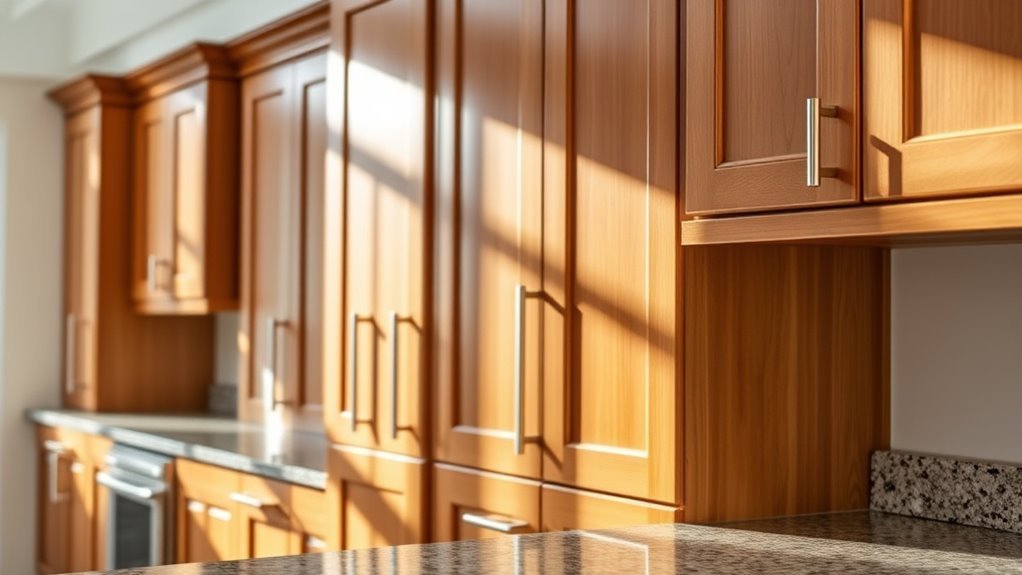
Wondering how much new kitchen cabinets will cost? The price really depends on the custom options you pick. Basic stock cabinets are the most affordable, but custom designs that match your space and style can get pricey.
Custom cabinetry lets you choose specific sizes, features, and finishes, which can significantly impact your budget. Keep in mind that trendy cabinet colors can also affect the price. Finishes like matte black or two-tone combos might cost more than standard white or wood tones.
While you want your kitchen to look stylish, balancing trendy colors with your budget is important. On average, new cabinets can cost anywhere from $4,000 to $15,000 or more, depending on how much customization you choose. Knowing these factors helps you plan better and find cabinets that fit both your taste and your wallet.
Which Materials Affect Kitchen Cabinet Prices Most?
Because the material you choose directly impacts durability, appearance, and cost, understanding which materials affect kitchen cabinet prices most is essential. Solid wood cabinets often come at a premium due to their strength and timeless look, while plywood offers a durable yet more affordable alternative. Medium-density fiberboard (MDF) is cost-effective but less durable, making it suitable for budget-conscious projects.
The cabinet finishes you select also influence the price. Painted or stained finishes on solid wood tend to cost more than laminate or thermofoil options. Don’t overlook hardware choices; high-quality knobs, pulls, and hinges can raise costs but improve functionality and style.
Ultimately, your material decisions shape both the longevity and aesthetic appeal of your cabinets. By carefully balancing these factors, you can find the right combination that fits your budget without sacrificing quality or style.
How Kitchen Cabinet Styles Affect Your Budget
Although your choice of cabinet style might seem purely aesthetic, it directly impacts your budget. Style preferences shape the overall design and often determine costs based on complexity and materials. Modern trends, for example, may favor sleek, minimalistic cabinets that can be less expensive than intricate traditional styles.
Your aesthetic choices also connect to functionality, like open shelving or glass fronts, which can increase costs. Color influence and finish options affect prices too—custom colors or high-gloss finishes tend to cost more. Staying current with trends might mean choosing pricier styles that are popular now.
Aesthetic choices like open shelving and custom finishes can raise costs while enhancing style and functionality.
Here’s how style influences costs:
- Intricate, classic styles usually cost more because of detailed craftsmanship.
- Minimalist, modern designs often reduce labor and material expenses.
- Specialty finishes and colors add to the overall price.
- Functional upgrades like built-in organizers can increase expenses.
Choosing your cabinet style carefully helps you balance your budget with your design goals.
How Kitchen Size and Layout Affect Kitchen Cabinet Costs
The size and layout of your kitchen play a big role in how much you’ll spend on cabinets. Larger kitchens naturally need more cabinetry, which can boost costs.
But it’s not just about size—how your kitchen is laid out matters too. A well-designed flow makes cabinets more accessible and helps you use space efficiently, giving you plenty of storage without extra expense.
If your kitchen layout is complicated or irregular, expect higher costs because of custom cabinet configurations. Renovations like changing your kitchen’s footprint or moving plumbing can also increase the overall price.
Focusing on style cohesion ensures your cabinets match the overall kitchen look. This helps you avoid costly mismatches or redesigns later.
Installation Factors That Increase Kitchen Cabinet Costs
Once your kitchen size and layout are finalized, installation becomes the next big factor that can impact your cabinet costs. You’ll encounter various installation challenges that directly influence labor expenses. Knowing about these can help you plan your budget better.
Here are four main installation factors that can increase costs:
- Uneven walls or floors: These require extra work to ensure cabinets fit perfectly, which raises labor costs.
- Complex cabinet designs: Custom shapes or built-in features need more precise installation, taking more time.
- Electrical and plumbing adjustments: Moving outlets or pipes to fit your cabinets adds to both labor and material costs.
- Removal of old cabinetry: Taking out existing cabinets can be labor-intensive, especially if demolition or disposal is involved.
Budget-Friendly Kitchen Cabinets That Look Great
You don’t have to spend a ton of money to get kitchen cabinets that look fantastic. There are plenty of affordable materials out there that can give your space a stylish vibe without draining your wallet. It’s all about picking the right options and getting a little creative with your design.
And don’t forget, smart installation tips can make a big difference in keeping costs down. With a bit of planning and some DIY elbow grease, you can have a beautiful kitchen without overspending. So, go ahead, get inspired and start transforming your space on a budget!
Affordable Materials Options
Finding budget-friendly kitchen cabinets that don’t sacrifice style is easier than you might think. You can pick materials that keep costs down without losing on looks or durability. Here are four affordable options to consider:
- Budget-friendly laminates. These are simple to clean, come in many colors, and mimic wood grain or stone textures.
- Cost-effective veneers. Thin wood layers applied over plywood or MDF give you a real wood look at a lower price.
- Thermofoil. A vinyl layer heated onto MDF creates a smooth, durable finish that resists moisture.
- Plywood with laminate. Combining sturdy plywood cores with affordable laminate surfaces offers both strength and style.
Stylish Design Ideas
Affordable materials don’t mean you have to settle for dull kitchen cabinets. You can still achieve a modern look and functional design without overspending. Choosing simple, sleek cabinet fronts in neutral tones instantly boosts your kitchen’s style.
Mixing open shelving with closed cabinets adds both style and utility. It keeps your space organized while making it visually appealing. Consider upgrading hardware with brushed nickel handles for a fresh, modern touch.
| Design Idea | Benefit |
|---|---|
| Matte-finish cabinets | Clean, contemporary look |
| Two-tone colors | Adds depth and character |
| Open shelving | Easy access and display |
Cost-Effective Installation Tips
Although kitchen cabinet installation can seem challenging, simple strategies can help you save money without sacrificing quality. By focusing on smart budget planning and quality assessment, you can find budget-friendly kitchen cabinets that look great and maintain resale value. Here are four cost-effective installation tips:
- Consider DIY installations to cut labor costs, but be aware of your limits to avoid costly mistakes.
- Check out custom options through local suppliers, who often offer better deals and personalized service.
- Take advantage of seasonal sales and financing options to manage expenses without overspending.
- Focus on cabinets that balance affordability with durability to ensure long-term value.
Following these tips helps you stay within budget while getting cabinets that enhance your kitchen’s appeal and functionality.
Mid-Range Kitchen Cabinets: Balancing Cost and Quality
When you’re looking at mid-range kitchen cabinets, you’ll notice there are a bunch of materials that strike a nice balance between style and durability. It’s pretty much about finding that sweet spot where quality doesn’t break the bank but still lasts through everyday use.
Material Options Overview
Choosing the right materials for mid-range kitchen cabinets means balancing durability and price. You want materials that match current design trends and offer quality finishes that last.
Here are four popular options to consider:
1. Solid Wood Veneers
They give a natural look with durable finishes, fitting well with both classic and modern styles.
2. Medium-Density Fiberboard (MDF)
This smooth surface is perfect for painted finishes. It’s affordable and resistant to warping.
3. Plywood
Strong and moisture-resistant, ideal if you want a good mix of sturdiness and style.
4. Thermofoil
A vinyl finish over MDF that mimics wood grain. It’s easy to clean and budget-friendly.
These materials help you stay stylish without overspending, making your kitchen both functional and trendy.
Price Versus Durability
Balancing price and durability is key to getting the most value from mid-range kitchen cabinets. You want cabinets that last without breaking the bank. Understanding how long they last helps you pick materials that give you solid durability so your investment pays off over time.
| Material | Price Range | Durability Rating |
|---|---|---|
| Solid Wood | $$ – $$$ | High |
| MDF | $ – $$ | Moderate |
| Plywood | $$ | High |
| Particleboard | $ | Low |
| Laminate | $ – $$ | Moderate |
Choosing plywood or solid wood usually means better durability and a longer lifespan, which justifies paying more. MDF and laminate are cheaper and offer moderate durability but may wear out faster.
High-End Kitchen Cabinets: What Justifies the Price
Though high-end kitchen cabinets come with a steep price tag, you’ll find they offer unmatched quality, craftsmanship, and durability that justify the investment. When you opt for luxury finishes and trusted brand reputation, you’re not just paying for looks—you’re securing long-lasting performance and style that enhances your entire kitchen.
High-end kitchen cabinets combine exceptional quality and craftsmanship for lasting beauty and performance.
Here’s what sets high-end cabinets apart:
1. Premium Materials
Solid hardwoods and exotic veneers guarantee strength and beauty.
2. Precise Craftsmanship
Skilled artisans handcraft each piece for a flawless fit and finish.
3. Luxury Finishes
Custom stains, paints, and textures create a unique, high-end appeal.
4. Advanced Hardware
Soft-close hinges and full-extension drawers improve functionality.
Choosing high-end cabinets means you get superior durability, timeless design, and a product that withstands daily wear while maintaining its elegance. This combination truly justifies the higher cost, turning your kitchen into a space you’ll love for years to come.
How to Get Accurate Kitchen Cabinet Quotes
Understanding what influences the cost of high-end kitchen cabinets helps you ask the right questions when requesting quotes. Start by providing detailed measurements and your design preferences.
Share information about materials, cabinet styles, finishes, and hardware you want. This helps suppliers give you accurate estimates and avoids surprises later.
When estimating costs, ask for itemized quotes that break down labor, materials, and installation fees. Don’t hesitate to inquire about customization or delivery charges.
Comparing multiple quotes is a good idea to understand market rates and spot any outliers. Also, clarify the timeline for production and installation to prevent delays that could increase costs.
Finally, confirm warranty terms and after-sales service included in the quote. Approaching kitchen quotes methodically means you’ll confidently estimate costs and pick the best option for your budget and style.
Tips to Save Money on Kitchen Cabinets Without Sacrificing Quality
Looking to save some money on kitchen cabinets without giving up quality? One smart way is to pick materials that are affordable but still durable and stylish. You don’t have to break the bank to get a great look in your kitchen!
Shopping around is also key—compare prices at different stores and keep an eye out for sales or discounts. This way, you can snag the best deals without sacrificing the quality you want.
Affordable Material Choices
Choosing the right materials can cut your kitchen cabinet costs quite a bit without sacrificing quality. You don’t have to go for the most expensive wood to get durable, attractive cabinets. Consider these affordable material options:
- Laminate options. They provide a smooth, easy-to-clean surface and come in many colors and patterns, mimicking more expensive materials.
- Plywood benefits. It’s stronger and more stable than particleboard, resisting warping and lasting longer, so you get great value.
- Medium-density fiberboard (MDF). It’s smooth and consistent, making it perfect for painted cabinets and less expensive than solid wood.
- Thermofoil. A vinyl laminate applied over MDF, thermofoil cabinets resist moisture and stains, making them ideal for busy kitchens.
Smart Shopping Strategies
Although quality cabinets can seem pricey, applying smart shopping strategies helps you save money without settling for less. Start with a thorough budget analysis to see where you can cut costs without sacrificing quality.
Use online comparisons to evaluate prices, styles, and customer reviews from different suppliers. Don’t forget to time your purchases around sales or seasonal discounts to get the best deals.
Consider semi-custom options for a good balance between affordability and personalization. These tips can help you get the cabinets you want without breaking the bank.
Frequently Asked Questions
How Do I Maintain and Clean New Kitchen Cabinets?
To keep your cabinets looking great, start with regular cleaning using a soft cloth and mild soap. Avoid harsh chemicals that can damage the finish.
For maintenance, wipe spills immediately and dust weekly to prevent buildup. Use a gentle polish now and then to keep the shine and protect the wood.
Also, check hinges and handles regularly to tighten any loose screws. Following these simple steps will help your kitchen cabinets stay in excellent condition for years.
What Are the Most Durable Finishes for Kitchen Cabinets?
You might think all finishes wear out quickly, but durable materials like polyurethane and acrylic say otherwise. These finishes resist scratches, moisture, and stains much better than traditional varnishes or lacquer.
If you want cabinets that last, choose finishes with high durability and a tough protective coat. They help keep your kitchen looking fresh and save you from frequent repairs or refinishing.
Can I Customize Kitchen Cabinets After Purchase?
Yes, you can customize kitchen cabinets after purchase through various options. You might add new hardware, change the finish, or install crown molding to update their look.
Post-purchase modifications also include adding organizers or adjusting shelving for better storage. Keep in mind, some changes may need professional help to ensure they’re durable and fit properly.
This way, you can tailor your cabinets to match your evolving style and needs.
How Long Do Kitchen Cabinets Typically Last?
Kitchen cabinets typically last 10 to 50 years, depending on the cabinet material you choose. Solid wood cabinets tend to be more durable and can last longer, while particleboard or laminate options might wear out sooner.
Proper installation really helps, so don’t skimp on installation costs. Good installation guarantees your cabinets stay sturdy and functional over time.
With good care and quality materials, you can enjoy your cabinets for decades.
Are There Eco-Friendly Kitchen Cabinet Options Available?
Yes, you can find eco-friendly kitchen cabinet options made from sustainable materials like bamboo, reclaimed wood, or recycled composites. These choices help reduce environmental impact while still looking stylish and being durable.
When comparing costs, eco-friendly cabinets might be a bit pricier at first. But they often save you money in the long run because they’re more durable and have lower environmental fees.
Choosing sustainable materials lets you create a beautiful kitchen and support greener living without sacrificing quality.
Conclusion
Now that you know what affects kitchen cabinet costs—from materials and styles to installation—aren’t you ready to make smart choices that fit your budget?
Balancing quality and price is easier when you understand the details. Whether you go mid-range or high-end, getting accurate quotes and exploring saving tips will help you get the kitchen you want without overspending.
Your dream kitchen is within reach. Are you ready to start? Kitchen cabinet costs can vary, but with the right information, you can make the best decision for your home and wallet.