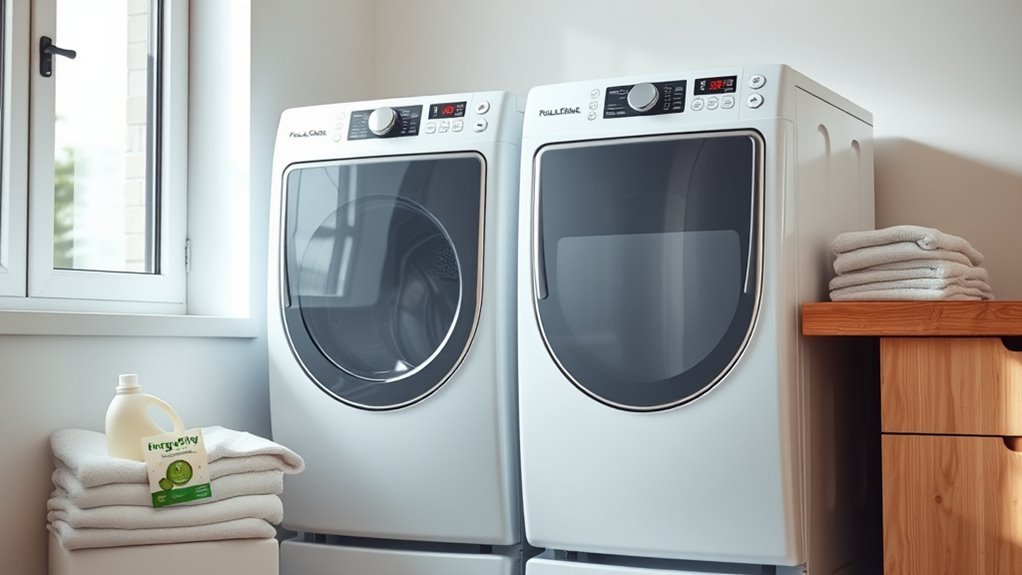
Energy Efficient Washer and Dryer Guide: What to Know Before You Buy
Are you tired of high energy bills and feeling guilty about your environmental impact? You’re not alone—many people struggle with finding laundry appliances that save money and are eco-friendly.
Luckily, choosing energy-efficient washers and dryers can make a big difference.
If you want to save money and reduce your environmental impact, choose energy-efficient washers and dryers that cut water and electricity use without losing cleaning power.
Front-load washers use less energy and water than top-loaders, and look for Energy Star certifications and features like moisture sensors and heat pump dryers.
Proper capacity, maintenance, and smart technology also boost efficiency.
Keep these tips in mind, and you’ll uncover even more ways to maximize your laundry savings and sustainability.
Key Takeaways
- Front-load washers and Energy Star-certified dryers use less water and energy, which helps lower your utility bills while still cleaning effectively.
- Features like load sensors, moisture sensors, and heat pump technology help optimize water and energy use during wash and dry cycles.
- Choosing the right appliance capacity based on your household size and laundry needs ensures efficient energy use and saves space.
- Regular maintenance, like cleaning filters and inspecting hoses, can extend your appliance’s lifespan and keep it running efficiently.
- Smart technology allows for automatic cycle adjustments and remote control, making energy savings and convenience easier than ever.
Why Energy-Efficient Washers and Dryers Save You Money and Help the Planet
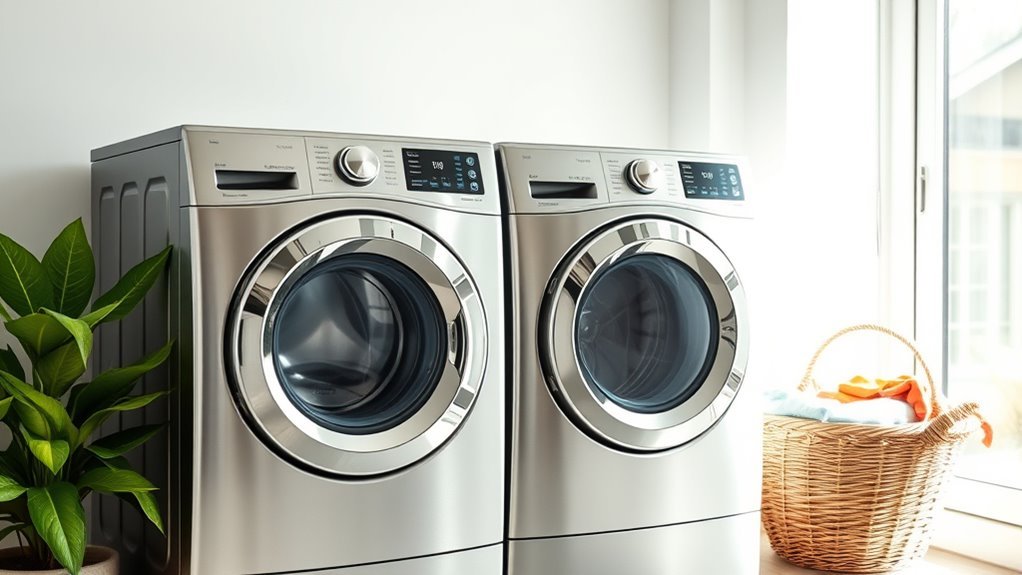
Although you might not think about it daily, choosing energy-efficient washers and dryers can greatly lower your utility bills while reducing your environmental impact.
When you pick models with low energy consumption, you enjoy immediate cost savings that add up over time. Technological advancements have led to machines that use less water and electricity without sacrificing performance.
Comparing brands based on user experiences helps you find reliable options that deliver these long-term benefits. Maintenance tips like regularly cleaning filters and checking hoses guarantee your appliances run efficiently, extending their lifespan and saving even more money.
Plus, by cutting down on energy use, you reduce your carbon footprint and help the planet. So, investing in energy-efficient washers and dryers isn’t just smart financially; it’s an eco-conscious choice that pays off in the long run.
Front-Load vs. Top-Load: Which Washer Uses Less Energy?
Choosing the right type of washer really impacts how much energy you’ll use. When comparing front-load vs. top-load washers, front load advantages often include lower water and energy consumption.
Top load disadvantages, like higher water use and less efficient spin cycles, usually mean more energy is needed per load. An energy comparison shows front-load washers typically use up to 40% less energy.
Your washing efficiency analysis should also consider how these models clean clothes with less water and spin faster to reduce drying time.
| Feature | Front-Load Washer | Top-Load Washer |
|---|---|---|
| Energy Consumption | Lower (up to 40% less) | Higher |
| Water Usage | Less water per load | More water per load |
| Washing Efficiency | Better soil removal, faster spin | Less effective cleaning, slower spin |
Choosing a front-load washer saves energy and boosts washing efficiency.
What to Look for in an Energy-Efficient Washer
When shopping for an energy-efficient washer, focus on features that save water and electricity without sacrificing cleaning power. Start by checking the washer’s load efficiency—models that adjust water levels based on load size help you save resources each cycle. Look for high Modified Energy Factor (MEF) ratings, which show better energy performance.
Think about washer features like multiple wash cycles and soil sensors; they help optimize water and energy use by customizing the wash to your laundry needs. Features like steam cleaning and cold-water settings can improve cleaning while reducing energy costs. Front-load washers usually offer better load efficiency compared to top-loaders, so keep that in mind.
Finally, make sure the washer has an Energy Star certification. It guarantees the appliance meets strict energy-saving standards. By focusing on these aspects, you’ll find a washer that’s eco-friendly and effective, helping you save money and reduce your environmental impact.
What to Look for in an Energy-Efficient Dryer
When you’re shopping for an energy-efficient dryer, a good place to start is by looking for models with the Energy Star certification. That way, you know they meet strict standards for saving energy.
You might also want to consider dryers with heat pump technology. These use less energy because they recycle heat during the drying process, making them a smart choice for saving on your utility bills.
And don’t forget to check if the dryer has moisture sensors. These features help prevent over-drying, which not only saves energy but also keeps your clothes looking their best for longer.
Energy Star Certification
Finding an Energy Star certified dryer can save you significant money on utility bills while reducing your environmental impact. When you choose a dryer with this certification, you’re tapping into proven energy efficiency benefits that go beyond just lower electricity use.
Energy Star dryers meet strict government standards, ensuring they use less energy without sacrificing performance. As a consumer, being aware of these standards helps you make smarter purchases that pay off in the long run.
Look for the Energy Star label on the appliance, which guarantees it meets these high-efficiency benchmarks. By choosing a certified model, you help conserve energy and enjoy cost savings—it’s a win-win for your wallet and the planet.
Heat Pump Technology
Although heat pump technology might sound complicated, it’s actually a very efficient way to dry your clothes. It uses much less energy than traditional dryers by recycling heat instead of venting it out.
This process captures warm air from the drying cycle, reuses it to dry your clothes, and helps lower your overall power bills. When shopping, look for dryers that highlight this feature because it saves energy and protects your clothes from heat damage.
Plus, heat pump dryers often run at lower temperatures, making them gentler on fabrics. Choosing one means you get reliable drying with a smaller environmental impact.
Moisture Sensor Features
Because moisture sensor features detect how dry your clothes are, they help prevent over-drying and save energy by shutting the dryer off at just the right time. When you choose a dryer with advanced moisture detection, you’ll enjoy better drying efficiency since the appliance adjusts cycles based on real-time moisture levels.
This means your clothes won’t spend extra time tumbling unnecessarily, reducing energy use and wear on fabrics. Look for models with precise moisture sensors, as they give consistent results and can lower your utility bills.
Energy Star Ratings and Certifications Explained
When you choose appliances with Energy Star ratings, you’re picking models that meet strict energy efficiency guidelines set by the U.S. Environmental Protection Agency. These ratings guarantee your washer and dryer use less energy without sacrificing performance.
Energy Star certifications are based on detailed energy consumption metrics, helping you understand how much power each model uses during typical cycles. When browsing appliance reviews, you’ll notice Energy Star-labeled machines tend to use less energy and save you money over time.
This certification isn’t just a marketing label. It’s a reliable indicator that the appliance has passed rigorous testing for efficiency. By focusing on Energy Star ratings, you can confidently choose washers and dryers that reduce your environmental impact and lower your utility bills.
How Load Size and Cycle Options Affect Washer and Dryer Energy Use
You can save energy by making sure your washer and dryer are set to the right load size. Overloading or underloading them can waste a lot of power, so it’s best to load them properly.
Also, choosing the right cycle type really makes a difference. Some cycles use less water and heat, which helps save energy. Keep an eye out for energy-saving settings on your appliances—they’re designed to do the job well without using more power than necessary.
Load Size Impact
Although it might seem easier to run smaller loads more often, adjusting your washer and dryer to match the size of each load can significantly reduce energy use. When you tailor your cycle to the load size, you get better washing results and save resources.
Matching your load size helps you make full use of your machine’s capacity, avoiding waste from under- or overloading. It also keeps your clothes cleaner without wasting energy or water.
| Load Size | Energy Use Impact | Washing Efficiency |
|---|---|---|
| Small | Higher per item | Lower, underutilized |
| Medium | Balanced | Ideal |
| Large | Slightly higher total | Efficient if not overloaded |
Cycle Type Efficiency
Because different cycle types use varying amounts of energy and water, choosing the right one for your load size can make a big difference in efficiency.
When you pick a cycle designed for smaller or lightly soiled loads, you use less water and energy, maximizing the benefits of your cycle choice.
Many modern washers and dryers offer eco-friendly options that optimize wash and dry times, reducing resource use without sacrificing cleaning power.
By matching cycle types to the fabric and load size, you avoid wasting energy on longer or heavier cycles than needed.
Paying attention to these cycle choices helps you save on utility bills and extends the life of your appliances, all while minimizing your environmental impact.
Smart cycle type efficiency is key to an energy-conscious laundry routine.
Energy-Saving Settings
When you adjust load size and cycle options thoughtfully, your washer and dryer can run much more efficiently. Thanks to energy-saving innovations and advances in washing technology, modern machines adjust water, heat, and spin speed based on the load.
Choosing the right cycle and load size helps you avoid wasting resources on small or overly large loads. It’s all about matching the settings to what you’re washing to save energy and water.
Choosing the Right Washer and Dryer Capacity for Your Household
How do you know which washer and dryer capacity suits your household best? Start by evaluating your family size and how often you do laundry. Larger families or those who wash frequently need bigger washer and dryer capacities to handle larger loads easily.
If you live alone or with a partner, a smaller capacity can save space and energy. Think about your household needs — do you often wash bulky items like bedding? Those require more drum space.
Also, check the space in your laundry area to make sure the units will fit comfortably. Comparing different brands helps you find models that are efficient and match your capacity needs.
Maintaining Your Energy-Efficient Washer and Dryer for Maximum Savings
To keep your energy-efficient washer and dryer running well, regular maintenance is key. Doing preventive upkeep not only makes your appliances last longer but also helps you save the most energy. By focusing on proper use and care, you can avoid costly repairs and keep everything running smoothly.
Here are three simple steps to follow:
- Clean filters and vents often. Lint buildup blocks airflow in dryers and clogs washer filters, which makes them use more energy.
- Check hoses and seals. Look for leaks or cracks that waste water and hurt performance.
- Run maintenance cycles. Many washers have a cleaning cycle—use it monthly to prevent odors and buildup.
How Smart Technology Can Boost Your Laundry Energy Savings
Want to save some energy when doing laundry? Smart washers and dryers can really help out. They automatically tweak their settings based on how much you’re washing and what kind of fabric it is, so you’re not wasting power on unnecessary cycles.
And the best part? With remote monitoring, you can see exactly when your laundry’s finished. Plus, you can control your machines from anywhere—whether you’re still in the house or out running errands. These smart features make it easy to cut down on energy use without even breaking a sweat.
Automated Energy Usage Optimization
Although traditional washers and dryers have improved in energy efficiency, smart technology takes savings even further by automatically adjusting settings based on your laundry load and usage patterns.
With automated energy usage optimization, your appliances customize cycles to cut waste and boost efficiency—all without you having to do a thing.
Here’s how it works:
- Automated settings change water temperature, spin speed, and drying time to match each load.
- Usage tracking keeps an eye on your habits to improve energy savings over time.
- Sensors detect load size and fabric type, making sure no excess energy is used.
Remote Monitoring And Control
When you’re away from home, smart washers and dryers let you monitor and control your laundry remotely. This helps save energy by running cycles only when it’s most efficient.
With smart home integration, you can connect your appliances to your existing ecosystem, making it easy to manage laundry alongside other devices. User-friendly apps give you real-time updates, so you can start, pause, or adjust cycles from your phone.
This flexibility helps avoid wasted energy by ensuring machines only run when needed, like during off-peak hours. Plus, remote alerts notify you when cycles finish, so you won’t leave clothes sitting and needing extra drying.
Budgeting Your Energy-Efficient Washer and Dryer Upgrade
Planning your budget carefully can make upgrading to an energy-efficient washer and dryer much more manageable. Start by doing a thorough cost comparison between models, considering not just the purchase price but also long-term savings on energy and water bills.
Next, look into financing options that fit your financial situation. Many retailers offer low-interest plans or payment installments to help you spread out the upfront cost.
Finally, don’t forget to factor in potential rebates or tax credits that can reduce your overall expense.
Here’s how to budget effectively:
- Compare Costs: Check both initial prices and estimated operating costs to find the best value.
- Check Financing: Explore financing options like store credit or personal loans to spread out payments.
- Seek Incentives: Find available rebates or tax credits to lower your total spending.
Frequently Asked Questions
Can Energy-Efficient Washers Handle Delicate Fabrics Without Damage?
Yes, energy-efficient washers can handle delicate fabrics without damage. They usually come with special cycles designed just for delicate items.
These cycles use gentle agitation and lower spin speeds to protect your clothes. This careful approach helps keep your fabrics looking good for longer.
You can trust that these washers are built to treat delicate items with the care they need. So, washing your delicate garments is safe and gentle with energy-efficient models.
How Noisy Are Energy-Efficient Washers and Dryers During Operation?
You’ll find that energy-efficient washers and dryers are surprisingly quiet, often producing noise levels around 50-60 decibels—similar to a normal conversation. Thanks to advanced vibration control technology, they minimize shaking and rattling during cycles.
This means you won’t have to deal with loud interruptions while they run. So, if you’re worried about noise disrupting your home, these models keep things running smoothly and quietly.
Do Energy-Efficient Dryers Require Special Venting or Installation?
Energy-efficient dryers usually don’t require special venting beyond standard venting requirements, but be sure to check the model’s specifications to be safe.
Installation considerations often include making sure there’s proper airflow and using the right vent materials, like metal ducting.
Some ventless models, such as heat pump dryers, don’t need traditional venting at all, so their installation is different.
Always follow the manufacturer’s guidelines to avoid any performance issues or safety hazards during setup.
Are There Rebates Available for Purchasing Energy-Efficient Laundry Appliances?
Yes, you can often find rebate eligibility when purchasing energy-efficient laundry appliances. Many local utilities and government programs offer incentives to help you save money upfront.
Before you buy, check with your utility provider or state energy office to see which rebates are available in your area. These incentives not only cut your initial costs but also encourage you to pick models that use less energy, saving you money in the long run.
How Long Do Energy-Efficient Washers and Dryers Typically Last?
You can expect your energy-efficient washer and dryer to last about 10 to 15 years. Their lifespan depends on build quality and how well you take care of them.
Staying on top of maintenance like cleaning filters and avoiding overloads can really help extend their life. By treating your appliances with care, you’ll keep them running smoothly and save money down the road.
Conclusion
When choosing an energy-efficient washer and dryer, you might wonder if the upfront cost really pays off. The truth is, with the right features like Energy Star ratings, smart technology, and proper capacity, you’ll save more on utility bills than you might expect.
Plus, maintaining your appliances helps keep them running efficiently longer. So, don’t hesitate to invest now; your wallet and the planet will thank you in the long run. Choosing energy-efficient washer and dryer units is a smart move for savings and sustainability.