How Deep Are Standard Kitchen Cabinets? The Complete Answer
Are you feeling overwhelmed trying to figure out the perfect kitchen cabinet sizes? You’re not alone—many people struggle with choosing the right depth to make their kitchens both functional and stylish.
Standard kitchen cabinets are typically 24 inches deep for base cabinets and 12 inches deep for wall cabinets. This sizing offers a perfect balance of storage and functionality, fitting appliances and countertops smoothly while keeping your kitchen open and easy to move through.
Depending on your space and needs, you might choose custom depths to maximize storage or improve ergonomics.
If you want to investigate how these choices affect your kitchen’s design and usability, there’s more to uncover.
Key Takeaways
- Standard base kitchen cabinets are usually 24 inches deep and 34.5 inches tall, not counting the countertop thickness.
- Wall kitchen cabinets tend to be 12 to 15 inches deep, with 12 inches being most common for a clean, streamlined look.
- The depth of your cabinets impacts how functional your kitchen is by balancing storage space with open areas and comfortable pathways.
- To get the right fit, measure the cabinet depth from the front edge to the back wall carefully.
- Custom cabinet depths can help maximize storage and improve ergonomics, tailored to your kitchen layout and needs.
What Are Standard Depths for Base Kitchen Cabinets?
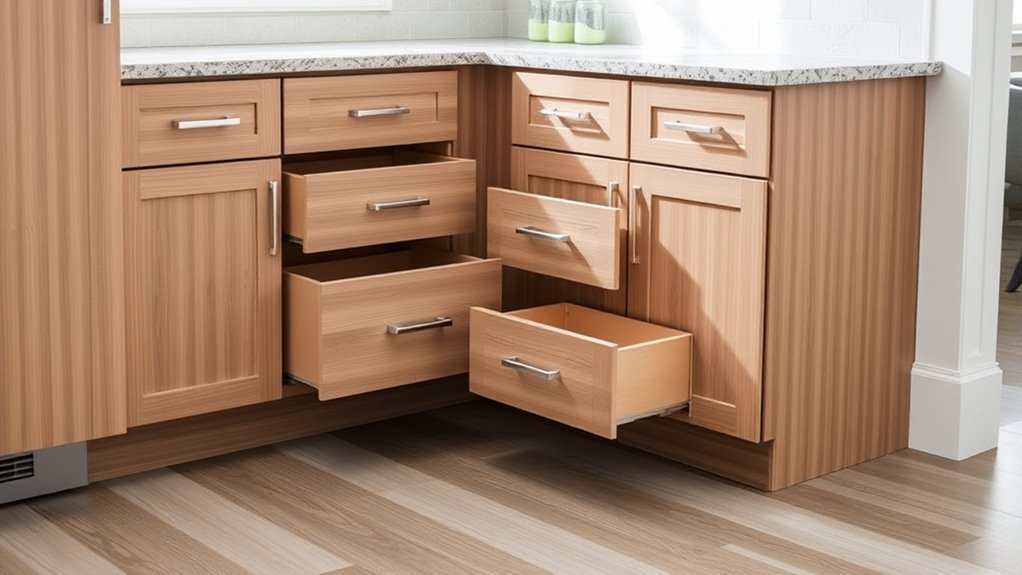
When you plan your kitchen layout, knowing the standard depths for base cabinets helps you maximize space and functionality. Typically, base kitchen cabinets are 24 inches deep. This depth strikes a balance between providing ample storage and fitting appliances and countertops seamlessly.
In kitchen design, this standard allows you to organize pots, pans, and other essentials efficiently without overcrowding your workspace. Base cabinets usually stand 34.5 inches tall, not including the countertop thickness, which guarantees comfortable access while cooking.
Sticking to these dimensions also makes selecting countertops and appliances easier, simplifying the design process. If you need more storage, you can customize cabinet depths, but this standard size works well for most kitchens.
Understanding these measurements helps you design a kitchen that’s both practical and visually appealing, making the most of every inch for your daily needs.
What Are Standard Depths for Wall Kitchen Cabinets?
While base cabinets usually measure 24 inches deep to balance storage and workspace, wall kitchen cabinets have different sizes to match the overall layout. Standard wall cabinet depths typically range from 12 to 15 inches.
This depth helps keep your kitchen open and airy while still offering enough storage for everyday items like dishes and glassware. Choosing the right depth is important for aesthetics and functionality.
Wall cabinets that are too deep can overwhelm the space and make countertops feel cramped. Conversely, shallow cabinets might limit storage and look awkward. Most kitchens stick to 12-inch deep wall cabinets for a clean, streamlined look that pairs well with the deeper base cabinets below.
Common Cabinet Depth Variations and Uses
Kitchen cabinets come in different depths, and each one is suited for specific purposes. Shallow cabinets are great if you want easy access and are storing smaller items—you won’t have to dig around to find what you need.
On the other hand, deeper cabinets are perfect if you need more storage space for larger or bulkier cookware. Knowing the differences between these depths can really help you pick the right cabinets for your kitchen, making everything more efficient and user-friendly.
Standard Depth Measurements
Kitchen cabinets usually come in a few standard depths that fit common layouts and storage needs. Most base cabinets are 24 inches deep, giving you enough space for countertops and storage without making your kitchen feel cramped.
Wall cabinets are typically 12 inches deep, making it easy to reach items while keeping headroom clear. Pantry or tall cabinets range from 12 to 24 inches deep, depending on how much storage you want.
These standard dimensions match popular design trends that focus on functionality and space efficiency. Sticking to these measurements helps your kitchen flow well and fits appliances and fixtures smoothly.
Knowing these depths allows you to plan your kitchen layout confidently, balancing storage capacity and easy access.
Shallow vs. Deep Cabinets
Two common cabinet depths you’ll encounter are shallow and deep, each serving different purposes in your kitchen. Shallow cabinets make it easy to access items and help reduce accessibility concerns, making them perfect for frequently used stuff. Their design also makes your kitchen feel more open and airy, boosting the overall look.
Deep cabinets, on the other hand, offer plenty of storage space. They’re great for larger cookware or bulk items. But, they can be tricky to organize unless you use smart storage solutions. Knowing the difference helps you find a good balance between convenience and capacity.
Mixing both types can make your kitchen more efficient and visually appealing, tailored to your daily needs.
Cabinet Depth by Function
Different cabinet depths serve specific functions, helping you maximize storage and stay organized. For example, standard base cabinets are usually 24 inches deep, giving you enough space for pots, pans, and small appliances.
Wall cabinets tend to be shallower, around 12 inches deep, so it’s easier to reach everyday items without cluttering your workspace. Pantry or tall cabinets can be deeper, up to 24 or 30 inches, to hold bulkier goods and larger tools.
Choosing the right depth for each cabinet type improves organization and makes the most of your kitchen layout. Matching depth to function helps prevent wasted space and keeps your kitchen tidy, efficient, and user-friendly.
Why Kitchen Cabinet Depth Makes a Difference in Your Kitchen
Although cabinet depth might seem like a minor detail, it plays an essential role in how functional and comfortable your kitchen feels. When you choose the right cabinet depth, you’re directly influencing your layout—how easily you move around, reach items, and organize your space.
Deeper cabinets offer more storage but can crowd narrow pathways, while shallower ones keep things open but limit capacity. Beyond function, cabinet depth affects design aesthetics. The depth you pick impacts visual balance and proportion, shaping how sleek or bulky your kitchen appears.
Cabinets that are too deep or shallow can disrupt harmony with appliances and countertops, making your kitchen look awkward or cluttered. By carefully considering cabinet depth, you ensure your layout flows smoothly and your design feels intentional.
This thoughtful choice creates a space that works well and looks great, reflecting your style without sacrificing comfort.
How Cabinet Depth Impacts Countertop Space and Use
Your choice of cabinet depth directly affects how much usable countertop space you have. Standard cabinet depths often find a good balance, but choosing deeper cabinets can extend your countertop surface, giving you more room for meal prep, small appliances, or decorative touches. This extra space makes your countertop more functional and helps you organize tools and ingredients without feeling cramped.
On the other hand, shallower cabinets mean less countertop area, which can limit where you place items during cooking. This might disrupt your workflow, making tasks take longer or feeling more cluttered. When thinking about cabinet depth, consider how you use your kitchen daily. Deeper cabinets with more countertop space support a smoother workflow, reducing unnecessary movement and keeping everything within easy reach.
In the end, the right cabinet depth helps you maximize both your storage and workspace. It creates a kitchen that fits your lifestyle and cooking habits perfectly.
How Cabinet Depth Influences Appliance Fit and Installation
When choosing cabinet depth, you should think about how it impacts the fit and installation of your appliances. Picking the right depth is key to making sure everything fits well.
Standard kitchen cabinets are usually 24 inches deep, which works for most built-in appliances like dishwashers and ovens. Going deeper or shallower can cause installation issues, like gaps or needing adjustments that might affect the look and function.
Standard cabinets are typically 24 inches deep, fitting most built-in appliances without installation issues.
If your cabinets are too shallow, appliances may stick out awkwardly, disrupting your kitchen’s flow. On the other hand, very deep cabinets can make it hard to line up appliances flush with the fronts, making installation more complicated.
You might also run into problems with plumbing and electrical connections if the appliance recesses don’t match your cabinet depth. To avoid these issues, always check your appliances’ specs against your cabinet depth before buying.
This way, you’ll ensure a smooth fit, make the most of your space, and keep your kitchen looking neat and functional.
How to Measure Kitchen Cabinets for Accurate Depth Planning
Measuring kitchen cabinets accurately starts with using a reliable tape measure to capture the depth from the cabinet’s front edge to the back wall. To ensure accuracy, keep the tape straight and avoid any bends or curves that might throw off your measurement.
Take multiple readings at different points along the cabinet’s interior. This helps account for any irregularities or wall inconsistencies. Don’t forget to measure both base and upper cabinets separately since their depths often differ.
Be sure to include any molding or overhangs that could impact usable space. Record each measurement carefully and double-check before making cuts or purchases. Following these tips will help you avoid costly mistakes from incorrect depth calculations.
Accurate depth planning makes sure your cabinets fit perfectly with appliances and countertops. This helps your renovation or installation project go smoothly and looks professional.
Custom Cabinet Depth Options: When to Go Beyond the Standard
Although standard cabinet depths work well for many kitchens, you might want to explore custom options to better fit your space and storage needs. Custom design lets you tailor cabinet depth to your layout, making your kitchen both functional and stylish.
Deeper cabinets can be great for storing larger pots or pantry items, while shallower ones help keep walkways open and improve ergonomics. Just keep in mind that material choices matter since thicker materials might affect overall size and installation.
Deeper cabinets store bulky items, while shallower ones enhance space and ergonomics; material thickness also impacts installation.
You’ll also want to make sure your custom cabinets line up with appliances and countertops for a seamless look. Going beyond standard sizes can boost usability and style, but it needs careful planning to avoid issues during installation.
Ultimately, custom cabinet depth options give you the freedom to create a kitchen that fits your lifestyle and space perfectly.
Choosing the Right Cabinet Depth for Your Kitchen
When you’re figuring out which cabinets to go with, it’s a good idea to start by understanding the standard depths. This way, you can get a sense of what will fit comfortably in your kitchen. Think about how much space you have to work with and how you plan to use your cabinets—this will help you make the best choice.
If you’re looking for something more tailored, custom cabinets are a great option. They can give you extra storage space without making your kitchen feel crowded. Just take your time to measure everything and consider your needs, and you’ll find the perfect fit!
Standard Cabinet Depths
Choosing the right cabinet depth can really impact your kitchen’s function and look. Standard base cabinets are usually 24 inches deep, giving you plenty of storage while fitting nicely with your countertops.
Wall cabinets are typically 12 inches deep, keeping items within easy reach without crowding your workspace. These standard depths help create a balanced, sleek appearance and maximize storage.
While you might find deeper wall cabinets or shallower base cabinets, sticking to these standards makes installation and fitting appliances easier.
Understanding standard cabinet depths helps you make smarter choices that boost your kitchen’s efficiency and style. This way, your storage solutions will meet your daily needs effectively.
Space Planning Considerations
Standard cabinet depths provide a solid starting point, but tailoring the depth to your kitchen’s layout and how you use the space makes all the difference. When planning, focus on space optimization to guarantee your kitchen feels open yet functional.
Deeper cabinets may offer more storage but can crowd walkways or reduce countertop space. Conversely, shallower cabinets keep things accessible and support ergonomic design by minimizing the need to reach too far.
Consider your kitchen’s traffic flow and how often you access stored items to strike the right balance. By thoughtfully selecting cabinet depth, you create a kitchen that’s not just visually appealing but also comfortable and efficient to work in every day.
This approach maximizes both storage and usability without compromising movement.
Custom Depth Options
Although typical cabinet depths work for many kitchens, customizing the depth allows you to tailor storage to fit your unique needs and space. When you opt for custom depth options, you can maximize both functionality and aesthetics, especially in tight or oddly shaped areas.
Using custom materials gives you the chance to select finishes and structures that match your style and durability preferences. Keep in mind that custom cabinet depths might require specialized installation techniques to ensure stability and proper alignment.
Working with professionals experienced in these techniques will help you avoid common pitfalls. Ultimately, custom depths offer flexibility, letting you make the most of every inch of your kitchen while boosting its overall look and usability.
Don’t hesitate to explore these options if standard sizes don’t quite meet your expectations.
Tips for Maximizing Storage With Standard and Non-Standard Cabinet Depths
When working with both standard and non-standard cabinet depths, you can find more efficient storage options tailored to your kitchen’s layout.
Start by assessing your space and figuring out which items you use most often. Use accessories like pull-out shelves, lazy Susans, and adjustable dividers to make the most of every inch, especially in deeper or shallower cabinets.
Begin by evaluating your space and prioritize frequently used items with smart accessories for efficient cabinet storage.
For non-standard depths, consider customized inserts or stackable organizers to avoid wasting space. Don’t forget vertical storage options like hooks or racks on cabinet doors to maximize every inch.
Combining these strategies helps keep your kitchen organized without feeling crowded. Mixing standard and custom depths lets you improve both accessibility and storage capacity.
This way, your kitchen functions smoothly and looks tidy. Thoughtful use of cabinet accessories and tailored storage solutions ensures you get the most out of your cabinets, no matter their depth.
Frequently Asked Questions
What Materials Are Commonly Used for Kitchen Cabinet Construction?
You’ll find that common material types for cabinet construction include plywood, MDF, solid wood, and particleboard. Plywood is popular because it’s strong and resists warping.
MDF offers a smooth finish, making it perfect for painting. Solid wood gives a classic, durable feel but can be pricier.
Particleboard is budget-friendly but less durable. Knowing these material types helps you pick cabinets that fit your style, budget, and durability needs perfectly.
How Do Cabinet Depths Affect Kitchen Lighting Design?
You should know that standard upper cabinets usually stick out about 12 inches from the wall, creating shadows that affect your lighting choices. These shadows can make under-cabinet lighting a must to brighten up your workspace.
What Are the Best Cabinet Finishes for Durability?
You’ll want to choose cabinet finish types like polyurethane or acrylic for top durability. These finishes resist scratches, moisture, and stains better than options like lacquer or shellac.
For a natural look, consider wood veneer with a durable clear coat. Durability comparisons show that high-gloss finishes hold up well in busy kitchens, while matte finishes may show wear faster.
Ultimately, pick a finish that balances your style with long-lasting protection.
Can Cabinet Depth Influence Kitchen Resale Value?
Think of your kitchen layout as a storybook. Every cabinet depth is a chapter that shapes the tale. Yes, cabinet depth can influence your kitchen’s resale value because it directly affects storage solutions.
When cabinets are thoughtfully deep, you offer buyers more space and functionality. This makes the kitchen feel organized and inviting. Practical details like these can turn a simple room into a selling point.
All of this helps boost your kitchen’s appeal and value effortlessly.
How Often Should Kitchen Cabinets Be Replaced or Updated?
You should consider replacing or updating your kitchen cabinets every 10 to 15 years, depending on wear and your style preferences.
If you’re planning a kitchen remodel, it’s a great opportunity to explore new cabinet styles that can refresh your space and boost functionality.
Sometimes, a simple update like painting or changing hardware can extend their life without needing a full replacement.
This approach can save you time and money while keeping your kitchen looking modern and fresh.
Conclusion
Understanding standard kitchen cabinet depths helps you make smarter choices for your space. For example, Sarah chose deeper base cabinets to store her bulky pots and pans. That small change made her kitchen more functional without sacrificing style.
By knowing your options and measuring carefully, you can pick the right depth that maximizes storage and countertop space. This way, your kitchen becomes both beautiful and practical.
Don’t settle—customize your cabinets to fit your needs. Knowing how deep standard kitchen cabinets are is key to creating a space that works perfectly for you.