How to Get Rid of Gnats in Kitchen: A Step-by-Step Guide
Dealing with gnats in your kitchen can be so frustrating—you’re not alone in this struggle. Many people find themselves battling these tiny pests, especially when they seem to appear out of nowhere.
Luckily, there are simple, effective ways to get rid of gnats and keep your kitchen bug-free.
To get rid of gnats in your kitchen, start by identifying hotspots like drains, fruit bowls, and trash bins.
Remove attractants by storing ripe fruit in sealed containers and cleaning spills and trash regularly.
Fix moisture issues by drying sinks and fixing leaks.
Set vinegar traps near infestations and use natural repellents like basil.
Keep drains clean with baking soda and vinegar.
Follow these steps, and you’ll find effective ways to keep your kitchen gnat-free and prevent them from returning.
Key Takeaways
- Identify gnats by their small size, erratic flight, and attraction to damp areas, overripe fruit, and organic matter in the kitchen.
- Clean sinks, drains, countertops, and trash bins thoroughly to remove moisture and breeding grounds for gnats.
- Store ripe fruit in the fridge or sealed containers, and regularly get rid of overripe or rotting produce.
- Use homemade vinegar traps with dish soap near gnat hotspots like fruit bowls and sink drains to catch adult gnats.
- Keep things dry by fixing leaks, storing food properly, and regularly cleaning drains and trash areas to prevent future problems.
How to Identify Gnats in Your Kitchen
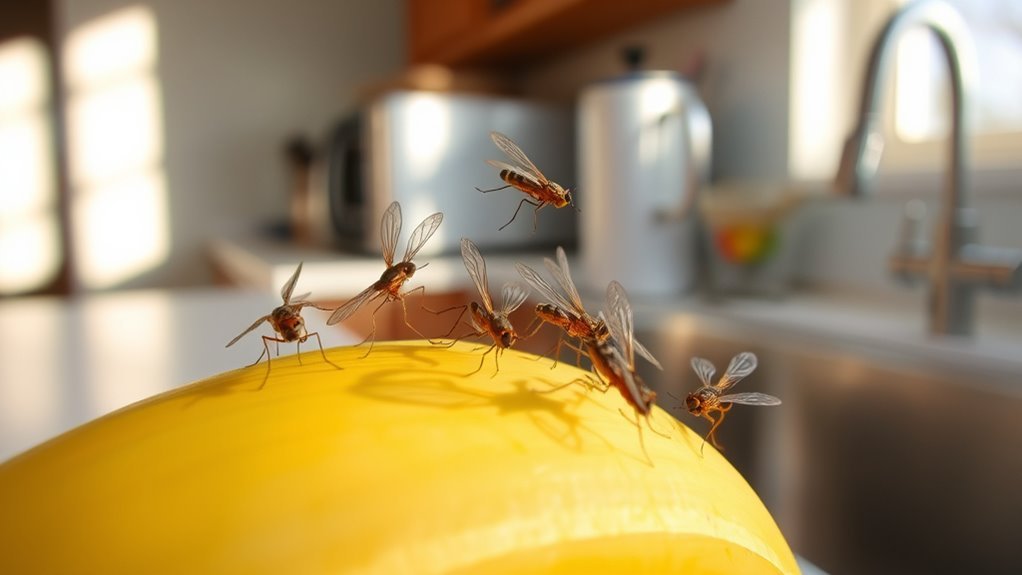
How can you tell if those tiny flying insects in your kitchen are gnats? First, look closely at their size and movement. Gnats are small, usually around 1/8 inch long, with slender bodies and long legs.
Their behavior includes hovering near food, plants, or drains, often flying in erratic patterns. Understanding their life cycle helps too: they start as eggs in moist areas, hatch into larvae, then pupae, and finally become adults that swarm your kitchen.
Gnats hover near food and drains, with a life cycle from eggs to larvae, pupae, then adults swarming kitchens.
These adult gnats are attracted to dampness and organic matter but don’t bite or cause harm. If you notice clusters of tiny flies darting near your sink or fruit bowl, chances are you’re dealing with gnats.
Paying attention to these signs and their active behavior will help you confirm their presence quickly. Taking action early can help you eliminate them before they multiply further.
What Attracts Gnats and Why They Invade Kitchens
Because gnats thrive in moist environments rich in organic material, your kitchen offers the perfect conditions for them to invade. Knowing what attracts them can help you stay a step ahead.
Common gnat species like fungus gnats and fruit flies are drawn to places where they can lay eggs and find food, fueling their life cycle.
Here are four main attractants in your kitchen:
- Overripe or rotting fruits and vegetables provide a food source and breeding ground.
- Damp areas, like sinks or dishcloths, create the moisture essential for larvae to develop.
- Trash bins with food scraps emit odors that lure adult gnats.
- Houseplants with moist soil attract fungus gnats looking to lay eggs.
How to Clean Your Kitchen to Remove Gnat Breeding Grounds
Start by thoroughly cleaning your kitchen to eliminate damp, decaying spots where gnats breed. Focus on sinks, drains, and countertops—these areas often trap moisture and food particles. Wipe down surfaces with a mild cleaner and make sure no crumbs or spills remain. Empty and clean trash bins regularly to prevent gnats from finding a breeding ground.
Next, improve your kitchen organization to reduce clutter that can trap moisture. Keep cabinets and drawers tidy, and avoid stacking dirty dishes. Proper food storage is essential: seal all food in airtight containers and refrigerate perishable items promptly. This helps prevent gnats from accessing exposed food.
Don’t forget to check under appliances and around the garbage disposal for hidden moisture or debris. Dry these areas thoroughly after cleaning. By maintaining a clean, organized kitchen and practicing good food storage habits, you’ll remove the ideal environments gnats need to multiply and keep your kitchen gnat-free.
Managing Overripe Fruit and Organic Waste to Avoid Gnats
Keeping your kitchen clean and organized helps prevent another common gnat attractor: overripe fruit and organic waste. Managing these items carefully is key to stopping gnats from multiplying. Here’s what you should do:
Practice proper fruit storage by keeping ripe fruit in the fridge or sealed containers. This slows spoilage and makes the fruit less attractive to gnats.
Store ripe fruit in the fridge or sealed containers to slow spoilage and deter gnats.
Check your fruit daily for overripeness and remove any soft or fermenting pieces right away. Regular inspection helps catch problems early.
Empty your compost bins often and use sealed containers to cut down on odors that draw gnats. Keeping compost areas tidy is essential.
Finally, wipe down trash cans and compost spots frequently to remove residue. This prevents gnats from breeding in these areas.
Fix Moisture Problems That Attract Gnats
If you want to stop gnats from invading your kitchen, addressing excess moisture is crucial. Gnats love damp environments, so controlling moisture and reducing humidity are key to keeping them away.
Fix leaks, dry sinks and counters quickly, and make sure your space is well-ventilated to lower humidity levels. Using a dehumidifier can help, especially in humid climates.
Here’s a quick moisture control checklist to guide you:
| Area | Issue | Solution |
|---|---|---|
| Sink | Standing water | Wipe dry after use |
| Dishwasher | Leaks | Repair promptly |
| Houseplants | Overwatering | Let soil dry out between watering |
| Refrigerator drip | Water pooling | Clean drip pans regularly |
| Ventilation | Poor airflow | Use fans or open windows |
Making Homemade Gnat Traps With Common Ingredients
Wondering how to catch gnats without harsh chemicals? Homemade vinegar traps are a simple and effective way to break the gnat life cycle right in your kitchen. Best of all, you can make them with items you probably already have at home.
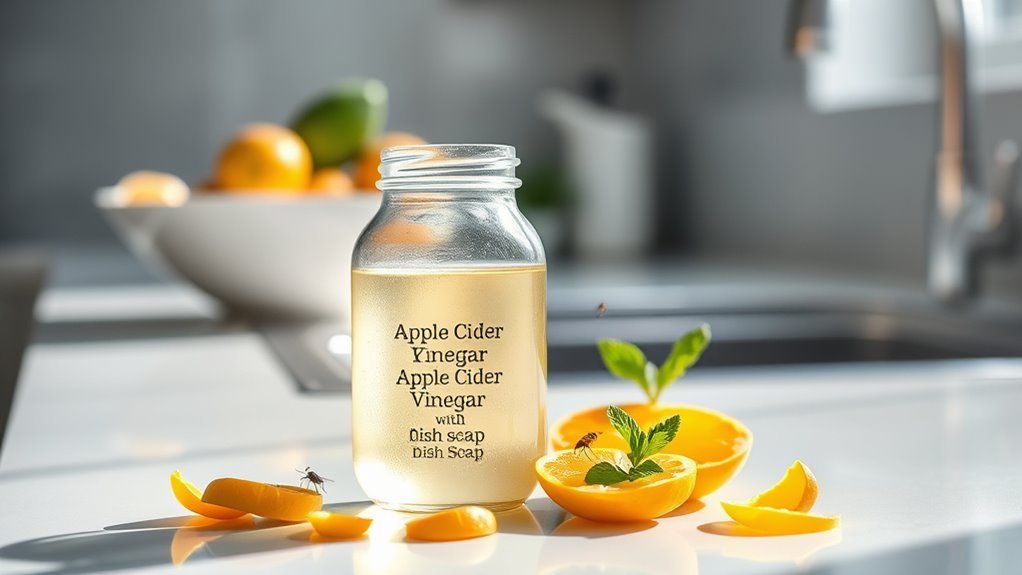
Start by grabbing a small bowl or jar and filling it with apple cider vinegar. The smell attracts the gnats and draws them in. Then, add a few drops of dish soap to break the surface tension so the gnats sink and drown.
Fill a small container with apple cider vinegar and dish soap to trap and drown gnats effectively.
Cover the container loosely with plastic wrap and poke small holes in it. These allow gnats to get in but keep them from escaping. Place the trap near gnat hotspots like fruit bowls or sink drains.
These homemade vinegar traps lure adult gnats, helping to cut down on breeding. Setting up multiple traps speeds up the process, so you can get your kitchen gnat-free faster.
Using Natural Traps to Catch and Kill Gnats
While chemical sprays might seem like a quick fix, using natural traps offers a safer and eco-friendly way to catch and kill gnats in your kitchen. Understanding the gnat life cycle helps you target them effectively—traps catch adults before they lay eggs, breaking the cycle.
You can create traps by mixing apple cider vinegar with a few drops of dish soap in a shallow container. The vinegar attracts gnats, while the soap breaks the surface tension, trapping them.
Adding natural repellents like basil, mint, or lavender near these traps can make them more effective by deterring gnats from breeding spots. Place the traps close to where gnats gather, such as near fruit bowls or drains.
Regularly replace the solution to keep it working well. By using natural traps and repellents, you reduce gnat populations safely without harsh chemicals, protecting both your kitchen environment and your health.
Using Store-Bought Gnat Killers Safely in Your Kitchen
When you’re picking out store-bought gnat killers, it’s a good idea to go for the non-toxic kinds. That way, you can keep your kitchen safe and avoid any unwanted chemicals near your food.
Make sure to read and follow the instructions on the packaging carefully. It’s the best way to make sure you’re using them correctly and not accidentally contaminating your kitchen.
Choosing Non-Toxic Products
Since your kitchen is a space where food is prepared and stored, you’ll want to choose gnat killers that are both effective and safe. Opting for non-toxic products helps protect your family and pets while keeping gnats at bay. Here’s how to pick the right ones:
- Look for natural repellents that contain essential oils like citronella, eucalyptus, or peppermint.
- Avoid harsh chemicals, especially those labeled toxic or harmful indoors.
- Check for EPA approval on safer, food-safe insecticides designed for kitchens.
- Consider products with clear ingredient lists so you can avoid unknown toxins.
Proper Application Techniques
Apply store-bought gnat killers carefully to protect your kitchen and everyone in it. Knowing gnat behavior helps you target their hotspots effectively.
Focus on areas like drains, fruit bowls, and trash bins where gnats breed. Always follow the product’s instructions for effective application, avoiding overuse to prevent residue buildup or harm to your family.
| Step | Action | Tip |
|---|---|---|
| 1 | Identify gnat hotspots | Look near moist areas |
| 2 | Read label instructions | Follow dosage precisely |
| 3 | Apply in targeted spots | Avoid food contact |
| 4 | Ventilate after application | Open windows or fans |
| 5 | Repeat as needed | Monitor gnat activity |
This approach guarantees safe, effective application while respecting gnat behavior patterns.
Effective Prevention Tips to Keep Gnats From Returning
To keep gnats from coming back, try to eliminate any moisture sources around your home and make sure your food is stored properly. It’s amazing how much of a difference these small changes can make! Also, don’t forget to clean your drains regularly because they can hide tiny breeding spots that you might not even notice.
Eliminate Moisture Sources
One of the most effective ways to keep gnats from coming back is by eliminating moisture sources in your kitchen. Gnats thrive in damp environments, so controlling moisture levels and humidity is essential.
Fix any leaks under sinks or around faucets promptly to prevent water buildup. Wipe down countertops and sinks regularly to remove standing water.
Use a dehumidifier or exhaust fan to maintain proper humidity, especially in humid climates. Empty and clean drip trays in appliances like refrigerators and dishwashers often.
Store Food Properly
Although gnats are attracted to moisture, they’re also drawn to improperly stored food. To keep these pests away, focus on proper food storage techniques.
Use airtight containers for fruits, vegetables, grains, and snacks. This keeps gnats from accessing the food and laying eggs.
Avoid leaving food exposed on countertops or in open bags. Also, refrigerate perishable items quickly to slow decay and reduce odors that attract gnats.
Check regularly for overripe or rotting produce and throw it out immediately.
Keeping your kitchen clean and organized with sealed food storage cuts off gnat food sources and makes your space less inviting.
These simple steps can effectively prevent gnats from coming back after you’ve gotten rid of them.
Regularly Clean Drains
Scrub your kitchen drains regularly to get rid of the moist, organic buildup where gnats love to breed. Keeping your drains clean is key to preventing gnats and keeping your kitchen pest-free.
Follow these simple steps to maintain clean drains:
- Pour boiling water down the drain weekly to loosen debris.
- Use a mixture of baking soda and vinegar to break down organic matter.
- Scrub drain covers and accessible pipes with a brush to remove slime.
- Consider a commercial drain cleaner monthly for deep cleaning.
When to Call a Professional for Persistent Gnat Infestations
If your efforts to eliminate gnats in the kitchen haven’t worked after several attempts, it might be time to call a professional. Persistent infestations often mean the gnats have found hidden breeding spots, and their gnat life cycle is continuing unchecked.
Professionals understand these cycles and can identify sources you might miss, like inside drains or behind appliances. A pest control expert uses targeted treatments to break the life cycle and prevent gnats from returning.
They also provide advice on long-term prevention tailored to your kitchen environment. If you notice gnats thriving despite thorough cleaning and homemade traps, or if the infestation spreads quickly, don’t hesitate to seek professional help. Acting early can save you time and stop the problem before it escalates.
Frequently Asked Questions
Are Gnats Harmful to Humans or Pets?
Gnats aren’t harmful to you or your pets, but they can be really annoying and disruptive.
They’re more of a nuisance than a danger, often drawn to food and moisture.
If you see them around, it’s a good idea to focus on pest control to stop an infestation.
Can Gnats Transmit Diseases Through Food?
They say, “A little leaven leavens the whole lump,” and with gnats, that’s true for food safety.
While gnats don’t bite or directly transmit diseases, their behavior—hovering around decaying food and waste—can spread bacteria onto your food.
So, you shouldn’t underestimate them. If you don’t control their presence quickly, they can contaminate your kitchen and increase the risk of foodborne illness.
Keep things clean to protect your meals.
Do Gnats Infest Other Parts of the House Besides the Kitchen?
Yes, gnats can infest other parts of your house besides the kitchen. They’re often drawn to moist areas like bathrooms, basements, and around houseplants.
To prevent an infestation, it’s important to control moisture and eliminate breeding sites throughout your home. Regularly check drains, fix leaks, and avoid overwatering your plants.
Staying vigilant with prevention helps keep gnats from spreading beyond the kitchen and turning into a bigger problem in your living space.
How Quickly Do Gnats Reproduce and Spread?
Gnats multiply like wildfire, and you’ll see their numbers explode fast. The gnat lifecycle is short—just about a week from egg to adult.
With gnat breeding happening nonstop in moist, food-rich spots, their population can double every few days. If you don’t act quickly, you’ll have swarms buzzing everywhere.
Staying on top of cleanliness and moisture control helps stop this rapid invasion before it spirals out of control.
Are Certain Kitchen Plants More Likely to Attract Gnats?
Yes, certain kitchen plants, especially those with moist soil like herbs or ferns, can attract gnats.
You’ll want to focus on gnat prevention by avoiding overwatering and letting the soil dry out between waterings. Using well-draining pots helps too.
If you notice gnats around your kitchen plants, try placing sticky traps nearby and consider repotting with fresh, dry soil to keep those pesky gnats away.
Conclusion
So, unless you want your kitchen to star in the next horror flick, “Attack of the Gnats,” it’s time to act. Clean up that fruit, fix leaks, and set traps like a gnat-busting ninja.
Sure, you could invite these tiny vampires to move in permanently, but why? Keep your kitchen gnat-free and enjoy meals without uninvited buzzing guests.
Because honestly, who needs a tiny, annoying roommate that never pays rent? Getting rid of gnats in your kitchen is all about staying ahead. Follow these simple steps and enjoy a gnat-free space.