
How to Play Pool Rules a Complete Guide to Playing and Winning Every Game
Learning how to play pool rules starts with understanding the basic gameplay, fouls, and equipment used on a standard pool table. Pool tables come in 7, 8, and 9-foot sizes with the typical playing surface measuring about 88 by 44 inches. Knowing the specific rules for your chosen game, such as 8-ball or cutthroat, helps improve accuracy and winning chances.
This guide is perfect for beginners and casual players seeking clear, practical instructions to play and win pool games. You’ll get straightforward explanations of rules, proper cue handling, and essential strategies to enjoy your time at the table with confidence.
Key Takeaways
- Standard pool tables are usually 7, 8, or 9 feet long, with an 8-foot table being the most common regulation size.
- A standard pool ball set features a single white cue ball alongside fifteen object balls, all measuring 2 1/4 inches across.
- Use a pool cue between 57 and 60 inches long with a medium-soft tip for better control as a beginner.
- The “ball-in-hand” rule allows the player to place the cue ball anywhere after most fouls in 8-ball pool.
- Triangle racks are used to arrange the fifteen balls at the game’s start, ensuring a fair break shot.
- Understanding common fouls like scratching or hitting the wrong ball group prevents giving opponents an advantage.
Basic Rules of Pool Explained for Beginners

Pool is a cue sport typically played by two players or two teams using a set of 16 balls on a rectangular table with six pockets. The balls include one white cue ball and 15 object balls numbered and colored differently. To begin a game, the balls are arranged in a triangular rack at one end of the table, with the cue ball positioned at the opposite end for the opening shot, known as the break.
The primary objective depends on the variant, but in the common 8-ball game, each player aims to pocket all seven balls of their assigned group, either solids (numbers 1 through 7) or stripes (numbers 9 through 15), and then legally pocket the black 8-ball to win. Players take turns striking the cue ball to hit their designated balls first, with the goal of sinking them into the table’s six pockets while avoiding fouls such as potting the cue ball or hitting the opponent’s balls first.
Essential rules to start playing pool include these basics: use the cue stick to strike the white cue ball; the cue ball must hit the correct target ball first, depending on the game; balls pocketed in a turn allow the player to continue shooting; failing to legally pocket a ball or committing a foul ends the turn; and the game ends when a player pockets their last ball followed by the 8-ball in 8-ball pool. In a standard 8-ball game, the 15 balls are divided between players after the break, often through which group is first legally pocketed.
Playing with two players is most common, but games like cutthroat pool can accommodate three or more players, with slightly altered rules and objectives. Games usually last until one player meets the winning condition, but the pace varies depending on skill level and the game type. Understanding how the balls are grouped and the consequence of each shot helps in planning strategies and maintaining control over the table.
The setup and clear objectives matter because they keep the game fair and enjoyable. Missing these basics can lead to confusion about whose turn it is or which balls are legal targets. For beginners, focusing on striking the cue ball cleanly and aiming carefully at the object balls will lead to better results. The typical table is 7 to 9 feet long, and a standard cue stick size is about 57 to 58 inches, fitting most players comfortably for controlled shots.
Essential Equipment and Setup for Pool Games
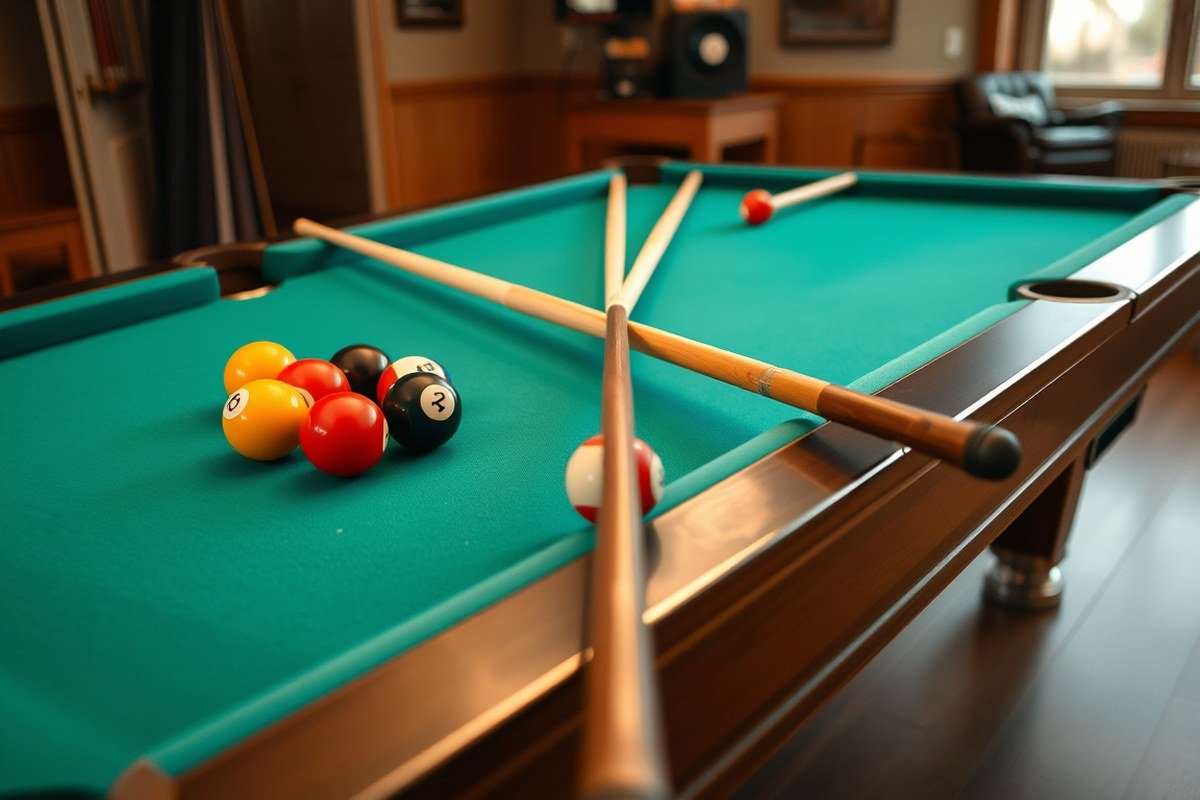
Pool tables come in several sizes, with the regulation table measuring about 8 feet long by 4 feet wide, offering a playing surface of 88 inches by 44 inches. Common table lengths also include 7 feet and 9 feet, often found in homes and bars. A larger table presents more challenge as shots require greater precision and control, while smaller tables are ideal for casual play and tight spaces. Knowing your table size helps you adjust your stance and shot power accordingly.
A typical set of pool balls contains 16 balls: a white cue ball, seven solid balls numbered from 1 to 7, seven striped balls numbered from 9 to 15, and the black 8 ball. The diameter of these balls is usually 2 1/4 inches (57 mm). This size fits most pool tables and ensures they roll and collide predictably. Playing with balls sized for your table helps keep shot accuracy and game speed consistent.
Setting up the rack is a key step before starting an 8-ball or 9-ball game. For 8-ball, you use a triangle rack to arrange 15 balls at the foot of the table. Place the 8 ball exactly in the center of the triangle. The front ball sits on the foot spot, and the other balls are placed randomly but with a solid ball in one corner of the rack and a striped ball in the opposite corner. This arrangement keeps the break fair and balanced.
For 9-ball, use a diamond-shaped rack to position balls numbered one through nine. Place the 1 ball at the front, on the foot spot, with the 9 ball in the center of the diamond. The other balls are arranged loosely around these two numbers. This setup directs play toward hitting the lowest-numbered ball first, which is important in 9-ball rules. Make sure the rack is tight by pushing the balls together firmly, preventing gaps that could affect the break shot.
The right racks and proper ball placement ensure consistent gameplay and respect official rules, especially in league or tournament settings. Using a high-quality rack and correctly sized balls costs about $20 to $50 for basic sets. Smaller or lower-quality equipment might damage balls or affect how they roll, so investing in decent gear pays off over time. A precise setup makes the break smoother and the game more enjoyable.
Make sure your rack is tight with no gaps between balls; even small spaces can cause uneven breaks and spoil your shot.
How to Hold and Use a Pool Cue Correctly
Holding and using a pool cue properly requires a balanced grip, a steady bridge hand, a solid stance, and clear aiming. Each aspect impacts your control and accuracy when shooting. Learning specific steps for grip, bridge, stance, and aiming will help you shoot consistently and improve quickly.
Correct Grip Techniques for Stability
Use a light and natural grip on the cue to maintain control without tension. Hold the butt of the cue with your dominant hand about 6 to 8 inches from the end, letting it rest comfortably between your thumb and first two fingers. The grip should feel relaxed, allowing the cue to move smoothly during your stroke. A tight grip restricts your follow-through and causes jerky shots. Try this script for gripping the cue:
- Place your dominant hand near the cue’s butt, about 6 to 8 inches from the end.
- Wrap your thumb and first two fingers lightly around the cue.
- Keep your pinky and ring finger relaxed, not gripping tightly.
- Hold the cue so it moves freely during your shot without twisting.
This grip method provides stability while enabling a smooth pendulum stroke. Too tight a grip leads to inconsistent strokes and less control. Adjust your grip pressure until you feel neither a slippery cue nor a locked hand.
Bridging Your Hand on the Table
Build a steady hand position that supports the cue and maintains stability during your shot. The open bridge is a good choice for beginners and casual players alike. Lay your fingers flat on the table, then lift your knuckles just enough to create a V-shaped channel between your thumb and index finger. This channel cradles the cue shaft and helps guide its movement. Here’s how to make an open bridge:
- Place your hand flat on the table near the cue ball.
- Spread your fingers comfortably for balance.
- Raise your knuckles off the table slightly to form a groove.
- Rest the cue shaft in the groove between your thumb and index finger.
- The cue should slide smoothly back and forth without wobbling.
You can switch to a closed bridge for shots needing extra stability, especially when you want to prevent cue tip misalignment. This involves wrapping your index finger around the cue shaft and resting the cue on your knuckles. The open bridge is easier for most shots and learning control.
Setting Your Stance for Consistent Shots
A good stance centers your body and allows the cue to swing naturally without shifting your weight. Stand with your feet about shoulder-width apart. Position your leading foot (left foot for right-handed players) forward, pointing toward the shot line, and place your back foot perpendicular or slightly outward for balance. Follow these stance steps:
- Place feet shoulder-width apart for stability.
- Lead foot points in the direction of your shot.
- Back foot at a 90-degree angle or slightly outward.
- Bend slightly at the knees and waist to lower your center of gravity.
- Keep your head low over the cue for clear sight of the shot line.
This stance helps you stay still during your stroke and maintain alignment. Avoid standing too upright or with feet too close together, which can cause unsteady shots. Staying balanced lets you deliver smoother and more accurate strokes.
Aiming and Stroke Basics
Start your aiming by lining up your cue stick so it points directly at the intended contact point on the object ball. Keep your head still, eyes focused on the target, and take several practice strokes back and forth to establish rhythm. Use a gentle, pendulum-like motion with your arm. Avoid snappy or jerky movements to maximize accuracy. Key aiming and stroke tips include:
- Visualize the path of the cue ball and object ball before shooting.
- Keep your elbow raised at a steady height to maintain a straight stroke.
- Start the cue back slowly and accelerate forward smoothly through the cue ball.
- Follow through with your cue stick pointing toward your target after hitting the cue ball.
- Hit softer than you think needed for better control; hard shots magnify aiming errors.
Consistent aim combined with a smooth stroke produces reliable shots. Rushing the stroke or gripping too hard will reduce control and increase missed shots. Practicing these details will help you develop confidence in your shot-making ability.
Step-by-Step Guide to Playing 8-Ball Pool
8-ball pool starts with a neatly arranged rack and a strategic break shot that sets the tone. Players take turns pocketing solids or stripes, claiming their group after legally potting one, aiming to clear their balls and then sink the 8-ball in a called pocket to win. Following these steps ensures fair play and a clear path to victory.
Racking the Balls for 8-Ball
The 8-ball rack consists of 15 balls arranged in a tight triangle at the foot of the table. Place the 8-ball in the center of the rack for a legal setup. The balls should be positioned with the first ball at the apex on the foot spot, one corner ball must be a solid and the other a stripe, and the rest placed randomly, making sure they touch each other.
Gather all the balls and arrange them until the triangle is compact and snug. Tight racking helps ensure a good break with balls spreading properly. Loose racks cause poor breaks and uneven gameplay.
Starting the Game: The Break Shot
Begin the game with the break shot, hitting the cue ball from behind the head string line. The goal is to spread the balls widely and ideally pocket at least one ball to keep the turn. After the break, the table is open, meaning you may hit any ball (solid or stripe) to claim your group. Here are key rules for the break:
- The break shot requires positioning the cue ball anywhere behind the head string area.
- A legal break demands that no fewer than four balls touch a cushion, or at least one ball drops into a pocket.
- Scratching the cue ball during the break gives the next player ball-in-hand, which must be placed behind the head string.
- Pocketing the 8-ball on the break can end the game in some rules but usually results in a re-rack or spot for the 8-ball.
- After the break, the table is open until a ball is legally pocketed.
The break sets your chances for success so focus on power and accuracy.
Determining Groups: Solids vs Stripes
The table starts open after the break, allowing players to legally pocket any ball. Once you sink a solid or stripe on a called shot, you claim that group for the rest of the game. Your opponent is assigned the other group automatically. Keep these steps in mind:
- Call the ball and pocket you intend to aim for on your shot.
- Legally pocket your called ball to claim solids (1-7) or stripes (9-15).
- You must then continue to pocket all the balls in your group before aiming for the 8-ball.
- Missing your shot or pocketing your opponent’s ball results in a turn loss.
- Hitting the cue ball off the table or fouls forfeits your shot and may give your opponent ball-in-hand.
Knowing your group clarifies your target balls and helps develop focused strategy.
Winning by Pocketing the 8-Ball
The ultimate goal is to legally pocket the 8-ball after clearing all your group balls. You must call the pocket for the 8-ball before the shot. Pocketing the 8-ball early, scratching, or sinking it into an uncalled pocket results in losing the game. Follow this checklist to win:
- Clear all your assigned solids or stripes first.
- Call the exact pocket for the 8-ball shot.
- Ensure the shot is legal, no fouls or scratches on the same turn.
- Do not accidentally pocket the 8-ball before your group balls are all cleared.
- Use careful cue ball control to set up the final, precise shot on the 8-ball.
Winning by pocketing the 8-ball takes planning, skill, and a clear understanding of the rules.
Common Rules, Fouls, and Penalties in Pool
Common fouls in pool usually involve mistakes like scratching (pocketing the cue ball), failing to hit your own ball first, or not driving any ball to a rail after contact. Scratching is one of the most frequent fouls and often happens when you lose control of the cue ball during your shot. Fouls significantly affect the flow of the game because they typically end your turn and give your opponent an advantage called “ball in hand.”
The phrase “ball in hand” means your opponent can position the cue ball anywhere on the table or inside the “kitchen,” which is the area behind the head string as per the agreed rules. This gives the next player a chance to make an unobstructed, precise shot. According to official 8-ball regulations, most fouls grant the opposing player ball in hand, making it important to steer clear of fouls to maintain control during the game.
- Scratching (cue ball pocketed or knocked off the table)
- Failing to hit your group of balls first (solids or stripes in 8-ball)
- Not driving any ball to a rail after contact
- Potting the cue ball along with the object ball
- Playing out of turn or hitting balls in the wrong order in rotation games
- Moving balls accidentally during play
The consequences of fouls are straightforward: your turn ends immediately, and your opponent is awarded ball in hand. This rule shifts the advantage, often allowing them to run multiple balls without interruption. Fouling while taking a shot at the final black ball in English pool rules results in you losing the entire frame. Always confirm the scratch and foul penalties before starting, since local variations exist. For example, some places let the opponent place the cue ball only in the kitchen after a scratch, while others allow placement anywhere on the table.
Using a checklist before every shot can help you avoid fouls: make sure to hit your correct ball first, avoid potting the cue ball, and keep at least one ball contacting a rail after the cue ball strikes the object ball. This practice reduces mistakes that end your turn prematurely. It also improves your overall control, which is key in competitive play.
Practice cue ball control to prevent scratches, as these fouls hand your opponent the best position on the table.
Differences Between Popular Pool Games Explained
Pool comes in several popular versions, each with unique rules that shape gameplay and strategy. Understanding the differences between 8-ball, 9-ball, and straight pool can help you decide which game suits your skill level and playing style.
8-ball ranks as the most widely played pool game and suits newcomers well. The game features all 15 object balls, and each player aims to clear either the solid balls (1 through 7) or the striped balls (9 through 15). After all balls in your group are pocketed, sinking the 8-ball legally secures your victory. This game combines thoughtful planning with shot accuracy across many balls on the table. Matches usually last longer compared to 9-ball.
9-ball uses only the balls numbered 1 to 9 and offers a quicker pace. Players must strike the lowest-numbered ball that remains on the table first on every shot. Pocketing the 9-ball legally at any point wins the game instantly. This format is favored by skilled players for its demand on exact shots and managing ball position during fast play.
Straight pool, also called 14.1 continuous pool, is aimed at advanced players. The goal is to reach a set number of points, usually 100 or 150, with each pocketed ball counting as one point. Players can shoot at any ball on the table, planning several shots ahead to run through many balls consecutively. Straight pool demands high skill, concentration, and tactical thinking, making it less accessible for beginners.
| Game | Balls Used | Winning Objective | Gameplay Focus | Speed | Best For |
|---|---|---|---|---|---|
| 8-ball | 1, 15 (all balls) | Clear your group then pocket the 8-ball | Strategy and ball control | Moderate | Beginners, casual players |
| 9-ball | 1, 9 | Legally pocket the 9-ball | Shot-making and position play | Fast-paced | Intermediate to advanced |
| Straight pool (14.1) | 1, 15 | Reach a set point total (e.g., 100 points) | Continuous ball running and planning | Variable; often longer | Advanced players |
The differences in ball count and winning conditions make each game unique. For example, 8-ball’s full rack and group clearing provide many opportunities for strategic defensive play. In 9-ball, forcing yourself to always strike the lowest-numbered ball first requires sharp accuracy. Straight pool allows more freedom in aiming but demands thorough planning to maintain long runs without mistakes.
Choosing your game depends on your current skill and what you want to focus on. Beginners often start with 8-ball because the rules are straightforward and the game moves at a comfortable pace. Once you’re comfortable with 8-ball, playing 9-ball can sharpen your shot-making and positional skills due to its quicker, more tactical nature. Straight pool suits those interested in advanced skill development and high-level tactical play, but it requires patience and considerable experience.
Basic Strategies to Improve and Win Pool Games
Winning at pool involves balancing aggressive shots that sink balls with smart defensive moves that limit your opponent’s options. Planning your shot sequences and controlling the cue ball’s position are key skills that help you maintain an advantage throughout the game.
Planning Effective Break Shots
The break shot sets the tone for the entire game. An effective break requires striking the cue ball with enough force and precision to send at least four object balls to the rails or pocket one, based on common house rules. Aim to hit the front ball of the rack slightly off-center to spread the balls widely across the table, giving you more shot opportunities.
Position the cue ball in the kitchen (behind the head string) and focus on a smooth, powerful stroke without losing control. Avoid hitting the rack dead center, which causes clustering. A well-planned break increases the chance you’ll pocket a ball early and control the table’s layout, making your next shots easier.
Offensive Shot Selection Tips
Choosing the right offensive shot means looking several moves ahead. After pocketing a ball, always think about where the cue ball will end up. Aim to leave it close to your next target ball to minimize difficult angles and reduce the risk of missing. Practicing cue ball control allows you to plan a sequence of shots that flow naturally.
For example, if you pocket the 3-ball on the bottom left pocket, plan to leave the cue ball near the center of the table, aligned with the 7-ball, to set up your next shot. Use subtle spin and speed adjustments to position the cue ball. Avoid long, direct shots if a better position is achievable through planning.
Using Defensive Shots to Control the Table
Knowing when to play defense is just as important as offensive skills. Use safety shots to leave your opponent without a clear shot on their next turn. This often means positioning the cue ball behind other balls or near the rail to block easy paths. Defensive play forces opponents into difficult or low-percentage shots.
For instance, if the next ball is snookered (blocked) by your cue ball, your opponent might have to attempt a tough bank or jump shot, increasing their chance of fouling. Defensive shots cost you the chance to pocket balls but pay off by disrupting your opponent’s rhythm and keeping you in control of the table.
Safety and Etiquette Tips for Playing Pool
Playing pool safely starts with understanding your surroundings and handling equipment properly. The pool cue, typically about 57 inches long, can cause injury if swung carelessly. Always watch your movements, especially when taking shots near other players. Keep the area around the table clear of obstacles and avoid sudden movements to prevent accidents like tripping or bumping into others.
Proper conduct at the table helps everyone enjoy the game. Respect the shooter’s space by standing clear of their line of aim and avoid distracting them with loud noises or rushing their turn. Sharing the table means being patient and courteous, such as waiting for your turn without leaning on the table or touching the balls unless it’s your shot. In casual settings, letting the previous player know if their cue or gloves have fallen or if the lighting is causing glare shows good etiquette.
- Wear closed-toe shoes to protect your feet from dropped cues or balls
- Wait until the shooter finishes before offering advice or comments
- Do not lean or place drinks on the pool table surface
- Call “foul” only when you are sure a rule has been broken to maintain fairness
- Keep your cue straight and use chalk properly to avoid missed shots and damage
- Avoid snapping the cue ball forcefully to prevent damage to the table and balls
Knowing when to call a foul or involve a referee depends on the type of game and setting. In casual games, players often self-regulate fouls, such as shooting the cue ball off the table or hitting the wrong ball first. For example, knocking any ball off a standard 7-foot by 3.5-foot English pool table is a clear foul. In formal or tournament play, always defer to the referee’s decisions regarding fouls and penalties. Call out “foul” loudly and clearly right after a potential infraction to keep the game fair and in order.
Always chalk your cue-tip before your shot to prevent miscues; it only takes a second but keeps shots accurate and the game flowing.
Following these safety and etiquette tips ensures a better experience for everyone at the pool table. Safety reduces the chance of injuries, while respectful play creates a friendly environment. Knowing when and how to call fouls supports fair competition and keeps the game enjoyable for all players, from beginners to those in official matches.
Step-by-Step Action Plan to Start Playing Pool Today
Get ready to play pool confidently by following these simple steps focused on mastering the basics and applying the rules correctly.
- Before your first game: Gather all essential equipment, a standard 8-ball set, pool cue, and chalk, and set up the table according to official rules. Confirm the balls are racked tight and positioned correctly.
- Day 1: Practice your grip and stance with the cue until you can comfortably take a smooth stroke. Test your form by hitting a few straight shots and watch if the cue ball moves as expected.
- Day 2: Learn and apply the basic 8-ball rules during a friendly game. Focus on calling your shots and following fouls properly. Check if the game flows without rule confusion.
- After 3 practice games: Identify common fouls you accidentally commit and learn how to avoid them. Notice whether your foul count decreases each time you play.
- Week 2: Start applying strategic moves such as positioning the cue ball after your shot to make the next easier. Watch if your shot planning improves your run at the table.
- Week 3: Play with experienced players or join a casual local league to test your skills under real conditions. Gauge your confidence and rule knowledge in live play.
- After one month: Review the standard etiquette and safety tips to ensure respectful and safe play for yourself and others. Confirm you can naturally follow these practices while focusing on your game.
Frequently Asked Questions
What Are the Basic Rules to Start a Game of Cutthroat Pool?
Cutthroat pool involves three players each assigned five balls, and the goal is to be the last player with balls on the table. Players take turns trying to pocket opponents’ balls while keeping their own safe. Understanding the turn sequence helps manage strategy effectively.
How Do the World Eightball Pool Federation (WEPF) Rules Differ from Casual Pool Rules?
WEPF rules standardize 8-ball play with stricter guidelines on fouls, ball calling, and rack setup. Casual games often allow more leniency, especially in calling shots. Following WEPF rules ensures fair competition in official matches.
Can You Explain How to Play 9-ball Pool Briefly?
9-ball pool uses balls numbered 1 to 9, and players must hit the lowest-numbered ball first. The aim is to legally pocket the 9-ball to win. This game is fast-paced and emphasizes precise cue ball control.
What Are the Most Common Fouls Not Usually Covered by Beginners?
Common fouls include scratching the cue ball, failing to hit a ball, and moving balls accidentally. Knowing these can prevent losing turns or giving your opponent ball-in-hand. Mastering foul rules improves your defensive play.
How Does Bumper Pool Differ from Standard Pool Games?
Bumper pool is played on a smaller table with fixed bumpers that create obstacles. Players aim to sink all balls into their pockets first. Its unique rules and table design make it a distinct skill challenge.
What Is the Main Difference Between Straight Pool and 8-ball Pool Rules?
Straight pool allows players to shoot any ball on the table and score points for each pocketed ball. 8-ball requires players to clear a specific group of balls first. Straight pool emphasizes continuous play and strategy.
Key Points to Remember
Playing pool with confidence means knowing the official rules, mastering your cue skills, and respecting the game’s etiquette. Start by setting up properly and practicing your form on every turn. The next step is to join a game with someone else and enjoy putting your knowledge into action.






One Comment