How to Use a Griddle: A Practical Guide for Perfect Cooking
Using a griddle involves heating a flat cooking surface to prepare foods evenly and quickly. To start, preheat your griddle on medium heat, then apply a thin layer of oil or butter. Place your ingredients—like pancakes, vegetables, or meats—directly on the heated surface and cook until done, flipping as needed.
Cooking with a griddle matters because it distributes heat evenly and provides a large, flat area perfect for batch cooking or preparing multiple items simultaneously. Its versatility lets you make breakfast classics, sandwiches, or stir-fries without requiring multiple pans.
This article will cover the types of griddles available, how to season and maintain them, essential cooking tips, common uses, and troubleshooting advice to help you get comfortable and confident with griddle cooking.
Understanding Griddle Types and Surfaces

Electric vs. Stovetop Griddles
Electric griddles plug in and offer precise temperature control, making them ideal for indoor use and consistent cooking. They often come with non-stick surfaces and drip trays for easy cleaning.
Stovetop griddles, which are placed directly on gas or electric burners, vary by material and size. They provide more cooking flexibility but require careful attention to heat distribution.
- Electric griddles provide constant heat
- Stovetop griddles depend on burner heat
- Electric models often simpler to clean
Material Differences: Cast Iron vs. Non-Stick
Cast iron griddles heat evenly and retain heat for a long time, perfect for searing and baking on the griddle. They require seasoning to maintain their non-stick qualities and prevent rust.
Non-stick griddles are easy to clean and need less oil. While convenient, their coating can degrade over time with high heat or abrasive cleaning, limiting their lifespan compared to cast iron.
- Cast iron requires seasoning
- Non-stick easier to clean but less durable
- Cast iron ideal for high-heat cooking
Preparing and Seasoning Your Griddle

Initial Cleaning and Oiling
Before the first use, clean the griddle with warm soapy water if it’s new, then dry thoroughly. For cast iron, apply a thin, even coat of cooking oil to protect the surface and build up seasoning layers.
Regular oiling before each use reduces sticking and promotes even cooking. Avoid heavy oils that can polymerize unevenly, choosing flaxseed, vegetable, or canola oil for best results.
- Use warm soapy water for new non-seasoned griddles
- Always dry completely to prevent rust
- Apply thin oil layer before use
Building and Maintaining Seasoning
Seasoning is the process of baking oil onto cast iron to create a natural non-stick coating. Heat the griddle after oiling until it smokes slightly, then repeat as needed.
Avoid using harsh detergents on seasoned cast iron. Instead, clean with hot water and a brush; reseason after heavy use or rust spots show up.
- Heat oiled surface to smoking point
- Repeat seasoning for best non-stick surface
- Clean gently to preserve seasoning
Essential Griddle Cooking Techniques

Proper Temperature Control
Preheat your griddle to the correct temperature to avoid food sticking or burning. Medium heat is ideal for most foods; high heat should be reserved for searing meats to lock in juices.
Use an infrared thermometer or a few drops of water to test heat—water should sizzle or evaporate immediately when the surface is ready.
- Medium heat for general cooking
- High heat for searing
- Water drop test for heat check
For more on this, see our related guide: Your Guide to Electric Range With Griddle: Choosing With Confidence.
Managing Food Placement and Timing
Avoid overcrowding the griddle, which lowers surface temperature and leads to uneven cooking. Cook similar items together to manage timing and flipping easily.
Flip foods only when they release naturally from the surface to prevent tearing or sticking, especially with delicate items like fish or crepes.
- Leave space between items
- Group similar foods
- Flip when food releases easily
Cleaning and Maintenance After Use

Daily Cleaning Tips
After cooking, scrape off food remnants while the griddle is still warm using a metal spatula or scraper. Wipe with a damp cloth or paper towel to remove grease.
For electric griddles, unplug and clean the surface gently with warm soapy water, avoiding the electrical components.
- Scrape food residue when warm
- Wipe surface clean
- Avoid soaking electric parts
Seasoning Maintenance and Storage
For cast iron, lightly re-oil the cooking surface after cleaning to preserve seasoning. Store the griddle in a dry place to prevent rust.
If rust forms, scrub with fine steel wool, rinse, dry thoroughly, and reseason the surface for protection.
- Light coating of oil after cleaning
- Keep griddle dry during storage
- Reseason if rust appears
Common Foods and Recipes for Griddle Cooking
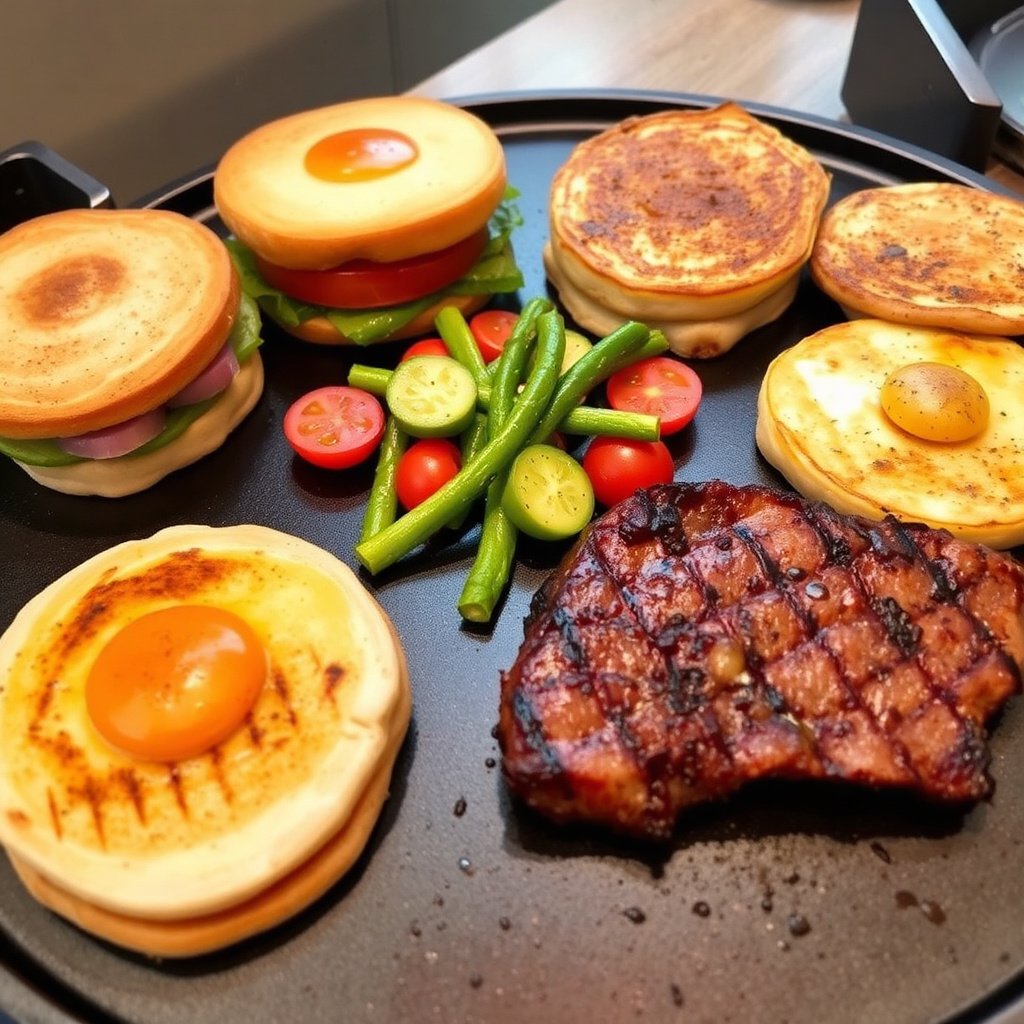
Breakfast Favorites on a Griddle
Pancakes, bacon, eggs, and hash browns are classic griddle meals because they cook evenly and quickly on the flat surface. Use medium heat for steady cooking to avoid burning or undercooking.
Try batch cooking multiple items at once to save time during busy mornings, using separate zones on larger griddles.
- Pancakes require steady medium heat
- Cook bacon at medium to low heat
- Eggs need a lightly oiled surface
For more on this, see our related guide: Your Guide to Electric Stove With Griddle: Choosing With Confidence.
Grilling Meats and Vegetables
Seared steaks, chicken breasts, and sliced vegetables benefit from high heat to achieve caramelization and grill marks. Turn items once to develop even color.
Marinate meats before griddling for extra flavor, and slice vegetables evenly for consistent cooking times.
- Preheat griddle on high for meats
- Flip once for best sear
- Evenly slice vegetables
Troubleshooting Common Griddle Issues

Addressing Food Sticking
Food sticks when the surface is not hot enough or lacks sufficient oil. Preheat fully before adding food and apply a thin coat of cooking oil to prevent sticking.
Avoid moving food too soon; wait until it naturally releases from the griddle before flipping.
- Always preheat griddle
- Use sufficient oil
- Flip only when food releases
For additional detailed information, consider the Griddle Cooking Techniques overview on Wikipedia. Griddle Cooking Techniques overview.
Fixing Uneven Heating
Uneven heating can result from burner hotspots or warped griddles. Rotate the griddle periodically or adjust burner settings to compensate for temperature differences.
For electric griddles, check manufacturer’s instructions for optimal temperature settings and placement.
- Rotate griddle to balance heat
- Check burner and griddle condition
- Follow manufacturer guidelines
Griddle Types Category Comparison
Here's a comparison of common griddle types to help you decide which best suits your cooking style and needs.
| Griddle Type | Heat Source | Surface Material | Portability | Ease of Cleaning |
|---|---|---|---|---|
| Electric Griddle | Electricity | Non-stick or cast iron | High | Easy |
| Stovetop Cast Iron Griddle | Gas/Electric Stove | Cast Iron | Medium | Requires seasoning and careful cleaning |
| Electric Cast Iron Griddle | Electricity | Cast Iron | Medium | Moderate, requires seasoning |
| Portable Butane Griddle | Butane Gas Cartridge | Aluminum Non-stick | Very High | Easy |
| Electric Double-Sided Griddle | Electricity | Non-stick | High | Easy |
Frequently Asked Questions
Can I use metal utensils on a griddle?
Metal utensils are safe on cast iron and uncoated griddles but can damage non-stick surfaces. Use silicone, wooden, or plastic tools on non-stick griddles to preserve the coating.
Do I need to season a non-stick griddle?
Non-stick griddles do not require seasoning. Simply clean gently and avoid abrasives to maintain the coating.
How do I prevent rust on a cast iron griddle?
After cleaning, dry the cast iron thoroughly and apply a thin coat of oil. Store it in a dry place to prevent moisture buildup and rust formation.
Can I cook acidic foods like tomatoes on a cast iron griddle?
Cooking acidic foods on cast iron can strip seasoning and impart metallic flavors. It’s best to limit such foods or ensure the griddle is well-seasoned.
Is it necessary to preheat the griddle before cooking?
Yes, preheating ensures even heat distribution and prevents sticking. A properly warmed griddle cooks food more evenly with better texture.
Key Takeaways
- Preheat your griddle for even cooking and to prevent food from sticking
- Season cast iron griddles regularly to maintain non-stick properties
- Use medium heat for most foods and high heat for searing meats
- Clean promptly after use and oil cast iron griddles to prevent rust
Conclusion
Choosing how to use a griddle effectively depends on understanding your equipment and cooking habits. Whether you have an electric or stovetop griddle, knowing how to properly preheat, season, and manage the cooking surface is essential for consistently tasty results. Paying attention to temperature control and food placement will greatly reduce sticking and uneven cooking, leading to more enjoyable meals and easier cleanup.
For those aiming to create hearty breakfasts or quick dinners, electric griddles with non-stick surfaces offer convenience and simple maintenance. Cast iron griddles, while requiring more care, excel for high-heat searing and developing rich flavors. If you enjoy batch cooking or often prepare diverse meals simultaneously, investing in a larger stovetop griddle or double-sided electric griddle can maximize your kitchen efficiency.
Start by selecting the griddle style that aligns with your cooking needs, then familiarize yourself with seasoning and cleaning techniques discussed here. With practice, you’ll find using a griddle becomes a go-to method for quick, flavorful meals. Try simple recipes like pancakes or grilled vegetables first, expanding to more complex dishes as your confidence grows.