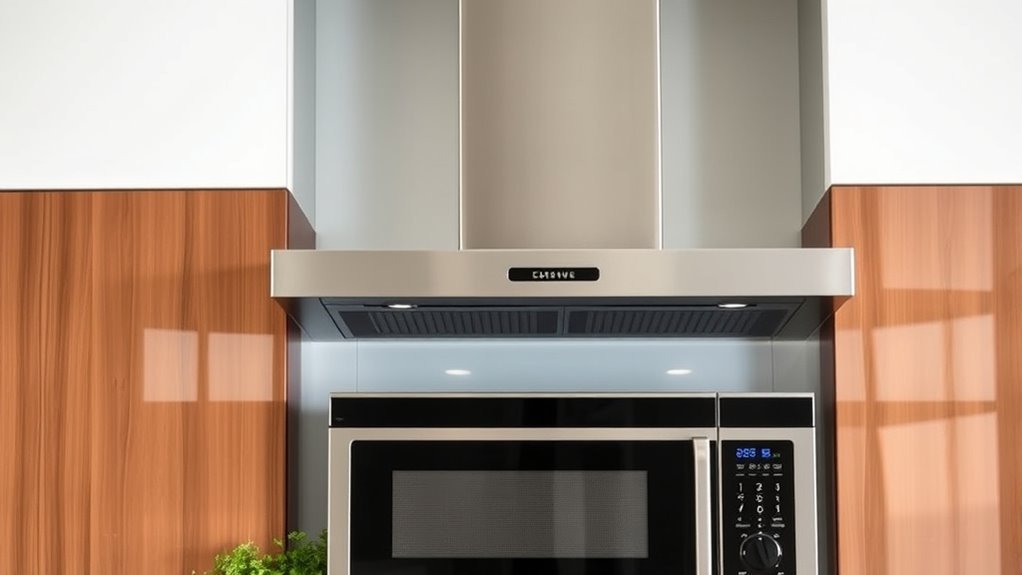
Kitchen Vent Hood With Microwave: a Complete Buying Guide
Feeling overwhelmed trying to find the perfect kitchen solution? You’re not alone—many people struggle with managing space, air quality, and style all at once.
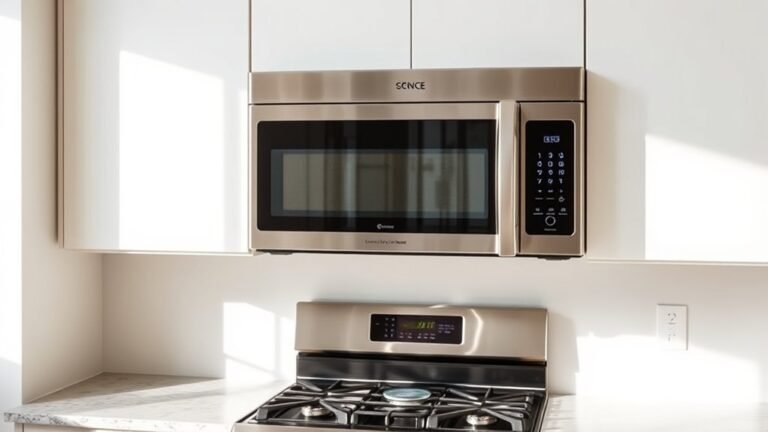
A kitchen vent hood with microwave combo can be a game-changer. It saves space, offers powerful ventilation, and adds a sleek look to your kitchen.
You’ll get a combination of style, energy efficiency, and convenience in one unit. Choose between easy-to-install recirculating models or venting ones that exhaust outside.
Accurate measurements and proper electrical setup are key for a perfect fit. Balancing features with your budget guarantees you get the best value.
Keep exploring to find tips on installation, maintenance, and top picks for your kitchen.
Key Takeaways
- Kitchen vent hood microwave combos save space by combining ventilation and cooking functions into one sleek appliance.
- You can choose between recirculating models for easy installation or venting models for better air exhaust.
- Make sure to measure your kitchen dimensions and check electrical and ducting requirements before installing.
- Balance your budget and desired features by comparing reliable brands like GE and Whirlpool with premium options like LuxeAir Pro.
- Don’t forget to maintain filters and clean them regularly. Review warranty terms and troubleshooting tips to ensure long-term use.
Why Choose a Kitchen Vent Hood Microwave Combo to Save Space and Boost Efficiency
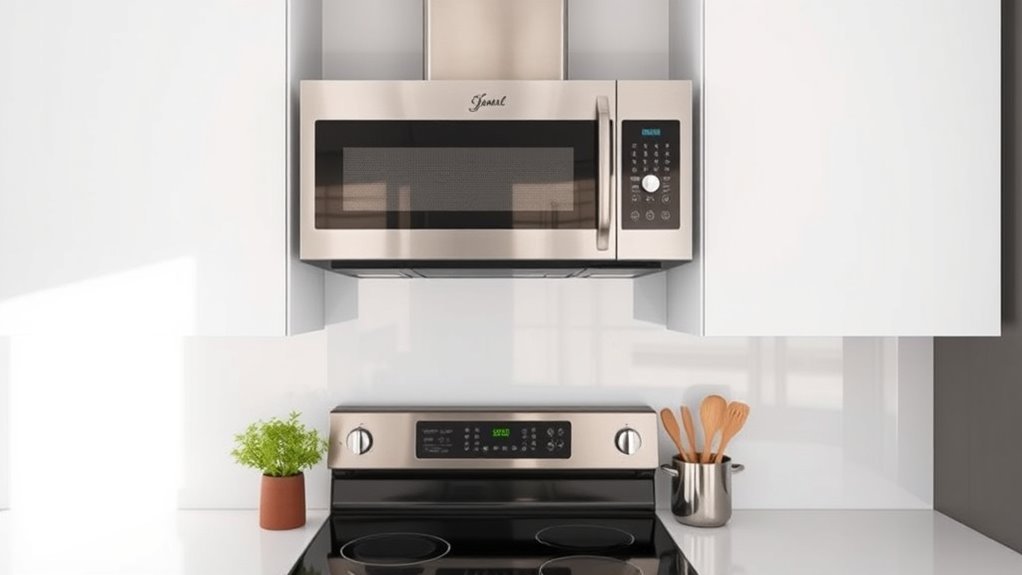
Why settle for separate appliances when you can combine them? Choosing a kitchen vent hood microwave combo instantly frees up valuable counter and wall space with its smart, space-saving design.
Instead of juggling two bulky units, you get a sleek appliance that fits neatly above your stove, making the most of your kitchen’s layout. This clever setup not only clears clutter but also boosts cooking efficiency.
By integrating the microwave and vent hood, you streamline your cooking process—venting out smoke and odors while quickly heating meals right where you need it.
You won’t have to move back and forth across the kitchen, which saves time and effort. Plus, these combos often come with powerful ventilation systems that keep your kitchen air fresh.
That means you can cook comfortably without worrying about lingering smells.
If you’re looking to optimize your kitchen’s footprint and speed up meal prep, a kitchen vent hood microwave combo is a smart, efficient choice.
Key Features of Kitchen Vent Hood Microwave Combos
When you choose a kitchen vent hood microwave combo, you’re getting more than just space-saving convenience—you’re adding features that make cooking easier and more enjoyable. These combos combine stylish design with energy efficiency, making them perfect for modern kitchens.
You’ll find models with strong ventilation systems that quickly remove smoke and odors, keeping your kitchen fresh. Plus, the microwaves cook meals faster and use less energy, saving you money.
Here’s a quick look at the key features:
| Feature | Benefit | What It Means for You |
|---|---|---|
| Ventilation Power | Removes smoke and odors | Keeps your kitchen fresh |
| Energy Efficiency | Uses less electricity | Saves on utility bills |
| Design Aesthetics | Sleek, modern looks | Boosts your kitchen style |
Choosing the right combo means efficient cooking, stylish looks, space savings, and energy conservation all in one.
Recirculating vs. Venting Vent Hood Microwave Models
When you’re trying to decide between recirculating and venting vent hood microwave models, it’s helpful to think about how each one manages airflow and odors. Recirculating models basically filter the air and then send it right back into your kitchen, so they’re super convenient if you don’t want to deal with venting outside. On the other hand, venting models actually exhaust the air outside, which generally provides better ventilation and keeps your kitchen smelling fresher.
Also, keep in mind that their installation requirements are different. Recirculating units are usually easier to install because they don’t need an external vent, making them a good choice for apartments or kitchens where adding a vent might be tricky. Venting models, however, do require proper ductwork to channel the air outside, so they might need a bit more planning upfront. Knowing these differences can really help you pick the best microwave hood for your kitchen setup.
Recirculating Vent Hood Features
Choosing between recirculating and venting vent hood microwave models really depends on your kitchen’s layout and ventilation options.
Recirculating vent hoods don’t vent air outside. Instead, they pull cooking fumes through filters that trap grease and odors before releasing clean air back into your kitchen.
You’ll need to check these filters regularly and replace them when necessary to keep things running efficiently. One advantage is that recirculating models can fit in kitchens that don’t have external ductwork.
However, they tend to be louder than vented models because the air recirculates internally. If installing ductwork is a challenge, a recirculating vent hood microwave can be a flexible option.
Just keep in mind that these models may require more maintenance and might be noisier, so consider these factors when making your choice.
Venting Vent Hood Benefits
While recirculating vent hoods offer flexibility for kitchens without external ductwork, venting vent hoods provide a different set of advantages that might better suit your cooking needs. They excel in ventilation efficiency, removing smoke, steam, and odors directly outside your home, which greatly improves air quality.
Here are three key benefits you’ll appreciate with venting vent hood microwave models:
- Superior Air Quality: By exhausting pollutants outdoors, they help maintain fresher indoor air.
- Enhanced Ventilation Efficiency: They handle heavy cooking fumes more effectively, reducing lingering smells.
- Reduced Maintenance: Unlike recirculating models, you won’t need to replace charcoal filters regularly, saving time and money.
Choosing a venting vent hood can make a noticeable difference in your kitchen’s environment and your overall cooking experience.
Installation Considerations Comparison
Because installation requirements vary a lot, it’s important to understand the differences between recirculating and venting vent hood microwave models before you decide. Each type comes with its own installation challenges that can affect your kitchen setup and efficiency.
Recirculating models are easier to install because they don’t need ductwork, but they do require regular filter maintenance. On the other hand, venting models need proper duct installation, which can be more complex but generally provide better air quality.
| Installation Type | Installation Challenges |
|---|---|
| Recirculating | No ductwork needed; filter upkeep |
| Venting | Requires ductwork; more complex |
Knowing these differences helps you pick the right vent hood microwave that fits your kitchen layout and maintenance preferences.
Measuring Your Kitchen Space for the Right Fit
Before you choose a vent hood, take some time to measure your wall and ceiling space carefully. This way, you’ll make sure it fits just right. Don’t forget to double-check your cabinet dimensions too, since they can impact how and where the hood can be installed. And, of course, leave enough space for proper ventilation — you want your kitchen to stay fresh and airy!
Measure Wall and Ceiling
Start by measuring the exact dimensions of your kitchen wall and ceiling where the vent hood will be installed. Accurate measurements ensure your new vent hood fits perfectly and works efficiently. Use reliable tools like a tape measure or laser measure for accuracy.
Focus on the wall height, width, and available ceiling space to avoid any installation issues. These measurements are key to choosing the right vent hood for your kitchen.
Here’s how to get it right: First, measure the wall height from the countertop to the ceiling to find the best placement for the vent hood. Next, measure the wall width to make sure it lines up properly with your cooktop.
Finally, check the ceiling clearance for ductwork or mounting hardware, making sure nothing obstructs the installation. Taking these steps will help you select a vent hood that fits seamlessly in your kitchen.
Check Cabinet Dimensions
Cabinet dimensions are key when choosing the right vent hood for your kitchen. Before buying, take careful measurements of your cabinet height and depth.
These measurements make sure your new vent hood fits perfectly under or between your cabinets without crowding your space or looking awkward. Pay attention to cabinet height so the vent hood doesn’t interfere with your microwave or other appliances.
Also, check the cabinet depth to avoid any overhang or gaps that could affect installation and overall look. Accurate dimensions help you select a vent hood that blends seamlessly with your kitchen layout.
Taking the time to measure now can save you from costly adjustments later. It ensures a smooth, functional fit for your new vent hood with a microwave.
Account For Ventilation Space
Your kitchen needs enough ventilation space to ensure your vent hood works efficiently and safely. Proper space planning helps your vent hood, especially models with microwaves, fit seamlessly while providing good airflow.
Start by measuring the height and width around your cooktop to match your vent hood’s size. Make sure to include the clearance recommended for different ventilation types.
Next, identify whether you’ll use a ducted or ductless system. This choice affects how much space you’ll need for venting and installation.
Finally, check for obstacles like cabinets or light fixtures that could block airflow or make installation tricky. Leave enough room for easy maintenance and safe operation.
Electrical and Ventilation Requirements for Installation
Proper electrical and ventilation setup guarantees your kitchen vent hood operates efficiently and safely. Before installation, check your kitchen’s electrical load to confirm it can handle the vent hood microwave combo without tripping breakers or causing power issues.
Most units require a dedicated 120-volt outlet, so verify that the circuit can support the hood’s wattage. Also, plan your ventilation ducts carefully. The ducts should be the right size and length to allow proper airflow, minimizing resistance and noise.
Use smooth, rigid metal ducts instead of flexible ones to improve efficiency and reduce buildup. Ensure the vent leads outside your home, not into the attic or crawl space, to prevent moisture problems.
If your kitchen layout limits venting options, consider a recirculating model with filters. Just keep in mind, it won’t perform as well as direct venting.
Following these electrical and ventilation requirements will keep your vent hood microwave combo working safely and effectively.
Top Vent Hood Microwave Combos for Every Budget
Looking for vent hood microwave combos that fit any budget? No matter if you’re working with a tight budget or splurging on a high-end kitchen, there’s definitely a great option out there for you. Whether you’re after a simple, reliable model or a fancy one loaded with all the latest features, you’ll find something that suits your style. Let’s take a look at some of the best choices to help you find the perfect match for your needs.
Budget-Friendly Options
Finding a vent hood microwave combo that fits your budget doesn’t mean sacrificing quality or style. You can find affordable brands that offer essential features without breaking the bank. Here are three budget-friendly options to consider:
1. GE Appliances
Known for reliable, cost-effective models with good ventilation and basic microwave functions.
2. Whirlpool
Offers combos with user-friendly controls and solid airflow, making them perfect for everyday cooking.
3. Frigidaire
Delivers affordable units with decent power and essential ventilation, ideal for smaller kitchens.
When choosing, focus on models that balance cost with features like multiple fan speeds, easy-to-clean surfaces, and sufficient microwave wattage. This way, you get a practical unit that suits your kitchen’s needs without overspending.
Premium Vent Hood Combos
While budget-friendly vent hood combos offer great value, premium models bring improved performance, advanced features, and sleek designs that uplift your kitchen experience. You’ll find premium features like powerful ventilation, quiet operation, and smart controls that make cooking easier. Plus, these combos come in various design styles, from modern stainless steel to classic black finishes, seamlessly blending into your kitchen decor.
Here’s a quick look at top premium vent hood combos:
| Model | Key Premium Features |
|---|---|
| LuxeAir Pro 9000 | Touchscreen, ultra-quiet fan |
| VentMaster Elite Series | Wi-Fi control, LED lighting |
| Chef’s Choice Diamond | Stainless steel, high CFM |
Choosing one means investing in quality, style, and functionality tailored for your cooking needs.
Installation Tips for Kitchen Vent Hood Microwave Combos
Because kitchen vent hood microwave combos combine two appliances into one, proper installation is key to ensure both function efficiently and safely. You’ll face installation challenges, especially since these units require secure mounting and precise electrical and ventilation connections. To handle this smoothly, keep these tips in mind:
- Choose the right mounting techniques: Follow the manufacturer’s instructions carefully. Use a sturdy wall or cabinet structure to support the unit’s weight. Anchors and brackets should be rated for heavy loads.
- Check electrical and vent requirements: Verify your kitchen wiring matches the unit’s power needs and that venting ducts align properly. Improper connections can reduce efficiency or cause safety hazards.
- Hire a professional if unsure: If you’re not comfortable with wiring or ventilation setup, it’s wise to hire an expert. This avoids costly mistakes and confirms your combo works safely and reliably.
Following these tips helps you overcome installation challenges with confidence and enjoy your new kitchen setup.
Easy Maintenance and Cleaning Tips for Your Combo Unit
Maintaining your kitchen vent hood microwave combo doesn’t have to be complicated. To keep it running smoothly and looking great, establish a regular cleaning routine.
Wipe down the exterior surfaces weekly using mild cleaning products like a soft cloth and gentle detergent. For the vent hood filters, clean them every month—or more often if you cook a lot—to prevent grease buildup.
Most filters can be soaked in warm, soapy water or placed in the dishwasher, but always check your unit’s manual first. Don’t forget to clean the microwave interior regularly, using microwave-safe cleaners or a simple mixture of water and vinegar to remove stains and odors.
Avoid abrasive materials that could damage surfaces. Regularly inspect and clean the vent’s exhaust area to ensure proper airflow.
Troubleshooting Common Issues With Kitchen Vent Hood Microwave Combos
If your kitchen vent hood microwave combo starts acting up, don’t panic. Many common issues have simple fixes you can handle yourself. Here are three key troubleshooting tips:
- Address fan noise and airflow issues: Excessive fan noise or weak airflow often come from clogged filters or grease buildup. Regular filter maintenance helps ensure smooth operation and better ventilation.
- Resolve power failures and control malfunctions: Check your electrical connections and reset the unit if it’s unresponsive. Sometimes, sensor problems cause the microwave to stop working properly—cleaning the sensor area can help.
- Fix installation challenges: Improper installation can lead to ongoing problems like poor ventilation or unusual noises. Make sure your vent hood is securely mounted and the ductwork is clear.
Final Comparison: Choosing the Best Kitchen Vent Hood Microwave Combo for You
Now that you know how to troubleshoot common problems, it’s easier to focus on what really matters: picking the right kitchen vent hood microwave combo for your needs. Start by thinking about your style preferences—whether you want something sleek and modern or classic and understated. Your choice should match your kitchen’s look.
Next, take a look at different brands. Look for ones known for reliability, good performance, and helpful customer service. Pay attention to features like fan speed, noise levels, and microwave capacity that suit your cooking habits.
Also, consider installation requirements and ventilation types to ensure everything fits perfectly. Don’t forget to check energy efficiency and warranty terms, which can save you money and trouble in the long run.
Frequently Asked Questions
Can I Use the Vent Hood Microwave Combo in a Mobile Home?
Yes, you can use a vent hood microwave combo in a mobile home, but it’s important to check the mobile home regulations first. These rules often have specific installation requirements to ensure safety and proper ventilation.
Make sure the unit fits the available space and that your electrical and venting setups meet local codes. It’s a good idea to consult a professional to help you meet all installation requirements.
This way, you can avoid potential issues down the line and enjoy your new appliance safely.
Are These Combos Compatible With Smart Home Systems?
Imagine you’ve installed a combo with smart features that connect to Alexa, letting you control the vent hood and microwave hands-free.
Yes, these combos can be compatible with smart home systems, but always check the model’s specs.
For smooth integration, follow installation tips like ensuring your Wi-Fi signal is strong near the unit and syncing devices properly.
This way, you’ll enjoy convenience without tech headaches.
Do Vent Hood Microwaves Affect Indoor Air Quality?
Yes, vent hood microwaves can affect indoor air quality. When you use one with good ventilation efficiency, it helps remove smoke, odors, and airborne grease effectively. This keeps the air in your kitchen fresher and healthier.
But if the vent hood isn’t maintained well or has low efficiency, it might not clear the air properly. That can leave lingering smells and even cause indoor air pollution.
Regular cleaning and maintenance are key to making sure your vent hood works well and keeps your indoor air quality high.
Can I Install a Vent Hood Microwave Combo Myself?
Sure, if you’ve got a PhD in rocket science and unlimited patience, you can totally install a vent hood microwave combo yourself.
But seriously, follow installation tips closely and don’t skip safety precautions. These units involve electrical wiring and venting that can get tricky.
Make sure you measure carefully, secure the unit properly, and double-check your work.
If you’re unsure, calling a pro beats turning your kitchen into a disaster zone.
What Warranties Typically Come With Vent Hood Microwave Combos?
You’ll usually find vent hood microwave combos come with a warranty that covers one to two years, including parts and labor. Some brands even offer extended warranties if you want extra peace of mind.
Keep in mind, if you do the installation yourself, the warranty might require proper setup within a certain timeframe—typically 90 days—to stay valid. Always check the warranty details before you start installing to avoid any surprises later.
Conclusion
Imagine your kitchen humming smoothly, with steam whisked away and meals heating up right above your stove. Choosing the right kitchen vent hood microwave combo not only frees up space but also streamlines your cooking flow.
With the right fit, installation, and care, this combo becomes your kitchen’s quiet hero. It’s all about finding the perfect unit that blends efficiency and style.
A good vent hood microwave combo makes every cooking moment easier. It keeps your kitchen looking sleek and functions quietly, making your space more enjoyable.
So, go ahead—pick the perfect unit that matches your style and needs. This way, your kitchen feels complete with a reliable kitchen vent hood microwave combo.