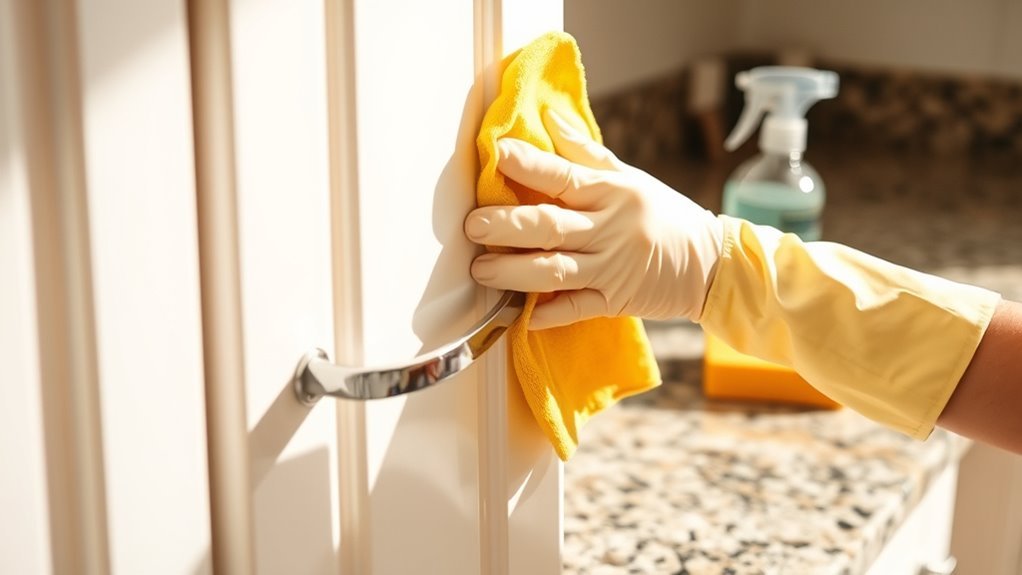
How to Clean Kitchen Cabinets Grease: A Step-by-Step Guide
Many of us know the struggle of keeping kitchen cabinets grease-free. It’s a common issue that can be frustrating, especially when stubborn grime builds up over time. You’re not alone—many people struggle with this, but the good news is there are simple ways to tackle it.
To clean kitchen cabinets grease, start by clearing your cabinets and gathering gentle cleaning supplies like mild dish soap or a vinegar-water mix. Use a soft cloth or sponge to scrub the greasy areas in circular motions.
Then, wipe with a damp cloth to rinse and dry thoroughly. This helps avoid streaks or damage to your cabinets. Avoid harsh chemicals and choose cleaners suitable for your cabinet material.
Follow these steps, and you’ll find tips and tricks to keep your cabinets spotless and well-maintained.
Key Takeaways
- Use a gentle cleaning solution like warm water with dish soap or a vinegar-water mix to remove grease effectively without damaging your cabinets.
- Clear your cabinets and countertops, open windows for ventilation, and wear gloves to protect both surfaces and yourself before you start.
- Lightly scrub greasy spots with a soft cloth or sponge using circular motions. Avoid harsh chemicals to keep your cabinet finishes looking their best.
- Rinse the cabinets with a damp cloth to pick up any residue, then dry them thoroughly to prevent water spots and warping.
- For wood cabinets, stick to gentle cleaners and dry immediately. Laminate cabinets can handle mild scrubbing and an occasional vinegar test.
What You Need To Clean Greasy Kitchen Cabinets
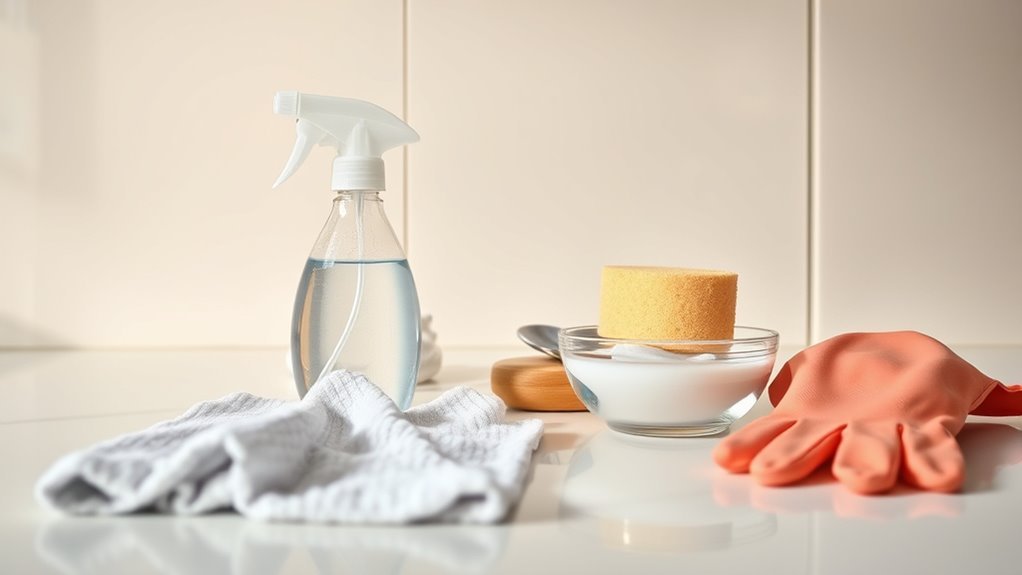
To clean greasy kitchen cabinets effectively, you’ll need a few essential supplies: a gentle all-purpose cleaner or a mixture of warm water and mild dish soap, a soft sponge or cloth, a bucket, and a dry towel. These cleaning supplies are vital for safe and efficient grease removal without damaging your cabinet surfaces.
You’ll want to avoid harsh chemicals that can strip finishes or cause discoloration. Start by preparing your cleaning solution in the bucket, making sure it’s mild enough for regular use but strong enough to cut through grease.
The sponge or cloth should be soft to prevent scratching while effectively lifting grime. After wiping down the cabinets, use the dry towel to remove any moisture and prevent streaks.
Use a soft sponge or cloth to lift grime gently, then dry with a towel to avoid streaks.
Having these essentials ready will make your grease removal process straightforward. It’ll help you restore your kitchen cabinets to their clean, bright condition with ease.
Getting Your Kitchen Ready For Cleaning Greasy Cabinets
Preparing your kitchen properly sets the stage for effective grease removal from your cabinets. Start by clearing the area around your cabinets—remove any items on countertops and inside cabinet doors to avoid damage or interference during cleaning. This kitchen prep guarantees you have full access to the greasy surfaces.
Next, gather all necessary cleaning supplies, like microfiber cloths, sponges, gloves, and a bucket. Having everything within reach prevents interruptions while you clean. Make sure your cleaning supplies are suitable for your cabinet material to avoid damage.
Ventilate your kitchen by opening windows or turning on an exhaust fan. This helps get rid of odors from cleaning products and grease buildup. Finally, wear comfortable clothing and gloves to protect your skin from harsh chemicals or grease.
Taking these steps will make your cleaning process smoother and more efficient, setting you up to successfully tackle those greasy kitchen cabinets.
Homemade Solutions To Remove Grease From Kitchen Cabinets
You can tackle greasy kitchen cabinets effectively using several simple homemade solutions. Start by mixing equal parts of white vinegar and warm water—this natural cleaner cuts through grease without harsh chemicals.
Tackle greasy kitchen cabinets easily with a simple mix of white vinegar and warm water for natural cleaning power.
Another effective grease removal technique is using baking soda; sprinkle it on a damp cloth and gently scrub the cabinet surfaces to lift stubborn grease. Lemon juice also works wonders thanks to its acidic properties, which break down grease naturally.
Combine lemon juice with a bit of olive oil to polish wooden cabinets while removing grime. For tougher buildup, create a paste from baking soda and water, apply it to greasy spots, let it sit for a few minutes, then wipe clean.
These natural cleaning agents are not only affordable but safe for your family and the environment. By using these grease removal techniques, you’ll restore the shine to your kitchen cabinets without relying on harsh, commercial products.
Step-By-Step Guide To Cleaning Greasy Kitchen Cabinets
Cleaning greasy kitchen cabinets is pretty simple and anyone can do it. First, clear out your cabinets to make everything accessible and help keep things organized.
Next, mix up a mild cleaning solution that can handle the grease without harming the surface. Use a soft cloth or sponge to gently scrub the cabinets in circular motions.
After cleaning, rinse with a damp cloth to remove any residue. Be sure to dry thoroughly so you don’t get water spots.
| Step | Action |
|---|---|
| 1. Clear Cabinets | Remove items for easy access |
| 2. Apply Cleaner | Use a gentle solution, scrub softly |
| 3. Rinse & Dry | Wipe with a damp cloth, dry well |
Following this routine not only gets rid of grease but also helps prevent it from building up again. Regular cleaning and keeping your cabinets organized will keep your kitchen fresh and make your cabinets last longer.
With just a little effort, you’ll enjoy a cleaner, more inviting cooking space.
Tips For Tackling Stubborn Grease On Kitchen Cabinets
Although regular cleaning tackles most grease buildup, stubborn spots often need a bit more effort and the right techniques. Start by applying a mixture of baking soda and water to these areas, letting it sit for 10 minutes before gently scrubbing with a soft cloth. This natural approach breaks down grease without damaging your cabinets.
Another effective method is using a vinegar and dish soap solution. Vinegar cuts through grease, while dish soap lifts it away. Always test any cleaner on a hidden spot first to make sure it won’t harm the finish.
For tougher grease, consider using commercial degreasing sprays designed for kitchen cabinets. Just follow the instructions carefully to avoid damage.
Incorporate cabinet maintenance tips like wiping spills immediately and cleaning regularly. This helps prevent buildup and keeps your cabinets looking fresh. With consistent care and these targeted approaches, you’ll keep your kitchen cabinets grease-free with minimal hassle.
How To Clean Different Kitchen Cabinet Materials Safely
When it comes to cleaning your kitchen cabinets, it’s important to choose the right method based on the material. For wood cabinets, it’s best to stick with gentle cleaners and soft cloths. This helps protect the finish and keeps them looking beautiful.
On the other hand, laminate surfaces can handle a little more scrubbing. Just be sure to use a mild cleaner to keep them looking fresh without causing any damage.
Wood Cabinet Cleaning Tips
When dealing with wood cabinets, it’s important to choose cleaning methods that protect their natural finish and prevent damage. Proper care can extend their lifespan and keep them looking fresh.
Avoid harsh chemicals on wood cabinets. Instead, use mild soap and water or specialized wood cleaners. Always dry the cabinets immediately to prevent warping.
| Cleaning Step | Recommended Product | Tip |
|---|---|---|
| Dusting | Soft microfiber cloth | Dust weekly to prevent buildup |
| Grease Removal | Mild dish soap + water | Use a damp cloth, not soaked |
| Stain Treatment | Wood-safe cleaner | Test in a hidden spot first |
| Polishing | Wood polish or beeswax | Apply sparingly, buff gently |
Stick to these steps for effective wood cabinet care and maintenance without damaging them.
Cleaning Laminate Surfaces
Since laminate cabinets resist moisture and stains better than wood, you can clean them with a wider range of products.
To keep them looking their best, avoid abrasive cleaners that might scratch the surface.
Instead, use a gentle detergent mixed with warm water and a soft cloth to wipe down your cabinets.
For tough grease, try a solution of equal parts vinegar and water, but test it on a small area first to make sure it doesn’t dull the finish.
Remember, regular cleaning helps prevent buildup, but don’t soak the cabinets.
Excess moisture can cause edges to peel, so be sure to dry the surface thoroughly after cleaning.
Follow these simple steps to maintain the look and durability of your laminate cabinets without risking damage.
How Often Should You Clean Grease From Kitchen Cabinets?
How often you should clean grease from your kitchen cabinets really depends on how much you cook and how quickly grease tends to build up. If you notice sticky spots or the finish starting to look dull, it’s probably time to give them a quick wipe down.
For most people, a good cleaning every few months does the trick. But if you cook a lot or tend to fry foods often, you might want to clean them more frequently—like once a month. Some folks find that doing a deep clean seasonally keeps their cabinets looking fresh and grease-free without much hassle.
Frequency Based On Usage
Grease buildup on kitchen cabinets needs regular attention to keep your space clean and functional. How often you clean should match how much you use your kitchen to prevent stubborn grime from building up.
If you cook every day or fry often, you’ll need to clean more frequently than someone who uses the kitchen only now and then.
Here’s a simple guide based on your usage:
- Heavy use, like daily cooking or frying, means cleaning every 1-2 weeks.
- Moderate use, such as cooking a few times a week, calls for monthly cleaning.
- Light use, like occasional cooking or just reheating, should be cleaned every 2-3 months.
- Minimal use, mostly dining out, means cleaning quarterly.
Adjust your cleaning schedule as needed to keep your cabinets fresh and grease-free without wasting effort.
Signs Cabinets Need Cleaning
How can you tell when your kitchen cabinets need cleaning? Look for visible grease buildup or sticky residue on surfaces, especially near the stove. If your cabinets feel grimy or emit a lingering cooking odor, it’s time to act.
Regularly checking for discoloration or a dull appearance also helps with cabinet maintenance. Grease can accumulate quickly, so don’t wait for stubborn stains to appear.
Being proactive with grease prevention reduces tough cleaning jobs later. You should clean your cabinets as soon as you notice these signs to keep them in good condition and extend their lifespan.
Consistent attention to these indicators guarantees your kitchen stays fresh and your cabinet surfaces remain smooth and easy to maintain.
Seasonal Cleaning Recommendations
Since kitchen cabinets often get exposed to cooking oils and steam, it’s important to clean grease buildup regularly. Doing so helps prevent damage and keeps them looking their best. Incorporate grease cleaning into your seasonal routines to maintain their appearance.
Here’s how often you should clean your cabinets:
- Weekly Wipe-Downs: Quickly remove surface grease with a damp cloth.
- Monthly Deep Cleaning: Use a gentle degreaser for a thorough clean.
- Spring Cleaning: Do a detailed scrub to tackle stubborn buildup after winter.
- Fall Maintenance: Prepare cabinets for holiday cooking by removing all grease and grime.
How To Maintain Kitchen Cabinets To Prevent Grease Build-Up
Although kitchen cabinets face constant exposure to cooking oils and steam, you can keep them looking fresh by regularly wiping them down with a mild cleaner. This simple step plays a vital role in grease prevention and overall cabinet maintenance.
Make it a habit to clean your cabinets weekly, focusing on areas near the stove where grease buildup is most common. Use a soft cloth or sponge to avoid damaging the finish.
In addition to regular cleaning, consider improving ventilation in your kitchen to reduce steam and airborne grease. Installing a range hood or using exhaust fans while cooking helps minimize grease settling on your cabinets.
Also, avoid letting spills sit for long. Wipe them immediately to prevent stains and buildup. By staying consistent with these practices, you’ll maintain your cabinets’ appearance and extend their lifespan, making deep grease cleaning less of a chore in the long run.
Common Mistakes When Cleaning Greasy Kitchen Cabinets
When it’s time to clean those greasy kitchen cabinets, it’s easy to reach for harsh chemicals. But honestly, those strong cleaners can end up damaging the finish on your cabinets, which is the last thing you want. Instead, try gentler solutions that are just as effective.
And don’t forget—every surface is different. Wooden cabinets, for example, need different care than laminate or painted ones. Ignoring the material can lead to unintended damage, so it’s worth taking a moment to identify what you’re working with.
Using Harsh Chemicals
Avoid reaching for harsh chemicals to tackle greasy kitchen cabinets, as they can do more harm than good. These strong cleaners may damage your cabinet’s finish and pose health risks if not handled properly. Prioritize chemical safety by reading labels and wearing gloves. Instead, consider eco-friendly alternatives that clean effectively without harsh side effects.
Here are common pitfalls to avoid when using harsh chemicals:
- Using bleach or ammonia, which can discolor or weaken cabinet surfaces.
- Applying undiluted cleaners that cause finishes to peel or crack.
- Neglecting to ventilate the area, risking inhalation of toxic fumes.
- Overusing chemicals when a mild, natural cleaner would do the job.
Choose safer options to protect your kitchen and health while keeping cabinets grease-free.
Ignoring Surface Material
Since different cabinet surfaces react differently to cleaning methods, ignoring your cabinet’s material can cause damage or ineffective results. Whether your cabinets are wood, laminate, or metal, each needs a specific approach to remove grease without harming the finish.
For example, wood cabinets require gentle cleaners to avoid stripping the varnish, while laminate can handle stronger solutions. Not considering the material can lead to stains, peeling, or discoloration, setting back your kitchen organization efforts.
Always check the manufacturer’s recommendations before cleaning, and test any cleaner on a small, hidden area first. Tailoring your cleaning method to your cabinets’ surface ensures you remove grease effectively and keep your kitchen looking its best without risking damage.
Why Does Grease Build Up On Kitchen Cabinets?
Because you cook often, grease particles from oils and fats easily escape into the air and settle on your cabinets. The grease, made up mainly of fatty acids and oils, tends to be sticky and hard to remove once it builds up.
Poor kitchen ventilation makes this worse because it doesn’t carry away these airborne particles effectively.
Here’s why grease tends to build up on your kitchen cabinets:
- Cooking Activities: Frying or sautéing releases tiny grease droplets into the air.
- Inadequate Ventilation: Without proper airflow, grease particles stay in the air and land on surfaces.
- Cabinet Surface Texture: Rough or porous finishes trap grease more easily.
- Frequency of Cleaning: Skipping regular cleaning allows grease layers to thicken over time.
Knowing these factors can help you prevent heavy grease buildup and keep your cabinets cleaner longer.
Frequently Asked Questions
Can Professional Cleaning Services Remove Kitchen Cabinet Grease?
Yes, professional cleaning services can remove kitchen cabinet grease effectively. They use advanced grease removal techniques that go beyond typical household methods, ensuring your cabinets look spotless.
When you hire experts, you benefit from their specialized equipment and eco-friendly solutions, saving you time and effort. You’ll also enjoy professional cleaning benefits like thorough sanitation and protection of your cabinet surfaces, making your kitchen cleaner and more inviting without the hassle.
Are There Commercial Products Specifically for Greasy Cabinet Removal?
Though you won’t find grease removal techniques in a medieval alchemist’s tome, today you’ve got plenty of cabinet cleaning products designed specifically for greasy buildup.
These commercial solutions cut through grime quickly and safely, saving you hours of scrubbing.
Look for degreasers labeled for kitchen use—they often contain enzymes or solvents that break down grease effectively.
Using these products simplifies your cleaning routine and keeps your cabinets looking fresh without much elbow grease.
How Long Does It Take for Grease to Build up on Cabinets?
Grease buildup timeline varies, but you might start noticing grease on your cabinets in just a few days to a couple of weeks.
How quickly it happens depends on how often you cook, what kind of food you prepare, and your ventilation system.
If you fry or use oils a lot without proper ventilation, grease tends to build up faster.
Keeping these factors in mind can help you manage and prevent thick grease buildup over time.
Can Grease Buildup Damage Kitchen Cabinet Hardware or Hinges?
Imagine your cabinet hinges start squeaking and sticking after months of greasy cooking. Yes, grease buildup can damage kitchen cabinet hardware by attracting dirt and causing corrosion or stiffness.
To avoid this, follow grease prevention tips like wiping surfaces regularly and using degreasers during cabinet maintenance. Staying proactive helps your hardware last longer and keeps everything running smoothly, saving you from costly repairs or replacements down the line.
Is It Safe to Use Steam Cleaners on Kitchen Cabinets?
You can use a steam cleaner on kitchen cabinets, but it’s important to check what material your cabinets are made of first. Steam cleaners are great at cutting through grease, but too much moisture can harm wood or laminate finishes.
So, don’t overdo it or use high heat on delicate surfaces. Always test a small, hidden spot before cleaning the whole cabinet to prevent warping or peeling.
That way, your cabinets stay clean and intact without any damage.
Conclusion
Cleaning greasy kitchen cabinets is like giving your home a fresh breath of air. Each swipe removes the fog of daily cooking, revealing the true beauty beneath.
By following simple steps and using the right tools, you’ll restore shine and freshness. This makes your kitchen a welcoming place again.
Remember, regular care keeps grease at bay. Just like tending a garden keeps weeds from taking over.
So, roll up your sleeves and let your cabinets shine. Keeping your kitchen cabinets grease-free is easy with a little effort!