Best Range Hood: Top Picks and Buying Tips
Are you tired of dealing with lingering odors and smoke whenever you cook? You’re not alone—many people struggle with keeping their kitchens fresh and clean.
Finding the right range hood can make a huge difference, but with so many options out there, it’s easy to feel overwhelmed.
You want a range hood that efficiently captures odors and smoke while matching your kitchen’s style. Look for models with high CFM ratings, quiet operation under 60 dB, and durable filters like stainless steel or charcoal.
Choose a size that matches your stove and decide between ducted for better performance or ductless for easier installation.
Top picks include ProMaster 9000 and TurboAir X1200.
Keep exploring to find the perfect fit and installation tips for your cooking needs.
Key Takeaways
- Choose a range hood with high CFM ratings and effective filters to best remove smoke and odors.
- Match the hood size to your stove width and install it 24-30 inches above the cooktop for optimal ventilation.
- Consider ducted models for better air quality and quieter operation, or go with ductless if you want easier installation.
- Look for models with noise levels under 3 sones and Energy Star certification for quiet, energy-efficient performance.
- Check out top models like TurboAir X1200 and ProMaster 9000, and browse online retailers for seasonal deals and promotions.
Why Your Kitchen Needs a Good Range Hood
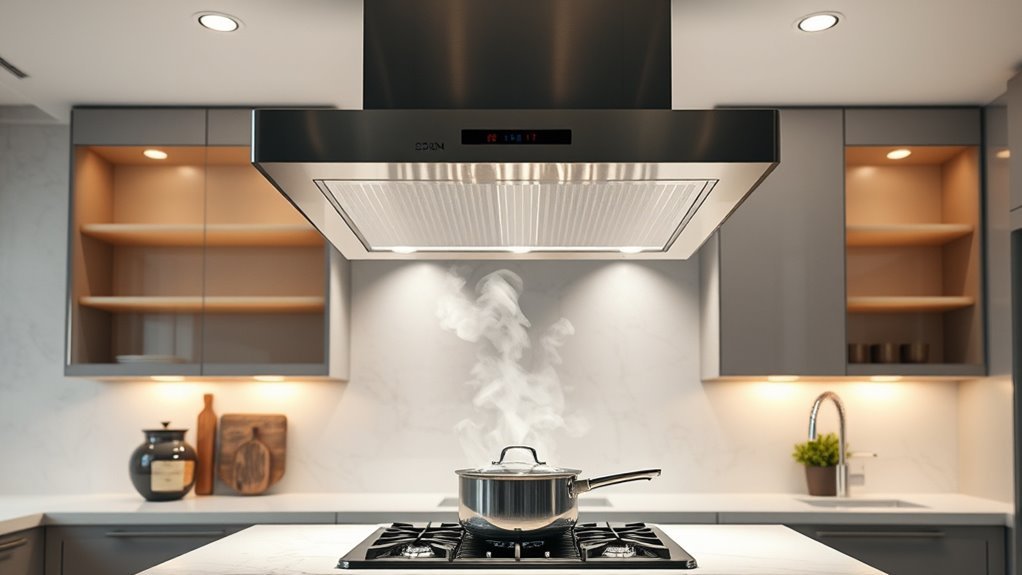
Although you might not notice it immediately, a good range hood plays an essential role in keeping your kitchen fresh and safe. When you cook, strong cooking odors can linger, making your kitchen less inviting and even affecting other areas of your home. A quality range hood efficiently captures and vents these odors, preventing them from settling on walls, cabinets, and furniture.
Beyond odor control, a well-chosen range hood boosts your kitchen aesthetics. It complements your design by blending seamlessly with your style, whether modern or traditional, adding a polished look to your cooking space. Without one, your kitchen might feel stuffy and cluttered with residual smells, which can detract from its overall appeal.
Investing in a good range hood means you’re not just improving air quality but also maintaining a visually pleasing environment. It keeps your kitchen fresh, safe, and stylish, making your cooking experience much more enjoyable.
Essential Features to Look for in a Range Hood
Choosing the right range hood means paying attention to specific features that impact both performance and convenience. Think about noise levels, airflow capacity, and filter types to ensure good ventilation. Don’t forget about how it looks—your range hood should match your kitchen style and fit the space well. Easy-to-use controls and good lighting can also make cooking easier and more enjoyable.
Here’s a quick guide to essential features:
| Feature | Importance | What to Look For |
|---|---|---|
| Filter Types | Removes grease and odors | Stainless steel or charcoal filters |
| Airflow Capacity | Efficient smoke and odor removal | Measured in CFM; higher is better |
| Noise Level | Comfort during operation | Choose models under 60 dB |
| Design Aesthetics | Matches your kitchen decor | Sleek finishes and compact designs |
Keeping these points in mind will help you pick a range hood that’s both functional and stylish.
Common Range Hood Types and Their Benefits
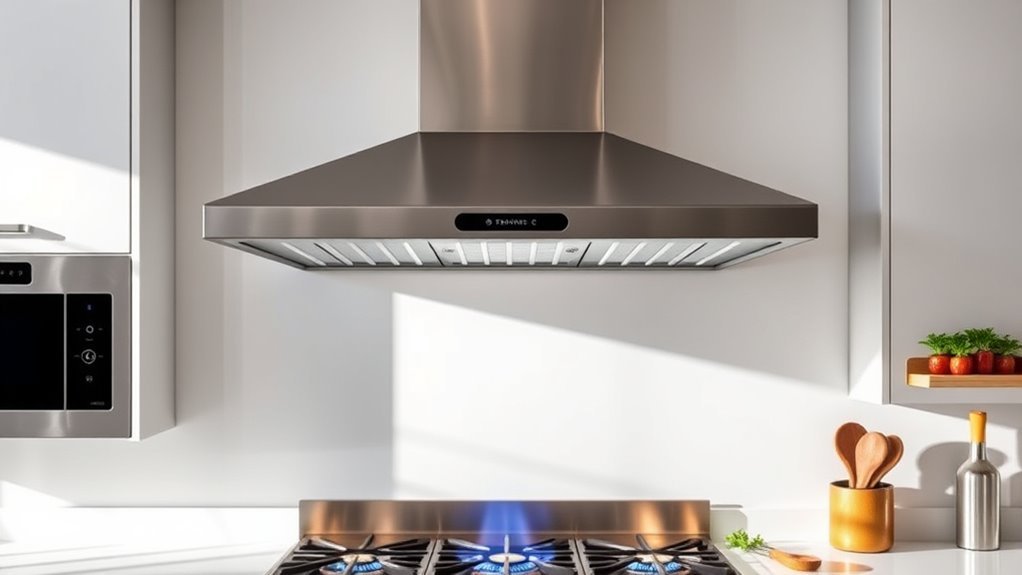
When you’re picking out a range hood, one of the first things to consider is whether you want a wall-mounted or an island model. They each have their own perks and are suited to different kitchen setups. Wall-mounted hoods are great if your stove is against a wall, giving you efficient coverage right above your cooktop. On the other hand, island hoods are perfect if your stove is in the middle of the kitchen, hanging from the ceiling to vent smoke and odors effectively from all around.
Wall-Mounted Vs. Island
If your kitchen has a wall or an island as the central cooking area, you’ll want to pick a range hood that fits the space. Wall-mounted range hoods attach directly to the wall above your stove, making them perfect if your cooking area is against a wall.
They often have a sleek look and are easy to install since they use existing wall space for venting. Island hoods hang from the ceiling above a cooktop on a kitchen island.
These tend to be more complex to install because of ceiling mounting and ductwork. But they make a bold design statement. Your choice depends on your kitchen layout and how much effort you’re willing to put into installation and style.
Ventilation Efficiency Comparison
Although range hoods come in various styles, their ventilation efficiency can vary quite a bit depending on the type you pick. Thanks to advances in ventilation tech, modern range hoods deliver better performance. Understanding how each type manages airflow is key to making the right choice.
Airflow measurement methods, like cubic feet per minute (CFM) ratings, help you compare efficiency. This way, you can pick a range hood that suits your cooking style and kitchen size.
Under-cabinet hoods are compact and work well for smaller kitchens. They offer moderate airflow that’s suitable for everyday cooking needs.
Wall-mounted hoods provide strong ventilation. They’re perfect for heavy cooking sessions and have higher CFM ratings.
Island hoods are designed for open spaces. They often come with powerful motors to handle airflow challenges over greater distances.
Range Hood Ventilation: Ducted vs. Ductless
How do you decide between ducted and ductless range hoods for your kitchen? Ducted hoods vent air outside, offering better filtration and removing smoke, odors, and moisture efficiently. The benefits include improved air quality and quieter operation because the exhaust doesn’t recirculate inside your kitchen.
But installing ductwork can be tricky and might need a professional. On the other hand, ductless range hoods rely on charcoal filters to clean the air before recirculating it. They’re easier to install since you don’t need ventilation ducts or exterior wall access.
This makes ductless models a good choice for apartments or kitchens where ducting isn’t possible. Just keep in mind they require regular filter replacements and won’t handle humidity as well.
Ultimately, your decision depends on your kitchen layout, installation options, and whether you prioritize air quality or ease of setup.
Choosing the Right Range Hood Size for Your Stove
First things first, grab a tape measure and find out how wide your stove is. It’s pretty important to get this right so the range hood fits just right. Usually, you want the hood to be at least as wide as your stove, maybe even a little wider—like a couple of inches. That way, it can really do its job and catch all the smoke and steam while you’re cooking up a storm.
Measuring Stove Dimensions
Choosing the right range hood starts with accurately measuring your stove’s dimensions. You want a hood that fits well and works efficiently, so precise measurements are key.
Focus on these important aspects:
- Stove height: Measure from the floor to the top of your stove. This helps ensure proper clearance and ventilation.
- Stove clearance: Check the distance between your stove and the bottom of your cabinets or the space where you plan to install the hood. This guarantees safe installation and good airflow.
- Depth and width: While we’ll cover width later, knowing your stove’s depth helps you avoid a hood that’s too shallow or too deep.
Hood Width Recommendations
Once you know your stove’s measurements, the next step is choosing a range hood width that matches or is slightly wider than your stove. This ensures proper clearance for effective ventilation and safety.
You want the hood to cover your cooking surface, but going too wide can make it look bulky and clash with your kitchen style. Here’s a quick guide to help you pick the right size:
| Stove Width (inches) | Recommended Hood Width (inches) |
|---|---|
| 24 | 24 – 30 |
| 30 | 30 – 36 |
| 36 | 36 – 42 |
| 48 | 48 – 54 |
| 60 | 60 – 66 |
Aim for a hood that’s at least as wide as your stove but no more than 6 inches wider. This keeps things looking balanced and ensures proper hood clearance.
Best Range Hoods for Small Kitchens and Apartments
How can you maximize ventilation without sacrificing space in a small kitchen or apartment? Choosing a range hood with a compact design is key. You want a unit that fits snugly into tight spots while still effectively removing smoke and odors.
Look for models made specifically for small areas to ensure you don’t compromise on air quality.
Here are some key features to keep in mind:
- Slim profile: Fits easily above smaller stovetops without overpowering your kitchen.
- Quiet operation: Keeps noise levels low so your small space stays comfortable.
- Efficient airflow: Delivers strong ventilation despite its small size, keeping the air fresh.
Top Range Hoods for Serious Cooking and High Heat
When you’re tackling serious cooking and high heat, you need a range hood that can keep up with the demands. These powerful machines clear smoke, grease, and odors quickly, helping your kitchen stay comfortable and safe.
Look for models with high CFM (cubic feet per minute) ratings and durable materials that resist warping under extreme temperatures. Stainless steel designs often handle high heat best, while multi-speed fans give you control over airflow.
Here’s a quick comparison to help you choose:
| Model | Max CFM | Heat Resistance |
|---|---|---|
| ProMaster 9000 | 900 | Excellent |
| HeatGuard Ultra | 850 | Outstanding |
| TurboAir X1200 | 1200 | Excellent |
| FlameStop 800 | 800 | Very Good |
| PowerVent 1000 | 1000 | Excellent |
Pick a range hood that matches your serious cooking style and high heat needs for the best kitchen experience.
Range Hood Energy Efficiency and Noise Levels
While powerful range hoods handle high heat and heavy smoke, you also want to consider how efficiently they use energy and how much noise they make. Energy consumption affects your utility bills, so choosing an energy-efficient model can save you money over time.
Powerful range hoods tackle heat and smoke, but energy efficiency and noise levels are key for long-term savings and comfort.
At the same time, sound ratings matter because a loud hood can disrupt conversations and make cooking less enjoyable.
When you’re looking at range hoods, pay attention to these factors:
- Energy use: Look for models with Energy Star certification or similar ratings to ensure they use power efficiently.
- Sound levels: Measured in sones, lower numbers mean quieter operation—ideally under 3 sones for minimal noise.
- Variable fan speeds: Adjustable settings help you balance ventilation and noise. Use lower speeds for light cooking and higher speeds when needed.
Installation Tips and Maintenance for Your Range Hood
Though selecting the right range hood is essential, proper installation and regular maintenance are equally important for it to work effectively and last longer. Make sure to mount the hood at the recommended height—usually 24 to 30 inches above the cooktop—for optimal ventilation. Use sturdy anchors and check that the ductwork is straight and as short as possible to improve airflow. Also, double-check electrical connections to ensure safety and compliance.
Following maintenance guidelines is just as crucial. Clean or replace filters regularly to keep grease and odors in check. Wipe down surfaces with a mild detergent to prevent buildup and keep it looking good. Periodically inspect the fan and motor for any unusual noises or signs of wear. By following these installation tips and maintenance routines, you’ll keep your range hood running smoothly, improve your kitchen air quality, and extend its lifespan.
Where to Find the Best Deals on Range Hoods
Looking for the best deals on range hoods? Well, online retailers are a great place to start. They often have discounts and seasonal sales that can really save you some money. Plus, browsing online makes it easy to compare different models and prices from the comfort of your home.
Don’t forget about local appliance stores too! Sometimes they run exclusive promotions or clearance sales that you won’t find online. It’s worth popping in to see what deals they might have. By checking out both online and local options, you’ll be able to find the perfect range hood at a price that fits your budget—without sacrificing quality.
Online Retailer Discounts
Finding the best deals on range hoods often means turning to online retailers, where discounts and promotions pop up regularly. You can take advantage of online sales and promotional offers that aren’t always available in physical stores.
To score the best price, keep an eye on these: major e-commerce platforms like Amazon and Wayfair, which frequently host flash sales. Manufacturer websites also offer exclusive online promotions or bundles.
Deal aggregator sites are helpful too—they track and compare current discounts across multiple retailers so you don’t miss out.
Local Appliance Store Deals
Local appliance stores often have some of the best deals on range hoods, especially during seasonal sales or special promotions. When you visit, keep an eye out for local promos that can save you a good amount of money.
Many retailers also offer appliance bundles, so you can buy a range hood along with other kitchen essentials at a discount. It’s a smart way to outfit your kitchen without breaking the bank.
Shopping locally means you can see the products in person, ask questions, and get personalized advice. Don’t forget to ask about price matching or financing options—they’re often available.
Taking advantage of local appliance store deals can save you money and help you find the perfect range hood for your needs.
Frequently Asked Questions
How Do Range Hoods Affect Indoor Air Quality Beyond Cooking Odors?
Range hoods improve your indoor air quality by providing ventilation benefits that go beyond just removing cooking odors. They help eliminate harmful airborne particles, smoke, and grease, reducing indoor pollution.
Many models also include air purification features that trap allergens and bacteria, making your kitchen environment healthier. By actively venting out contaminants and circulating cleaner air, your range hood keeps your home fresher and protects your respiratory health.
Can Range Hoods Help Reduce Kitchen Humidity Levels?
Yes, range hoods can help reduce kitchen humidity levels by providing effective ventilation. When you cook, steam and moisture build up, which increases indoor humidity.
A good range hood actively pulls out that moisture, preventing excess dampness that can lead to mold or damage. It quickly removes humid air, helping keep the environment comfortable.
Plus, it protects your kitchen surfaces from issues caused by moisture. Overall, range hoods are a helpful tool for controlling humidity while you cook.
What Materials Are Range Hood Filters Typically Made From?
Range hood filters are typically made from aluminum, stainless steel, or charcoal.
You’ll find metal mesh filters, which are durable and easy to clean, helping maintain filter efficiency. Charcoal filters, on the other hand, absorb odors but need replacing regularly.
To keep your filter efficient, it’s important to perform regular maintenance by cleaning or replacing filters as recommended. This helps your range hood work effectively and keeps your kitchen air fresh.
Are Smart Range Hoods Compatible With Home Automation Systems?
You might expect smart range hoods to be tricky to sync with home automation, but they’re often surprisingly compatible. Many models come with smart features that let you control fan speed, lighting, and alerts via apps or voice assistants.
Just remember to check the installation requirements, as some need specific wiring or Wi-Fi setups. Once installed, you’ll enjoy seamless integration that makes cooking more convenient and your kitchen smarter.
How Long Do Range Hood Motors Usually Last Before Needing Replacement?
You can expect the motor lifespan of a range hood to be around 10 to 15 years with proper care.
Signs that it might be time to replace the motor include unusual noises, reduced suction, or the motor struggling to start.
If you notice these issues, it’s a good idea to consider replacing the motor to keep your ventilation working efficiently.
Regular cleaning and maintenance can help extend the motor’s life, so stay on top of its performance to avoid unexpected breakdowns.
Conclusion
Choosing the right range hood isn’t just about style. It also impacts your kitchen’s air quality and comfort. Did you know that a quality range hood can remove up to 90% of cooking odors and smoke? That’s a big win for keeping your space fresh and safe.
Focusing on features, size, and ventilation type will help you find a hood that matches your cooking style perfectly. Whether you prefer a powerful vent or a quieter operation, there’s a perfect fit out there for you.
Keep these tips in mind, and you’ll enjoy a cleaner, quieter kitchen every day. Investing in the best range hood makes all the difference for a healthier cooking environment.