Induction Range Pros and Cons: What You Should Know
Are you tired of waiting forever for your stove to heat up or struggling with uneven cooking? Many people find traditional ranges frustrating, especially when trying to prepare meals quickly and efficiently. If that sounds familiar, you’re not alone.
If you’re considering an induction range, know it heats cookware quickly and precisely using electromagnetic fields, saving energy and keeping your kitchen cooler. You’ll appreciate safety features like cool-to-touch surfaces and automatic shutoffs.
However, upfront costs are higher, and you’ll need compatible magnetic cookware. Installation requires a dedicated circuit and proper countertop space.
Induction ranges offer great control and efficiency, making them a modern choice. You’ll find even more details that can help you decide if it suits your kitchen.
Key Takeaways
- Induction ranges heat cookware directly using electromagnetic fields, which means they heat up quickly and give you precise temperature control. They’re also energy-efficient, saving you on your utility bills.
- To work well, the cookware needs to be magnetic and flat-bottomed. Cast iron or magnetic stainless steel pans are perfect for optimal performance.
- The benefits include saving energy, having a safer surface that stays cool to the touch, rapid heating, and precise control over cooking temperatures.
- On the flip side, they tend to cost more upfront and can be expensive to repair. You might also need to replace your existing cookware and take extra care when cleaning the glass surface.
- Installation isn’t a simple plug-in job. It requires a dedicated 240-volt circuit, and your kitchen layout and countertops have to be compatible for everything to work smoothly.
How Induction Ranges Work: What You Need to Know
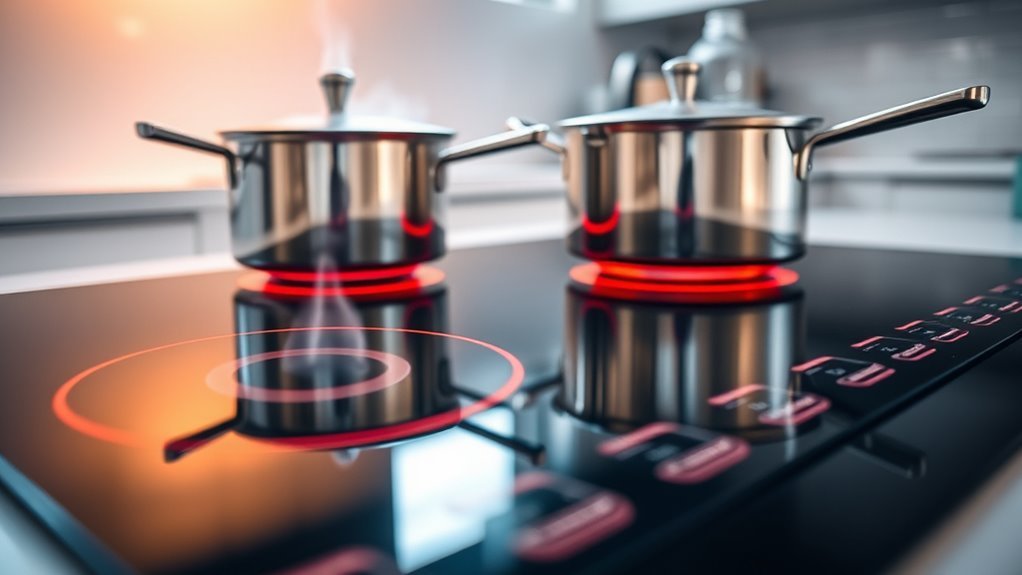
Although induction ranges might seem similar to traditional cooktops, they use electromagnetic fields to heat your pots and pans directly. Induction technology relies on magnetic fields that create electric currents in the cookware, leading to efficient energy conversion.
Induction cooktops use magnetic fields to heat cookware directly, ensuring efficient and precise energy transfer.
This direct heating method boosts cooking efficiency by reducing heat loss and providing precise temperature control. You’ll notice improved temperature uniformity, so your food cooks evenly without hot spots.
The user experience is smoother thanks to fast heating and cooling times. Plus, heat stays focused on your cookware, keeping the cooktop surface cooler and safer. For maintenance, just wipe the smooth surface clean—no burnt-on spills like with gas or electric ranges.
Understanding how these magnetic fields work helps you appreciate the convenience and energy savings induction ranges offer, making your kitchen tasks quicker and more enjoyable.
Which Cookware Works Best on Induction Ranges
Since induction ranges rely on magnetic fields to heat cookware directly, not all pots and pans will work effectively. You need to evaluate cookware materials carefully to see if they are induction-compatible.
Cast iron and magnetic stainless steel are your best options because their magnetic properties let the range heat them efficiently. Non-magnetic materials like aluminum, copper, or glass won’t work unless they have a magnetic layer built into the base.
To check if your cookware works with induction, try sticking a magnet to the bottom. If it sticks firmly, you’re good to go. Keep in mind, cookware with a flat bottom also makes better contact with the surface, which improves heat transfer.
When shopping for pots and pans, focus on magnetic materials and flat bases. This way, you’ll get the most out of your induction range without running into compatibility issues.
Benefits of Using an Induction Range
You’ll love how an induction range helps save energy because it heats just your cookware, not the air around it. It’s actually pretty efficient that way! And the best part is, you get really precise temperature control, so you can cook exactly how you want without any guesswork.
Plus, it has safety features built in that help prevent accidents, making your kitchen a safer place to cook and hang out.
Energy Efficiency Advantages
When you cook with an induction range, you’ll notice it uses energy much more efficiently than traditional gas or electric stoves. Thanks to its eco-friendly technology, it heats cookware directly, reducing wasted heat and saving energy.
This means your kitchen stays cooler, and your bills get smaller. Here’s a quick comparison:
| Feature | Induction Range | Traditional Stove |
|---|---|---|
| Energy Efficiency | Up to 90% energy transfer | Around 40-55% energy transfer |
| Heat Waste | Minimal | High |
| Cooking Speed | Faster | Slower |
| Kitchen Temperature | Cooler | Warmer |
| Environmental Impact | Lower carbon footprint | Higher carbon footprint |
Choosing induction helps you support green living while saving money.
Precise Temperature Control
Although many cooking methods can struggle with temperature accuracy, an induction range gives you precise control over heat levels. You can adjust the temperature instantly, making it easier to keep things stable.
This means your food cooks evenly, preventing hot spots or burning. With consistent heat, you’ll get reliable results every time, whether you’re simmering sauces or searing steaks.
The induction range responds quickly to your changes, so you’re not left guessing or waiting for it to catch up. This precise control helps you follow recipes exactly and try out new techniques confidently.
If you value accuracy in your cooking, an induction range offers unmatched temperature control to improve your kitchen experience.
Safety Features Benefits
Because induction ranges heat only the cookware and not the surrounding surface, they greatly reduce the risk of burns and kitchen accidents. When you choose an induction range, you get several safety features designed to keep you and your family safe.
Many models include child safety locks that prevent accidental activation, so curious kids stay protected. The range also has overheating protection that automatically turns it off if it gets too hot, helping prevent damage or fires.
Plus, the system only works with compatible pots and pans, so you don’t have to worry about using unsafe or inappropriate cookware.
Most induction ranges also come with strict safety certifications, giving you peace of mind every time you cook. These features make induction cooking both a smart and safe choice for your kitchen.
Drawbacks of Induction Ranges to Consider
Despite their many advantages, induction ranges come with some drawbacks you should think about before buying. One big factor is the cost; induction ranges are usually more expensive upfront compared to traditional gas or electric stoves.
Plus, repair costs can be higher if something goes wrong, since parts and service are often specialized and pricey. Maintenance isn’t too hard, but you do need to be careful with the glass surface to avoid scratches or cracks.
Repair costs may be higher, and the glass surface requires careful maintenance to prevent scratches or cracks.
Unlike conventional ranges, you can’t just use any cookware. You need pots and pans with magnetic bottoms, so you might have to replace some of your kitchenware. These costs and restrictions can add up and affect your budget and everyday use.
Knowing these drawbacks helps you decide if an induction range is the right fit for your needs and lifestyle.
Installation Requirements and Kitchen Compatibility
When you decide to install an induction range, you’ll want to check if your kitchen can handle its electrical needs. These ranges usually need a dedicated 240-volt circuit, so you might have to upgrade your electrical panel if it can’t handle the load.
Also, think about your kitchen layout to make sure the range fits comfortably and allows for safe, efficient cooking.
Here are three key points to consider:
- Electrical requirements: Make sure your wiring supports the high amperage and voltage that induction ranges require.
- Space and ventilation: Ensure there’s enough counter space around the range and proper ventilation to prevent overheating.
- Countertop compatibility: Since induction cooktops are flat, check if your countertop material and height work well with the new range for comfortable use.
Induction Range Prices and Long-Term Costs
After making sure your kitchen can handle the electrical and space needs of an induction range, it’s time to think about the cost. Induction ranges can be pricier than traditional gas or electric ones, especially at the entry level.
But those higher upfront costs often come with cool features and modern tech that help you cook better. While it might seem like a big expense at first, think about the long-term savings from faster cooking and more precise temperature control.
These benefits can help cut down on wasted energy and food costs over time. Maintenance for induction ranges is usually pretty cheap because they have smooth surfaces and fewer moving parts.
Plus, you won’t have to worry about gas line installation or repairs. Over the long run, their efficiency and low upkeep costs can make the initial price worth it. So, even if induction ranges seem expensive at first, they can save you money as you keep using them.
How Induction Ranges Save Energy Compared to Gas and Electric
Because induction ranges use electromagnetic energy to heat cookware directly, they waste much less energy than gas or traditional electric stoves. This direct transfer means you get more efficient energy use and faster cooking. You’ll notice your meals cook quicker while using less power.
Here’s how induction ranges save energy compared to gas and electric:
- Minimal Heat Loss: Unlike gas flames or electric coils that heat the air around the pot, induction heats only the cookware, reducing wasted heat.
- Precise Temperature Control: You can adjust heat instantly, which prevents overheating and unnecessary energy use.
- Faster Cooking Times: Efficient energy transfer speeds up cooking, cutting down overall energy consumption.
Key Safety Features of Induction Ranges
Although induction ranges offer many cooking benefits, their key safety features truly set them apart. These ranges use an electromagnetic field to directly heat your cookware, which means the cooktop surface stays cool to the touch. This reduces burn risks and makes cooking safer.
Safety mechanisms like heat indicators alert you if the surface is still hot after cooking. This helps you know when it’s safe to clean or touch the surface. Child locks prevent accidental activation, giving you peace of mind if you have little ones around.
An automatic shutoff feature kicks in if no cookware is detected or if the pot boils dry. This helps prevent fires and other accidents. These fire prevention elements, along with clear user guidelines, guarantee safe operation every time.
Induction Range Cooking Speed and Control
You’ll quickly notice that induction ranges heat up super fast, which is a real time-saver when you’re cooking. They give you precise control over the temperature, so you can dial it in just right for whatever dish you’re making. And because they respond instantly, you can switch settings on the fly without any lag — making your cooking experience smoother and more efficient.
Rapid Heating Efficiency
When you turn on an induction range, the heating elements respond almost instantly, delivering precise and consistent heat directly to your cookware. This quick heat transfer means you don’t have to wait long for your pots and pans to warm up, so you can start cooking faster with better control.
Here’s what rapid heating efficiency brings to your kitchen:
- Faster meal prep since the cookware heats quickly and evenly.
- Better cooking accuracy because heat is transferred directly without loss.
- Energy savings because the range uses power only when needed, reducing waste.
With an induction range, you get a cooking experience that’s not only quick but also highly precise, making your kitchen time more efficient and enjoyable.
Precise Temperature Adjustment
Induction ranges give you unmatched control over cooking temperatures, letting you adjust heat levels instantly and accurately. This precise temperature adjustment helps you keep the temperature steady during your cooking, preventing hot spots and uneven results.
When you need cooking precision, induction allows you to fine-tune the heat for delicate tasks like simmering sauces or melting chocolate without burning. You’ll appreciate how this control elevates your results, whether you’re searing meat or gently warming a dish.
Unlike traditional ranges, induction technology responds directly to your adjustments. This means the temperature you set is exactly what your cookware receives. This level of precision makes your cooking experience better and helps you create perfect dishes every time.
Instant Response Time
Although traditional stovetops take time to heat up or cool down, an induction range reacts instantly to your adjustments. This quick response lets you control the cooking temperature with unmatched precision, so your meals turn out just how you want.
Responsive cooking means you can switch from a boil to a simmer in seconds, saving both time and energy. Here’s why instant response time makes a difference:
- Faster cooking: You get near-instant heat, cutting down your overall cooking time.
- Better control: Adjust temperatures quickly without waiting for the burner to catch up.
- Energy efficient: Heat goes directly to your cookware, reducing wasted energy.
With an induction range, you’re in full control, making cooking faster, easier, and more efficient every time you step into the kitchen.
Is an Induction Range the Right Choice for Your Kitchen?
How do you know if an induction range fits your cooking style and kitchen setup? First, think about how you like to cook. If you often need precise temperature control and quick heat adjustments, induction’s instant response will make your cooking easier. It’s great for sautéing, simmering, and boiling with accuracy.
Next, consider your kitchen’s look. Induction ranges have sleek, smooth surfaces that blend well with modern kitchens, giving a clean, minimalist vibe. They’re also easy to clean, helping keep your kitchen tidy.
But, you’ll need compatible cookware, like magnetic stainless steel or cast iron. So, check your pots and pans before making the switch.
If you prefer traditional gas flames or have specific cookware, induction might not be the best fit.
Ultimately, if you value energy efficiency, safety, and a modern style that fits your kitchen, induction ranges are a great choice for many cooking styles.
Frequently Asked Questions
Can Induction Ranges Interfere With Medical Devices Like Pacemakers?
Yes, induction ranges can potentially cause electromagnetic interference, which might affect pacemaker safety.
However, most modern pacemakers are designed to resist such interference, and the risk is generally low if you keep a safe distance from the cooking surface.
If you have a pacemaker, it’s a good idea to consult your doctor or the device manufacturer to make sure you can use induction ranges safely without compromising your health.
How Do Induction Ranges Impact Indoor Air Quality?
Induction ranges impact indoor air quality like a gentle breeze compared to a storm. Because they use induction efficiency to heat cookware directly, they produce less ambient heat and fewer combustion byproducts than gas stoves.
This means your kitchen stays cleaner and fresher. Plus, lower energy consumption reduces heat waste, cutting down on pollutants.
Are Induction Ranges Compatible With Smart Home Systems?
Yes, induction ranges are compatible with smart home systems, making it easy to integrate them into your connected home. You can control cooking settings remotely, monitor energy use, and get alerts through your phone or voice assistant.
This connectivity adds convenience while helping you save energy. You can optimize cooking times and adjust power levels easily. If you love modern tech and want to be energy-efficient, a smart-compatible induction range is a great choice for your lifestyle.
What Is the Lifespan of an Induction Range Compared to Traditional Stoves?
You’ll find induction ranges often last around 10 to 15 years, similar to traditional stoves. But their induction efficiency and cooking speed really set them apart.
While conventional stoves rely on flame or electric coils that can wear out unevenly, induction units have fewer mechanical parts. This can mean fewer repairs over time.
Can Induction Ranges Be Used During Power Outages With Alternative Energy Sources?
You can use induction ranges during power outages if you have a reliable backup power source like a generator or battery system. Since induction ranges rely on electricity, they won’t work without power.
Their energy efficiency means you’ll get more cooking done using less backup energy compared to traditional stoves. Just make sure your alternative energy source can handle the range’s power needs for smooth cooking during outages.
Conclusion
Choosing an induction range can transform your cooking experience, offering lightning-fast heat and precise control that’ll make you feel like a kitchen wizard.
While you might need to update some cookware and consider installation details, the energy savings and safety features make it worth it.
If you value speed, efficiency, and modern tech, an induction range is a game-changer.
So, is it right for your kitchen? Only you can decide, but it’s hard to beat this cooking marvel!