How to Remove Grease From Kitchen Cabinets: A Step-by-Step Guide
Everyone who cooks at home knows how tricky it can be to keep kitchen cabinets looking spotless. Grease and grime seem to appear out of nowhere, making your space look dull and uninviting.
If you’re tired of scrubbing without results, you’re not alone—many people struggle with this common kitchen challenge.
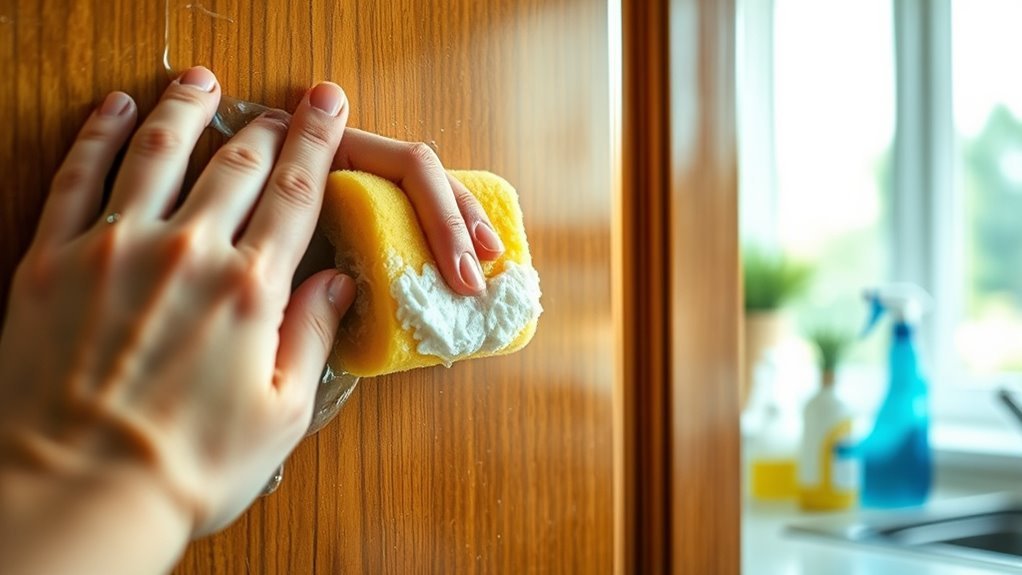
To remove grease from your kitchen cabinets, start by mixing a gentle degreaser with warm water. Use a soft cloth or sponge to wipe each surface, focusing on greasy spots without soaking the wood or laminate.
For tougher grime, apply degreaser directly and let it sit before wiping away.
Using homemade solutions like vinegar or baking soda can also help. Keep gloves on for protection, and once you’ve got this down, you’ll learn how to care for different cabinet types and prevent buildup.
Key Takeaways
- Mix a gentle degreaser with warm water and wipe the cabinets with a damp cloth, focusing on greasy areas.
- Use a soft-bristle brush or sponge to scrub stubborn grease spots after applying degreaser directly.
- Apply DIY solutions like vinegar, baking soda paste, or dish soap for effective grease removal on various surfaces.
- Always test cleaning solutions on a small, hidden cabinet area to prevent discoloration or damage.
- Prevent buildup by using exhaust fans, covering pans, wiping immediately after cooking, and cleaning regularly.
How to Remove Grease From Kitchen Cabinets
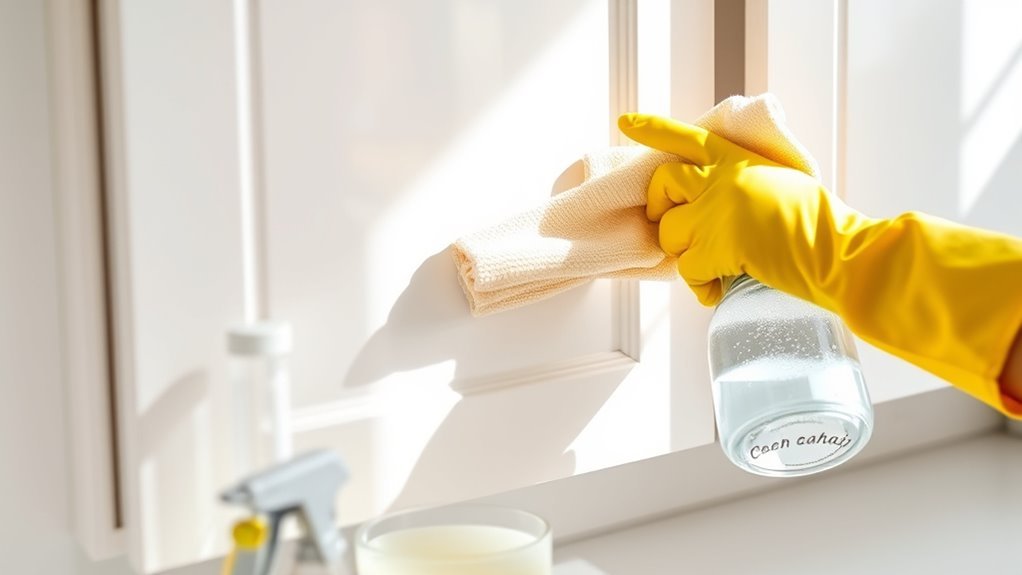
Start by gathering your cleaning supplies, including a gentle degreaser, warm water, and a soft cloth. This basic setup helps you tackle grease without damaging your cabinets.
Mix the degreaser with warm water, then dip the cloth into the solution and wring it out so it’s damp, not soaked. Gently wipe down your kitchen cabinets, focusing on areas with visible grease buildup.
Mix degreaser with warm water, dampen cloth, and gently wipe cabinets, targeting greasy spots without soaking.
Avoid harsh scrubbing, which can harm the finish and worsen cabinet care. Rinse the cloth with clean water and go over the cabinets again to remove any residue.
For stubborn spots, apply the degreaser directly, let it sit briefly, then wipe it away. Regular cleaning this way helps prevent grease buildup, keeping your kitchen fresh.
It also extends the life of your cabinets. Remember, consistent maintenance is key to preserving the beauty and function of your kitchen cabinets.
Understanding Why Grease Sticks to Kitchen Cabinets
You’ve probably noticed that grease tends to stick stubbornly to your kitchen cabinets. That’s because it’s made up of oils and food particles that love to cling to surfaces. Different materials like wood, laminate, or painted finishes each attract grease in their own way, which can make cleaning a bit tricky.
And don’t forget about the heat and humidity in your kitchen. They actually make it easier for grease to settle and harden onto your cabinets, making that stubborn layer even tougher to clean off.
Grease Composition Breakdown
Although grease might seem like a simple oily residue, it’s actually a complex mixture of fats, oils, and food particles that cling stubbornly to your kitchen cabinets. These components come from various sources like cooking oils, butter, and airborne food splatters.
When you cook, tiny droplets of oil and fat float in the air and settle on surfaces, forming a sticky film. This buildup attracts dust and grime, making the grease even harder to remove.
Understanding what grease is made of is key for effective prevention. Regularly cleaning your cabinets and using ventilation while cooking can help reduce grease buildup.
Knowing the composition of grease helps you choose the right cleaning methods and products. This way, you can keep your kitchen cabinets spotless and grease-free.
Cabinet Surface Types
The type of cabinet surface you have really influences how grease sticks and how easy it is to clean. Different materials attract and hold grease differently, which affects your cleaning routine.
Wood finishes tend to absorb grease more easily, so they need frequent cleaning to prevent buildup.
Laminate surfaces usually repel grease better but still require regular wiping depending on how greasy they get.
Metal cabinets can show grease spots quickly but are generally easy to clean with minimal effort.
Painted surfaces vary a lot; some attract grease because of their texture, so cleaning frequency is important.
Knowing these differences helps you customize your cleaning routine and pick the right products for your cabinets.
Kitchen Environment Factors
Understanding how grease clings to your cabinets means looking beyond surface types to the kitchen environment itself. Your kitchen hygiene plays a vital role; if you don’t clean regularly, grease builds up faster.
Cooking habits also matter. Frequent frying or sautéing releases more airborne grease particles that settle on cabinet surfaces. Poor ventilation worsens this by trapping grease-laden air around your cabinets.
Humidity and temperature fluctuations can cause grease to stick more stubbornly. By recognizing these factors, you can adjust your cleaning routine and cooking setup to minimize grease buildup.
Improving ventilation, wiping down cabinets after cooking, and maintaining consistent kitchen hygiene help keep grease from becoming a persistent problem on your kitchen cabinets.
Supplies You Need to Remove Cabinet Grease
Before you dive into cleaning, it’s a good idea to gather all the supplies you’ll need. Grab some microfiber cloths, sponges, and maybe a soft brush—that way, you’re all set to tackle that grease.
You’ll also want to have some effective cleaning solutions on hand. Think dish soap, vinegar, or even a commercial degreaser if the grease is really stubborn. Having the right tools and products ready makes the whole cleaning process way easier and quicker.
Essential Cleaning Tools
Gathering the right tools makes tackling greasy kitchen cabinets much easier. To effectively implement your cleaning techniques and maintain good habits, you’ll want to have these essentials on hand:
- Microfiber cloths They’re gentle yet effective at lifting grease without scratching surfaces.
- Soft-bristle brush Helps reach crevices and stubborn grime without damaging finishes.
- Spray bottle Perfect for applying cleaning solutions evenly and controlling moisture.
- Rubber gloves Protect your hands from harsh chemicals and keep your grip secure.
Having these tools ready streamlines your process and guarantees you can clean thoroughly without causing damage. They support consistent maintenance habits, making it easier to keep cabinets grease-free over time.
Effective Cleaning Solutions
Although grease can be tough to break down, choosing the right cleaning solutions makes the job much easier. You don’t have to rely on harsh chemicals; natural alternatives like white vinegar, baking soda, and lemon juice work wonders on greasy cabinets.
These eco-friendly solutions not only clean effectively but also keep your kitchen safe from toxins. For tougher grime, mix dish soap with warm water—this simple combo cuts through grease without damaging surfaces.
Remember to test any solution on a small area first to avoid discoloration. By using these natural options and eco-friendly solutions, you’ll remove grease efficiently while maintaining a healthier home environment.
Keep these supplies handy, and you’ll be able to tackle grease buildup with confidence and care.
How to Prepare Kitchen Cabinets for Grease Cleaning
Since grease can be stubborn and messy, you’ll want to clear the area and protect your countertops and floors before cleaning. Proper cabinet prep is key to making grease removal easier and preventing damage.
Take a few simple steps beforehand to help with grease prevention and keep your cabinets safe during cleaning. First, remove all items from the cabinets to avoid spills or damage. Then, lay down old towels or a plastic sheet on counters and floors to catch drips.
Next, wipe the cabinet surfaces with a dry microfiber cloth to remove loose dust and dirt. Finally, open windows or turn on ventilation to keep the air fresh and reduce moisture buildup.
DIY Cleaning Solutions: Vinegar, Baking Soda, and Dish Soap
Got grease on your cabinets? No worries! You can handle it with some common household items like vinegar, baking soda, and dish soap. Vinegar is great at cutting through grime, making your cleaning much easier. Baking soda works as a gentle scrub that lifts away dirt without scratching surfaces. And dish soap is fantastic at breaking down oily residues, leaving everything sparkling. Let’s take a closer look at how each of these simple ingredients can help make your cabinets look like new again.
Vinegar Cleaning Benefits
When tackling grease buildup on kitchen cabinets, vinegar proves to be a powerful and natural cleaner you can rely on. Its properties, like acidity and antimicrobial effects, make it great for breaking down stubborn grease without harsh chemicals.
You’ll appreciate these vinegar applications when cleaning your kitchen:
- Cuts through greasy residue quickly thanks to its acidic nature.
- Disinfects surfaces, reducing bacteria and odors.
- Safe for most cabinet finishes, preventing damage.
- Affordable and easy to mix with water for a DIY spray solution.
Using vinegar lets you clean effectively while keeping your kitchen eco-friendly. Just remember to test it on a small area first to make sure it’s compatible with your cabinet material.
Baking Soda Applications
Combine baking soda with vinegar and dish soap to make a powerful DIY cleaner that tackles grease and grime on kitchen cabinets.
Baking soda works as a gentle abrasive, making it great for fighting tough stains and removing grease. Start by mixing baking soda with a little water to create a thick cleaning paste.
Apply this paste to greasy spots and let it sit for a few minutes. Then, gently scrub with a soft cloth or sponge.
The combination of baking soda’s natural deodorizing qualities and its ability to fight grease makes it a must-have for your cleaning routine. For the best results, rinse with a damp cloth.
These baking soda kitchen tips help you refresh cabinets without harsh chemicals, keeping your space clean and safe.
Dish Soap Effectiveness
Baking soda’s gentle abrasion pairs perfectly with dish soap’s grease-cutting power, making it a key ingredient in many DIY kitchen cleaners. When tackling grease on your cabinets, dish soap breaks down oily residues effectively without harsh chemicals.
You can boost its grease removal by mixing it with other natural ingredients like baking soda or vinegar. These combinations work even better for stubborn spots.
Here’s how dish soap helps you clean cabinets:
- It cuts through grease quickly, making stubborn spots easier to wipe away.
- It mixes well with water for a gentle yet effective cleaning solution.
- It works safely on most cabinet finishes without causing damage.
- Combining it with baking soda or vinegar boosts its grease removal power.
Use dish soap regularly, and you’ll keep your cabinets looking fresh and grease-free.
Using Commercial Degreasers Safely on Kitchen Cabinets
Commercial degreasers can tackle stubborn grease on your kitchen cabinets quickly, but you need to use them carefully to avoid damage. First, always read and follow the product guidelines on the label to ensure proper use and protect your cabinet finish.
Test the degreaser on a small, hidden area before applying it widely. This helps you check for any adverse reactions and prevents potential damage.
Wear gloves and maintain good ventilation when using commercial degreasers, as recommended in safety tips. Avoid mixing chemicals, as this can produce harmful fumes.
Apply the degreaser sparingly with a soft cloth or sponge, gently wiping the greasy areas. Rinse thoroughly with water afterward to remove any residue, which can attract more dirt if left behind.
Cleaning Different Cabinet Materials Safely
Because kitchen cabinets come in various materials, cleaning each type requires different methods to avoid damage. You need to consider cabinet material compatibility to choose safe cleaning methods that effectively remove grease without harming surfaces.
Here’s how to clean different cabinet materials safely:
- Wood Cabinets: Use a mild soap and water solution. Avoid harsh chemicals or excessive water to prevent warping or stripping the finish.
- Laminate Cabinets: A mixture of warm water and vinegar works well. Steer clear of abrasive scrubbing pads that can scratch the surface.
- Metal Cabinets: Use a gentle detergent diluted in water. Dry immediately to prevent rust or water spots.
- Glass Cabinets: Clean with a glass cleaner or a vinegar-water mix. Use a soft cloth to avoid scratching.
How to Prevent Grease Buildup on Kitchen Cabinets
Keep grease from building up on your kitchen cabinets by adopting simple, consistent habits. Preventative measures like improving ventilation and adjusting your cooking techniques can really cut down on grease.
Always use a range hood or exhaust fan while cooking to catch airborne grease particles. Cover pots and pans to minimize splatters and keep things tidy.
Wipe down surfaces right after cooking so grease doesn’t settle and harden. These small steps make a big difference in keeping your cabinets clean.
Here’s a quick guide to help you put these tips into action:
| Preventative Measure | Description | Benefit |
|---|---|---|
| Use Exhaust Fan | Turn on during cooking | Reduces airborne grease |
| Cover Cooking Pots | Place lids on pots and pans | Minimizes grease splatters |
| Wipe Cabinets Promptly | Clean cabinet surfaces immediately | Prevents grease from hardening |
| Choose Low-Grease Cooking | Opt for baking or steaming | Limits grease release |
Quick Maintenance Tips to Keep Cabinets Grease-Free
A few simple habits can help you keep your kitchen cabinets grease-free with minimal effort. Regular maintenance is the best way to prevent grease buildup and save yourself time later.
Wipe down your cabinets weekly with a damp microfiber cloth to remove dust and light grease before it gets stubborn. For a deeper clean, use a mild cleaner or a mix of water and vinegar once a month.
Try to avoid using cooking sprays and oils near your cabinets, as these can settle and cause grease build-up. Keep a small brush or toothbrush nearby to clean out corners and grooves where grease tends to collect.
Troubleshooting Common Grease Cleaning Challenges
When grease stubbornly clings to your kitchen cabinets despite regular cleaning, it can be frustrating to know how to tackle the buildup effectively. Start by identifying the type of surface you’re dealing with, as some materials require gentler approaches.
Grease on kitchen cabinets can be tricky; first, identify your surface to choose the gentlest cleaning method.
For stubborn stains, avoid harsh scrubbing that can damage finishes. Instead, apply a degreaser or a mixture of vinegar and water, letting it sit for a few minutes before wiping.
If grease removal remains difficult, try a baking soda paste. Its mild abrasiveness helps lift tough grime without scratching. Remember to rinse thoroughly to prevent residue buildup.
For persistent spots, repeat treatments rather than increasing the concentration of cleaning agents. Finally, make sure your cleaning cloth or sponge is clean, as dirt can spread grease rather than remove it.
Frequently Asked Questions
Can Grease Buildup Damage the Finish of Kitchen Cabinets?
Yes, grease buildup can damage your kitchen cabinet finishes over time. The grease attracts dirt and grime, which can cause discoloration and sticky surfaces.
If you don’t clean it regularly, the grease can seep into the finish, breaking it down and leading to peeling or cracking.
Protect your cabinet finishes by wiping away grease promptly. This keeps your kitchen looking fresh and helps extend the life of your cabinets.
How Often Should I Deep Clean My Kitchen Cabinets?
You should deep clean your kitchen cabinets about every three to six months, like clockwork, to keep them looking fresh. Regular cleaning helps prevent grease buildup and keeps your cabinet maintenance on track.
If you cook often or notice sticky spots, you might want to clean more frequently. Staying consistent with deep cleaning not only preserves your cabinets’ finish but also guarantees your kitchen stays hygienic and inviting.
Are There Eco-Friendly Commercial Degreasers Available?
Yes, you’ll find eco-friendly commercial degreasers that use natural alternatives to tackle grease without harsh chemicals. These products often combine plant-based ingredients and biodegradable formulas, making your cleaning methods safer for the environment and your home.
When choosing, look for labels emphasizing natural, non-toxic components. You’ll enjoy effective grease removal while keeping your kitchen fresh and green, aligning with eco-conscious cleaning habits that protect both your family and the planet.
Can Professional Cleaning Services Remove Stubborn Grease?
Yes, professional cleaning services can tackle stubborn grease with advanced grease removal techniques you might not have tried. They bring expertise, specialized tools, and industrial-strength products that make a noticeable difference.
Does Cooking Method Affect How Much Grease Accumulates?
Yes, your cooking method definitely affects how much grease accumulates. When you use frying techniques, especially deep-frying or pan-frying, more oil and grease are released into the air and settle on cabinets.
On the other hand, steam cooking produces minimal grease since it relies on moisture and heat without added fats. So, if you want less grease buildup, choosing steam cooking over frying can make a noticeable difference in your kitchen.
Conclusion
Just when you think your kitchen cabinets are doomed to stay greasy, you’ll find that a simple mix of vinegar, baking soda, and dish soap works wonders. It’s like the grease never stood a chance! With the right supplies and a bit of elbow grease, you’ll not only clean but also prevent future buildup.
Next time you cook up a storm, remember that regular cleaning helps maintain your cabinets. Using this easy homemade solution makes the process quick and effective. Clean cabinets are just a few simple steps away, keeping your kitchen looking fresh and inviting.