How Much Does Kitchen Remodel Cost? The Complete Answer
Thinking about a kitchen remodel but feeling overwhelmed by the costs? You’re not alone. Many homeowners struggle with figuring out how much a remodel will actually cost and what’s worth the investment.
You can expect a kitchen remodel to cost between $10,000 and $50,000, depending on your choices and project scope. Smaller upgrades like new appliances or countertops cost less than full remodels, which often involve layout changes and system upgrades.
Material quality, kitchen size, and labor also heavily influence costs.
Budget for cabinets, countertops, and appliances, plus contingency funds for surprises.
Keep your style and budget in mind, and you’ll find the best approach to fit your goals and needs.
Learn how to navigate every step for a smooth remodel.
Key Takeaways
- Kitchen remodel costs usually range from $10,000 to $50,000. This depends on the materials you choose, your design preferences, and how big the project is.
- Full remodels tend to need a bigger budget and involve a complete redesign. Upgrades are smaller and more budget-friendly, like new appliances or countertops.
- The size of your kitchen and how complicated the layout is will directly affect labor, materials, and overall costs. Custom cabinets or moving plumbing can increase expenses.
- Key costs include cabinets, countertops, appliances, and labor. The quality of materials and local labor rates will also influence the total price.
- It’s a good idea to set aside 10-15% of your budget for unforeseen expenses like repairs, price increases, or permits that come up during the remodel.
How Much Does a Kitchen Remodel Cost on Average?
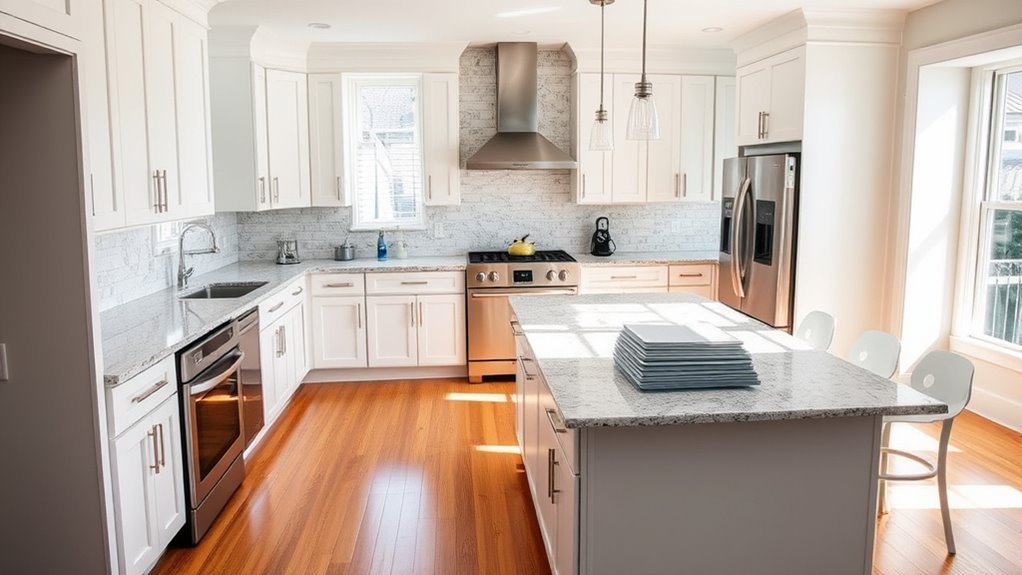
How much does a kitchen remodel cost on average? While prices vary widely, you can expect to spend anywhere from $10,000 to $50,000 depending on your choices.
Staying updated on kitchen design trends helps you make smart decisions that fit your style and budget. For example, open shelving, matte black fixtures, and quartz countertops are popular now and can be budget-friendly upgrades if you choose materials wisely.
You don’t have to replace everything to get a fresh, modern look. Simple changes like updating cabinet hardware, installing energy-efficient lighting, or repainting walls can greatly improve your kitchen’s appeal without breaking the bank.
Typical Costs: Kitchen Upgrade vs. Full Remodel
Although both kitchen upgrades and full remodels can change your space, they vary a lot in scope and cost. A kitchen upgrade usually involves smaller improvements like swapping out appliances, refinishing cabinets, or updating countertops. These tend to be less expensive and quicker, making them a good choice if you want a fresh look without a big project.
Kitchen upgrades offer quick, affordable improvements like new appliances and countertops for a refreshed look without a full remodel.
When planning, think about things like the quality of materials and how much work is needed to make smart investments. This helps you get the most out of your upgrade.
A full remodel, on the other hand, means redesigning the layout, upgrading plumbing or electrical systems, and installing new cabinetry and flooring. It requires a bigger budget and more detailed planning to avoid going overboard.
Understanding these differences can help you pick the right option for your vision and budget. That way, your kitchen makeover will be stylish and valuable without any unexpected costs.
How Do Kitchen Remodel Costs Vary by Size and Layout?
Why does the size and layout of your kitchen impact remodel costs so much? Because both directly influence the materials, labor, and design complexity involved.
Larger spaces usually mean more cabinetry, flooring, and countertop materials, which can increase expenses. An open or unusual layout might require extra structural changes or custom solutions, adding to the cost.
Here’s how size and layout affect your budget:
- Larger kitchens lead to higher material and labor costs.
- Complex layouts often need custom cabinetry or unique fixtures.
- Smaller kitchens may limit options but can help cut overall spend.
- Open floor plans might require relocating plumbing or electrical systems.
What Factors Affect Kitchen Remodel Pricing the Most?
When you’re remodeling your kitchen, the kind of materials you pick can really make a difference in your overall costs. For example, opting for high-end countertops or custom cabinets will usually cost more than standard options.
Labor is another big factor, and it can vary quite a bit depending on how complex the work is and where you’re located. Some areas have higher labor rates, and if your project involves tricky tasks like plumbing or electrical work, that can bump up the price even more.
Getting a good handle on these factors can help you make smarter choices and keep your remodeling budget in check.
Material Quality Impact
Since the materials you choose directly influence both the durability and appearance of your kitchen, they play an essential role in your remodel’s overall cost. Material types and quality differences can cause significant price variation.
For example, opting for solid wood cabinets instead of MDF will increase costs but provide long-lasting value. Likewise, natural stone countertops tend to cost more than laminate but offer better durability and aesthetics.
When selecting materials, consider the lifespan and maintenance needs of each option. Think about how material quality affects resale value and the visual impact on your kitchen’s style.
Finally, weigh your budget constraints against your desired level of luxury to make the best choice.
Labor Costs Variation
Material choices shape the look and longevity of your kitchen, but labor costs often make up a big part of your remodel budget. You’ll see labor cost changes depending on how complex the work is, the skill needed, and how long each task takes.
For example, installing custom cabinets needs more expertise and time than standard ones, which boosts labor costs. Also, regional differences matter—a remodel in a big city or high-cost area usually costs more than in rural or less populated places.
Knowing these factors helps you predict how your total costs might vary and plan your budget better. Being aware of labor cost swings and regional rates ensures you can budget realistically for your kitchen renovation.
How to Budget for Cabinets, Countertops, and Appliances
Although cabinets, countertops, and appliances are some of the biggest expenses in a kitchen remodel, you can keep your budget in check with good planning. Start by exploring different cabinet styles and countertop materials that match your style and color scheme without overspending.
Pick appliance brands known for energy efficiency to save money in the long run. Think about storage solutions that make the most of your space without needing costly custom work.
When budgeting, focus on a few key points:
Compare installation methods to find options that save money.
Choose durable countertop materials that give you good value.
Pick appliance brands that balance features with price.
Go for cabinet styles that look great and fit your budget.
How Labor and Permits Impact Kitchen Remodel Costs
After choosing cabinets, countertops, and appliances that match your style and budget, it’s important to consider how labor and permits will impact your overall kitchen remodel costs. Labor rates depend on where you live and how complex the job is.
Skilled workers like electricians, plumbers, and carpenters charge different rates. Knowing these costs can help you avoid surprises later on. Keep in mind that more detailed designs or custom work usually come with higher labor fees.
Permit fees also play a role in your budget. Depending on your location, you might need permits for electrical, plumbing, or structural changes. These costs vary by city but are necessary to ensure your remodel is up to code.
Skipping permits can lead to fines or expensive rework, so it’s best to include them in your planning. Overall, understanding these factors helps you stay on track financially and avoid unexpected expenses.
Step-by-Step Guide to Planning Your Kitchen Remodel Budget
Thinking about remodeling your kitchen? First, take a moment to figure out which updates are most important to you. Is it new cabinets, a fancy backsplash, or maybe a state-of-the-art appliance? Once you’ve got that sorted, start estimating how much the materials will cost. This way, you’ll get a clearer picture of what your dream kitchen might actually cost.
And don’t forget to set aside some extra cash for those surprise expenses that always pop up. Having a contingency fund will help keep your project on track without stressing over unexpected costs.
Assess Renovation Priorities
Start by listing your top renovation priorities to guide your kitchen remodel budget effectively. Focus on what matters most to you, balancing design preferences with functionality upgrades. This helps you allocate funds where they’ll make the biggest impact.
Consider these key areas as you assess your priorities:
- Enhancing storage space for better organization
- Upgrading appliances for improved efficiency
- Updating lighting and fixtures to match your style
- Reconfiguring the layout for a smoother workflow
Estimate Material Costs
Once you’ve pinpointed your renovation priorities, it’s time to put numbers to the materials you’ll need. Start by listing all essential types like cabinetry, countertops, flooring, and fixtures.
For each, research prices from multiple suppliers to get a clear cost comparison. Remember, material type really impacts your budget—solid wood cabinets cost more than laminate, and quartz counters differ from granite.
Use online tools or visit stores to gather accurate quotes. Don’t forget to factor in delivery fees or bulk discounts, which can affect your total.
Allocate Contingency Funds
Setting aside a contingency fund is a key step in managing your kitchen remodel budget effectively. It gives you the flexibility to handle unexpected expenses like hidden repairs or price changes.
You should allocate around 10-15% of your total budget for this fund. This cushion helps prevent financial stress and keeps your project on track.
When allocating contingency funds, think about unforeseen structural issues or damages. Also, consider upgrades or changes you might decide on during remodeling.
Don’t forget price fluctuations in materials or labor, and potential delays that could cause additional costs. Planning ahead for these things makes the process smoother.
Top Ways to Cut Kitchen Remodel Costs Without Sacrificing Quality
Although remodeling a kitchen can feel overwhelming, you don’t have to break the bank to get a high-quality result. One of the best ways to cut costs is by choosing budget-friendly materials that still offer durability and style. For example, opt for laminate countertops instead of granite or consider engineered wood flooring rather than hardwood. These options save money without sacrificing the overall look.
You can also tackle some DIY projects to reduce labor expenses. Installing a backsplash, painting cabinets, or assembling flat-pack cabinetry are manageable tasks that give you control over your budget. Just be realistic about your skills and time to avoid costly mistakes.
Additionally, reuse existing fixtures and appliances when possible, and shop sales or clearance items to stretch your budget further. By combining smart material choices and hands-on effort, you’ll keep costs down while creating a beautiful, functional kitchen.
When Is It Worth Investing in High-End Kitchen Features?
You should think about investing in high-end kitchen features when they can really add long-term value to your home and make it more attractive to buyers down the line. These upgrades aren’t just about luxury—they can actually boost your home’s resale appeal, which is pretty important if you’re planning to sell someday.
Plus, upgrading to high-end features can seriously improve your daily cooking experience. Think better functionality, easier cleaning, and more efficient appliances—that kind of stuff makes a big difference when you’re in the kitchen every day.
Just keep in mind, it’s all about weighing the benefits against the costs. If the upgrades will pay off in the long run and make your life easier now, then it’s probably worth the investment.
Long-Term Value Gains
When you invest in high-end kitchen features, you’re not just upgrading your space—you’re potentially increasing your home’s long-term value. A smart kitchen upgrade can lead to a better remodeling return, especially if you pick timeless designs and durable materials. Focus on features that improve both functionality and looks to get the most benefits.
Think about these factors to boost your kitchen’s long-term value:
- Quality appliances that save energy and are reliable
- Custom cabinetry with craftsmanship built to last
- Durable countertops like quartz or granite
- Smart kitchen technology for added convenience and a modern touch
Impact on Home Resale
If you plan to sell your home soon, investing in high-end kitchen features can really boost its market appeal and resale value. Buyers often focus on kitchens, and a modern, well-equipped space can make your property stand out.
But it’s important to match your upgrades with current market trends to ensure your investment pays off. Sleek appliances and durable countertops are still popular, while overly customized features might turn buyers off.
High-end finishes can justify a higher asking price, but only if they match the neighborhood’s standards. Remember, not every luxury upgrade will automatically increase your home’s value.
Do some research on local market trends and talk to real estate experts. That way, your kitchen remodel will truly add value when it’s time to sell.
Enhanced Functionality Benefits
Although high-end kitchen features often come with a hefty price tag, they’re worth the investment when they significantly improve your daily cooking experience and overall kitchen functionality.
You’ll notice better space optimization and boosted workflow efficiency, making meal prep smoother and more enjoyable. High-end appliances and smart storage solutions can truly transform how you use your kitchen.
Consider investing in these features when you want to:
- Maximize every inch with clever space optimization
- Streamline tasks for improved workflow efficiency
- Enjoy durable, energy-efficient appliances that save time
- Add convenience with smart technology and customizable storage
Getting Accurate Quotes and Avoiding Hidden Kitchen Remodel Costs
Securing accurate quotes is essential to keeping your kitchen remodel on budget and stress-free. Start by requesting detailed estimates from multiple contractors so you can compare options easily.
Look beyond just the total cost and make sure each quote breaks down expenses like materials, labor, and permits. This transparency helps you spot any hidden fees early on.
Focus on detailed expense breakdowns to uncover hidden fees before starting your kitchen remodel.
Ask contractors about potential extra charges for unforeseen issues like plumbing or electrical updates. Clarify payment schedules and cancellation policies to avoid surprises later.
Don’t hesitate to question anything that seems vague or unusually low. It could be a sign of corners being cut or costs not included.
Frequently Asked Questions
How Long Does a Typical Kitchen Remodel Take to Complete?
A typical kitchen remodel takes about 6 to 12 weeks to complete, depending on the kitchen timeline and remodeling phases involved.
You’ll move through planning, demolition, installation, and finishing touches, each requiring time and coordination.
Delays can happen if unexpected issues arise or if you customize materials.
Staying organized and communicating with your contractor helps keep the remodeling phases on track, so your kitchen transformation finishes smoothly and on schedule.
What Are the Latest Kitchen Design Trends in Remodeling?
You’ll love that 72% of homeowners now choose open concept layouts to create a spacious, airy feel.
The latest kitchen design trends focus on blending style with technology, so you’ll want to include smart appliances that make cooking easier and more efficient.
Combining open concept spaces with these high-tech gadgets not only improves functionality but also boosts your kitchen’s modern appeal, making it the heart of your home.
How Do I Choose the Right Kitchen Layout for My Lifestyle?
You should choose a kitchen layout that fits your daily habits and helps your workflow run smoothly. If you love entertaining or want a more open, spacious feel, an open concept works great by connecting your kitchen with the living areas.
For more focused cooking, consider layouts like L-shape or U-shape. These keep everything within reach, making prep and cooking easier. Think about how you move around, prep, and store your items to find a design that matches your lifestyle perfectly.
What Eco-Friendly Materials Can I Use in My Kitchen Remodel?
You can choose sustainable countertops like bamboo or recycled glass to make your kitchen eco-friendly. Using reclaimed wood for cabinets or flooring adds character while reducing waste.
These materials not only look great but also minimize environmental impact. Plus, you’ll feel good knowing you’re supporting sustainability.
Don’t forget low-VOC paints and energy-efficient appliances to complete your green remodel. You’ve got plenty of options to create a stylish, eco-conscious kitchen.
Can I Live in My Home During the Kitchen Renovation?
Yes, you can live in your home during the kitchen renovation, but be prepared for some challenges. Setting up a temporary kitchen in another room, like the laundry or dining area, can help you manage meals without the main kitchen.
Expect some noise, dust, and limited access to your kitchen space. Planning ahead and staying flexible will make living through the remodel easier.
It will help keep your daily routine as smooth as possible. Just remember, patience and good organization are key during this time.
Conclusion
You might think kitchen remodels always break the bank, but that’s not necessarily true. By understanding costs—from cabinets to appliances—and planning carefully, you can create a beautiful kitchen without overspending.
Remember, size, layout, and quality choices play huge roles in your budget. So don’t just settle for guesses or flashy ads. Explore thoroughly into quotes and options to get the best value.
Your dream kitchen is more affordable than you think. A well-planned kitchen remodel cost can fit your budget and still give you the stylish space you want.