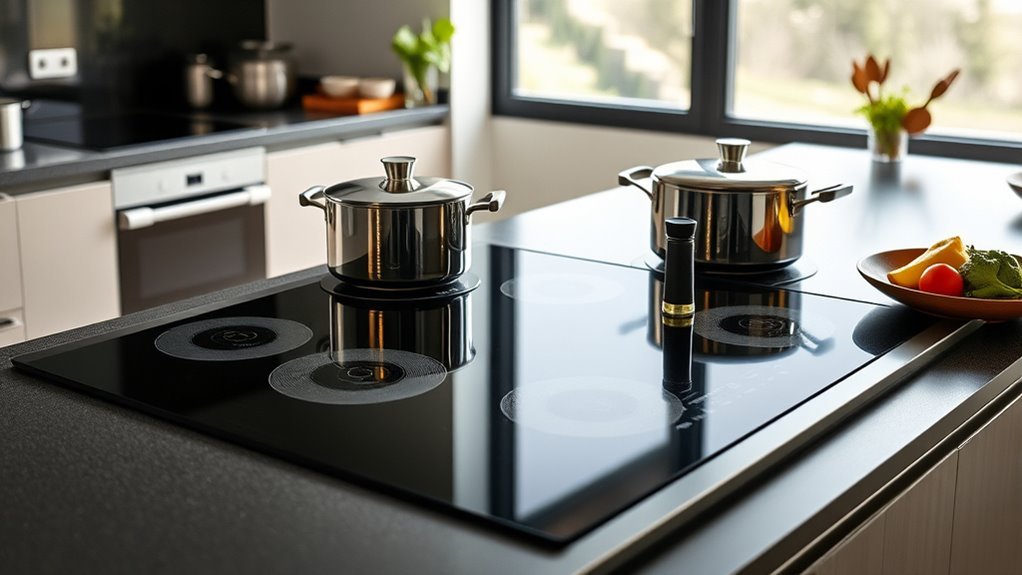
Induction Cooktops Pros and Cons: What You Should Know
Are you tired of waiting forever for your stove to heat up or worried about safety hazards in the kitchen? You’re not alone—many people struggle with traditional gas or electric stoves that can be slow and risky.
Induction cooktops heat your pots directly using magnetic fields, so they cook food faster and use less energy than gas or electric stoves. They’re safer with cooler surfaces and automatic shut-offs, but you’ll need compatible cookware and proper electrical setup.
Upfront costs are higher, and power outages can disrupt cooking.
If you want efficient cooking with smart safety features, there’s plenty more to evaluate before choosing the best induction model for your kitchen.
Key Takeaways
- Induction cooktops heat cookware quickly and efficiently, which means less time spent cooking and lower energy bills.
- They also offer better safety because their surfaces stay cooler, there are no open flames, and they have automatic shut-off features.
- Just keep in mind, only magnetic, flat-bottomed cookware works, so you might need to buy new pots and pans.
- The initial cost can be higher, and you might need electrical upgrades, which can add to the installation expenses.
- Plus, since they depend on stable electrical power, you won’t be able to cook during outages unless you have backup power sources.
How Induction Cooktops Work vs. Other Stoves
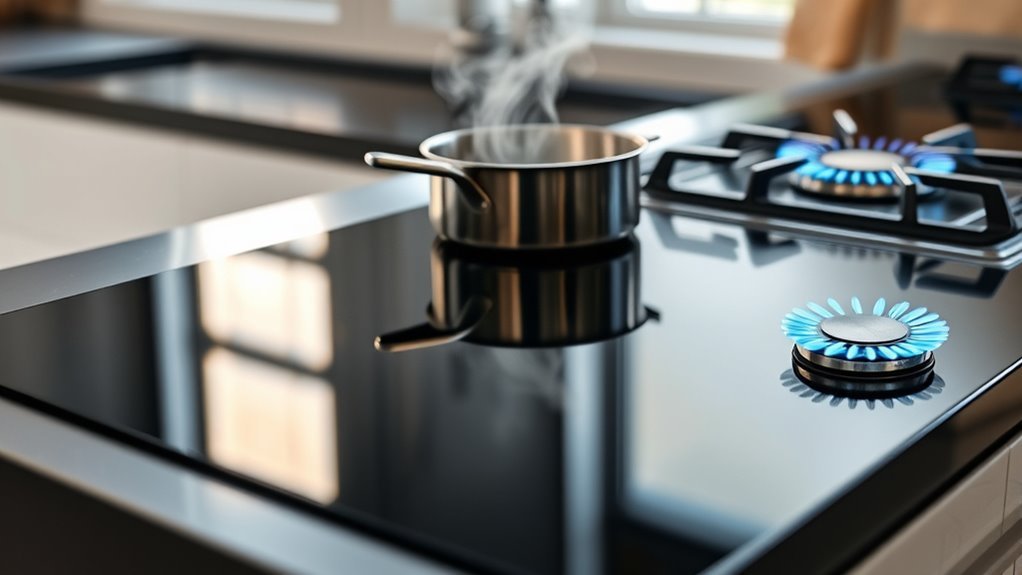
Although induction cooktops might seem similar to traditional stoves, they use a completely different heating method. Instead of heating the burner itself, induction technology generates heat directly in the cookware through electromagnetic fields. When you place a compatible pot on the surface, the cooktop induces electric currents in the metal, making it hot instantly.
This approach contrasts with gas or electric stoves, which heat indirectly—either by flame or a heated coil—leading to slower heat transfer. Because heat is created inside the pan, cooking speeds are noticeably faster. Induction cooktops bring water to a boil quicker and respond quickly to temperature adjustments.
You’ll also notice less wasted energy since the cooktop surface stays relatively cool. Understanding this difference helps you appreciate why induction is often praised for precision and efficiency, even if it feels similar to using a traditional stove at first glance.
Top Benefits of Induction Cooktops
You’ll quickly see that induction cooktops are great at saving energy because they heat up only the cookware itself, not the air around it. This means less wasted heat and more efficient cooking. Plus, they give you precise temperature control, so you can cook with accuracy every time—no more guesswork. Let’s take a closer look at how these benefits can make your cooking experience easier and more efficient.
Energy Efficiency Advantages
Many home cooks appreciate how induction cooktops use energy more efficiently than traditional gas or electric stoves. This efficiency not only saves you money but also reduces your sustainability impact by lowering energy consumption.
When you choose induction, you benefit from faster heating times that cut down on wasted energy. It also transfers energy directly to your cookware, which improves cooking performance.
Plus, induction cooktops stay cooler, reducing heat loss and keeping your kitchen more comfortable. And since they only activate when a pot is present, they use less standby energy.
Precise Temperature Control
Precise temperature control is one of the standout features that make induction cooktops a favorite among home chefs. When you cook with induction, you benefit from exceptional temperature accuracy, allowing you to adjust heat instantly and maintain the exact level you need.
This means you can simmer sauces gently or sear meats perfectly without worrying about overheating or burning. The consistent temperature control guarantees your dishes cook evenly every time, boosting cooking consistency and reducing guesswork.
Unlike traditional gas or electric stoves, induction cooktops respond immediately to your adjustments, giving you greater confidence and control in the kitchen. If you value precision and reliable results, induction cooktops offer a clear advantage that elevates your overall cooking experience.
Why Induction Cooktops Are Safer Than Gas or Electric
Because induction cooktops use magnetic fields to heat only the cookware, they stay much cooler than gas or traditional electric stoves, reducing the risk of burns. This safety feature greatly improves your experience by helping prevent accidents in the kitchen. Unlike gas flames or hot coils, the cooktop surface stays relatively cool, so you don’t have to worry about touching a dangerously hot burner.
Induction cooktops heat only cookware, keeping the surface cool and reducing burn risks for safer cooking.
Here’s why induction cooktops are safer for you:
- They instantly stop heating when you remove the pot, preventing accidental burns.
- There’s no open flame, so fire hazards are much lower.
- The surface cools quickly after cooking, reducing burn risks.
- Many models have automatic shut-off features if no cookware is detected.
These safety features make induction cooktops a smart choice if you want a safer, more user-friendly cooking environment.
Why Induction Cooktops Save Time and Energy
You’ll notice that induction cooktops heat up way faster than traditional stoves, which means you can get your meals ready in no time. It’s a real time-saver, especially when you’re in a hurry.
Plus, they use energy more efficiently because they transfer heat directly to your cookware, so there’s less wasted energy. That not only helps you save on your electricity bill but also keeps your kitchen cooler since less heat is escaping into the air.
Faster Heating Speeds
When you switch to an induction cooktop, your meals start cooking almost instantly. Thanks to induction speed, the cooktop heats the cookware directly through magnetic fields, so there’s no need to wait for burners to warm up.
This means you get faster boiling times that cut meal prep, and immediate temperature adjustments for precise cooking.
You’ll spend less time standing over the stove, freeing you up for other tasks. Plus, the increased cooking efficiency saves effort and reduces stress.
Because heat transfers directly to your pot or pan, you avoid wasting energy and enjoy quicker results.
This swift response helps you move seamlessly through recipes without delays.
Energy Efficiency Benefits
Although induction cooktops heat up faster, their real benefit is energy efficiency. When you cook with induction, electromagnetic technology heats your cookware directly, so less energy is wasted compared to gas or electric stoves.
This precise heating leads to noticeable energy savings, which can lower your utility bills over time. Plus, using energy more efficiently helps reduce your environmental impact.
Induction cooktops need less power to get the same cooking results. This helps conserve resources and decreases emissions from electricity production.
If you want to cook smarter and be kinder to the planet, induction technology is a practical choice. It offers great performance without sacrificing convenience.
Reduced Heat Waste
Induction cooktops not only cut energy use but also minimize heat loss during cooking. Since they generate heat directly in the cookware, you get better cooking precision and excellent heat retention.
This means less wasted energy and faster meal prep. You’ll love how induction cooktops help you:
- Reduce cooking time by heating pans instantly
- Keep your kitchen cooler by limiting ambient heat
- Use energy efficiently, lowering your utility bills
- Achieve consistent results thanks to precise temperature control
Best Cookware for Induction Cooktops
Choosing the right cookware can make a big difference in how well your cooktop performs. For induction cooktops, you need pots and pans made from materials that are magnetic and induction compatible.
Cast iron and stainless steel are top choices because they magnetize easily and distribute heat well. Copper looks great but usually isn’t compatible unless it has a magnetic base.
Make sure your cookware has flat bottoms so it stays in full contact with the cooktop surface, which helps with heat transfer. Heavier cookware often provides better heat conductivity and even cooking.
Non-stick options are available in induction-compatible lines, offering convenience along with good performance. When shopping, look for trusted brands that specify induction compatibility so you don’t get surprised.
Choosing cookware designed for induction guarantees your cooktop’s efficiency and makes your cooking experience better all around.
Common Induction Cooktop Drawbacks
Before you decide on an induction cooktop, it’s a good idea to think about some of the downsides. For starters, not all cookware is compatible with these units, so you might need to invest in new pots and pans. They can also be a bit pricier upfront compared to traditional stoves. And, of course, since they depend entirely on your electricity, a power outage means you won’t be able to cook at all.
Limited Cookware Compatibility
Although induction cooktops heat up quickly and efficiently, their performance really depends on the cookware you use. Not all materials work well with induction, which can be frustrating if you’re not prepared.
First, your cookware needs to be magnetic. Cast iron and some stainless steel pots and pans work great. On the other hand, non-magnetic materials like aluminum, copper, and glass won’t heat unless they have induction-compatible bases.
You might have to replace or buy new cookware, which can be an inconvenience. There are induction interface disks that can help, but they might reduce the efficiency and speed of cooking.
Knowing these limitations can save you surprises and help you plan your kitchen setup better when choosing an induction cooktop.
Higher Initial Cost
Because induction cooktops use advanced technology, they often come with a higher price tag compared to traditional gas or electric stoves. When you’re weighing your options, budget considerations play a big role.
The upfront cost can be a hurdle if you’re working with a tight budget, as induction units typically cost more to buy and install. But don’t let the initial expense discourage you entirely.
Over time, induction cooktops offer long-term savings through improved energy efficiency and faster cooking times, which can lower your utility bills. If you’re willing to invest now, you could benefit financially later.
Still, it’s important to see if the higher initial cost fits your current financial situation before making a commitment.
Power Source Dependence
While the upfront investment in an induction cooktop may be worth it for many, you should consider how these appliances rely entirely on a consistent electrical power source. Without a stable power supply, your cooktop won’t work, which can be frustrating during outages or in areas with unreliable electricity.
Here are some key points to keep in mind:
- Induction cooktops have specific electrical requirements that might mean upgrading your home’s wiring.
- Installation can add cost and complexity if your current setup isn’t compatible.
- Power interruptions mean no cooking, so reliable backup options like generators are essential.
- Dependence on electricity limits portability and outdoor use compared to gas options.
Understanding these factors helps you decide if an induction cooktop fits your lifestyle and home setup.
Is an Induction Cooktop Right for You?
Wondering if an induction cooktop fits your cooking style and kitchen setup? If you value quick heating and precise temperature control, it’s a strong contender. You’ll appreciate how induction cooktop maintenance is generally straightforward—just wipe down the smooth surface after use, avoiding abrasive cleaners. However, keep in mind that you’ll need compatible cookware, usually magnetic-based pots and pans.
When choosing, investigate various induction cooktop brands to find one that matches your budget and features. Some brands offer smart technology and multiple cooking zones, which could improve your experience. Also, consider your kitchen’s electrical setup since induction cooktops require sufficient power.
If you often cook for large groups or prefer traditional cooking methods, you might want to weigh these factors carefully. But if energy efficiency, safety, and speed matter most, an induction cooktop can be a great fit for your kitchen.
Induction Cooktop Average Cost
Induction cooktops usually cost between $200 and $2,000, depending on size, brand, and features. There are different budget ranges to help you find one that fits your needs.
Entry-level models start around $200 to $400. They’re great if you want basic functionality without spending too much. Mid-range cooktops cost $500 to $1,200 and offer more cooking zones and better controls.
Premium models can run $1,300 to $2,000 or more. These often have sleek designs and advanced features. Keep in mind, you’ll also need compatible cookware, which can affect your overall budget.
Knowing these price ranges helps you pick a cooktop that matches your cooking style and wallet. You can get good performance even at the average price point, so choose what feels right for your kitchen and lifestyle.
Installation and Space Needs for Induction Cooktops
Before installing your cooktop, you’ll need to verify your kitchen has enough counter space and proper electrical connections. Induction cooktops require a dedicated 240-volt outlet, so you might need an electrician’s help to ensure safe wiring.
Space considerations are important too—make sure your countertop can fit the cooktop’s size with enough room around it for ventilation and easy use. Check the thickness and material of your countertop, as some surfaces may need reinforcement.
Since induction cooktops sit flush or slightly recessed, your cabinetry should support this style of installation. Planning these factors early helps avoid costly adjustments later and keeps your cooktop running efficiently.
Troubleshooting Common Induction Cooktop Issues
Several common issues can happen with your induction cooktop, but most are easy to spot and fix. When something seems off, start by checking the error codes in your manual—they can point you to the specific problem.
Here are some troubleshooting tips to help you out:
- Cooktop won’t start: Make sure your cookware is induction-compatible and placed correctly in the center.
- Error codes flashing: Look up these signals in your user manual. They often indicate overheating or electrical issues.
- Uneven heating: Use flat-bottomed cookware to ensure good contact with the surface.
- Cooktop shuts off mid-use: This might be a safety feature kicking in. Check for overheating or blocked vents.
Frequently Asked Questions
Can Induction Cooktops Be Used During Power Outages?
No, you can’t use induction cooktops during power outages since they rely on electricity as their power source.
If the power goes out, your cooktop won’t work, which means you’ll need an alternative for emergency cooking.
It’s a good idea to have a backup plan, like a gas stove or portable camping stove, so you can still prepare meals when the power’s down.
Are Induction Cooktops Compatible With All Kitchen Ventilation Systems?
Think of your kitchen ventilation system as the lungs of your cooking space. Induction cooktops are usually compatible with most ventilation systems, but you’ll want to make sure they work well together.
Proper ventilation is key to handling the heat and steam they produce. Pay close attention to installation requirements because improper setup can reduce airflow and leave lingering odors.
If you meet these conditions, your ventilation will work smoothly with your induction cooktop.
Do Induction Cooktops Interfere With Medical Devices Like Pacemakers?
Induction cooktops generally don’t interfere with pacemakers, but you should still consider induction safety if you have medical concerns. The electromagnetic fields they generate are localized and usually too weak to affect most modern pacemakers.
However, if you have a pacemaker or similar device, it’s wise to consult your doctor before using an induction cooktop. Taking precautions guarantees your safety without sacrificing the benefits of induction cooking.
How Do Induction Cooktops Affect Indoor Air Quality?
Coincidentally, as you enjoy the clean heating of induction cooktops, their minimal induction emissions mean they hardly affect your indoor air quality.
Because they use electromagnetic fields to heat cookware directly, they produce less ambient heat compared to gas stoves, which helps with heat efficiency and reduces indoor pollutants.
This means your kitchen stays cooler and cleaner, so you don’t have to worry about smoke or fumes compromising the air you breathe while cooking.
Can Induction Cooktops Be Repaired or Recycled Environmentally?
Yes, you can repair induction cooktops by replacing faulty coils or control boards, which helps extend their lifespan.
When it’s time to get rid of them, look for recycling options that handle electronic waste responsibly. Many facilities recover valuable metals and parts, reducing environmental impact.
Conclusion
You might wonder if induction cooktops are really worth the switch. The truth is, they combine safety, speed, and energy efficiency in a way gas and traditional electric stoves can’t match.
While the upfront cost and cookware requirements might give you pause, the long-term benefits often outweigh these concerns.
If you value precision and convenience in your cooking, an induction cooktop just might be the perfect upgrade for your kitchen.