Induction Cooktop or Electric: Which Is Better?
Are you tired of slow cooking, high energy bills, or surfaces that aren’t safe to touch? You’re not alone—many people struggle with choosing the right cooktop for their kitchen.
Finding a solution that’s fast, efficient, and safe can be tricky. That’s why understanding the differences between induction and electric cooktops is so helpful.
If you want faster cooking, better energy efficiency, and safer surfaces, an induction cooktop is the way to go. It heats cookware directly using magnetic fields, saving energy and offering precise temperature control.
While electric cooktops work with more cookware types and usually cost less upfront, they heat slower and waste more energy.
Choosing the right cooktop depends on your cooking style and needs—exploring these factors can help you pick the perfect fit for your kitchen.
Key Takeaways
- Induction cooktops heat cookware directly with magnetic fields, which means faster cooking and better energy efficiency than electric cooktops.
- Electric cooktops work through heating elements under glass, leading to slower heat-up times and more energy loss compared to induction.
- Induction requires magnetic cookware, but electric cooktops can handle a wider variety of materials, including non-magnetic options.
- Induction cooktops cost more upfront and might need special wiring, but they save money in the long run with reduced energy use.
- Induction offers precise temperature control and cooler surfaces for safety, while electric cooktops heat more slowly but are usually cheaper initially.
Why Choosing the Right Cooktop Matters
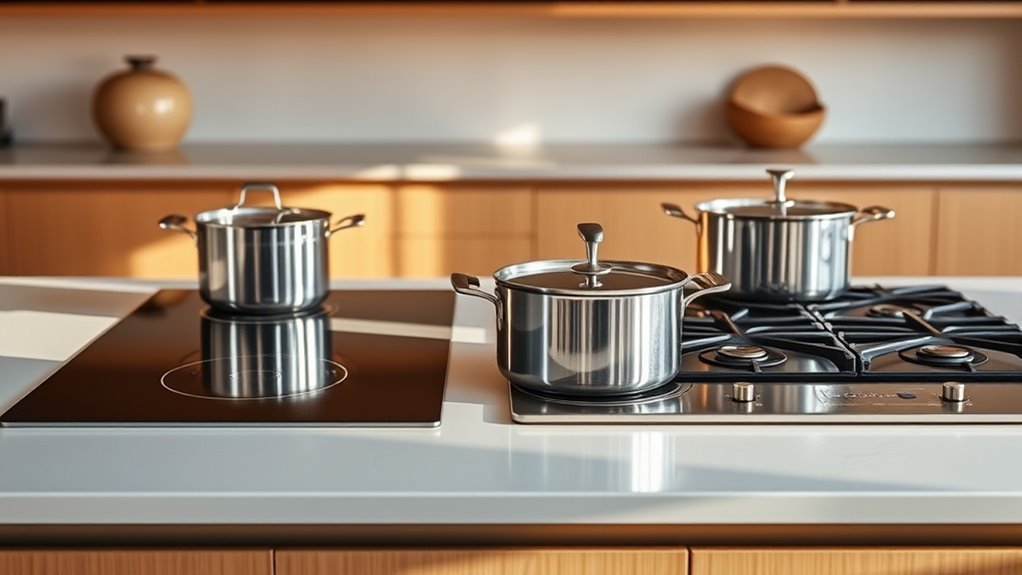
When you pick the right cooktop, you set yourself up for a smoother cooking experience and better energy efficiency. Choosing wisely means you’ll enjoy better cooktop performance, saving both time and energy in your kitchen.
Your daily cooking routine becomes more enjoyable when the cooktop matches your needs and habits. Understanding your preferences is key here. Do you prioritize quick heat-up times, easy cleanup, or precise temperature control?
Matching your cooktop to your habits makes daily cooking smoother and more enjoyable.
Each of these factors influences how well your cooktop performs for you. Picking a cooktop that fits your cooking style helps you avoid frustration and wasted energy.
In the end, the right choice boosts comfort and convenience while lowering energy costs. By focusing on efficiency and what you need, you’ll make a decision that keeps your kitchen productive and enjoyable for years to come.
How Induction and Electric Cooktops Work Differently
Although both induction and electric cooktops use electricity, they heat in very different ways that change how you cook.
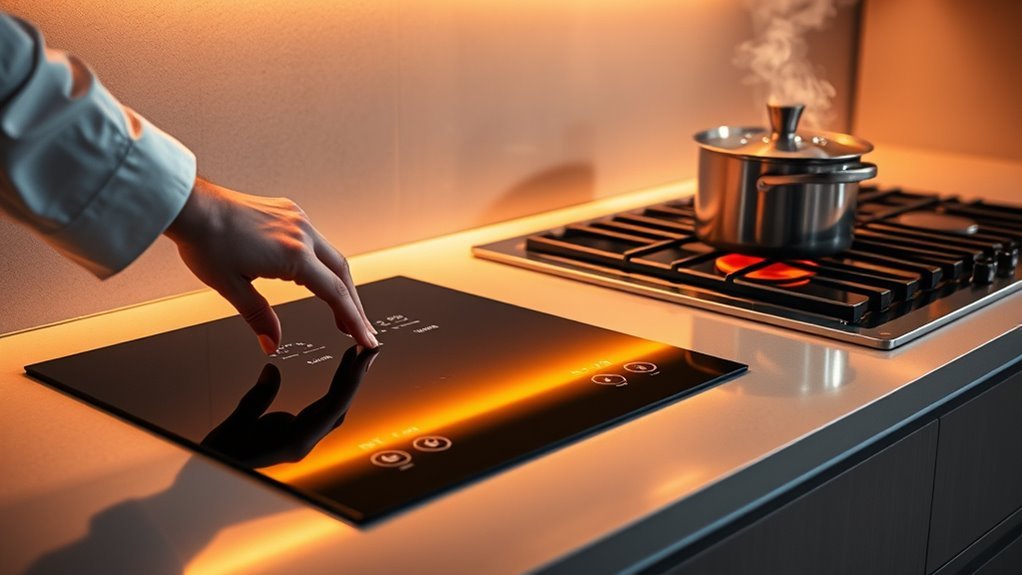
Induction technology uses magnetic fields to directly heat your cookware, so the cooktop itself stays fairly cool. This allows you to control temperature changes quickly and precisely.
Electric cooktops, on the other hand, rely on heating elements beneath a glass surface that warm up and then transfer heat to your pots and pans. This method is less direct, so the surface gets hot and adjusting temperatures can take longer.
In terms of efficiency, induction cooktops usually perform better because they lose less heat during cooking. They heat only the cookware, avoiding wasted energy.
Electric cooktops heat the entire surface, which can lead to some energy loss and slower response times. Knowing these differences can help you choose the cooktop that best fits your cooking style.
Which Cooktop Heats Up Faster and Saves You Energy?
How quickly your cooktop heats up can really impact your cooking and your energy bills.
Induction cooktops are great for heating efficiency because they use electromagnetic energy to directly heat your cookware. This means less wasted heat and faster cooking times compared to traditional electric cooktops, which heat indirectly through a coil.
Choosing an induction cooktop gives you faster heat-up times, so you spend less time waiting for your food to cook. It also helps reduce energy waste and lowers your overall energy use.
Plus, induction cooktops offer more precise temperature control, so you can avoid overheating and cook more accurately.
Electric cooktops take longer to reach the right temperature because they first heat the coil, then transfer heat to the cookware, losing some heat along the way.
If you want to save energy and cook faster, an induction cooktop is a smarter choice for your kitchen.
Safety Features: Induction vs Electric Cooktops
Since safety is a top priority in any kitchen, understanding how induction and electric cooktops differ in their safety features can help you make a smarter choice. Induction cooktops follow strict safety standards, using electromagnetic fields to heat only the cookware. This keeps the surface relatively cool, which reduces burn risks and overheating concerns.
Plus, induction models automatically shut off when no pot is detected, adding another layer of safety. On the other hand, electric cooktops heat their entire surface, so you need to be cautious around hot burners even after cooking.
While modern electric cooktops include safety features like automatic shut-off and residual heat indicators, they still pose a higher burn risk compared to induction. Both options meet safety standards, but if safety and reducing accidents are your priority, induction is usually the better choice.
Which Cooktop Offers Better Temperature Control?
When you cook, precise temperature control can make all the difference between a perfect meal and a disappointing one. Induction cooktops excel in temperature precision, allowing you to adjust heat instantly and keep cooking temperatures steady.
Electric cooktops, while reliable, often lag in responsiveness, making fine temperature adjustments trickier. With an induction cooktop, you get rapid heat changes for quick adjustments, consistent heat delivery for better cooking results, and minimal fluctuations during cooking.
Electric cooktops rely on heating elements that take longer to heat and cool, which can lead to uneven cooking and less control over temperature. This delay may affect recipes that need quick changes in heat.
If you want tight temperature control and consistent results, induction cooktops generally offer a better experience, helping you achieve great results every time.
Cookware Compatibility: What Works Best for Each
When you’re picking out cookware for your cooktop, it’s good to know that induction stoves need magnetic materials like cast iron or stainless steel to work properly. So, if you’re going the induction route, make sure your pots and pans are compatible.
On the other hand, electric cooktops are pretty versatile—they let you use almost any kind of cookware without much fuss. Understanding how different materials perform can really help you get the best cooking results, no matter which type of cooktop you have.
Induction Cookware Requirements
Although induction cooktops offer fast and efficient heating, they require specific cookware to work properly. You need to verify your pots and pans are made with induction materials to guarantee compatibility. Not all cookware works on induction, so choosing the right type is essential.
Here’s what you should look for:
- Cookware with magnetic bases like cast iron or stainless steel
- Flat-bottomed pans for full contact with the cooktop
- Avoid aluminum, copper, glass, or non-magnetic stainless steel unless they have an induction-compatible base
- Use a magnet test: if a magnet sticks firmly, the cookware will work
Electric Cookware Versatility
Induction cooktops require specific cookware to work properly, but electric cooktops are much more flexible. With an electric cooktop, you can use almost any type—stainless steel, cast iron, aluminum, glass, or even copper.
This versatility is one of the main advantages of electric cookware because you don’t need to replace your favorite pots and pans. However, electric cooktops can have slower heat adjustments and may heat unevenly, especially with thinner or warped cookware.
While electric cooktops don’t need magnetic or induction-compatible materials, choosing flat-bottomed cookware helps ensure better contact and heat transfer. So, if you want to keep using your diverse collection without worrying about compatibility, electric cooktops make it easier, even if they don’t perform quite as quickly as induction models.
Material Impact On Performance
Because cookware material directly affects heat conduction and compatibility, choosing the right pots and pans is essential for the best performance on both induction and electric cooktops. You’ll notice that different material types influence cooking performance in unique ways.
For induction cooktops, your cookware must be magnetic, while electric cooktops offer more flexibility. Here’s what works best:
- Cast iron is excellent for induction because of its magnetic properties and it retains heat well.
- Stainless steel with a magnetic base offers durability and good heat distribution on induction.
- Aluminum or copper are great for electric cooktops but generally won’t work on induction unless they have a magnetic layer.
- Non-stick pans are compatible with both, but make sure the base is induction-compatible.
Selecting cookware based on material types improves your overall cooking experience.
Cleaning and Maintenance: Induction vs Electric
When you clean your cooktop regularly, maintenance becomes much easier no matter what type you have. For both induction and electric cooktops, simple tips like wiping spills immediately with a soft cloth and using mild detergent can prevent buildup and damage.
Induction cooktops have a smooth glass surface, so they’re easy to wipe down quickly. Just avoid abrasive scrubbers to keep the finish scratch-free. Electric cooktops, especially coil models, need a bit more attention—regularly removing and cleaning the coils and drip pans is part of the routine.
Routine care is really important. For induction, a quick wipe after each use helps prevent stains, and deep cleaning once a week keeps it looking new. With electric cooktops, regularly inspecting and cleaning the coils and pans ensures efficient heating.
Installation and Cost: Induction vs Electric Cooktops
When you’re trying to decide between induction and electric cooktops, it’s important to think about the initial cost and what kind of installation you’ll need. Induction cooktops generally cost more to buy upfront, and they might require special wiring or modifications to your kitchen. On the other hand, electric cooktops usually have a simpler setup, which can save you some hassle during installation.
But don’t forget to consider the long-term costs as well. Induction cooktops tend to be more energy-efficient, so they can save you money on your electricity bills over time. So, while the initial investment might be higher, the savings on energy could make it worth it in the long run.
Initial Purchase Price
Choosing between an induction cooktop and a traditional electric model often comes down to the initial purchase price. When you’re budgeting, it’s helpful to know that induction cooktops usually cost more upfront.
They typically range from $300 to $1,500, while electric cooktops tend to be more affordable, usually between $200 and $700. Higher-end induction models may offer extra features that justify the higher price.
You might save money initially with electric, but it’s worth considering the long-term value as well.
Installation Requirements
While the upfront cost is important, you should also consider the installation requirements for induction and electric cooktops.
Induction cooktops often need more precise wiring because they require a higher amperage circuit. You might need an electrician to upgrade your panel or wiring.
Electric cooktops usually have simpler wiring needs but still need to meet local electrical codes.
Both cooktops fit standard countertop cutouts, but induction models sometimes need extra ventilation or clearance to prevent overheating.
Before installing, check your kitchen’s layout and electrical setup to make sure everything is compatible.
Understanding these wiring specs and space needs can help you avoid costly modifications and make installation smoother.
Long-Term Energy Costs
Although induction cooktops often come with a higher upfront cost, they can save you money over time because they’re more energy-efficient than traditional electric cooktops. When you consider the long-term energy costs, induction models usually come out ahead for people who cook frequently.
Here’s why: induction cooktops use electromagnetic energy to heat pans directly, which reduces wasted heat. Electric cooktops, on the other hand, lose more energy as they heat the surface and surrounding air.
Because of their higher efficiency, induction cooktops help lower your electricity bills. Over the years, the savings on energy costs can make up for the initial installation expense.
Matching Cooktops to Your Cooking Style and Needs
Because your cooking style shapes how you use your kitchen, selecting the right cooktop can make a big difference in your daily routine. If you value quick heat adjustments and precise temperature control, an induction cooktop is a great match. It heats food rapidly and cools down quickly, offering excellent responsiveness.
On the other hand, if you prefer slower, consistent heating or often use cookware that isn’t compatible with induction, an electric cooktop might suit your lifestyle better. Think about how often you cook, the types of dishes you make, and your kitchen habits.
For busy lifestyles, induction’s energy efficiency and safety features can save time and effort. If you enjoy simmering or baking directly on the cooktop, electric models provide steady heat that fits those needs.
In the end, understanding your cooking preferences and how each cooktop’s strengths align with them will help you choose the right fit for your kitchen and lifestyle.
Common Myths About Induction and Electric Cooktops and How to Decide Between Induction and Electric for Your Kitchen
How do you cut through the confusion surrounding induction and electric cooktops? Start with some myth busting to clear up common consumer misconceptions. For example, people often think induction cooktops are unsafe or that electric ones are slow. Understanding performance comparisons and efficiency debates helps you make an informed choice. Consider your cooking preferences and how technology advancements affect each option.
Cut through cooktop confusion by busting myths and understanding performance for smarter kitchen choices.
To decide which suits your kitchen, focus on these points:
- Induction heats faster and is more energy-efficient.
- Electric cooktops offer broader cookware compatibility.
- Induction provides precise temperature control.
- Electric models are generally less expensive upfront.
Frequently Asked Questions
Can Induction Cooktops Interfere With Pacemakers?
Induction cooktops create electromagnetic fields, but if you have a pacemaker, you shouldn’t worry too much.
Modern pacemakers are designed with safety in mind and are usually shielded against common household electromagnetic fields.
That said, it’s a good idea to keep some distance while cooking and follow your doctor’s advice.
If you’re worried, talk to your healthcare provider to confirm your pacemaker won’t be affected by induction cooktops.
Are Induction Cooktops Compatible With All Types of Kitchen Ventilation?
You might think all kitchen ventilation works the same, but they don’t. Induction cooktops usually need specific ventilation to handle their high heat output, unlike some traditional stoves.
You also need to consider installation requirements carefully. Some vent hoods must be positioned differently to maximize airflow and efficiency.
While induction cooktops are generally compatible with most ventilation systems, making sure yours meets these needs is important for the best performance and safety.
Do Electric Cooktops Affect the Taste of Food Differently?
No, electric cooktops don’t affect flavor profiles differently by themselves. The taste depends more on your cooking techniques, like how you control heat and timing.
Electric cooktops heat evenly but slower, so you might need to adjust your methods to avoid overcooking or undercooking.
If you focus on mastering those techniques, you’ll get great flavor every time, regardless of the cooktop type.
Can Induction Cooktops Be Used Outdoors or in RVS?
You know what they say, “Where there’s a will, there’s a way.” Yes, you can use induction cooktops outdoors or in RVs thanks to their portability options.
They’re compact and easy to set up, making them perfect for travel. Plus, their energy efficiency means you won’t drain your RV’s power quickly.
Just make sure you have a compatible power source, and you’re good to cook anywhere you want!
How Do Induction and Electric Cooktops Impact Home Insurance Policies?
You’ll find that insurance coverage can be influenced by the type of cooktop you use.
Induction cooktops generally lower safety concerns since they stay cooler and reduce fire risks, which insurers often appreciate.
Electric cooktops may raise more safety concerns due to exposed heating elements.
It’s smart to inform your insurer about your appliance choice to make sure your policy covers any potential risks properly.
You might also benefit from lower premiums with safer options.
Conclusion
Choosing between induction and electric cooktops is like picking the right key to access your kitchen’s potential. Induction offers the swift precision of a master’s touch, while electric brings steady, reliable warmth.
Think of your cooking style as the flame guiding you—whether you value speed, control, or simplicity. Induction heats up quickly and responds instantly to your adjustments, giving you more control.
Electric cooktops are straightforward and dependable, perfect if you prefer a more traditional approach. They might not be as fast, but they get the job done with consistent heat.
Whichever you choose, the right cooktop will activate your passion for cooking and brighten your culinary journey every day. For the best experience, consider your needs and preferences when choosing between induction and electric.