How Long to Run a Dishwasher? The Complete Answer
Many people struggle with figuring out how long to run a dishwasher to get everything clean without wasting time or energy. You’re not alone—finding the right cycle can feel confusing, especially with so many options.
Luckily, understanding typical run times can help you make smarter choices for every load.
You’ll typically run your dishwasher between 1.5 to 2 hours on a standard cycle, but quick washes take about 30 minutes. Heavy-duty ones can last up to 3 hours depending on soil level and load size.
Using sensor technology, your dishwasher adjusts time for efficiency.
Choosing the right cycle and proper loading helps save time without sacrificing cleanliness. Maintaining your dishwasher also keeps run times consistent.
Keep going to uncover smart tips for optimizing every wash.
Key Takeaways
- Standard dishwasher cycles usually last between 1.5 to 2 hours, while quick cycles are around 30 minutes.
- Heavy-duty cycles for tough grime can take up to 3 hours, depending on the settings and the model.
- How long a cycle runs depends on water temperature, load size, and sensor technology adjustments.
- Using quick cycles and loading your dishwasher properly with good detergent can cut down the run time without sacrificing cleanliness.
- Regular maintenance like cleaning filters and spray arms helps keep the dishwasher running efficiently and consistently.
How Long Does a Dishwasher Cycle Usually Take?
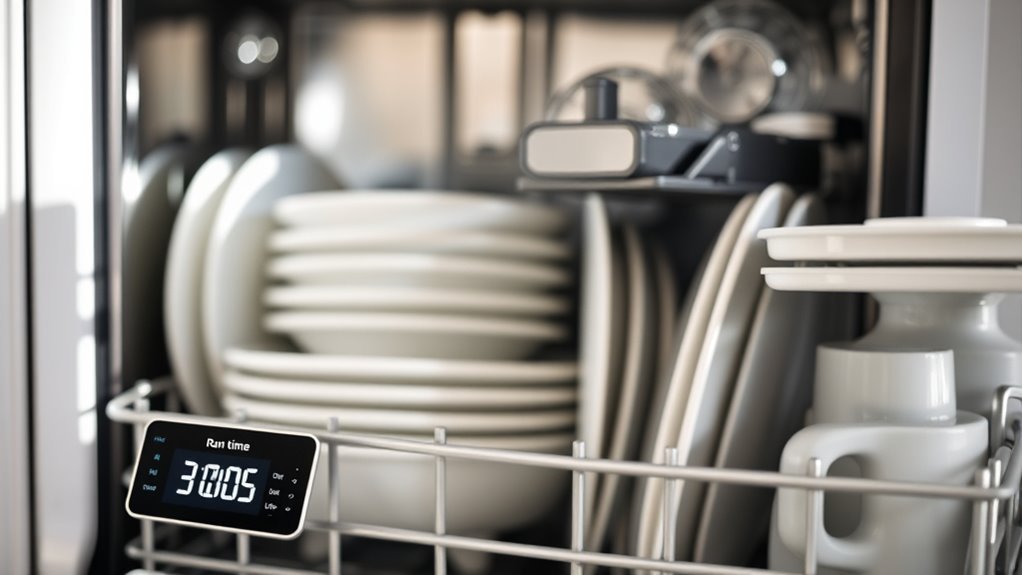
How long does a dishwasher cycle usually take? Most standard cycles last between 1.5 to 2 hours, but this can vary depending on the model and settings you choose.
Most dishwasher cycles typically run between 1.5 to 2 hours, depending on model and settings.
Thanks to recent innovations, dishwashers now offer options that can shorten or extend run times without sacrificing efficiency. For example, quick wash cycles can clean lightly soiled dishes in about 30 minutes.
Heavy-duty cycles designed for tough grime may take up to 3 hours. These innovations also help save water and energy by adjusting wash intensity and duration based on load size and soil level.
When you select a cycle, the dishwasher optimizes its performance to balance cleaning power and energy use. So, while the average cycle time is around two hours, you have plenty of options to suit your needs and improve efficiency.
What Factors Affect Dishwasher Run Time?
You’ll see that the time your dishwasher takes can vary quite a bit based on the cycle you pick. For example, a quick wash will usually be faster than a heavy-duty cycle. It’s pretty much about what kind of clean you’re looking for!
Water temperature is another big factor. If the water heats up faster or reaches the right temperature sooner, your dishes will get cleaned more quickly. So, the temperature setting can really make a difference in how long the whole process takes.
And don’t forget about how much you’re washing. If you load up the dishwasher with a full load, it might take longer to finish. But if it’s just a few items, the cycle can be quicker. Basically, the size of your load can either speed things up or slow them down.
Cycle Type Impact
Because different cycle types use varying amounts of water, heat, and time, the dishwasher’s run duration can change quite a bit. When you pick a cycle, you’re balancing how efficient it is against how well it cleans.
Quick or eco cycles are made to save energy and water, so they run shorter but might not handle really dirty dishes as well. Heavy-duty or pots-and-pans cycles take longer because they use more water and higher heat for a better clean.
Some dishwashers have sensor-based cycles that adjust the run time based on how dirty the dishes are. This helps optimize both efficiency and performance. Knowing these differences helps you pick the right cycle for your load, ensuring your dishes come out clean without wasting time or resources.
Water Temperature Role
Although cycle type plays a big role, water temperature greatly influences your dishwasher’s run time. The hotter the water, the faster and more efficiently your dishwasher cleans.
Most dishwashers work best between 120°F and 150°F. Water below this range can make cycles longer since the machine has to work harder to clean.
If your incoming water is cold, the dishwasher needs to heat it up, which adds to the overall run time. Higher water temperatures also help with sanitizing, but they usually mean longer cycles to keep the heat steady.
Load Size Effects
Water temperature sets the stage for your dishwasher’s efficiency, but the size of your load also plays a big role in how long it takes to run. When you fill your dishwasher close to capacity with proper spacing, you help everything work better. Water and detergent can reach all your dishes more effectively.
Overloading or underloading throws off this balance. If you pack it too full, water won’t circulate well, and the cycle might take longer to clean everything. On the other hand, a small load usually shortens the cycle but can waste energy if the machine isn’t made for partial loads.
To get the best results, arrange your dishes with some space in between and avoid crowding. Doing this helps your dishwasher perform at its best and prevents unnecessarily long wash times.
How Load Size Changes Dishwasher Run Time
When you load your dishwasher with fewer dishes, it can often finish its cycle faster since there’s less to clean. The run time depends a lot on how you manage load distribution and the cycle settings.
Here’s how load size changes dishwasher run time:
- Smaller Loads – With fewer items, your dishwasher uses less water and energy, so cycles can be quicker. Some models might still run a full cycle to ensure everything is clean.
- Balanced Load Distribution – Spacing dishes properly helps water reach all surfaces more efficiently, which can reduce the need for longer or repeat rinses.
- Cycle Adjustment Based on Load – Many modern dishwashers have sensors that detect load size and soil level. They then adjust the cycle length to clean effectively and save time.
How to Choose the Best Dishwasher Cycle
When you’re loading up your dishwasher, you’ll notice there are usually a bunch of different cycle options. Each one is made for specific types of loads and how dirty your dishes are. Choosing the right cycle can make a big difference in how clean your dishes come out—and it can also save you time and energy.
Cycle Types Overview
Although it might seem straightforward, choosing the right dishwasher cycle can save you time and energy, and it guarantees your dishes come out spotless. Different cycles offer varying efficiency and wash performance, so understanding your options helps you pick the best one.
Here are three common cycle types you’ll encounter:
- Normal Cycle – Balances efficiency with thorough cleaning, making it great for everyday dishes.
- Heavy Duty Cycle – Uses longer wash times and higher temperatures for pots, pans, and heavily soiled items.
- Quick or Express Cycle – Focuses on speed and energy savings but may not clean as well for lightly soiled loads.
Choosing wisely makes sure your dishwasher runs smoothly and your dishes get the clean they deserve.
Matching Cycles To Loads
Understanding the different dishwasher cycles helps you pick the one that matches your load perfectly. When deciding which cycle to use, think about your load types carefully.
Lightly soiled dishes, like glasses or cups, do well with shorter, energy-efficient cycles that save water and electricity. Heavily soiled pots and pans need longer, more intense cycles to get thoroughly clean.
Using the right cycle not only makes your dishes spotless but also improves cycle efficiency, reducing waste and wear on your machine. Avoid overloading or mixing heavily soiled items with delicate ones, as this can hurt cleaning quality.
When Should You Use Quick or Express Cycles?
When should you choose a quick or express cycle on your dishwasher? These cycles are great when you need clean dishes fast, but it’s good to know their benefits and limitations.
Here are three situations where these cycles work well:
- Lightly Soiled Dishes: If your plates and glasses only have minor food residue, a quick or express cycle cleans effectively without wasting time or energy.
- Small Loads: Running a half-load with these cycles saves water and power while still giving you clean dishes.
- Urgent Use: When you need dishes ready in under an hour, quick cycles cut down washing time compared to standard cycles.
Just keep in mind that express cycles might not handle heavily soiled or greasy items well because of shorter wash and rinse times. Use them wisely to balance speed and cleaning performance.
Do Eco or Energy-Saving Cycles Save Time and Energy?
Wondering if eco or energy-saving dishwasher cycles actually save you time and energy? These cycles focus on eco cycle efficiency by using lower water temperatures and extending wash times to minimize energy consumption. While they don’t cut down on the total cycle length—in fact, they often take longer than standard cycles—they reduce electricity use considerably, offering real energy saving benefits.
If you want to lower your utility bills and reduce your environmental impact, eco cycles are a smart choice. They use less hot water and energy, which helps your dishwasher run more efficiently overall. However, if you’re pressed for time, these cycles might not be ideal since they prioritize energy savings over speed.
How Dishwasher Brands Affect Cycle Length
Many dishwasher brands design their machines with cycle lengths tailored to different cleaning technologies and user preferences. When you choose a brand, you’re also selecting its approach to efficiency and cycle innovation, which directly impacts how long your dishwasher runs. Some brands prioritize shorter cycles without sacrificing cleanliness, while others focus on thorough cleaning that takes more time.
Here are three key ways brand differences affect cycle length:
- Cycle Innovation: Brands with advanced sensors and soil detection adjust run times dynamically, reducing unnecessary water and energy use.
- Brand Efficiency: High-efficiency brands often feature quicker wash cycles thanks to optimized water jets and heating elements.
- Cycle Variety: Some brands offer multiple cycle options, from express to heavy-duty, giving you control over run length based on your needs.
Understanding these factors can help you choose a dishwasher that balances cleaning performance with your time preferences.
Can You Shorten Dishwasher Run Time Without Losing Cleanliness?
Want to cut down your dishwasher’s run time without worrying about messy dishes? It’s totally possible! Just make sure you’re using a good quality detergent and loading your dishwasher smartly.
Short cycles can do the trick, especially if you avoid stuffing the dishwasher too full and give heavily soiled dishes a quick rinse beforehand. Let’s take a look at how these tips can help you get clean dishes faster and still keep everything spotless.
Impact Of Short Cycles
Although shorter dishwasher cycles seem like a quick way to save time, they can impact how well your dishes get cleaned. It’s important to weigh the benefits and drawbacks before choosing one.
Short cycle advantages include saving time and using less water and energy. They work well for lightly soiled dishes that don’t need a deep clean.
But the disadvantages become obvious with heavily soiled pots or greasy pans. These cycles might not be able to remove stubborn residues effectively.
Plus, shorter cycles often use lower water temperatures or less washing time, which can compromise the overall cleanliness of your dishes.
Detergent Quality Matters
When choosing a dishwasher cycle, the quality of your detergent is key to how clean your dishes turn out. Different types of detergent have varying cleaning strengths and residue concerns, which can affect whether you can shorten cycle times without losing cleaning power.
Performance tests and brand comparisons show that some eco-friendly options match the cleaning ability of standard detergents while using fewer chemicals. Picking the right detergent lets you confidently opt for shorter cycles without sacrificing results.
| Detergent Type | Key Benefit |
|---|---|
| Powder | Strong on tough stains |
| Gel | Good for light loads |
| Eco-Friendly Pods | Reduced residue, environmentally friendly |
Choose detergents that have proven performance to get the best cleaning results and cycle efficiency.
Load Arrangement Tips
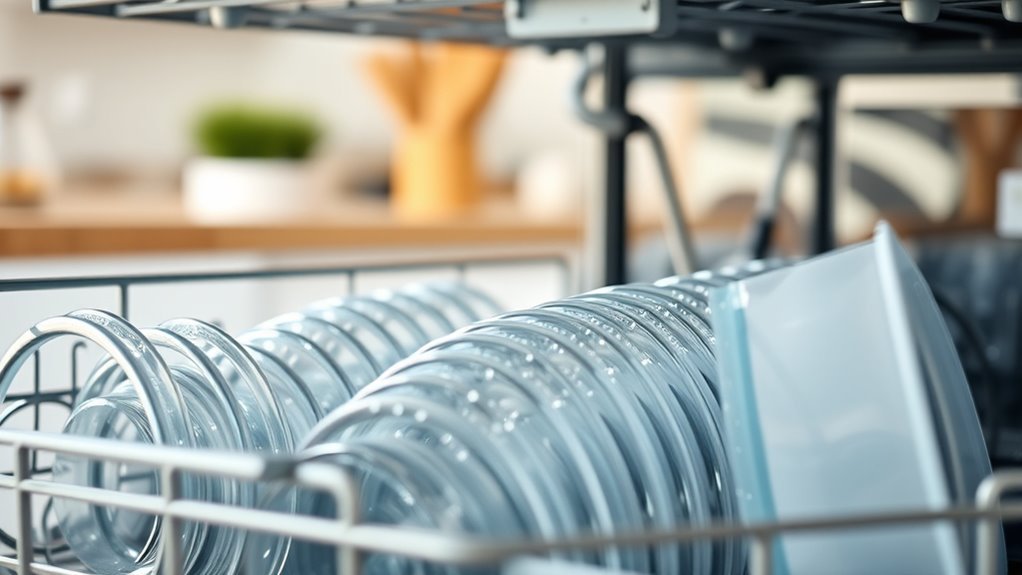
Properly arranging your dishwasher load can really improve cleaning and help you save time by shortening cycle lengths without losing cleanliness. When you focus on load balancing and smart stacking, water and detergent can reach all surfaces effectively.
Here’s how to make your dishwasher work better:
- Distribute Items Evenly: Spread out heavy and light dishes across both racks to avoid unbalanced loads that can reduce cleaning power.
- Avoid Overlapping: Stack plates and bowls so they don’t block water jets. This helps water flow properly and boosts cleaning.
- Place Larger Items Strategically: Put pots and pans on the bottom rack, angling them downward so they don’t block smaller items from getting sprayed.
Following these simple tips ensures your dishwasher cleans thoroughly on shorter cycles, saving you time and energy without sacrificing results.
Adjusting Settings for Heavily Soiled Dishes
Since heavily soiled dishes need extra attention, you’ll want to adjust your dishwasher settings to ensure a thorough clean. These dishes often need longer wash times, higher temperatures, and more intense spray cycles. Making these changes helps prevent food residue buildup and leaves everything sparkling.
Here’s a quick guide to common adjustments for heavily soiled loads:
| Setting | Recommended Adjustment |
|---|---|
| Wash Cycle | Select “Heavy” or “Pots & Pans” |
| Temperature | Increase to 140°F – 160°F |
| Pre-Wash | Enable for extra rinsing |
| Drying | Use “Extended” or “Heat Dry” |
| Soil Sensor | Activate if available |
Adjusting these settings helps break down tough food particles and grease. This way, your dishwasher can handle even the dirtiest dishes effectively.
Don’t forget to check your manual for model-specific options to optimize your wash cycles.
Maintenance Tips for Consistent Dishwasher Run Times
To keep your dishwasher running efficiently and maintain consistent cycle times, you need to perform regular maintenance. Proper upkeep prevents clogs, improves cleaning, and ensures your machine runs on schedule every time.
Here are three essential maintenance tips for consistent dishwasher run times:
- Clean the filter regularly. Food particles can clog the filter and slow down cycles. Remove and rinse it every few weeks to keep water flowing smoothly.
- Inspect and clean spray arms. Debris can block the spray arms, reducing water pressure. Remove and rinse them monthly to keep cleaning at its best.
- Run a cleaning cycle with vinegar or dishwasher cleaner. This helps remove buildup and odors. Use a cleaning agent once a month to prevent residue that could extend cycle times.
Frequently Asked Questions
How Often Should You Run a Dishwasher to Prevent Odors?
You should run your dishwasher at least once every two to three days to keep odors at bay. Regular use is one of the best ways to maintain your dishwasher because it prevents food particles from sitting around and causing smells.
Pair this with simple habits like cleaning the filter weekly and running a vinegar rinse once a month. These small steps help keep your dishwasher fresh and smelling clean.
Can Dishwasher Detergents Affect Cycle Duration?
Yes, detergent types can affect cycle duration because some formulas dissolve faster or need longer rinses.
If you choose a detergent designed for quick cleaning, your dishwasher might finish sooner, which can make the cycle more efficient.
On the other hand, gel or powder detergents sometimes require longer cycles to fully activate and clean dishes well.
Picking the right detergent isn’t just about cleaning results — it also influences how long your dishwasher runs.
Is It Safe to Run a Dishwasher Overnight?
You might wonder if it’s really safe to run a dishwasher overnight. The answer? Yes, but with caution. Modern dishwashers have built-in safety features that help reduce risks during overnight use.
Still, it’s a good idea to check that your dishwasher is in good shape. Look for leaks and make sure everything is working properly. Also, avoid leaving flammable items nearby just to be safe.
Practicing dishwasher safety means you can wake up to clean dishes without any worries. Just keep an eye out for strange noises or any malfunctions — if something seems off, it’s best to turn it off.
How Does Water Temperature Impact Dishwasher Performance?
Water temperature directly impacts your dishwasher’s performance by affecting cleaning power and drying efficiency. Hotter water helps break down grease and food particles faster, so your dishes come out cleaner.
It also improves water efficiency since you won’t need extra cycles. But keep in mind, higher temperatures can use more energy, so finding the right balance is important.
Using the manufacturer’s recommended temperature ensures your dishwasher cleans well while saving water and energy. This way, you can cut down on utility bills without sacrificing cleaning results.
What Are Common Dishwasher Noises and What Do They Mean?
You’ll usually hear a humming sound from the drain pump as it moves water out. If the spray arm spins noisily, it might be hitting an obstruction or have mineral buildup.
Clicking noises often mean the water inlet valve is opening or closing. If you hear grinding or loud thuds, check for debris caught in the spray arm or pump.
These sounds help you pinpoint issues before they get worse.
Conclusion
So, how long should you run your dishwasher? Long enough to make your dishes sparkle, but not so long you’re waiting forever.
Sure, you can pick quick cycles if you’re in a rush—because who doesn’t want half-clean plates? Just keep in mind, rushing might leave you with a science experiment in the sink.
Adjust your settings wisely, stay on top of maintenance, and your dishwasher will thank you by actually cleaning, not just humming a tune.
For the best results, always consider the load size and soil level.
And if you want to keep your dishwasher running smoothly, regular cleaning and proper loading are key.
Happy washing!