How to Organize a Kitchen: A Step-by-Step Guide
Are you tired of feeling overwhelmed every time you step into your kitchen? You’re not alone—many people struggle with keeping their space organized and functional.
Luckily, with a few simple steps, you can transform your kitchen into a tidy, efficient space that works for you.
Start by clearing out clutter and sorting items by use and category. Define specific zones for cooking, prepping, and cleaning to streamline your workflow.
Choose storage solutions that fit your space, like drawer dividers and stackable containers. Organize cabinets and pantry shelves for easy access.
Keep countertops minimal with daily essentials, and maintain order through simple daily habits.
Stay tuned, and you’ll uncover even more tips to customize your kitchen for effortless efficiency.
Key Takeaways
- Declutter your kitchen by removing unnecessary items and sorting essentials for a simplified, functional space.
- Create specific zones for cooking, prepping, and cleaning. This makes your workflow smoother and more accessible.
- Use drawer dividers, adjustable shelves, and vertical storage to make the most of your cabinet and drawer space.
- Store pantry items in clear, labeled containers. Arrange them by category and how often you use them.
- Keep up daily habits like wiping surfaces, putting away dishes, and organizing while you cook. This helps keep the kitchen tidy.
Clear Out Kitchen Clutter to Start Fresh
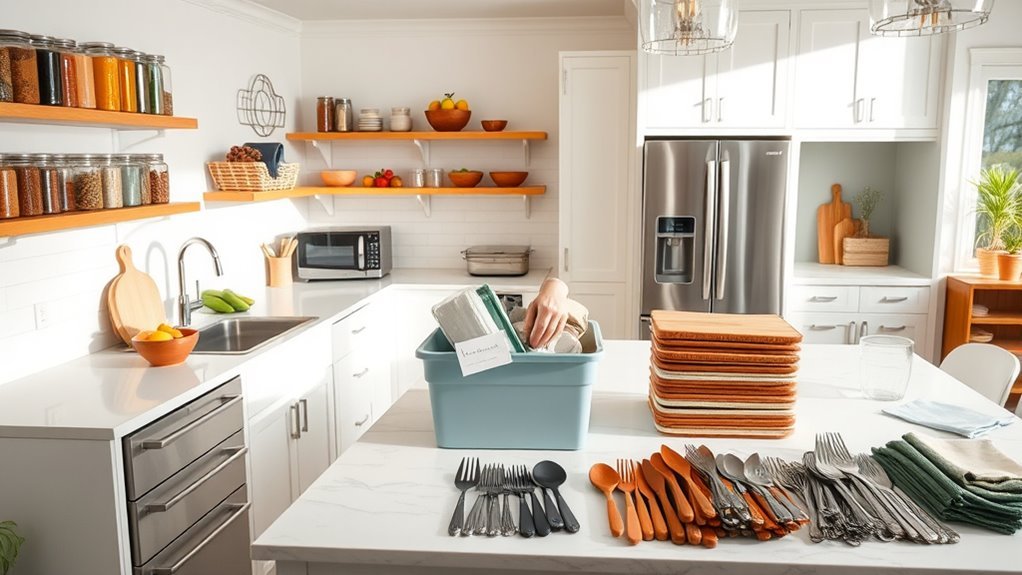
Begin by tackling the clutter that’s taken over your kitchen. You’ll want to adopt decluttering strategies that help you identify items you no longer need or use.
Start by removing everything from your countertops, drawers, and cabinets. This clears your space and gives you a fresh perspective.
As you sort through your belongings, adopt a minimalist mindset. Ask yourself if each item adds value or simply takes up space. Be honest about duplicates, broken tools, or expired products.
Set aside things to donate, recycle, or toss. Remember, the goal is to simplify, not just rearrange.
By clearing out kitchen clutter, you create room for essentials and improve functionality. This fresh start makes organizing easier and keeps your kitchen feeling open and inviting.
Once you’ve finished, you’ll notice a calm, orderly space that encourages cooking and creativity. Decluttering is your first step toward a well-organized kitchen.
Sort Kitchen Items by Category and Use
After clearing out clutter, sort your kitchen items by category and how often you use them to make your space more efficient. Start by making a kitchen inventory to see what you actually own. This helps you decide which items should have prime storage spots and which can be stored away or donated.
Think about a seasonal rotation for items you only use during certain times of the year, like holiday cookware or summer grilling tools. Group similar items together—pots with pots, baking tools with baking tools—to keep things organized.
Keep daily-use items in easily accessible spots so you can grab them quickly. Store seasonal or rarely used items in less accessible areas or separate storage to free up space.
Create Cooking, Prep, and Cleanup Zones That Make Life Easier
To make your kitchen work better for you, it’s a good idea to create specific zones for cooking, prepping, and cleanup. When everything has its place based on what you’re doing, it makes the whole process so much smoother.
Think about organizing your space so that tools and ingredients related to each task are close by. This way, you can move easily from chopping to cooking to cleaning without running around. It not only saves you time but also keeps your kitchen tidy and clutter-free. Overall, setting up these zones makes cooking more fun and less stressful!
Defining Key Kitchen Zones
Although organizing a kitchen might seem overwhelming, defining clear zones for cooking, prepping, and cleanup can make things much easier. It helps streamline your workflow and saves you time.
Start by analyzing your kitchen layout and considering traffic patterns. This way, you can guarantee smooth movement around the space.
Focus on functional design that balances appliance placement and ergonomic access. Make sure everything you need is within reach.
Don’t forget safety considerations and storage priorities when arranging each zone. These details keep your kitchen both practical and safe.
Plus, involve your family to match the plan with everyone’s habits. Sharing ideas makes it more effective.
And don’t forget to express your personal style. A well-designed kitchen can also be a beautiful space to enjoy.
Here’s how to define your key zones:
- Cooking Zone: Position your stove, oven, and spices nearby for efficient meal prep.
- Prep Zone: Allocate counter space near the sink with knives and cutting boards.
- Cleanup Zone: Place your dishwasher, trash, and sink close together for easy tidying up.
This approach makes your kitchen both practical and inviting.
Streamlining Workflow Efficiency
When you design your kitchen around distinct cooking, prep, and cleanup zones, you make everyday tasks flow smoothly and reduce wasted steps. Start by using workflow mapping to understand your cooking habits and prioritize tasks effectively.
Focus on kitchen ergonomics to improve movement efficiency by placing frequently used tools within easy reach. Organize utensils and appliances according to their function to make tools more accessible during meal prep.
Prioritize task order to streamline your process, reducing back-and-forth trips. This setup enhances time management by cutting unnecessary motions and clutter.
Pick Storage Solutions That Work for Your Kitchen
When you’re thinking about storage, the first thing to do is look at the space you have in your kitchen. You want to avoid overcrowding, so it’s all about making the most of what you’ve got.
Pick storage options that actually work for what you need—things like pots, pans, spices, or snacks—and make sure they help you cook and clean up without hassle.
And don’t forget, the goal is to keep everything within easy reach and simple to access. That way, your kitchen stays functional and chaos-free!
Assess Available Kitchen Space
Before choosing storage solutions, take a close look at your kitchen space. Knowing your kitchen’s size helps you find storage options without making the area feel crowded.
Measure your countertops, cabinets, and pantry areas to see where you can add or improve storage. This step is key to making the most of your space.
Here are three simple steps to get started:
- Map out your kitchen dimensions — note the length, width, and height to get a clear picture of your space.
- Identify underused areas — look for empty corners, walls, or vertical spots that could hold extra storage.
- Assess current storage options — evaluate your existing cabinets and shelves to see if they’re enough or if you need to make some improvements.
Choose Functional Storage Types
Many kitchen storage options exist, but choosing the right ones depends on your space and cooking habits. Focus on solutions that maximize space, like vertical storage and open shelving.
Modular organizers and drawer dividers help create functional layouts tailored to your needs. Select container choices that fit your kitchen’s style and purpose, and consider multi-purpose items to cut down clutter.
| Storage Type | Benefit | Tip |
|---|---|---|
| Drawer Dividers | Organize utensils | Customize size |
| Vertical Storage | Save counter space | Use tall racks |
| Modular Organizers | Adaptable & flexible | Combine for efficiency |
| Open Shelving | Easy access & display | Keep items tidy |
| Multi Purpose Items | Reduce clutter | Choose versatile tools |
Use shelf strategies to keep everything within reach and well-organized.
Prioritize Accessibility and Convenience
Although selecting the right storage types is important, making accessibility and convenience a priority helps your kitchen run smoothly. When organizing, think about kitchen traffic and how easy it is to reach items to make daily tasks simpler.
Place frequently used utensils and appliances near prep areas for quick access and efficiency. Keep pantry items at eye level so you can find what you need without hassle. Store rarely used items in less accessible spots to save prime space for essentials.
Maximize Kitchen Cabinet and Drawer Organization
You can transform your kitchen cabinets and drawers into highly efficient storage spaces by using simple organizing strategies. Start by evaluating cabinet sizing and adjusting shelf height to fit your kitchen tools and seasonal items properly.
Use drawer dividers to keep utensils organized and easy to find, avoiding clutter. Maximize vertical space by adding stackable shelves or hooks inside cabinets, which is great for small appliances and food storage containers.
Store cleaning supplies in lower cabinets for easy access while keeping them separate from food-related items. Keep frequently used utensils and gadgets within reach, tucking away less-used seasonal items in higher or less accessible spots.
Set Up an Efficient Pantry System
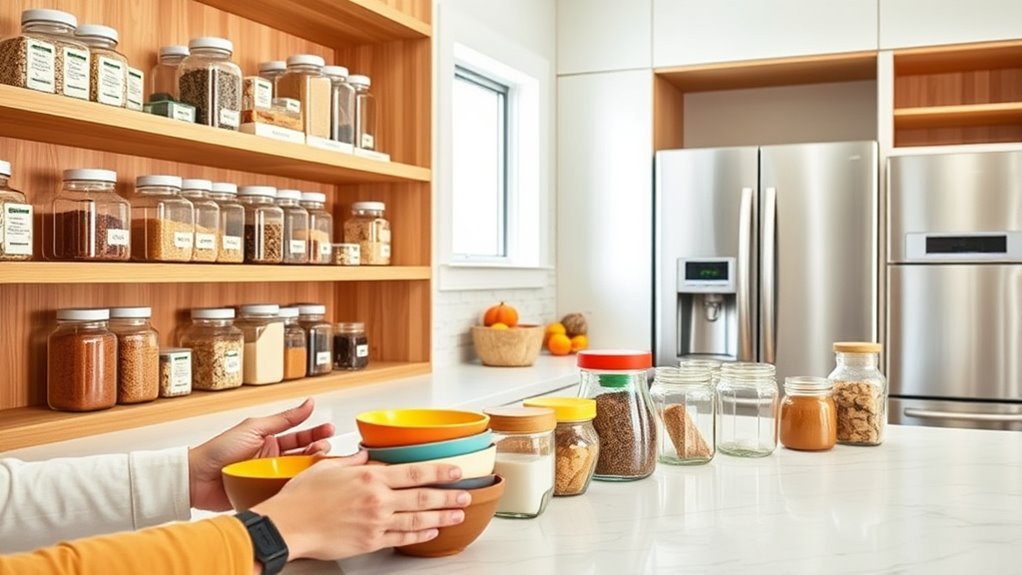
First off, try grouping your pantry items into clear categories. It makes everything so much easier to find when you’re looking for that specific ingredient. Using transparent storage containers is a great idea too because you can see exactly what’s inside without having to open every jar or box.
And don’t forget to label your shelves and bins! It might seem like a small step, but it really helps keep things organized and saves you time when you’re rushing to get dinner together. Plus, it just makes your pantry look tidier and more inviting.
Categorize Pantry Items
Group your pantry items by category to make your kitchen routine easier and help you find things quickly. Start by taking a complete inventory so you know what you have and can avoid duplicates.
Next, think about shelf spacing to fit different item sizes and keep everything neat. To do this effectively, separate items by type like canned goods, baking supplies, and snacks to create designated zones.
Arrange the most-used items at eye level so you can grab them fast. Label shelves or baskets to stay organized and help everyone in your household find what they need with ease.
Use Clear Storage Containers
Although organizing by category is essential, using clear storage containers takes your pantry system to the next level by improving visibility and accessibility. With clear containers, you can quickly spot pantry essentials without rummaging.
Choose containers based on material choices—either glass or BPA-free plastic—to match your style and storage needs. Incorporate a variety of containers, including stackable options, to maximize space and handle bulk storage.
Use organization hacks like color coding lids to differentiate contents at a glance. This not only enhances function but also makes your pantry look tidy and inviting.
Clear containers keep items fresh and create a uniform look that makes your pantry more appealing. These tips help simplify your kitchen routine and keep everything in order with ease.
Label Shelves and Bins
When you label shelves and bins, you make it easier to find and return items quickly, which keeps your pantry organized over time. Effective labeling techniques help you maintain order and reduce clutter.
Start by grouping similar items together, then assign clear, visible labels to each shelf and bin for easy identification. For bin organization, choose containers that fit your space and stack neatly.
Here’s how to get started:
- Use waterproof labels or a label maker for durability and neatness.
- Categorize items by type, like snacks, baking supplies, or canned goods.
- Place labels at eye level or on bin fronts for quick access.
This system saves time and keeps your kitchen running smoothly.
Organize Countertops for Daily Cooking Tasks
Clear your countertops by keeping only the essentials you use every day within arm’s reach. Start by selecting countertop appliances that truly simplify your daily cooking tasks, like a coffee maker or toaster, and store less-used gadgets away.
Arrange your cooking utensils in a container near the stove for quick access, but avoid overcrowding. Limit the number of utensils to those you use most often, such as spatulas, wooden spoons, and tongs.
This approach not only frees up space but also creates a more efficient cooking environment. Keep frequently used ingredients like salt, pepper, and oil in small, easy-to-reach containers to streamline meal prep.
Make sure to clear crumbs and spills regularly to maintain a clean workspace. By thoughtfully organizing your countertop appliances and utensils, you’ll reduce clutter and speed up your cooking routine, making your kitchen more functional and enjoyable every day.
Use Labels and Containers to Keep Your Kitchen Tidy
Two simple tools can transform your kitchen’s organization: labels and containers. Using effective labeling techniques helps you quickly identify contents, saving time and reducing clutter. Pairing the right container types with your pantry and fridge items makes storing food more efficient and keeps everything fresh longer.
Labels and containers simplify kitchen organization, making food storage efficient and freshness easy to maintain.
Here are three tips to get started:
- Choose clear containers for dry goods like pasta or grains so you can see when supplies run low without opening each box.
- Use waterproof labels or a label maker to create neat, legible tags. Include expiration dates for perishable items to avoid waste.
- Select container types that fit your space and needs, such as stackable bins for snacks or airtight jars for spices, to maximize storage and maintain tidiness.
Maintain Your Kitchen Organization With Simple Daily Habits
Although organizing your kitchen might seem overwhelming, keeping it tidy is much easier with simple daily habits. Start by committing to daily cleaning—wipe down countertops, put away dishes, and quickly sweep the floor each day. These small actions stop clutter from piling up and make your kitchen more inviting.
When you plan your meal prep, take a moment to check your pantry and fridge. Make sure everything’s in labeled containers and easy to find. After cooking, clean as you go to prevent a mountain of dishes from building up.
Get into the habit of returning items to their proper spots right after using them. Incorporate these routines into your daily life, and you’ll save time and reduce stress. Keeping your kitchen organized doesn’t mean huge efforts every day—just consistent, simple habits like daily cleaning and mindful prep will keep your space neat and functional.
Customize Your Kitchen Setup to Fit Your Routine
When you customize your kitchen setup to match your daily habits, cooking and cleaning become much easier. Your kitchen layout should reflect your personal routines and cooking styles. This way, you can move smoothly from prep to cooking to cleanup without hassle.
Think about workflow adjustments that fit your routines and storage needs. Make sure everything you need is within easy reach so your time in the kitchen feels more natural and less cluttered.
Here are three simple ways to personalize your kitchen setup:
- Place frequently used tools and ingredients near your main prep area to make cooking faster.
- Use storage solutions that fit your family’s involvement, like pull-out bins for kids or specific zones for meal prepping.
- Pick items that are both practical and attractive. This can boost your kitchen’s vibe while helping you stay organized.
Frequently Asked Questions
How Often Should I Deep Clean My Kitchen Appliances?
You should deep clean your kitchen appliances every three to six months to keep them in top shape. Sticking to a regular cleaning schedule helps with appliance maintenance and prevents buildup that can cause issues.
Some appliances, like your microwave or refrigerator, might need a monthly wipe-down, but deep cleaning less often is usually enough. Regular care saves you time and money by extending your appliances’ lifespan and improving their performance.
What Are the Best Eco-Friendly Cleaning Products for Kitchens?
You might think all eco-friendly alternatives lack power, but that’s not true. The best eco-friendly cleaning products for kitchens use natural disinfectants like vinegar, baking soda, and lemon juice.
These ingredients effectively cut grease and kill germs without harsh chemicals. Brands like Seventh Generation and Method offer safe, biodegradable options that protect your health and the environment.
Using these natural disinfectants keeps your kitchen sparkling clean and green.
How Can I Childproof My Kitchen Effectively?
To childproof your kitchen effectively, focus on safety by installing secure locks on cabinets and drawers, especially those with sharp objects or cleaning supplies. Use high storage solutions to keep dangerous items out of your child’s reach.
Consider adding corner guards on counters and stove knob covers to prevent accidents. Keep small appliances unplugged and hide cords to avoid any pulling or choking hazards.
These simple steps will create a safer environment, letting you cook without worries while protecting your little ones from potential hazards.
What Are Common Mistakes to Avoid When Organizing a Kitchen?
Don’t bite off more than you can chew when organizing your kitchen. A common mistake is ignoring your storage needs, which can lead to clutter and chaos.
You might try to cram too many items into small spaces or forget to declutter regularly. Both habits can make your kitchen feel overwhelming and hard to use.
Avoid placing frequently used items in hard-to-reach spots. That just wastes your time hunting for things you need often.
Keep your layout functional and accessible so your kitchen stays efficient. An organized space should be enjoyable to use every day.
How Do I Organize a Kitchen With Limited Space?
You can make the most of limited kitchen space by using vertical storage like wall-mounted shelves or hooks for pots and utensils. This helps free up your countertops and cabinets.
Choose multipurpose tools that combine functions, such as a grater with a slicer or a pot that also works as a steamer. It saves space and adds convenience.
Keep your most-used items within easy reach, and store less-used gadgets higher up or in less accessible spots. These simple tricks can keep your small kitchen organized and clutter-free.
Conclusion
Organizing your kitchen is like tuning a well-loved instrument. When everything’s in harmony, your daily rhythm flows effortlessly.
By clearing clutter, creating zones, and choosing smart storage, you’re composing a space that sings with efficiency and joy. It’s all about making your kitchen work for you.
Keep your kitchen’s melody alive with simple habits and personal touches. Soon, cooking feels less like a chore and more like a dance.
With a little effort, your kitchen can become a space that’s graceful, inspired, and uniquely yours. And that’s the key to truly enjoying your time in the kitchen.