How Much Do Kitchen Cabinets Cost? The Complete Answer
Feeling overwhelmed by the cost of kitchen cabinets? You’re not alone. Many people struggle with figuring out how much they should budget for a kitchen upgrade that looks great and lasts.
You’ll generally spend between $60 and $1,200 or more per linear foot on kitchen cabinets, depending on whether you choose stock, semi-custom, or custom styles. Your kitchen size, materials like plywood or hardwood, and installation options also affect costs.
Adding custom features or designer hardware can raise your budget, but there are smart ways to save without sacrificing quality.
Keep exploring to find the best balance between price and value for your kitchen.
Key Takeaways
- Kitchen cabinet prices range from $60 to over $1,200 per linear foot, depending on whether you choose stock, semi-custom, or custom options.
- Installation costs can vary from doing it yourself to paying $100–$300 per cabinet for professional services.
- The size of your kitchen plays a big role, with smaller kitchens often needing custom solutions and larger ones increasing complexity and costs.
- Material choices like plywood, hardwood, finishes, and hardware all have a big impact on the overall price of your cabinets.
- Budget-friendly options include RTA cabinets, refacing, using cost-effective materials, and opting for simpler layouts to get the best value without sacrificing quality.
How Much Do Kitchen Cabinets Usually Cost?
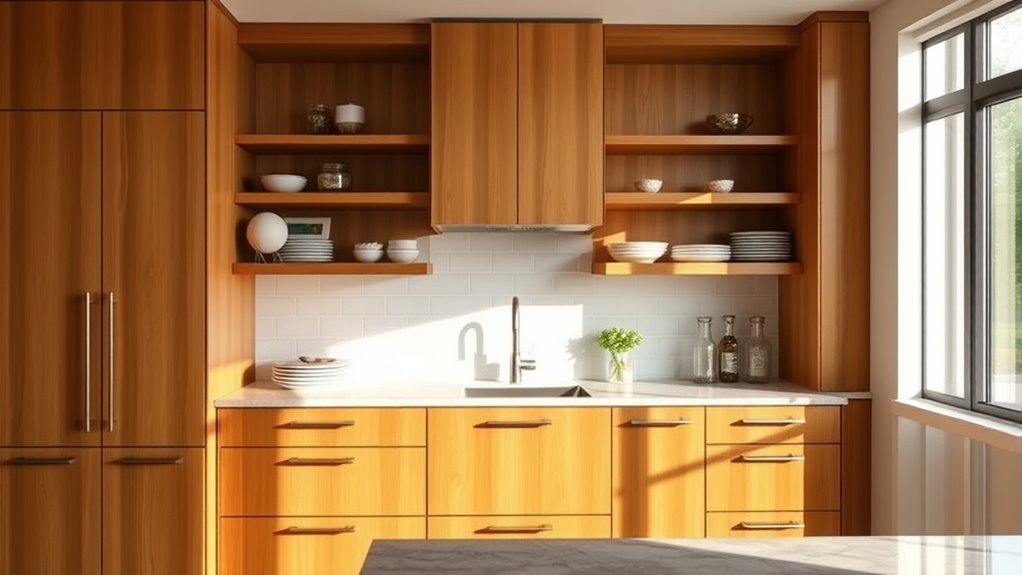
How much do kitchen cabinets usually cost? The price mainly depends on the style you pick and how you choose to install them.
Stock cabinets are the most budget-friendly, usually costing between $60 and $200 per linear foot. Semi-custom cabinets give you more style options and typically range from $100 to $650 per linear foot.
Stock cabinets offer affordability at $60 to $200 per linear foot, while semi-custom options range from $100 to $650.
If you’re after something unique, custom cabinets can cost $500 to $1,200 or more per linear foot. Installation methods also affect your total cost. Doing it yourself can save money but requires skill and time.
Hiring professionals for full installation usually adds $100 to $300 per cabinet depending on how complex the job is. Some cabinets come with easy assembly features, which can reduce both time and costs.
How Your Kitchen Size Affects Cabinet Costs
The size of your kitchen really impacts how much you’ll end up spending on cabinets. If your kitchen is on the smaller side, you’ll probably find that the costs stay pretty manageable. Medium kitchens tend to fall somewhere in the middle price-wise, so they’re often a good balance between size and budget. But if you’ve got a large kitchen, be prepared for higher costs since you’ll need more materials and extra labor to get everything installed.
Small Kitchens Budget Impact
Even a small kitchen can have a big impact on your cabinet costs. When space is tight, you’ll want to focus on optimizing every inch, often with custom or semi-custom cabinets.
These specialized options might cost more than standard cabinets, but they help you avoid wasted space. Plus, incorporating current trends like open shelving or integrated storage can influence costs depending on your material choices.
While smaller kitchens usually need fewer cabinets, the need for tailored designs and smart layouts can balance out the savings. By planning carefully and focusing on efficient storage, you can keep expenses in check while making your kitchen functional and stylish.
Medium Kitchens Cost Range
Because medium kitchens offer more space to work with, they often allow for a wider range of cabinet options without the premium costs tied to custom designs. With this layout, you can find a good balance between style and practicality.
You can choose cabinets that boost both the look and functionality of your kitchen. The extra space lets you add features like pull-out shelves, lazy Susans, or built-in organizers to maximize storage without breaking the bank.
Standard and semi-custom cabinets fit well here, giving you flexibility in materials and finishes. Plus, you can add upper and lower cabinets or even a small pantry to make your kitchen more efficient.
Large Kitchens Expense Factors
Medium kitchens offer a balanced mix of style and function, but as your kitchen size increases, so do the factors that influence cabinet costs.
In large kitchens, your cabinet layout becomes more complex, which can raise installation techniques and labor expenses.
Think about trending styles and design trends that fit your bigger space, along with color choices that match the room’s scale.
Storage solutions and space optimization are key to keeping things functional without making the space feel crowded.
Hardware options can also add to your budget, especially if you go for high-end finishes.
Don’t forget maintenance tips to keep everything looking good longer, since larger kitchens need more care.
What Materials Affect Kitchen Cabinet Prices Most?
Materials play a major role in determining the cost of your kitchen cabinets. The wood types you choose, from budget-friendly plywood to premium hardwoods, directly affect both price and durability.
Finish options like paint, stain, or laminates also influence cost and maintenance needs. Some finishes require more upkeep, so think about what fits your lifestyle.
Hardware choices, including hinges and handles, vary in price and impact both function and style. Higher-quality hardware can last longer and look better, but costs more.
Sustainability factors are becoming more important. Eco-friendly materials might cost more upfront but offer long-term benefits for the environment and your home.
Installation materials like fasteners and mounting systems add to overall expenses. They also affect how long your cabinets last and stay in good shape.
Staying current with design trends can push you toward pricier materials, but it helps keep your kitchen looking fresh and stylish.
How Kitchen Cabinet Styles Impact Your Budget
Your choice of kitchen cabinet style can greatly influence your overall budget. Modern styles often feature sleek lines and trendy materials, which may increase costs due to specialized finishes and hardware. Traditional designs with detailed moldings and classic finishes can also raise expenses because of their intricate craftsmanship.
Choosing a kitchen cabinet style significantly impacts your budget, with modern and traditional options often costing more due to materials and craftsmanship.
If you prefer minimalist aesthetics, you’ll likely save money since these designs focus on simplicity, fewer embellishments, and clean surfaces. Rustic charm offers a cozy look but might add cost depending on the wood type and finish options.
Color choices also affect pricing—custom colors or multi-tone finishes typically cost more. Functional features like pull-out shelves, soft-close drawers, and ergonomic layouts improve usability but can add to your budget.
Prioritizing space optimization with smart storage solutions might influence costs too. Balancing style preferences with practical needs helps you manage expenses while still getting the look and function you want in your kitchen.
How Custom and Stock Kitchen Cabinets Differ in Price
When you’re trying to decide between custom and stock kitchen cabinets, it’s helpful to get a sense of how their prices stack up. Custom cabinets tend to be more expensive because they’re made to your exact specifications, which means they take into account the materials, unique designs, and the craftsmanship involved. On the flip side, stock cabinets are generally more budget-friendly and ready to go, making them a popular choice if you’re looking to save some money. Let’s take a closer look at how their prices compare so you can figure out what works best for your space and your wallet.
Custom Cabinet Pricing Factors
Although custom kitchen cabinets often cost more than stock options, they give you more flexibility in design, materials, and finishes. When you choose custom cabinets, factors like design, material choices, craftsmanship, finish options, and features all impact the price.
Your style preferences and budget also play a role in the final cost. Installation methods that are tailored to your kitchen’s layout can add to the complexity and increase the price.
| Pricing Factor | Impact on Cost |
|---|---|
| Custom Design | Higher for unique layouts |
| Material Choices | Premium woods increase price |
| Craftsmanship Quality | Skilled labor raises cost |
| Finish Options | Specialty finishes add expense |
| Functionality Features | Advanced storage boosts price |
Understanding these factors helps you balance quality and budget effectively.
Stock Cabinet Cost Benefits
Custom cabinets provide unmatched personalization, but stock cabinets offer clear advantages in cost that can’t be overlooked. When you’re weighing your options, consider these stock cabinet advantages:
1. Lower upfront cost
Stock cabinets come pre-made, so you pay less than custom ones.
2. Quick availability
Since they’re ready-made, you avoid long wait times.
3. Proven stock cabinet durability
These cabinets are built to standard specs, ensuring consistent strength and longevity.
4. Simpler installation
Their uniform sizes make installation faster and often less expensive.
Price Comparison Overview
Understanding the price differences between custom and stock kitchen cabinets can help you make a smart budgeting decision. Stock cabinets usually come from well-known brands with set sizes and finishes, making them more affordable and quicker to install.
Custom cabinets, on the other hand, are built to your exact specifications, which increases the cost due to labor and unique materials. Pricing trends show that custom cabinets can cost two to three times more than stock options, but they offer greater flexibility and personalization.
When you weigh these options, think about how much customization you really need versus your budget. By comparing prices and offerings from different cabinet brands, you’ll get a clearer idea of where to invest for the best value in your kitchen remodel.
How Installation Costs Add Up for Kitchen Cabinets
When planning your kitchen cabinet project, installation costs can add up quickly depending on several factors. Knowing what influences these costs helps you budget better and avoid surprises. Key expenses include:
- Installation materials and prep work. You’ll need brackets, screws, adhesives, and sometimes wall reinforcements to ensure your cabinets fit securely.
- Labor costs and project timeline. Skilled installers charge hourly, and if your project takes longer due to complexity or hard-to-reach spots, costs go up.
- Removal expenses. If you’re replacing old cabinets, removing them safely will add to your total cost.
- Designer fees and local regulations. Working with a designer or dealing with building codes and permits can also increase expenses.
Each of these factors affects your final bill. For example, tight spaces may require extra prep work and more time, boosting labor costs. Being aware of these elements helps you plan wisely and keep your kitchen upgrade on budget.
Which Kitchen Cabinet Customizations Increase Prices?
Installation costs are just one part of your overall kitchen cabinet budget. Customizations play a big role in driving prices up. For example, choosing unique drawer styles or intricate door designs means more labor and materials, which increases expenses.
Opting for premium wood types also adds cost, especially exotic or sustainably sourced options. When you pick specialized color finishes or glazing techniques, expect the price to rise due to extra processing.
Choosing premium woods and specialized finishes increases costs due to added materials and processing.
Hardware options like designer handles or soft-close features add both convenience and cost. Interior organization upgrades such as pull-out shelves or built-in dividers can improve functionality but also increase your spend.
Taller cabinet heights require more materials and complex installation, impacting your budget. Edge profiles that go beyond basic square cuts, like beveled or rounded edges, also add to the overall price.
Each customization boosts your kitchen’s look and function but remember, these choices directly influence your final cabinet costs.
Smart Ways to Save Money on Kitchen Cabinets Without Losing Quality
Although kitchen cabinets can quickly add up in cost, you don’t have to sacrifice quality to stay within your budget. Choosing budget-friendly options and affordable materials lets you get durable, attractive cabinets without overspending.
Here are some smart ways to save money on kitchen cabinets without sacrificing quality:
- Opt for ready-to-assemble (RTA) cabinets. They’re more affordable and still high quality.
- Choose cost-effective materials like plywood or MDF instead of solid wood.
- Reface your existing cabinet boxes by replacing doors and hardware. It’s a budget-friendly way to refresh your kitchen.
- Keep your layout simple to avoid costly customizations or extra cabinets.
Using these strategies helps you balance cost and quality. Your kitchen will look great and last long without breaking the bank.
Smart budgeting doesn’t mean you have to compromise on style or durability.
How to Get Accurate Quotes for Kitchen Cabinets
To get accurate quotes for kitchen cabinets, start by clearly defining your project details, including cabinet style, materials, and dimensions. Having precise measurements and a clear vision helps suppliers give you quotes that match your needs.
Next, request detailed estimates from multiple sources so you can compare prices effectively. Make sure each quote breaks down costs for materials, labor, and any extra fees.
When choosing a supplier, consider their reputation, product quality, and warranty terms, not just the price. Don’t be afraid to ask questions if anything in the quotes isn’t clear.
Watch out for hidden costs that could inflate the final price. Being thorough and organized helps you avoid surprises and set a realistic budget for your kitchen cabinets.
In the end, detailed project info and careful comparison will help you make smart decisions and pick the best supplier for your kitchen remodel.
When to Invest More in Kitchen Cabinets for Long-Term Value
You’ll want to invest more in kitchen cabinets when you find quality materials and custom features that really match your long-term needs. It’s about thinking ahead—going for durable options now can save you a lot of hassle and money later on. Plus, well-made cabinets can seriously boost your kitchen’s resale value when it’s time to move. Let’s take a closer look at how these choices can make a big difference.
Quality Materials Matter
When you choose high-quality materials for your kitchen cabinets, you set yourself up for lasting beauty and durability. Investing in better materials means your cabinets will resist wear and tear longer. Consider these four factors to get the most value:
- Construction quality: Solid joinery and strong frames help your cabinets last longer.
- Finish options and color variety: High-end finishes give you more choices and resist fading.
- Eco-friendly choices: Sustainable materials cut down on environmental impact while still being strong.
- Brand reputation and hardware selection: Trusted brands provide reliable hardware that looks great and performs well.
Customization Benefits Long-Term
Although customization may cost more upfront, it offers big long-term benefits by tailoring your kitchen cabinets to fit your needs and style. Custom finishes give you durability and a look that mass-produced options often can’t match. Design flexibility allows you to optimize storage and functionality so your kitchen works perfectly for you.
When you invest more initially, you can avoid costly replacements or modifications down the line. Customization helps you create a space that truly fits your lifestyle and preferences.
Resale Value Impact
Investing more in kitchen cabinets not only makes your daily cooking easier but can also significantly increase your home’s resale value. When deciding how much to spend, think about these key factors:
- Quality Materials: Using higher-end materials can boost the look of your kitchen and attract buyers who are willing to pay more.
- Timeless Design: Classic styles tend to age well, helping your kitchen keep its appeal and resale value over time.
- Functionality: Features like soft-close drawers and adjustable shelves make your kitchen more practical and can make it stand out.
- Consistency: Matching your cabinets with the rest of your home’s design creates a cohesive look that buyers will appreciate.
Frequently Asked Questions
How Do I Maintain and Clean Kitchen Cabinets Properly?
To maintain and clean your kitchen cabinets properly, start with gentle cabinet cleaning using a soft cloth and mild soap. Avoid harsh chemicals that can damage finishes.
Wipe spills immediately to prevent stains. Use maintenance tips like regularly dusting, checking hinges, and tightening screws to keep cabinets functional.
For wooden cabinets, occasionally apply a wood conditioner to preserve the finish. Following these steps helps your cabinets look great and last longer.
What Are the Latest Trends in Kitchen Cabinet Colors?
You’ll love knowing that 65% of homeowners now choose kitchen cabinets in modern hues like deep navy, sage green, or matte black. These colors make bold, stylish statements in any kitchen.
You can also experiment with color combinations, such as pairing white upper cabinets with darker lower ones, to add depth and personality.
Mixing finishes, like matte and gloss, is trending too, helping your kitchen feel fresh and customized just for you.
Can Kitchen Cabinets Be Eco-Friendly or Made From Sustainable Materials?
Yes, you can definitely choose kitchen cabinets made from sustainable sources like reclaimed wood or bamboo. These options help reduce environmental impact while still looking great.
Plus, it’s a good idea to go for eco-friendly finishes, such as water-based stains or low-VOC paints. They keep your kitchen healthier and greener.
How Long Do Kitchen Cabinets Typically Last Before Replacement?
You can expect your kitchen cabinets’ lifespan to be around 10 to 30 years, depending on materials and care. If you notice signs like sagging doors, water damage, or persistent wear, it might be time to think about replacing them.
Regular maintenance can help extend their life, but once their functionality or look suffers, replacing them keeps your kitchen both stylish and practical.
Don’t ignore those early warning signs—they’re clues that your cabinets might need some attention or a full upgrade.
Are There Warranty Options Available for Kitchen Cabinets?
Yes, many kitchen cabinets come with warranty details that cover defects in materials and workmanship. These warranties often range from one year to a lifetime.
To get the most out of your warranty, make sure to follow installation tips carefully. Improper installation can void the coverage, so it’s worth paying attention to the instructions.
Always keep your receipt and warranty documents in a safe place. Don’t hesitate to contact the manufacturer if any issues come up.
This way, you protect your investment and help ensure your cabinets stay in great condition for years to come.
Conclusion
Choosing kitchen cabinets is like planting a garden: the seeds you pick and how you nurture them shape the future beauty of your space.
By understanding costs, materials, and styles, you’re planting wisely. Investing thoughtfully now means your kitchen will bloom for years, blending function and style.
So, don’t rush. Tend to your choices with care, and your kitchen will grow into a warm, lasting heart of your home.
When it comes to kitchen cabinets, knowing the costs helps you make smart decisions about your budget.
Remember, the right kitchen cabinets can transform your space into something beautiful and functional for years to come.