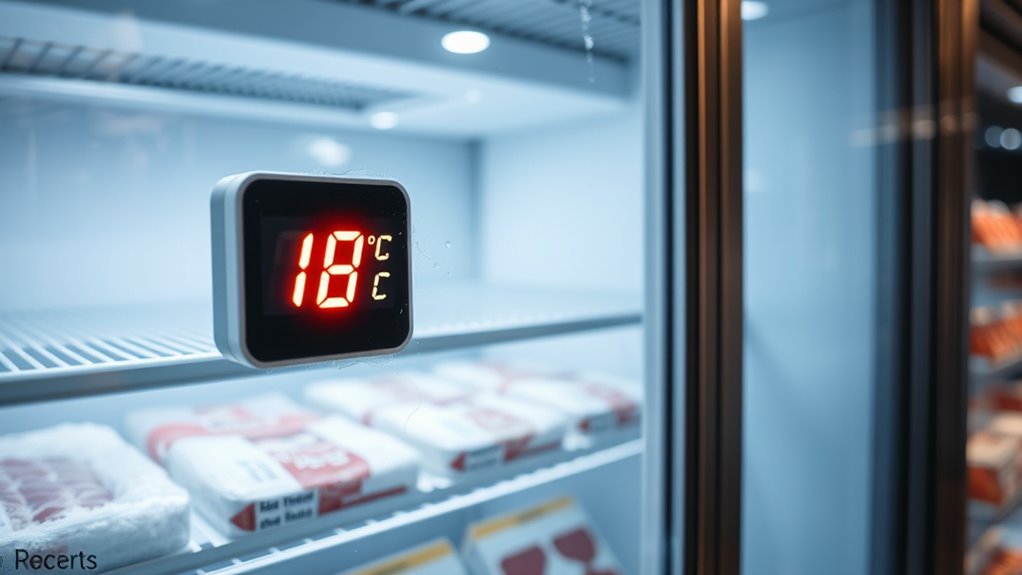
What Temperature Should the Freezer Be? The Complete Answer
Many people struggle with keeping their food fresh and safe in the freezer. It’s easy to wonder if your freezer is set at the right temperature or if your food might spoil faster than it should. Don’t worry—you’re not alone in this!
You should set your freezer to 0°F (-18°C) to keep your food fresh, safe, and nutrient-rich. This temperature slows bacterial growth, prevents spoilage, and preserves texture and flavor while avoiding energy waste.
Make sure to check your freezer with a thermometer and adjust gradually for stability. Avoid frequent door openings and proper organization to maintain consistency.
If you want to understand how different foods react and how to handle temperature issues, there’s more useful information ahead.
Key Takeaways
- The ideal freezer temperature is 0°F (-18°C) to keep food safe, fresh, and nutritious.
- Store meat, poultry, fruits, vegetables, and prepared foods at or below 0°F (-18°C).
- Place a freezer thermometer in the center for accurate readings and give it about 2 hours to stabilize.
- Try not to open the door too often or overload the freezer. This helps keep the temperature steady and prevents spoilage.
- If your freezer can’t stay at 0°F, has ice buildup, makes strange noises, or causes food to spoil faster, it’s best to call a professional.
What Is the Ideal Freezer Temperature?
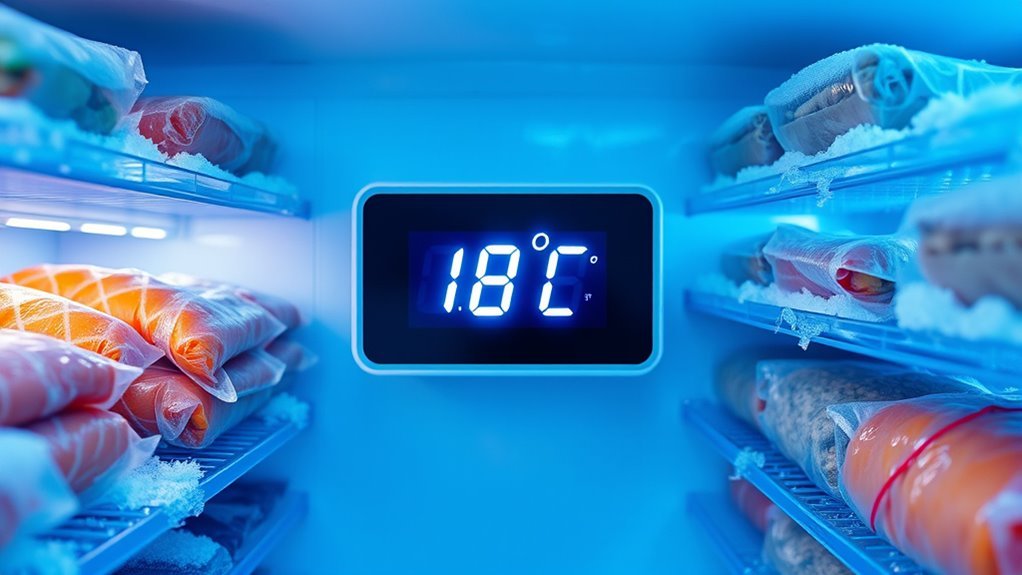
How cold should your freezer be to keep food fresh and safe? The ideal settings for your freezer are usually around 0°F (-18°C). This temperature hits the sweet spot, keeping food fresh while your freezer runs efficiently.
If it’s too warm, your food might spoil faster. But setting it colder than needed wastes energy and puts extra strain on your appliance.
Check your freezer’s thermostat and adjust it to this recommended temperature. Many newer freezers have digital controls, so it’s easy to set and keep an eye on the right level.
Avoid changing the temperature often, as that can reduce efficiency and affect how well your food stays preserved.
Why Does Freezer Temperature Matter for Food Safety and Quality?
Why does maintaining the right freezer temperature matter for your food’s safety and quality? When your freezer is set correctly, it slows down bacterial growth and prevents food spoilage, keeping your food safe to eat. The freezing process stops bacteria from multiplying, but if the temperature is too high, bacteria can still grow, risking your health.
Besides safety, the right temperature preserves food texture and flavor. Proper freezing limits the formation of large ice crystals that can damage cell walls, helping maintain the food’s original texture. It also helps retain nutrients so your food stays nutritious. If your freezer is too warm, ice crystals grow larger, causing freezer burn and flavor loss.
Moreover, the right temperature extends storage time, letting you keep food longer without losing quality. By managing freezer temperature carefully, you protect both your health and the deliciousness of your meals.
What Is the Best Freezer Temperature for Different Types of Food?
You’ll want to set the right freezer temperature depending on what you’re storing to keep food fresh and safe. Meat and poultry usually need colder temps than fruits and vegetables, while prepared and leftover foods have their own ideal ranges. Let’s take a look at the best temperatures for each type so you can keep everything at its best quality and safety.
Meat And Poultry
Although freezing meat and poultry preserves their freshness, setting the correct freezer temperature is key to keeping them safe and high quality. You should keep your freezer at 0°F (-18°C) or below for the best frozen storage.
This temperature slows bacterial growth and helps prevent spoilage, making sure your meat stays good longer. Whether you’re freezing beef, pork, chicken, or turkey, keeping it at this temperature helps maintain texture, flavor, and nutrition.
Avoid fluctuating temperatures, as thawing and refreezing can damage the meat and pose food safety risks. For long-term storage, wrap meat tightly to prevent freezer burn and moisture loss.
Fruits And Vegetables
When freezing fruits and vegetables, keeping your freezer at 0°F (-18°C) or below helps them stay fresh and nutritious. This temperature is great for retaining nutrients and slowing down enzymes that cause spoilage.
To get the best results, prepare your produce properly—wash, blanch vegetables, and dry fruits before freezing.
Use airtight containers or freezer bags to prevent freezer burn. Label items with dates so you can keep track of freshness.
For fruits like berries and peaches, freeze them individually before putting them in bags. For vegetables like green beans and broccoli, blanch them to lock in nutrients.
Avoid overloading your freezer to keep the temperature steady.
Following these tips means you can enjoy fresh-tasting, nutrient-rich fruits and vegetables whenever you want.
Prepared And Leftover Foods
Since different prepared and leftover foods vary in moisture content and density, keeping your freezer at the right temperature is key to preserving their taste and safety. For most leftovers and meal prep items, 0°F (-18°C) is the perfect setting.
This temperature slows bacteria growth and prevents spoilage, all while keeping your food quality intact. Dense meals like casseroles freeze well at this temperature, and soups or sauces tend to retain moisture better.
Try to avoid temperature fluctuations, as they can cause freezer burn, which diminishes flavor and texture. Label your leftovers with dates to make sure you eat them within three to six months.
Sticking to 0°F will keep your prepared foods safe and tasty, making meal prep and leftover storage simple and worry-free.
How Do I Check My Freezer’s Temperature?
To check your freezer’s temperature, the best thing to do is use a freezer thermometer. Just place it inside the freezer and leave it there for a few hours so it can give you an accurate reading. Once enough time has passed, take a quick look at the thermometer to see what the temperature is.
Getting familiar with those numbers is really helpful because it lets you know if your freezer is running the right temperature. If it’s too warm, you can make some adjustments to keep your food properly frozen and safe.
Using A Freezer Thermometer
A freezer thermometer helps you accurately monitor your freezer’s temperature to ensure your food stays safely frozen. To get reliable readings, proper thermometer placement is key—avoid door areas where temperatures fluctuate. For accurate results, consider calibrating your thermometer to guarantee its accuracy.
Here’s how to use it effectively:
- Place the thermometer in the middle of the freezer.
- Keep it away from freezer walls or frozen items.
- Leave the thermometer in for at least 2 hours.
- Check the reading without opening the door too often.
- Periodically calibrate your thermometer following the manufacturer’s instructions.
Interpreting Temperature Readings
After placing your freezer thermometer and giving it enough time to stabilize, it’s time to read and interpret the temperature.
If you’re using a digital display, make sure the reading is steady and not fluctuating due to temperature changes. Fluctuations are normal but shouldn’t be extreme.
For accurate results, note the temperature once it stays consistent for several minutes. If your thermometer shows above 0°F (-18°C), your freezer isn’t cold enough to keep food properly frozen.
On the other hand, temperatures well below this might waste energy. Regularly checking your freezer’s temperature helps you catch issues early and keep your food safe.
How Do I Set the Perfect Freezer Temperature?
Wondering how to set the perfect freezer temperature? It’s easier than you think once you understand your freezer settings and why temperature calibration matters.
Start by checking your freezer’s manual for recommended settings. Then, grab a reliable freezer thermometer to keep an eye on the actual temperature inside.
Begin with your freezer’s manual, then use a thermometer to monitor its true temperature.
Here’s how to get it right: Set your freezer to 0°F (−18°C) for the best food preservation. Place the thermometer in the middle of the freezer for the most accurate reading.
If the temperature drifts, adjust the settings gradually. After making changes, wait 24 hours for the temperature to stabilize.
Remember to regularly calibrate your freezer’s thermostat to keep everything consistent.
What Happens If Your Freezer Temperature Is Too Warm or Too Cold?
If your freezer isn’t cold enough, your food might not stay frozen properly, which can lead to spoilage and even safety issues. No one wants to deal with spoiled leftovers or unsafe food, right?
But if it’s set too cold, it can actually impact the quality of your food — making things freeze too hard or causing unnecessary energy use. So, finding that sweet spot is key to keeping everything fresh and safe without wasting energy.
Effects Of Warm Temperatures
When your freezer temperature drifts too warm, your food can start to thaw and spoil faster, risking both taste and safety. Temperature fluctuations become more common, especially if the insulation quality isn’t great. This can make your freezer less efficient and lead to problems like:
- Ice crystals melting, making foods soggy
- Bacterial growth increasing, which raises health risks
- Shorter shelf life for frozen items
- Frost buildup from repeated thawing and refreezing
- Higher energy bills as the freezer works harder
To avoid these issues, keep the temperature steady around 0°F (-18°C). Poor insulation or frequently opening the door makes warm temperatures worse. Check the seals and try to limit outside air exposure. Keeping your freezer cold enough helps preserve your food’s freshness and safety.
Risks Of Excessive Cold
Although keeping your freezer cold is essential, setting the temperature too low can cause problems just as serious as letting it get too warm. When your freezer is excessively cold, frost buildup can quickly accumulate, reducing storage space and forcing the unit to work harder.
This extra strain may lead to equipment failure over time. Furthermore, running your freezer at unnecessarily low temperatures decreases energy efficiency, causing your electricity bills to climb.
While you might think colder is better, extreme cold won’t prevent food spoilage any more effectively than the ideal temperature. In fact, it can sometimes damage food texture and quality.
To avoid these risks, aim to maintain the recommended temperature range. This ensures your freezer runs smoothly without wasting energy or harming your food.
Food Safety And Quality
Since maintaining the right freezer temperature directly affects food safety and quality, you need to monitor it closely. If your freezer is too warm, bacteria can multiply, increasing the risk of illness.
On the other hand, if it’s too cold, the texture and taste of your food may degrade, shortening storage time.
Here’s what happens when the temperature isn’t ideal:
- Warmer than 0°F (-18°C) allows bacteria to grow
- Freezer burn damages food quality and flavor
- Excessive ice crystals affect the texture
- Nutrients can be lost faster with improper freezing
- Storage time is shortened, leading to more waste
Keeping your freezer at the recommended temperature ensures safe, tasty food and helps you store it longer without risking spoilage.
How Can I Keep My Freezer Temperature Consistent?
How do you maintain a steady temperature in your freezer to keep food fresh longer? Start by avoiding opening the door too often, as this causes temperature fluctuations. Make sure your freezer has good insulation; sealing gaps around the door helps keep cold air inside and saves energy.
Regularly defrost manual models to prevent ice buildup, which can mess with the temperature. Keep your freezer away from heat sources like ovens or direct sunlight to reduce the workload on the cooling system.
Check the temperature often with an appliance thermometer and adjust the settings if needed. Organize your food so air can circulate freely, and avoid overpacking, which can trap warm spots.
| Tip | Benefit | Action |
|---|---|---|
| Seal Door Gaps | Better insulation | Replace worn gaskets |
| Limit Door Openings | Stable temperature | Plan ahead before opening |
| Regular Defrosting | Energy efficiency | Defrost when ice exceeds ¼ inch |
Following these steps will help keep your freezer’s temperature steady and save energy.
How Does Freezer Temperature Affect Energy Consumption?
Keeping your freezer temperature steady not only preserves your food but also impacts your energy bills. When the temperature fluctuates, your freezer’s compressor cycles more often, which reduces energy efficiency and increases electricity use. You want to keep it around 0°F (-18°C) to balance food safety and power consumption.
Maintaining a steady freezer temperature saves energy and keeps your food safe at around 0°F (-18°C).
Here’s how freezer temperature affects energy use:
- Lower temperatures make the compressor work harder, raising energy consumption.
- Higher temperatures reduce compressor cycles but can cause food to spoil.
- Opening the door frequently causes temperature spikes, which trigger more compressor activity.
- Frost buildup insulates the freezer, making the compressor run longer and lowering efficiency.
- Good airflow inside the freezer helps keep temperatures stable and reduces energy waste.
When Should You Call a Professional About Freezer Temperature Issues?
What signs should you watch for that indicate it’s time to call a professional about your freezer’s temperature problems? If your freezer struggles to maintain the correct temperature despite your adjustments, or if you notice ice buildup, strange noises, or frequent cycling, these could signal freezer malfunctions.
When your food starts spoiling faster than usual or you see frost accumulating excessively, don’t ignore it. Attempting to fix these issues yourself might worsen the problem. Instead, reach out to professional services that specialize in freezer repair and maintenance.
They have the tools and expertise to diagnose and resolve temperature-related malfunctions efficiently. Prompt professional help can prevent costly damage and keep your freezer running effectively. So, if you experience any persistent temperature inconsistencies or signs of malfunction, don’t hesitate to call a professional.
Addressing freezer temperature issues early guarantees food safety and energy efficiency.
Tips for Maintaining the Right Freezer Temperature at Home
Although it might seem straightforward, maintaining the right freezer temperature takes some consistent effort and a few simple habits. To keep your freezer running smoothly and your food safe, focus on regular maintenance and energy efficiency.
Here are five tips to help you keep your freezer at the perfect temperature at home:
- Check the temperature regularly with a reliable thermometer.
- Avoid overloading the freezer so air can circulate properly.
- Keep the door closed as much as possible to prevent temperature swings.
- Defrost your freezer when ice buildup exceeds a quarter-inch.
- Clean the condenser coils every six months to boost energy efficiency.
Frequently Asked Questions
Can Freezer Temperature Affect the Taste of Ice Cream?
Yes, freezer temperature can affect the taste of ice cream. When your freezer is too warm, the ice cream melts a little and then refreezes, which changes the texture and how you perceive the flavor.
If it’s too cold, ice crystals can form, making the ice cream less creamy and dulling the taste you love. Keeping the right temperature helps preserve the flavor by keeping it smooth and preventing those nasty ice crystals from ruining your treat.
How Long Can Food Stay Safe if Freezer Power Is Out?
When the lights go out, your freezer is like a ticking clock for food safety. During a power outage, your food stays safe for about 24 to 48 hours if you keep the freezer door closed tight.
Don’t open it unless you have to, or the cold air escapes. If the power’s out longer, check for ice crystals. If they’re gone, it’s time to toss the food to avoid any risk.
Does Freezer Location in the House Impact Its Temperature?
Yes, the freezer location in your house does impact its temperature. If you put it near a heat source or in a warm room, external heat can make it work harder to stay cold.
Proper freezer insulation helps, but it can’t fully counteract constant heat exposure. To keep your freezer efficient, avoid placing it near ovens, direct sunlight, or heating vents.
Instead, choose a cool, well-ventilated spot. This way, your freezer will stay colder and run more efficiently.
Are There Specific Freezer Temperatures for Medical or Scientific Use?
Yes, specific freezer temperatures are essential for medical freezer standards and scientific storage guidelines. You’ll need to keep medical samples typically between -20°C and -80°C, depending on the material.
Scientific storage often demands ultra-low temperatures, sometimes even below -150°C, to preserve biological specimens or chemicals properly.
Following these precise temperature ranges guarantees sample integrity and complies with regulatory requirements. So, don’t overlook the importance of using the right freezer settings for your needs.
Can Freezer Temperature Settings Influence Frost Buildup?
You can definitely keep frost from turning your freezer into an icy winter wonderland by adjusting the temperature settings. When you set your freezer too cold, moisture can freeze on surfaces, leading to unwanted frost buildup.
By maintaining the right temperature, you help control humidity and prevent excess frost. This keeps your freezer running efficiently and your food fresh.
Conclusion
You might think keeping your freezer cold enough is just about preserving food, but it’s also about safety, energy use, and even saving money. When you set your freezer to the ideal temperature—usually around 0°F (-18°C)—you’re not just freezing food; you’re freezing time, quality, and waste.
By paying attention to your freezer’s temperature, you’re protecting more than meals. You’re safeguarding your home and health too. Keeping your freezer at the right temperature ensures your food stays fresh and safe to eat.
So, remember, maintaining that perfect 0°F (-18°C) isn’t just a good idea. It’s a smart move for your health, budget, and peace of mind.