How Much Are New Kitchen Cabinets? The Complete Answer
Thinking about updating your kitchen but feeling overwhelmed by the potential costs? You’re not alone—many people struggle with figuring out how much new cabinets will actually set them back. It’s a big investment, and you want to make sure you’re making the right choice without breaking the bank.
You’ll typically spend between $3,000 and $8,000 on new kitchen cabinets, depending on materials, style, size, and installation complexity. Solid hardwoods cost more than engineered wood, and custom designs raise prices further.
Installation fees and hidden costs, like hardware and prep work, also add up.
To save, consider semi-custom options or DIY tasks, but budget extra for maintenance and unexpected expenses.
Investigate these factors to confidently plan your kitchen cabinet investment.
Key Takeaways
- New kitchen cabinets usually cost between $3,000 and $8,000. This depends on the size, brand, and installation fees.
- Solid hardwood cabinets are pricier but last longer, while engineered wood is more budget-friendly but has a shorter lifespan.
- Installation costs vary depending on how complex the job is and your location. There are also extra charges for removing old cabinets and upgrading hardware.
- Custom cabinets and special finishes tend to increase the overall cost compared to ready-to-assemble (RTA) or semi-custom options.
- It’s a good idea to set aside 10-15% of your budget for maintenance and unexpected expenses. This helps extend the life of your cabinets and avoid surprises.
How Much Do New Kitchen Cabinets Typically Cost?
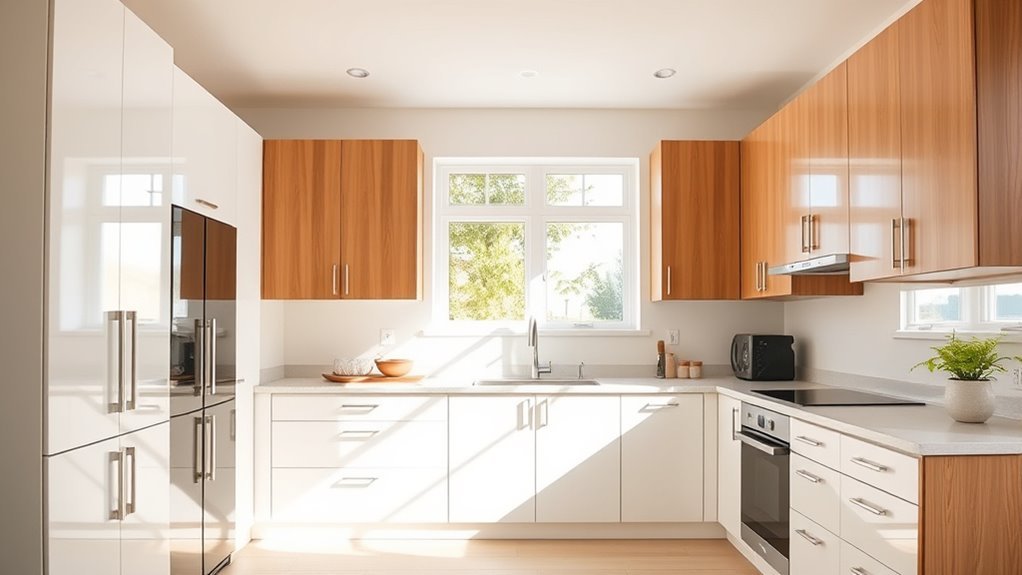
When you’re planning a kitchen remodel, knowing how much new cabinets typically cost can help you set a realistic budget. On average, new kitchen cabinets run between $3,000 and $8,000, but prices vary based on size, brand, and installation fees.
To keep costs manageable, you’ll want to apply smart budgeting strategies, such as prioritizing essential cabinets and considering semi-custom options. Don’t forget to factor in cabinet maintenance, which can extend the life of your investment and save money long-term.
Proper sealing, regular cleaning, and timely repairs prevent costly replacements. Setting aside about 10-15% of your cabinet budget for upkeep can keep your kitchen looking fresh without surprises.
How Materials and Styles Affect Kitchen Cabinet Costs
Materials and styles play a big role in determining your kitchen cabinet costs. When choosing cabinets, the material durability directly impacts the price. Solid hardwoods like maple or oak are more expensive but offer long-lasting strength. Engineered wood or MDF options cost less but might not hold up as well over time.
Paying attention to style trends also influences costs. Popular styles like shaker cabinets tend to be moderately priced, while intricate designs with detailed moldings or glass inserts usually raise the price. Finishes matter too—painted cabinets often cost more than stained ones because of the extra labor involved.
Why Custom Cabinets Cost More Than Ready-to-Assemble Options
Because custom cabinets are made specifically for your kitchen’s measurements and style preferences, they tend to cost more than ready-to-assemble (RTA) options. You’re paying for a perfect fit, unique design, and better materials.
RTA cabinets, however, have some drawbacks. They offer limited customization, often use basic materials, and can be bulky to assemble.
Here’s a quick comparison to help you decide:
| Custom Cabinets Benefits | RTA Cabinets Drawbacks |
|---|---|
| Tailored to your exact space | Standard sizes, may not fit well |
| High-quality, durable materials | Lower quality, less durable |
| Unique designs, personal style | Limited styles, generic look |
| Expert craftsmanship | DIY assembly, time-consuming |
How Kitchen Cabinet Installation Fees Impact Your Budget
Choosing between custom and ready-to-assemble cabinets sets the stage for your overall kitchen budget, but installation fees can greatly affect the final cost. Understanding different installation types helps you make informed decisions.
Selecting custom or ready-to-assemble cabinets shapes your budget, while installation fees significantly influence total costs.
For example, a basic installation involves simply mounting cabinets, while complex layouts may require modifications, which can increase labor costs. You should also consider whether your installer charges a flat fee or hourly rate, as this impacts your total expense.
Labor costs vary depending on your location, the installer’s experience, and how complex the project is. If you need old cabinets removed, expect extra fees.
Specialized installations like crown molding or under-cabinet lighting also add to costs. To keep labor costs manageable, prepare your kitchen beforehand by clearing the workspace and verifying plumbing or electrical work is ready.
Estimating Kitchen Cabinet Costs Based on Your Kitchen Size
Your kitchen’s size plays a big role in figuring out the overall cost of new cabinets. When estimating expenses, it’s important to look at your kitchen layout and the measurements of the space where cabinets will go.
Larger kitchens usually need more cabinets, which naturally raises the price. But even in smaller kitchens, choosing custom cabinet sizes to maximize storage can increase your budget as well.
The layout also affects the types of cabinets you’ll need, like corner units or tall pantry cabinets, which tend to be more expensive. Standard sizes usually cost less, while custom sizes that fit your kitchen’s unique shape can add to the cost.
Affordable Cabinets That Don’t Sacrifice Quality
While searching for new kitchen cabinets, you don’t have to break the bank to find options that hold up in quality and style. Many budget-friendly choices use quality materials like plywood and MDF with durable finishes, giving you a sturdy, attractive cabinet without the high price tag.
Affordable kitchen cabinets can combine quality materials like plywood and MDF with stylish, durable finishes without overspending.
You can also find ready-to-assemble cabinets that save on labor costs while still offering solid construction. Look for manufacturers who offer warranties, which often show confidence in their products’ durability.
Keep an eye out for classic designs and neutral colors. They tend to stay stylish longer and give your kitchen a timeless look. Focus on materials and craftsmanship rather than just brand names or trendy features.
This way, you’ll get cabinets that meet your needs without overspending. Remember, affordable cabinets don’t mean cheap. With a little research, you can find options that balance cost, quality materials, and style perfectly for your kitchen remodel.
When High-End Kitchen Cabinets Are Worth the Extra Cost
Although high-end kitchen cabinets come with a steeper price tag, they offer unmatched durability, craftsmanship, and design that boost your kitchen’s overall value and appeal. When you choose luxury finishes, you’re investing in materials and details that last over time, both visually and structurally. These cabinets resist wear better than standard options, meaning fewer repairs or replacements later on.
You’ll also get better design longevity. High-end cabinets are built to stay stylish and functional for years, so you won’t need frequent updates. If your kitchen is a central space or you plan to stay long-term, this lasting quality makes the extra cost worthwhile.
In short, choosing premium cabinets isn’t just about looks. You’re securing a durable, elegant kitchen that keeps its charm and usefulness for years to come, making the investment truly worthwhile.
Hidden Costs to Know Before Buying Kitchen Cabinets
Before you go ahead and buy kitchen cabinets, it’s a good idea to think about the installation fees. These can really add up and vary a lot depending on who you hire and the complexity of the job.
Also, don’t forget about the little extras like handles, hinges, and any other hardware you might want. If you’re thinking about customizing your cabinets to make them uniquely yours, there could be additional costs there too.
Getting a clear picture of these hidden expenses upfront can save you from surprises later on. It’s all about planning ahead so your dream kitchen doesn’t end up costing more than you expected!
Installation Fees Breakdown
Since installing kitchen cabinets involves more than just placing them on your walls, you’ll want to understand the various fees that can add up during the process. Installation types greatly influence labor costs; for example, a straightforward replacement is usually cheaper than a full remodel requiring custom fitting or structural changes.
Labor costs typically cover measuring, removing old cabinets, prepping walls, and securing new units. Depending on your location and contractor, expect to pay between $50 and $200 per hour. Some professionals charge a flat rate based on your kitchen’s size and complexity.
Don’t forget that complicated installations like those involving plumbing or electrical work can add to fees. Knowing these details upfront helps you budget realistically and avoid surprises once installation begins.
Additional Hardware Costs
Many kitchen cabinet purchases come with unexpected hardware costs that can catch you off guard. When budgeting, don’t forget to factor in various hardware types like drawer pulls, cabinet hinges, and cabinet locks. These components not only influence functionality but also affect the overall look of your kitchen.
Installation accessories, such as screws and mounting brackets, are often necessary but overlooked expenses. You might also want to upgrade to soft close mechanisms, which add convenience by preventing slamming doors and drawers.
Finish options for hardware can vary, offering choices like brushed nickel, matte black, or polished chrome to match your kitchen style. Decorative hardware further improves aesthetics but typically raises costs.
Being aware of these additional hardware costs helps you plan your cabinet purchase without surprises.
Customization Expense Factors
Although customizing your kitchen cabinets can create the perfect look and fit for your space, it often comes with hidden expenses that catch buyers off guard. When you choose custom finishes or specific color options, prices can rise quickly. Design complexity plays a big role too. Intricate details require more time and skilled labor.
Your material selection impacts cost as well. Premium woods and durable laminates cost more. Don’t overlook brand reputation, which often reflects quality but can add to the price. Installation techniques vary, and advanced methods or unique layouts may increase labor fees.
Staying updated on customization trends might tempt you to add functional features like soft-close drawers or pull-out shelves. These can further affect your budget. Knowing these factors helps you avoid surprises during your cabinet purchase.
How to Save Money on New Kitchen Cabinets Without Regrets
Looking to save some money on new kitchen cabinets? One smart way is to choose materials that give you a good balance between cost and durability. For example, instead of opting for the most expensive options, consider materials that are affordable but still last through daily use.
Another thing to think about is whether to do the installation yourself or hire a pro. Doing it yourself can save you a lot on labor costs, but keep in mind it might take more time and effort, and if you’re not experienced, it could lead to mistakes. Hiring a professional can be more expensive upfront, but it might give you peace of mind knowing the job will be done right the first time.
Smart Material Choices
When choosing materials for your new kitchen cabinets, opting for smart, budget-friendly options can help you save money without sacrificing quality or style. Look for sustainable materials like bamboo or reclaimed wood, which are eco-friendly and often cost less than traditional hardwoods. These materials are durable and add a unique character to your kitchen.
Also, consider cabinets with innovative finishes like thermofoil or laminate, which mimic the look of expensive wood at a fraction of the price. These finishes resist scratches and moisture, helping your cabinets last longer.
DIY Versus Professional
Deciding whether to install your kitchen cabinets yourself or hire a professional can really affect your budget and the final look.
DIY has its perks, like saving on labor costs and having full control over the design and materials.
But keep in mind, it requires skills and can be tricky, which might lead to costly mistakes.
Professionals bring expertise, ensuring a precise install, and often offer warranties that protect your investment.
While DIY might seem cheaper upfront, consider the time you’ll spend and the possibility of rework, which can add up.
If you’re not experienced, hiring a professional usually means better quality and durability, which can be worth the extra cost.
Think about your skills, timeline, and what you want the finished product to be like to make the best choice.
This way, you’ll avoid regrets and get the most out of your new kitchen cabinets.
Final Tips for Budgeting Your Kitchen Cabinet Remodel
Budgeting your kitchen cabinet remodel takes some planning and realistic expectations. Use practical strategies and cost-saving tips like focusing on essential upgrades and comparing quotes from multiple suppliers.
Remember, unexpected expenses can come up, so it’s smart to set aside a contingency fund. Here’s a quick reference table to help you stay on track with your budget:
| Tip | Action | Benefit |
|---|---|---|
| Prioritize essentials | Focus on cabinets you use most | Saves money on less-used items |
| Compare quotes | Get multiple estimates | Helps find the best price |
| Set contingency fund | Allocate 10-15% extra | Covers unexpected costs |
| Choose semi-custom | Balance quality and cost | Offers affordable customization |
| DIY small tasks | Handle minor installations | Cuts down on labor expenses |
Frequently Asked Questions
How Do I Maintain and Clean New Kitchen Cabinets?
To keep your new kitchen cabinets looking great, it’s important to clean them based on what they’re made of. For wood cabinets, a gentle soap and water mix works best—just skip harsh chemicals that could damage the finish.
Laminate and metal cabinets are pretty durable and respond well to mild all-purpose cleaners. Always use a soft cloth to wipe them down and make sure to dry thoroughly to avoid moisture damage.
Don’t forget to dust regularly and clean up spills right away. This helps keep your cabinets looking fresh and ensures they last longer.
What Are the Latest Trends in Kitchen Cabinet Design?
The latest kitchen cabinet trends are like a refreshing change, with minimalist designs leading the way. You’ll find sleek, handle-free cabinets that keep your space clean and simple.
Bold colors, like deep navy or forest green, add personality and contrast beautifully with neutral tones. Mixing matte and glossy finishes can also enhance your kitchen’s look.
If you want a modern vibe, focus on clean lines and pops of daring color. It’s all about creating a stylish, functional space that feels fresh and inviting.
Can I Change Cabinet Hardware Without Replacing Cabinets?
Yes, you can definitely change cabinet hardware without replacing your cabinets. Swapping out handles and knobs is a quick way to refresh your kitchen’s look.
When selecting new hardware, make sure the size and screw placement match your existing holes to avoid extra drilling.
For installation tips, use a template for consistent alignment and tighten screws firmly but gently to prevent damage.
This simple update can make a big style impact!
How Long Do Kitchen Cabinets Typically Last?
Kitchen cabinets typically last 20 to 50 years, depending on cabinet materials and installation quality. Solid wood cabinets can easily approach the higher end, while particleboard options may wear out sooner.
Remember, proper installation costs might seem steep upfront, but they guarantee your cabinets stay sturdy and last longer. Investing in quality materials and professional installation helps you avoid frequent replacements.
This way, your kitchen will stay looking great for decades.
Are Eco-Friendly Kitchen Cabinets More Expensive?
Yes, eco-friendly kitchen cabinets usually cost more upfront because sustainable materials and production methods can be pricier. However, you’ll enjoy benefits like reduced environmental impact and healthier indoor air quality.
You can choose from various material options, including reclaimed wood, bamboo, and low-VOC finishes. While the initial investment is higher, you’re supporting eco-conscious manufacturing and often getting durable, long-lasting cabinets that pay off over time.
Conclusion
You might think splurging on high-end kitchen cabinets is just a luxury, but sometimes it’s the smartest investment. Investing in quality cabinets can pay off in the long run with durability and style.
On the flip side, going for the cheapest option might save you now but cost you later in repairs or replacements. Cheap cabinets can sometimes lead to more expenses down the line.
Balancing quality with budget is key. You don’t have to break the bank to get cabinets you love. It’s all about finding the right mix that suits your style and your wallet.
So, weigh your priorities carefully. When considering new kitchen cabinets, remember that choosing the right option can make a big difference in your home’s look and value.