How to Build an Outdoor Kitchen: A Step-by-Step Guide
Thinking about creating an outdoor kitchen but feeling overwhelmed by where to start? You’re not alone—many people struggle with turning their backyard dreams into reality.
Building your own outdoor cooking space can seem daunting, but with a clear plan, it’s totally doable.
To build your outdoor kitchen, start by planning the layout near your indoor kitchen for easy flow and set a realistic budget focusing on must-have appliances.
Design smart zones for cooking, prepping, and serving, using weather-resistant materials like stainless steel.
Prepare the site carefully, install utilities safely, and choose durable countertops and lighting to finish.
Keep maintenance in mind to extend its life.
Follow these basic steps, and you’ll soon master creating a functional, stylish outdoor cooking space.
Key Takeaways
- Plan your layout with sunlight, wind, and how close it is to your indoor kitchen for convenience and smooth workflow.
- Design functional zones for cooking, prepping, and serving, using weather-resistant cabinetry and smart storage solutions.
- Pick durable, low-maintenance materials like stainless steel and stone, balancing upfront costs and how long they last.
- Prepare the site by clearing, leveling, and planning utility routes, making sure to hire professionals and follow building codes.
- Finish with sturdy countertops, layered lighting, and regular upkeep to keep everything safe, efficient, and usable all year.
Plan Your Outdoor Kitchen Layout and Location
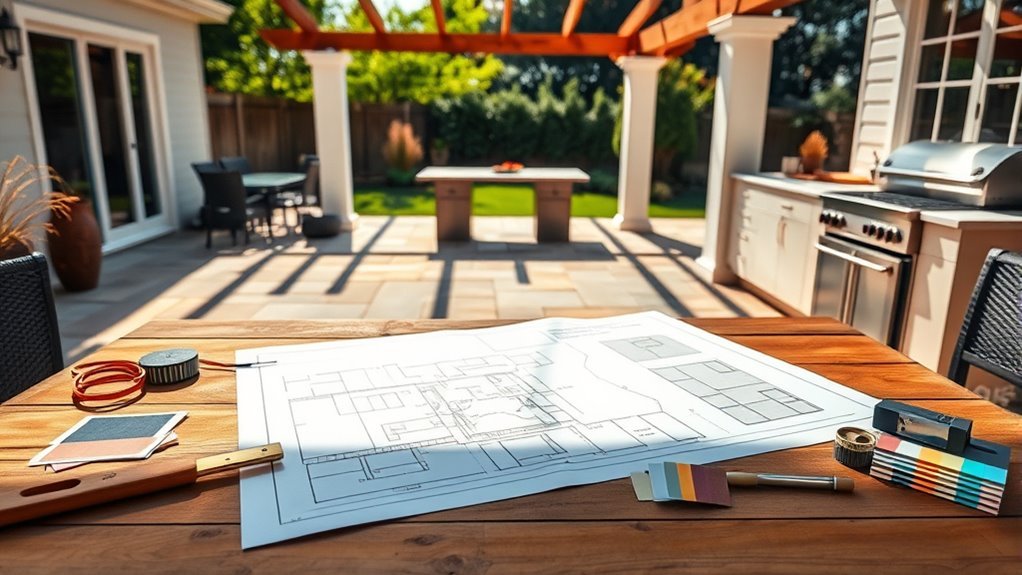
Before you start building, choose the best spot and layout for your outdoor kitchen. Think about the orientation to make the most of sunlight and wind direction, so you stay comfortable while cooking.
Positioning your kitchen near your indoor kitchen or dining area can make everything flow better and be more convenient.
Placing your outdoor kitchen close to indoor spaces enhances convenience and creates a smooth flow for entertaining.
Pay attention to space—plan enough room for cooking, prepping, and seating without feeling crowded.
Consider how you’ll move between the grill, sink, and refrigerator. A good work triangle saves time and effort.
Don’t forget about electrical and plumbing access, as these can limit where you place things.
Also, think about shade options or natural windbreaks to stay comfortable outdoors.
By planning your layout and location carefully, you’ll create a functional and efficient outdoor kitchen that fits your lifestyle.
Taking your time with this step ensures your project goes smoothly and your outdoor kitchen serves you well for years.
Set Your Outdoor Kitchen Budget
Once you’ve mapped out your outdoor kitchen’s layout and location, it’s time to figure out how much you’re willing to spend. Setting a clear budget helps you make smarter choices and avoid overspending. Start by listing all the components you want, like grills, countertops, sinks, and storage. Use this list to break down your costs.
Focus on the major items first, then think about smaller details like lighting and accessories. Keep in mind that installation and permits can add unexpected costs, so make sure to include those. Use tips like prioritizing must-haves over nice-to-haves and researching material prices to stay realistic.
Don’t forget to set aside a contingency fund for surprises. By planning your budget early, you’ll keep your outdoor kitchen project on track and enjoy the process without stressing over money.
Design Your Outdoor Kitchen Layout for Function and Style
Although choosing your appliances and materials is important, designing your outdoor kitchen layout really determines how well it functions and looks. You want to find a good balance between outdoor style and making the most of your space to create a practical yet inviting area.
Start by thinking about these three key factors:
Begin with these three essential factors to create a functional and stylish outdoor kitchen layout.
- Workflow Efficiency – Arrange your cooking, prep, and serving zones in a logical order to keep movement smooth. The classic “work triangle” between the grill, sink, and refrigerator works great outdoors too.
- Space Optimization – Use corners and vertical spaces like shelves to make the most of your footprint without feeling cramped. Leave enough room for guests to move around comfortably.
- Visual Appeal – Pick a layout that matches your yard’s style. Symmetry and clean lines often make outdoor spaces look more polished, while natural materials help everything blend seamlessly.
Choose Durable Materials for Your Outdoor Kitchen
Since your outdoor kitchen will face the elements year-round, choosing durable materials is essential to keep it functional and attractive over time. Focus on materials with excellent weather resistance like stainless steel, natural stone, and concrete.
Stainless steel offers low maintenance and resistance to corrosion, making it a popular choice. Stone and concrete provide sturdy, heat-resistant surfaces with a variety of aesthetic options.
When comparing costs, stainless steel tends to be pricier upfront but can save you money long-term because it requires minimal upkeep. Stone and concrete are more budget-friendly but may need sealing to prevent weather damage.
Pay close attention to installation techniques. Proper sealing and anchoring help protect your kitchen from moisture and shifting over time. Regularly cleaning surfaces and inspecting for cracks or rust can extend your outdoor kitchen’s lifespan.
Select Essential Appliances and Fixtures for Your Outdoor Kitchen
Selecting the right appliances and fixtures is key to making your outdoor kitchen both functional and enjoyable. Think about your needs and the space you have. Your choices should match your outdoor decor and be made from durable countertop materials.
Here are three main elements to focus on:
- Grill Options and Heating Elements: Pick from gas, charcoal, or electric grills based on how you like to cook. Consider adding heating elements like side burners or infrared grills for extra versatility.
- Refrigeration Choices and Sink Styles: Choose a weather-resistant fridge to keep drinks and ingredients cool. Pick a sink style that works well with your workflow, making cleanup easy.
- Storage Solutions and Lighting Fixtures: Make sure you have enough storage for utensils and supplies to stay organized. Install lighting that’s both safe and creates a nice atmosphere for nighttime use.
Prepare Your Outdoor Kitchen Site and Utilities
Before you start building, you’ll need to prepare the site and set up utilities to ensure everything runs smoothly. Proper site prep makes sure your outdoor kitchen is stable and safe, while planning utilities connects essential services like water, electricity, and gas.
Begin by clearing and leveling the area, removing debris, and making sure drainage is good. Then, plan where your utilities will run, keeping convenience and safety in mind. Work with professionals to install electrical outlets, plumbing lines, and gas connections according to local codes.
This groundwork helps prevent costly changes later and keeps your project on track.
| Feeling | Reason for Importance |
|---|---|
| Confidence | Knowing utilities are safely installed |
| Excitement | Seeing your space take shape |
| Relief | Avoiding future costly repairs |
| Satisfaction | A strong, well-prepared foundation |
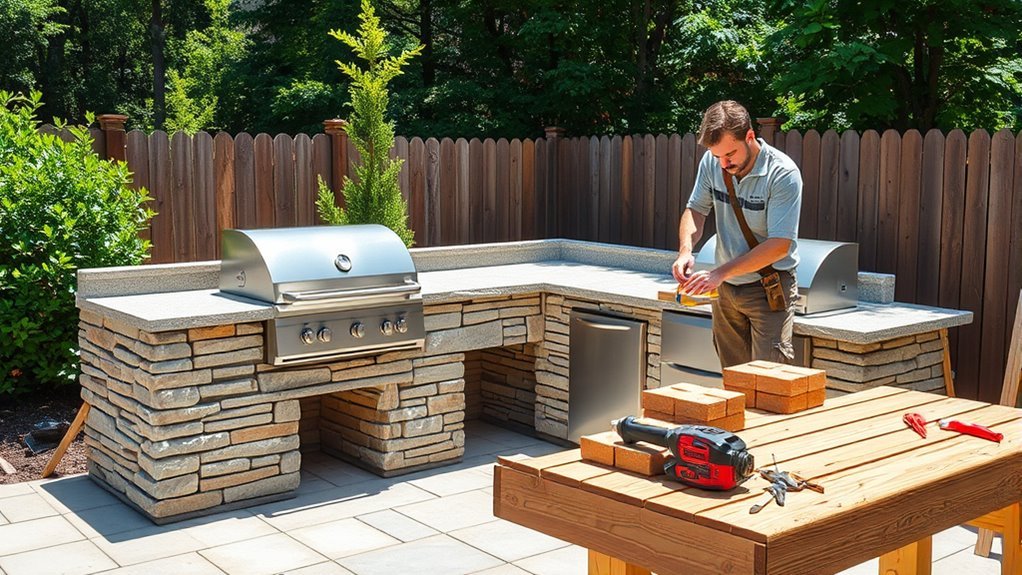
Build Your Outdoor Kitchen Structure and Cabinets
When you’re planning your outdoor kitchen, it’s really important to pick materials that can handle all the weather. You want things that won’t warp, rot, or fade after a few seasons. So, think about things like stainless steel, weather-resistant stone, or treated woods that are built to last. This way, your outdoor space stays looking great and functions well for years to come.
Next, when it comes to designing your cabinets, focus on making them both practical and easy to use. Good cabinets should give you enough storage for all your cooking tools and supplies without feeling cluttered. Plus, think about how you’ll use the space—easy access, plenty of countertop area, and maybe even some features like pull-out shelves or built-in trash cans. Building a sturdy structure with functional cabinetry will make your outdoor kitchen a joy to cook in and a real centerpiece for your backyard.
Choosing Durable Materials
Durable materials are the foundation of a long-lasting outdoor kitchen, so choosing the right ones will save you time and money later on. When picking materials, focus on weather resistance and how much maintenance they need to keep your kitchen in good shape.
Also, consider the cost and environmental impact to find a balance between your budget and sustainability goals. Don’t forget about how the materials look, how easy they are to install, and their weight, as these factors affect both style and practicality.
Here are three key points to keep in mind:
- Go for weather-resistant materials like stainless steel or concrete that don’t require much upkeep.
- Think about the weight of the materials to avoid complicated installation or structural problems.
- Choose eco-friendly options whenever possible to reduce environmental impact without sacrificing style.
Designing Functional Cabinetry
A well-designed cabinetry system forms the core of your outdoor kitchen, offering essential storage and workspace. When choosing cabinet styles, focus on those that boost both function and style.
Pick weather-resistant materials like stainless steel or marine-grade polymer to handle the outdoors. Incorporate smart storage options such as pull-out drawers and adjustable shelves to make the most of your space.
Use organization ideas like built-in utensil holders and spice racks to keep everything within easy reach. Accessibility features like soft-close doors and easy-glide hardware make using the cabinets more convenient and durable.
Don’t forget maintenance tips: regularly clean surfaces and check seals to extend the life of your cabinets. By blending thoughtful design with practical storage and tough materials, you’ll create cabinetry that’s both functional and stylish for outdoor cooking.
Install Appliances and Connect Utilities Safely
You’ll want to put your appliances somewhere they’re easy to reach but also safe from weather and other outdoor elements. It’s all about finding that sweet spot where convenience meets protection.
When it comes to hooking up utilities like gas, water, and electricity, safety should always come first. Taking the right precautions can help you avoid accidents or issues down the line.
Let’s walk through some simple steps to make sure everything is installed correctly and securely, so you can enjoy your appliances without worry.
Appliance Placement Essentials
Before installing your outdoor kitchen appliances, plan their placement carefully to ensure safety and functionality. Think about the types of appliances and how to position them for an efficient cooking space. Here are three key points to focus on:
- Group by Function: Place appliances like grills, refrigerators, and sinks in zones that support your workflow. Keep prep areas near the grill and storage close to the refrigerator for convenience.
- Ensure Clearance: Leave enough space around each appliance for safe operation and easy maintenance. Check the manufacturer’s guidelines for minimum clearances to avoid issues later.
- Avoid Cross-Contamination: Position sinks away from cooking surfaces but close enough for easy use. This helps keep things hygienic without disrupting your workflow.
Utility Connections Safety
Once you’ve determined the best spots for your appliances, the next step is to connect utilities safely to keep your outdoor kitchen running smoothly. Start by addressing plumbing considerations. Make sure water lines and drainage are properly installed to prevent leaks and water damage. Use durable, weather-resistant materials designed for outdoor use.
Next, focus on electrical safety. Hire a licensed electrician to install outdoor-rated outlets with GFCI protection to avoid shocks and short circuits. Ensure wiring is well-insulated and protected from moisture. Double-check that all connections meet local codes and regulations.
Taking these precautions not only protects your appliances but also keeps you and your guests safe. Proper utility connection is essential for an efficient, durable outdoor kitchen you’ll enjoy for years.
Finish Your Outdoor Kitchen With Countertops, Lighting, and Accessories
Choosing the right countertops, lighting, and accessories can transform your outdoor kitchen into a functional and inviting space. Start by selecting durable countertop materials like granite or concrete that withstand weather and are easy to clean.
Next, consider outdoor lighting options to improve both ambiance and safety. Use a mix of task lighting near prep areas and ambient lighting like string lights or lanterns to create a cozy atmosphere.
Finally, accessorize thoughtfully to blend style with practicality. Arrange grilling essentials and functional decor such as utensil holders and storage bins within easy reach. Add seasonal accessories like herb pots or decorative elements to personalize your space.
This approach guarantees your outdoor kitchen is efficient, stylish, and ready for year-round enjoyment.
Maintain Your Outdoor Kitchen for Longevity and Performance
To keep your outdoor kitchen working smoothly and looking great, regular maintenance is key. Start with cleaning—wipe down surfaces and appliances after each use to prevent buildup.
Seasonal maintenance is also important. Before winter, apply surface sealing to countertops and stonework to protect against moisture damage. Use weather protection like covers or retractable awnings to shield appliances and furniture from harsh weather.
Check gas lines, clean burners, and inspect electrical components regularly to keep appliances in top shape. Don’t forget pest control—seal cracks and store food properly to keep critters away.
For furniture, clean and treat materials based on their type, whether wood, metal, or fabric. Lastly, organize tools and accessories with smart storage solutions to reduce clutter and prevent damage.
Frequently Asked Questions
What Are the Best Plants to Surround an Outdoor Kitchen?
You’ll want to choose plants that complement your outdoor kitchen while adding function and beauty. Incorporate a herb garden with basil, rosemary, and thyme for fresh flavors at your fingertips.
Use privacy screens like tall bamboo, ornamental grasses, or evergreen shrubs to create a cozy, secluded vibe. These plants not only improve your cooking space but also provide natural fragrance and a relaxing atmosphere you’ll love spending time in.
How Do I Protect My Outdoor Kitchen From Pests?
Worried about pests invading your outdoor kitchen? Start by planting pest repellent plants like lavender, mint, or marigolds around the area to naturally keep bugs away.
Regular outdoor kitchen maintenance is key. Clean up food scraps promptly and seal any cracks where pests might enter.
You’ll also want to cover food and trash containers tightly. These simple steps help you enjoy your space without unwanted critters crashing the party.
Can I Install a Fireplace Near My Outdoor Kitchen?
Yes, you can install a fireplace near your outdoor kitchen, but safety should always come first. Make sure to keep enough distance between the fireplace and your cooking appliances to avoid heat damage or fire risks.
It’s important to have proper ventilation and use non-combustible materials in your outdoor kitchen design. Planning your layout carefully helps ensure everything is both functional and safe.
This way, you can enjoy cozy fires without worrying about your cooking space or guests.
What Are Eco-Friendly Options for Outdoor Kitchen Materials?
You might be surprised how many eco-friendly options exist for your outdoor kitchen. Start with sustainable materials like bamboo or reclaimed wood for your cabinets. They’re durable and earth-conscious.
Don’t overlook recycled countertops made from glass or concrete. They add style while cutting waste.
Choosing these options not only reduces your environmental footprint but also creates a unique space you’ll love. Going green has never looked so good or felt so right.
How Do I Winterize My Outdoor Kitchen Properly?
To winterize your outdoor kitchen properly, start by thoroughly cleaning all surfaces and appliances.
Disconnect and drain water lines to prevent freezing damage. Cover grills and appliances with weatherproof covers to protect them from snow and moisture.
Store removable items like utensils and cushions in a dry place for seasonal storage. Regular winter maintenance, such as checking covers and clearing snow, will keep your kitchen in great shape until spring arrives.
Conclusion
So, you’ve planned, budgeted, built, and installed your outdoor kitchen. Congratulations! Now you can impress neighbors by grilling in style while pretending you don’t know how many hours you spent assembling those “simple” cabinets.
Just don’t forget about maintenance. Nothing says “outdoor chef” like a rusted grill and a countertop that’s seen better days. But hey, as long as your snacks are hot and your drinks cold, who cares if the rest falls apart?