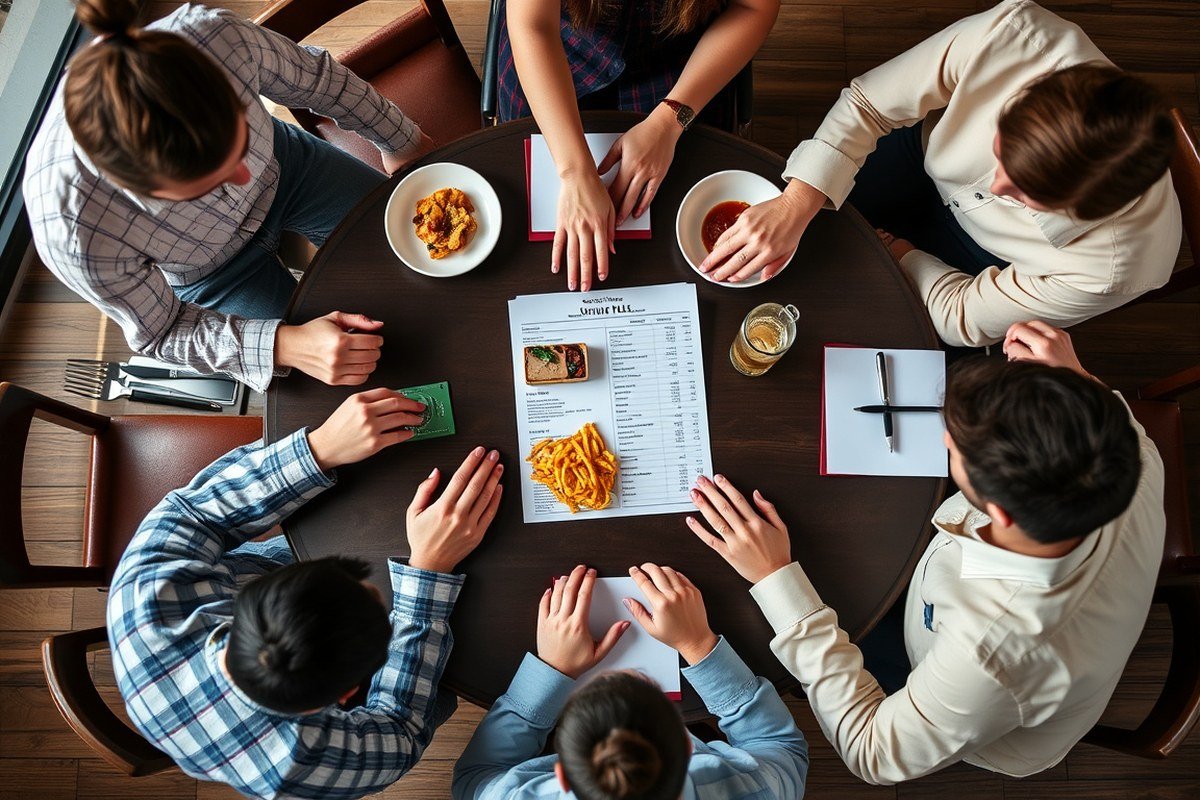
How to Split a Bill at a Restaurant: 8 Proven Ways for Fair, Easy Payments
A fair and simple approach to dividing a restaurant check depends on selecting a method that matches your group’s size and individual orders. Splitting the cost evenly quickens payment, while allocating expenses according to each person’s meal, with tax and tip included, ensures fairness. Understanding how to split a bill at a restaurant helps prevent disputes and maintains a friendly atmosphere when dining out with friends or colleagues.
This advice is for groups who want simple ways to divide costs without awkwardness or unfairness. You get practical tips for handling taxes, tips, shared dishes, and how to decide which method fits different group situations best.
Key Takeaways
- Split the bill evenly only if everyone’s orders are similar to avoid subsidizing expensive items.
- Calculate tax and tip based on each person’s subtotal for a fairer total payment.
- Ask early and politely about splitting the bill to prevent awkwardness at the end of the meal.
- Choose itemized splitting for large groups or when meal costs vary significantly between diners.
- Use bill-splitting apps to calculate and share payments instantly, reducing errors and delays.
- Divide shared dishes and drinks by the number of people who consumed them, not the entire group.
1. The Simplest Ways to Split a Restaurant Bill Fairly

Splitting a restaurant bill fairly depends on how similar everyone’s orders are and how much effort the group wants to put in. The simplest method is an equal split, where the total bill, including tax and tip, is divided evenly among all diners. This works best when everyone orders meals and drinks at similar prices. For example, if a $200 bill is shared by four friends who all ordered entrees around $50, splitting evenly is quick and avoids awkwardness. Each person pays $50 plus their share of tax and tip.
Paying only for what you ordered, called itemized splitting, is the most accurate and fair option when meals vary widely in price or some people order little while others order a lot. First, add up each person’s order before tax and tip. Then calculate their share of tax and the tip proportionally. For instance, if your meal cost $55 and the total bill is $200 with a 20% tip, your share of the tip is 27.5% (55/200) of the tip amount.
A middle ground between equal and itemized splitting is a hybrid method. This involves allocating shared items, like appetizers or drinks, equally or proportionally, while remaining expenses are paid based on individual orders. This method suits groups sharing some dishes but handling most meals separately.
| Method | Fairness | Ease | Best For |
|---|---|---|---|
| Equal Split | Medium | Very Easy | Similar Orders |
| Itemized Split | High | Moderate | Different Orders |
| Hybrid Split | Very High | Moderate | Shared + Individual Items |
Using a restaurant bill split calculator speeds up both equal and itemized methods, including tax and tip calculations. Enter the total, tip percentage, and individual orders to get precise amounts. This reduces disputes and confusion, especially for larger groups. A quick script for itemized payment could be: “Let’s each pay for our own meals and share the tip and tax based on what we ordered.” This keeps the process clear and fair.
Asking the server for separate checks when ordering is another way to avoid splitting headaches. It’s most practical for equal splits or straightforward itemized splits. However, some restaurants may limit this option, or an extra charge might apply. Deciding on the method before the bill arrives helps keep the experience smooth and friendly.
2. How to Calculate Tax and Tip Fairly in Group Bills

You should calculate tax before calculating the tip, tipping on the pre-tax total as commonly advised. Tax can be split either evenly or proportionally based on each person’s order. The standard tip percentage for group dining ranges from 18% to 20%. This ensures fairness and clarity when dividing the bill among friends.
Calculating Tax Proportionally
Tax is normally calculated on the total amount of food and drinks ordered before tip is added. Then, it can be split either evenly among group members or proportionally based on the cost of each person’s order. Proportional splitting prevents one person from subsidizing another’s expensive meal.
To calculate tax proportionally, start by adding up each person’s subtotal, then apply the tax rate to those subtotals individually. This ensures everyone pays tax only on what they ordered.
Splitting tax evenly is simpler but can be unfair if orders vary widely in price.
Determining the Right Tip Percentage
The commonly accepted tip rate in the United States for group dining is between 18% and 20% of the pre-tax subtotal. The Emily Post Institute recommends tipping on the pre-tax amount, which avoids tipping on the tax portion you pay to the government. Tipping on the post-tax total is also practiced, but the difference is usually small, for example, on a $100 bill with 8% tax, tipping 20% post-tax increases the tip by about $1.60.
Adding Tip Fairly to Each Person’s Share
Tipping fairly means calculating the tip based on each person’s share of the pre-tax subtotal, then adding it to their tax and food cost. The tip percentage applies to each subtotal before tax and tip. This approach prevents overpaying for others’ orders.
To do this by hand, each person’s share of the tip is their subtotal multiplied by the tip percentage. Then add the proportional tax and subtotal. Dividing the total amount due among friends this way is fair and transparent.
- List each person’s itemized food and drink subtotal.
- Calculate the tax on each subtotal by multiplying it by the local tax rate.
- Add the tax to each person’s subtotal to get their pre-tip total.
- Calculate the tip for each person by multiplying their subtotal (before tax) by the tip percentage.
- Add the tip to each person’s pre-tip total for their full share.
- Double-check that the sum of all shares equals the total bill including tax and tip.
- Collect payments according to each person’s calculated total.
For example, in New York City with an 8.875% tax and a 20% tip on a $180 pre-tax bill split among four people with subtotals of $40, $45, $50, and $45:
| Person | Subtotal | Tax (8.875%) | Tip (20%) | Total |
|---|---|---|---|---|
| 1 | $40.00 | $3.55 | $8.00 | $51.55 |
| 2 | $45.00 | $3.99 | $9.00 | $57.99 |
| 3 | $50.00 | $4.44 | $10.00 | $64.44 |
| 4 | $45.00 | $3.99 | $9.00 | $57.99 |
3. When and How to Ask to Split the Bill Without Awkwardness
The best time to ask about splitting the bill is before ordering to avoid confusion and awkwardness at the end of the meal. Politely introducing the topic helps everyone understand what to expect and keeps things fair. Use simple, clear language to bring it up confidently while respecting everyone’s preferences.
Introducing Splitting Before Ordering
Starting the conversation about splitting the bill before anyone orders sets a positive tone. You might say, “Hey everyone, just so we’re all on the same page, would you be okay with splitting the bill evenly?” This phrasing is casual and invites agreement without pressure. When some people want to pay for their own items, say, “You can cover your own order, that’s fine, just inform the server at the start.”” Being upfront avoids surprises and keeps payment smooth.
Setting this expectation early also helps if the restaurant needs to know about separate payments beforehand. Some places allow multiple payment methods but want to be informed in advance to prepare. You can add, “I’ll check with the server if they can split the bill for us.” This shows consideration and keeps the conversation practical.
Handling Resistance Gracefully
Occasionally, someone might object to the proposed splitting method. When that happens, listen calmly and respond with understanding. For example, say, “I get that everyone’s orders are different, so maybe we can figure out individual payments instead. What would work best for you?” This respects their perspective and steers the conversation toward a workable solution.
Offer clear options, like splitting evenly, paying per item, or dividing by who ordered drinks versus food. You can follow with, “We want this to be fair and easy for everyone, so let’s find the best way together.” Avoid pushing a method that makes others uncomfortable; fairness and comfort make the process smoother and less tense.
Confirming Payment Methods with the Server
After agreeing on how to split the bill, check with your server about payment options. Ask something like, “Would it be okay if we split the bill among a few different cards or cash?” Some servers may find it difficult to divide small checks many ways, especially with large groups or unclear orders. Knowing this upfront helps set realistic expectations.
When your group uses both cash and cards, say, “Some of us will pay with cash, others with cards.” Is that okay?” Servers can then confirm what is acceptable. Clarifying this early prevents awkward moments when it’s time to pay and keeps everything flowing smoothly.
4. Choosing the Best Splitting Method for Different Group Situations
Choosing the best method to split a restaurant bill depends largely on the group’s size, order differences, and social dynamics. Couples and singles in a small group might prefer an equal split if their orders are roughly the same price. Equal splitting minimizes hassle since each person pays the same amount, which works well when average costs fall between $20 and $40 per person and differences are minor or everyone agrees to share equally.
Large groups or dinners with multiple courses make equal splitting less practical. When orders vary greatly in price, an itemized or hybrid split ensures fairness. An itemized split means each person pays only for what they ordered. Combined with a free bill split calculator, it avoids manual errors and speeds up the process. A hybrid split divides shared dishes or drinks evenly, while individual entrees are paid for separately, balancing simplicity and fairness. Deciding which method fits your situation best can be done using the following checklist:
- Does everyone’s meal cost about the same? Choose equal split.
- Are orders diverse with drinks, appetizers, or pricey entrees? Choose itemized or hybrid split.
- Is the group large, with multiple shared dishes? Choose hybrid split.
- Is it a casual meal with friends open to splitting evenly? Equal split saves time.
- Does anyone prefer to pay or be reimbursed separately? Use a bill splitting app for the final calculation.
Here is a comparison table showing which method fits different group setups:
| Group Situation | Recommended Split | Why It Works |
|---|---|---|
| Couples or small groups (similar orders) | Equal split | Simplifies payment, minimal disputes. |
| Large groups, mixed orders, shared dishes | Hybrid split | Balances fairness with convenience. |
| Groups with wide price variation in orders | Itemized split | Ensures everyone pays for their own consumption. |
| Casual outings where convenience matters more than precision | Equal split | Faster payment, fewer calculations. |
In groups where one or two people order expensive wines or cocktails, it’s fair for them to cover those items separately even if equal splitting was planned. Agreeing on the splitting method before ordering avoids awkward conversations when the bill arrives. Using an app that handles tax and tip calculations automatically helps keep the process smooth. Voting on the method as a group also ensures everyone feels comfortable.
5. Using Apps and Digital Tools to Split Bills Instantly
Using apps and digital tools helps split restaurant bills instantly and accurately, especially when accounting for tax and tip. Popular options like Tab and Splitwise let you enter bill details and assign each item to individuals. These apps then calculate what each person owes, including their share of tax and tip, saving time and avoiding manual errors. You just input the amounts and the app handles the math, which matters because bills with different orders and add-ons can get confusing.
Many people prefer having one person pay the entire bill first. Then, the group members reimburse their shares using services like Venmo, PayPal, or Cash App. This method works well because many restaurants don’t allow multiple card payments, or if they do, the process can be complicated. When you do split payments at the restaurant, double-check that tax and tip are correctly applied to each partial payment to avoid overpaying or underpaying.
Calculator apps are also handy if you want to quickly do an equal split or customized shares without installing anything. For example, if the bill is $180 before tax and tip, you can enter that subtotal in a split bill calculator online, add the tax (usually 6-10% depending on state), and the tip (15-20% typical). The calculator then distributes these costs evenly or by item between diners immediately.
- Use Tab or Splitwise by scanning or typing the bill’s subtotal, then assign items per person.
- Confirm the local sales tax rate in the app to get accurate totals.
- Choose the tip percentage before finalizing to ensure fair gratuity distribution.
- Have one person pay the total, and use Venmo or PayPal to send money instantly.
- For mixed group orders, add shared items evenly among participants.
- When splitting on-site, check with servers if partial card payments can cover tax and tip properly.
- Try online calculators when items and shares are simple and equal; no app install needed.
Double-check all tax and tip calculations in apps before payment to avoid surprises on the final receipt.
Many digital tools work smoothly on smartphones and require just a few taps. Some apps may charge a small fee for additional features, while most basic split bill calculations are free. Using these apps reduces math errors, speeds up settling up, and lessens awkward conversations about money. You can save each group’s bill details in apps like Splitwise for quick tracking over multiple meals or outings.
6. Fair Ways to Split Meals with Shared Dishes and Drinks
When appetizers, desserts, or a bottle of wine are shared among a group, splitting their cost fairly can prevent disputes and keep the meal enjoyable. The simplest approach is to divide these shared items equally among everyone who partook or agreed to contribute. For example, if a group of four shares a $48 bottle of wine and one person doesn’t drink, it’s fair that only the three drinkers split the cost, paying $16 each, rather than having the non-drinker subsidize the alcohol. This prevents non-drinkers from overpaying and keeps the split equitable.
Non-drinkers should generally not pay for alcohol. In mixed groups where some drink and others do not, charging everyone equally can raise each person’s share by $10 or more, especially with bottles or cocktails priced $15 or higher. Splitting shared bottles or drinks only among those who actually consumed alcohol is a clear, just method that respects everyone’s choices and budgets.
For shared appetizers and desserts, splitting the cost evenly among the entire group usually works well. Everyone enjoys these communal dishes, so dividing the amount by the total number of diners is straightforward. Some people might not have tried a specific shared dish, so ask whether they want to skip paying for that item. This communication upfront avoids surprises when the bill arrives.
Special occasions such as birthday meals often involve a host or celebrant treating the group. In these cases, it works best to exclude the birthday person’s individual items from the split. For example, take the total bill, subtract the birthday person’s food and drinks, then split the remaining amount among the other guests equally. This respects the host’s generosity while keeping the division clear and fair.
Suppose you and three friends share a $48 bottle of wine, a $20 appetizer, and regular entrees. One friend who doesn’t drink pays just for their entrée, the three friends who do share the $48 wine cost at $16 each, and the $20 appetizer gets split evenly at $5 per person. Everyone pays for their personal meals too. This method combines fairness with simplicity.
In less formal groups, agree before ordering whether the bill will be split evenly or by item. Even splits for shared dishes and drinks keep things simple, but itemized splitting suits groups with big price differences in orders. Communication is key to avoid awkwardness and ensure everyone feels the split is fair and transparent.
7. Common Mistakes in Splitting Restaurant Bills and How to Fix Them
Double tipping happens when each person calculates a tip on their portion, then the server or app adds tip again on the total. This leads to paying more than intended. To avoid it, agree on a total tip percentage first, then split that amount equally or by consumption. Using a calculator or a bill-splitting app that includes tax and tip settings helps you confirm the final tip amount before paying.
Forgetting to include tax in the bill split can cause underpayment. Tax, applied to the full bill, must be covered regardless of how you split the food cost. Leaving out tax can shortchange the server or restaurant and lead to awkward moments when the group pays the bill. Always calculate the total tax first, then divide it proportionally with the food and drinks. This method ensures the full amount due is paid without confusion.
Uneven shares occur when sums don’t add up exactly after payment, often because of rounding or miscalculations. Fixing this requires quick, clear communication. Spotting a mistake after payment means you should recalculate together right away. One way is to use cash to settle minor differences or a quick digital payment to balance out. Make sure everyone agrees to the correction before closing out.
- Double tipping: Calculate tip once on the total, then split tips among guests.
- Forgetting tax: Add total tax to the bill, then split fairly along with food costs.
- Unequal shares: Recheck calculations and use small cash adjustments or payment apps.
- Rounding errors: Agree on a rounding method upfront to prevent confusion at payment.
- Sharing dishes unevenly: Assign costs proportionally to who ate what, avoiding split equally when not fair.
Before paying, compare your totals: adding each person’s food, drink, tax share, and tip share should match or be very close to the bill. This final verification catches mistakes early. When apps are involved, double-check their automatic calculations versus manual estimates. Clear roles, like one person responsible for adding tax and tip, can reduce errors. For groups with diverse orders, itemize bills carefully, so no one pays too much or too little.
8. Tips for Handling Challenging Group Dynamics and Special Cases
Splitting a restaurant bill fairly in groups with different incomes, orders, or cultural expectations can avoid awkwardness and disputes. Addressing income gaps, large order disparities, and cultural differences requires clear communication and agreed-upon rules before or during the meal. Taking these steps helps maintain goodwill, fairness, and enjoyment for everyone involved.
Income-Based Proportional Splitting Explained
Using income to split a bill means each person pays a share proportional to their earnings. Calculate your portion by dividing your income by the combined income of everyone and then multiply that ratio by the total bill. For example, if your income is $40,000, a friend’s is $60,000, and the total bill is $100, your share is ($40,000 ÷ $100,000) × $100 = $40.
This approach accounts for differences in financial means, making it easier to avoid strain on lower-income participants. However, it may not work well for groups with large price differences in orders since the formula does not consider what each person actually consumed. It also requires trust and transparency about incomes, which some may find too personal or uncomfortable to share.
Managing Large Price Differences Gracefully
When one or more people order significantly more or pricier items than others, even split methods become unfair and can cause tension. The simplest fix is itemized splitting, where each person pays exactly for what they ordered. This can be calculated manually or with apps that scan and separate items on the receipt.
If the group wants to keep things simple but still be fair, it helps to discuss expectations beforehand. For instance, someone who only had soup should not be pressured into covering the cost of another’s steak. You can also agree that high-cost items, like expensive drinks or appetizers, be paid by those who consumed them, while the rest of the bill is split evenly.
Clear, early communication about how to handle differing order sizes prevents hard feelings when the bill arrives.
Bill Splitting Customs Around the World
Culture plays a major role in how bills are divided. In some countries, the person who invited pays the entire bill by default, while in others individual payment or even equal splitting is the norm. For example, in many East Asian countries, the host usually covers the full amount, especially at formal or business dinners.
Other cultures embrace the concept of “Dutch treat,” where the group splits evenly regardless of consumption, valuing group harmony and simplicity over exact fairness. Studies of 21 countries found that expectations vary significantly, so when dining with international friends, a brief conversation about payment can avoid misunderstandings.
In multicultural groups, consider mixed methods or mutually agreeable compromises. Explaining your preferred method openly encourages respect for diverse customs and can enrich the dining experience by preventing awkwardness or offense.
Step-by-Step Action Plan for Splitting Your Restaurant Bill Fairly
Follow these steps to make splitting your restaurant bill simple, fair, and stress-free for everyone involved.
- Before ordering: Check if the restaurant splits checks and if the group prefers one method (equal shares, itemized, or apps). Confirming this early avoids surprises.
- When ordering: Keep track of individual or shared items. Ask who wants what for shared dishes to allocate costs fairly and reduce confusion later.
- At the end of the meal: Use a calculator or a bill-splitting app to total each person’s share, including tax and tip. This ensures everyone pays their fair portion.
- Before paying: Communicate clearly how the bill is split and confirm with the group. This avoids awkwardness and disputes at the register.
- At payment: Use group payment apps or ask the server to divide the bill as agreed. Check that the final amount matches your calculations.
- After payment: Double-check receipts and ensure everyone has settled their part. Address any mistakes right away to keep things smooth.
- Next outing: Suggest using a bill-splitting app or agreeing on a method early. This improves fairness and comfort over multiple group meals.
Frequently Asked Questions
How Do I Handle Splitting the Bill If Someone Didn’t Order Drinks?
Separate the drinks cost for that person and split the rest evenly. This keeps the split fair and prevents anyone from paying more for items they didn’t consume.
Is It Better to Ask for Separate Checks at the Start of the Meal?
Yes, requesting separate checks when seated avoids confusion and awkward moments when paying. This allows each person to manage their portion as they order.
Can I Use a Phone App to Split Bills Accurately?
Yes, bill-splitting apps help automatically calculate each person’s share, including tax and tip. They reduce errors and speed up the payment process for groups.
What Do I Do If the Group Has Very Uneven Orders?
Use a detailed split method where each person pays for what they ordered plus tax and tip on their items. This avoids unfair charging and is facilitated by some bill split calculators.
How Should I Handle the Tip When Splitting the Bill?
Calculate the tip based on the total bill or individual shares to keep it proportional. It’s common to add the tip after dividing the meal costs for accuracy.
What’s the Best Way to Split a Bill with Large Groups Dining Out?
For large groups, splitting based on the order or using an app with itemized billing is best. It avoids the unfairness of even splits when orders vary widely.
Wrapping Up
Splitting a restaurant bill fairly takes clear communication and the right tools to avoid frustration. Start by agreeing on your approach before the meal, track orders carefully, and use an app or simple math to handle tax and tips. Taking these small steps makes dining out with friends simple, fair, and stress-free every time you gather.




2 Comments