
What Temp to Cook Pork Chops: Perfect 145°F & Timing Guide
The safe and ideal temperature to cook pork chops is 145°F (63°C), ensuring juicy, tender meat without drying out. After reaching this temperature, let the chops rest for three minutes to allow the juices to redistribute. This temperature fits medium-rare doneness and works well for most cooking methods.
Home cooks aiming for perfectly cooked pork chops will find clear guidelines on temperature, timing, and techniques here. The information covers different chop cuts, thicknesses, thermometer use, and timing adjustments for frozen versus thawed meat, helping you achieve the best flavor and safety every time.
Key Takeaways
- Use a meat thermometer to check pork chops’ internal temperature for accuracy and food safety.
- Cook pork chops to 145°F (63°C) and then rest for three minutes before serving.
- Pan-sear boneless, 1-inch thick pork chops for 5-7 minutes per side on medium-high heat.
- Bake pork chops in a 350°F oven for juicy results, cooking about 4-6 minutes per side if flipping.
- Remove pork chops from the fridge 30 minutes before cooking to promote even cooking and better searing.
- Adjust cooking time when using frozen pork chops; thawed chops cook faster and more evenly.
What Temperature Should Pork Chops Reach to Be Safe and Juicy?

The USDA recommends cooking pork chops to a minimum internal temperature of 145°F (63°C) to destroy harmful bacteria while preserving juiciness and tenderness. After hitting 145°F, let the chops rest for three minutes to allow the temperature to even out and finish cooking safely. This resting period lets the heat continue to kill bacteria and improves the meat’s texture without drying it out.
Before 2011, pork chops were commonly cooked to 160°F or more, which often resulted in dry, tough meat. Lowering the target temperature to 145°F maintains safety but keeps the pork moist and flavorful with a slight pink hue in the center. The USDA confirms that whole muscle pork cuts cooked to 145°F with a proper rest are safe, even if pink meat remains. This slight pinkness does not indicate undercooking but rather a natural color change in pork when cooked to this safer, lower temperature.
For the best texture and juiciness, you can remove pork chops from heat when they reach about 140°F (60°C) and let residual heat bring them up to the recommended 145°F during the resting period. This method avoids overcooking and preserves juiciness while still meeting safety requirements. Avoid cooking whole muscle pork to temperatures higher than 160°F because it removes moisture and tenderness, making the chops chewier and less enjoyable.
Ground pork is different and should be cooked to 160°F to be safe, since grinding distributes bacteria throughout the meat. Whole pork chops do not require this higher temperature because bacteria live only on the surface, which cooking will eliminate once the entire internal temp hits 145°F.
Achieving the right temperature for your pork chops requires using a reliable meat thermometer inserted into the thickest part of the chop. Cooking at a relatively high heat for a brief time is recommended to reach 145°F efficiently without drying out the meat. The rest period of at least three minutes is equally important because it completes the cooking process safely and locks in juices. Skipping this step can leave texture uneven and may risk undercooked spots.
How to Correctly Use a Meat Thermometer on Pork Chops
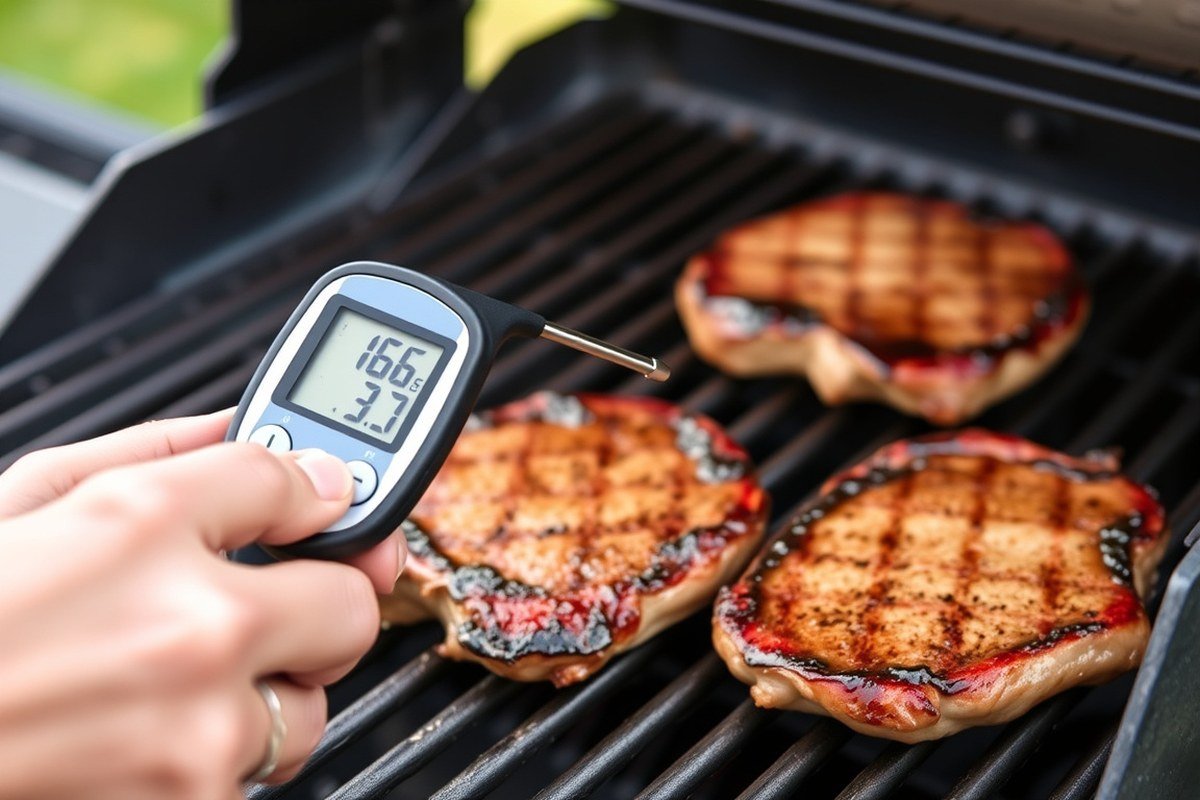
Using a meat thermometer helps you cook pork chops to the safe internal temperature of 145°F, ensuring they stay juicy. Check the temperature in the thickest section of the chop, steering clear of the bone, and start measuring near the end of the estimated cooking time to avoid drying out the meat.
Choosing the Right Thermometer Type
An instant-read meat thermometer works best for pork chops because it provides quick, accurate temperature readings. Digital models typically cost between $10 and $30 and offer ease of use and easy-to-read displays. Analog dial thermometers are less expensive but slower and can be harder to read precisely. For slower cooking methods or larger cuts, leave-in probe thermometers that monitor temperature throughout cooking can be useful, but for pork chops, instant-read models are preferred due to their speed and convenience.
Proper Thermometer Placement
To get an accurate temperature reading, insert the thermometer into the center of the thickest part of the pork chop. Avoid touching bone, fat, or gristle, as these can give falsely high or low readings. Bone-in chops take slightly longer to cook, so measuring near the bone but without touching it can help assess doneness.
Make sure the thermometer’s sensing tip is fully inserted about 1 to 2 inches deep, depending on chop thickness. Angling the probe slightly can help reach the center more effectively without piercing through the meat entirely.
When to Check Temperature During Cooking
Begin checking the temperature near the end of the estimated cook time for your pork chops, generally when they are about 5 minutes away from being done. This prevents opening the grill, oven, or pan too often and losing heat. For thinner chops under 1 inch, start checking earlier, as they cook faster.
Check temperature multiple times if cooking thicker chops or bone-in cuts since internal temperature can rise unevenly. Allow the meat to rest for 3 to 5 minutes after cooking; temperature will rise slightly from carryover heat, ensuring it reaches the safe 145°F mark without overcooking.
Interpreting the Thermometer Reading
Once the thermometer reads 145°F in the thickest part of the chop, remove it from heat immediately. This temperature is recommended by the USDA for safe pork while preserving juiciness. When the thermometer shows less than 145°F, keep cooking the pork chops and check the temperature every 2 to 3 minutes.
Be cautious not to rely solely on time or chop appearance. Thermometer readings give the most reliable indication of doneness and safety, reducing the chance of foodborne illness or drying out the meat. Follow these steps for accurate temperature checks:
- Let pork chops sit out for about 30 minutes before cooking so they can reach room temperature, which helps them cook evenly.
- Choose an instant-read digital thermometer for quick, precise readings.
- Place the thermometer probe into the thickest part of the pork chop, making sure not to touch any bones or fatty areas.
- Start checking the temperature a few minutes before the estimated finish time.
- Check multiple spots on thicker or bone-in chops to ensure even cooking.
- Remove pork chops once the thermometer reads 145°F.
- Allow the chops to rest for 3 to 5 minutes to let temperature rise slightly and juices redistribute.
Always clean your thermometer probe with hot, soapy water between checks to prevent cross-contamination and ensure accurate readings.
Cooking Times and Temperatures for Pork Chops by Cut and Thickness
USDA guidelines say pork chops must reach an internal temperature of 145°F to ensure safety and retain juiciness, regardless of the cut or thickness. Cooking times and temperatures vary depending on the chop’s thickness, whether it has a bone, and the specific cut. Bone-in pork chops usually take longer to cook than boneless ones but maintain their moisture and flavor better. Thicker pork chops need more time on the heat to safely reach 145°F without becoming dry.
High heat around 375°F to 425°F works well for tender pork chops like loin or rib chops, especially when pan-searing or grilling. Thinner chops, approximately 1 inch thick, usually take about 5 to 7 minutes per side to reach the right temperature on the stovetop or grill. Thicker or bone-in chops may need longer cooking times or a combo of searing then oven-baking to finish.
| Pork Chop Cut | Cooking Temperature (°F) | Approximate Cooking Time | Bone-In vs Boneless | Recommended Method |
|---|---|---|---|---|
| Loin / Rib Chops (1 inch thick) | 375-425 | 5-7 minutes per side (pan-sear/grill) | Bone-in takes slightly longer, more flavorful | Pan-searing, grilling, oven-baking |
| Thicker Bone-In Chops (1.5 inch or more) | 375-425 | Sear 5-7 minutes per side, then bake 10-15 minutes | Bone retains moisture better, slower cooking needed | Sear then oven-bake for even heat |
| Boneless Chops (1 inch thick) | 375-425 | 5-7 minutes per side (pan-sear/grill) | Cook faster than bone-in, easier to handle | Pan-searing, grilling |
| Oven Baked Pork Chops (all cuts) | 375 | 25-30 minutes | Bone-in may require slightly longer | Oven roasting |
Slow cooking tougher shoulder or rib chops at lower temperatures (around 275°F) is better to break down connective tissue, aiming for higher internal temperatures around 170-210°F to tenderize them. Ground pork, which is not a whole cut, should reach 160°F. Baking chops at 375°F typically takes between 25 and 30 minutes, depending on thickness. Bone-in chops benefit from the added flavour the bone imparts and usually need a few extra minutes because the bone slows heat transfer. Pan-searing or grilling thinner boneless chops is faster and requires close attention to avoid overcooking. For frozen chops, add about 50% more cooking time than fresh ones, and check internal temperature through the side of the chop for accuracy.
Best Cooking Methods to Achieve the Ideal Pork Chop Temperature
Grilling, pan-searing, baking, and slow cooking each offer ways to reach the ideal internal temperature of 145°F for pork chops. High-heat methods like grilling and searing cook pork chops quickly while locking in juices. Baking and slow cooking provide more even heat to cook chops through gently, which is helpful for thicker or frozen cuts. Combining searing with baking often produces the juiciest, most tender results.
Grilling Pork Chops Safely and Effectively
Grilling pork chops takes advantage of direct high heat to quickly reach 145°F, sealing in flavour and moisture. Preheat your grill to medium-high, around 400°F to 450°F, to get a good sear on the outside without drying out the meat. Let the pork chops sit at room temperature for 20 to 30 minutes before placing them on the grill to promote even cooking. Cook the chops for about 4 to 5 minutes per side, depending on thickness, and use a meat thermometer to check for 145°F before removing.
Resting the chops off the heat for 3 to 5 minutes after grilling allows carryover cooking to raise the temperature slightly while redistributing juices. Avoid cooking chops to higher temperatures than 145°F unless you prefer them medium or well done, which risks drying out thinner cuts. Consistent grill temperature and timely flipping help keep the chops juicy and evenly cooked.
Pan-Searing with Proper Temperature Control
Pan searing creates a delicious crust on pork chops and cooks them rapidly on the stovetop. Start by heating a heavy skillet over medium-high heat until very hot, then add a small amount of oil with a high smoke point, like canola or grapeseed, to prevent burning. Place chops in the pan and sear for 3 to 4 minutes per side to develop colour while shooting for an internal temperature near 130°F before moving to the oven.
For thicker pork chops, start by searing them in a hot pan to create a crisp surface, then move them into an oven set to 375°F to finish cooking. Bake for 15 to 20 minutes, or until the internal temperature hits 145°F. This method ensures a juicy inside with a crunchy outside while helping prevent overcooking. Use a meat thermometer and check the temperature often during baking.
Baking Pork Chops in the Oven
Baking allows you to cook pork chops evenly without much effort, making it suitable for thick or frozen cuts. Set the oven between 350°F and 375°F, placing the chops on a baking sheet or dish. Bake thick chops between 20 and 25 minutes, regularly monitoring the internal temperature until it reaches 145°F. For thin chops, avoid overbaking since they can dry out quickly, so keep a close eye on cooking time.
Room temperature chops cook more evenly in the oven. Baking produces less crust than searing or grilling, so herbs, spices, or a marinade can add flavour without high heat. For best results, you can sear chops first and then bake them to finish, which ensures tenderness and a rich surface texture.
Slow-Cooking for Tender Pork Chops
Slow cooking uses low, steady heat that gently raises the chop’s internal temperature, making it an option for frozen chops or tougher cuts requiring more cooking time. Set the slow cooker on low and cook chops for 6 to 8 hours or on high for about 3 to 4 hours, making sure that the temperature reaches 145°F for safe consumption.
This method results in very tender pork as connective tissue breaks down but generally lacks the crispy exterior of frying or grilling. Slow cooking works well if you want juicy chops without watching the stove or grill. However, it requires planning ahead and is best for chops in a sauce or liquid to keep moisture.
The Impact of Resting Pork Chops After Cooking
Resting pork chops after cooking is essential because it helps the juices redistribute throughout the meat. When you cook pork chops to 145°F (63°C) and remove them from heat, the juices tend to gather in the center. Letting the chops rest allows these juices to spread evenly, making the meat more tender and flavorful.
The ideal resting time is about 3 to 5 minutes. During this time, the internal temperature of the pork chop can rise slightly, usually by 3 to 5 degrees, thanks to carryover cooking. This means if you pull the chop off the heat at exactly 145°F, the temperature may reach around 150°F as it rests. Resting covers both safety and quality, ensuring that the pork reaches a safe temperature while staying juicy.
Not resting pork chops causes the juices to escape as soon as you cut into them. This can result in tougher, drier meat and less flavor. The difference is noticeable, especially with lean cuts that easily dry out. Resting also lets the muscle fibers relax, which boosts tenderness.
Carryover cooking happens because the residual heat continues to cook the meat after it’s off the heat source. Resting provides the time needed for this to finish properly. The heat moves from the outer layers inward, evening out the temperature. Without resting, you might cut into a chop that hasn’t reached its final temperature, or lose the opportunity for tenderizing juices to settle.
For baked pork chops, you can wrap them loosely in foil during resting to keep moisture locked in. For grilled or pan-seared chops, simply placing them on a warm plate or a cutting board works well. Adding a small pat of butter on pan-seared pork chops during rest can add flavor without drying out the surface.
Always rest pork chops for at least 3 minutes after cooking to let the temperature even out and keep the meat juicy.
Adjusting Cooking Temperature and Time for Frozen vs Thawed Pork Chops
You can cook pork chops safely from frozen, but it requires extra time and care to ensure the inside reaches the safe internal temperature of 145°F without overcooking the outside. Frozen pork chops take about 1.5 times longer to cook than thawed ones. Adjusting cooking methods and timing helps keep them juicy and evenly cooked.
Recommended Methods for Cooking Frozen Pork Chops
Cooking pork chops straight from the freezer is doable, but some methods work better than others. Using an oven or skillet with a lid can help cook the meat evenly by retaining heat and moisture. Avoid grilling directly from frozen, as the outside may burn before the inside cooks through.
For best results, consider searing frozen pork chops briefly in a hot pan to brown the outside, then finishing in a preheated oven at 350°F. This combination helps develop flavor while warming the chops evenly to 145°F internal temperature. Always use a meat thermometer to check doneness.
Time Adjustments for Frozen vs Thawed
The cooking time for frozen pork chops increases significantly. Expect it to take about 50% more time than thawed chops to reach 145°F. For example, if a 1-inch thawed pork chop cooks in 20 minutes, the frozen version will take around 30 minutes. Temperature must still reach 145°F to be safe.
Plan accordingly, and avoid guessing cooking time. Start checking the temperature with a meat thermometer closer to the extended cook time to prevent overcooking. Keep in mind thickness affects timing; thicker chops need more time even when thawed.
Avoiding Overcooked Exteriors
Frozen chops are prone to overcooked edges with an undercooked center if not managed properly. Lowering heat slightly and using indirect heat or finishing in the oven can help distribute heat more evenly. Searing frozen meat for too long can cause dry, burnt edges before the inside reaches 145°F.
Adding moisture through methods like cooking with a lid or using a little broth or water in the pan can reduce drying. Resting chops for at least 3 minutes after cooking lets juices redistribute, boosting tenderness and flavor. Follow these steps for cooking frozen pork chops safely and well:
- Preheat your oven to 350°F if finishing chops there.
- Heat a skillet over medium heat with a small amount of oil.
- Place frozen pork chops on the skillet and sear for 2 to 3 minutes per side until lightly browned.
- Transfer chops to an oven-safe dish or keep in the skillet with a lid.
- Cook in the oven or on very low heat on the stovetop, checking internal temperature with a meat thermometer.
- Allow pork chops to reach 145°F internally before removing from heat.
- Let chops rest for at least 3 minutes before serving.
Common Pork Chop Cooking Mistakes and How to Fix Them
One of the most common mistakes when cooking pork chops is overcooking, which leads to dry, tough meat. Pork chops cooked beyond the ideal temperature range lose their natural juices. To prevent this, use a reliable meat thermometer and remove the chops from the heat as soon as they reach 145°F. Carryover cooking will raise the temperature by a few degrees while resting, so taking them off the heat at the right point is critical.
Skipping the resting period after cooking causes another problem. Without resting for about 5 to 10 minutes, the juices haven’t had time to redistribute inside the meat. This means when you cut into the chop immediately, the flavorful juices spill out, leaving the pork dry. Resting also helps the texture become more tender and enjoyable.
Using only your eyes to judge doneness or skipping a thermometer often leads to uneven cooking or unsafe pork temperatures. The outside of pork chops may appear cooked while the inside stays raw. Insert the thermometer into the thickest section of the chop and check the internal temperature before serving for both safety and taste.
- Use an instant-read meat thermometer for accurate temperature check.
- Remove pork chops from heat at 145°F to avoid overcooking.
- Rest pork chops for 5 to 10 minutes after cooking to retain juices.
- Cook pork chops evenly by adjusting cooking temperature and thickness.
- Avoid skipping rest; even quick-cooking thin chops benefit from a short rest.
- For thick or bone-in chops, extend resting time to 10-15 minutes.
- Overcooked pork chops can become dry, so slice them thinly and serve with moist sauces to help improve their texture.
Overcooking happens easily because pork chops cook quickly and the difference between juicy and dry can be just a few degrees. Using a thermometer consistently will save you money by avoiding wasted food and improve your meals. When you find your pork chops are dry after cooking, cutting them into thin slices and serving with a sauce or gravy can help restore some moisture and mouthfeel.
Uneven cooking often results from cooking at too high a temperature or from uneven chop thickness. Cooking at a moderate heat allows time for the inside to reach a safe temperature without burning the outside. Also, using even-sized pork chops lets you cook them uniformly, avoiding undercooked sections or dry edges.
How to Know When to Remove Pork Chops from Heat Considering Carryover Cooking
Carryover cooking is the process where meat continues to rise in temperature after being removed from heat. This happens because the heat stored in the outer layers of the pork chop moves inward, raising the internal temperature by several degrees. For pork chops, this increase typically ranges from 5°F to 10°F, though factors like thickness and cooking method influence how much the temperature will rise.
To hit the perfect 145°F internal temperature after resting, pull your pork chops off the heat when they reach about 135°F. This early removal ensures the final temperature settles between 140°F and 145°F during resting, making the pork juicy and safe to eat. This pull temperature works as a simple decision rule: remove the chop when the thermometer reads 135°F, then let carryover cooking finish the job while resting.
The thickness of the pork chop is a major factor in how much carryover cooking will raise the temperature. Thicker chops (1 inch or more) tend to experience a greater rise, closer to 10°F, because they retain more residual heat. Thinner chops might only rise by 5°F to 7°F. For thicker cuts or those cooked over high heat, like grilling or pan-searing, expect a stronger carryover effect. Lower temperature cooking methods such as baking may have a smaller temperature rise during resting.
When cooking very thin chops, you can pull them off the heat closer to 140°F because they’ll warm up less during resting. For medium-rare lovers aiming for a 145°F to 150°F final temperature, adjusting the pull temperature to around 140°F works better. On the other hand, if you cook a thick chop using intense heat, stopping at 130°F can prevent overcooking.
After removing pork chops from heat at the pull temperature, cover them loosely with foil and rest for at least 3 to 5 minutes. During this time, the temperature will climb to the safe minimum of 145°F recommended by food safety guidelines. Failing to pull early enough results in chopping into dry, tough pork because the carryover temperature pushes the meat well beyond the ideal doneness.
Always use an accurate instant-read thermometer and check temperature in the thickest part of the chop to know when to pull it off the heat reliably.
Step-by-Step Action Plan for Perfect Pork Chops
Follow these steps to cook pork chops that are safe and juicy every time. Use your meat thermometer to check for the right temperature and avoid common mistakes.
- Before you start: Thaw pork chops completely in the refrigerator if frozen. This helps cook evenly and reach the right temperature without drying out.
- Prep time: Let pork chops come to room temperature for about 20 minutes, which promotes even cooking and proper temperature control.
- During cooking: Use a reliable meat thermometer inserted into the thickest part to monitor internal temperature.
- When temperature reads 135°F (57°C): Remove the chops from heat to allow for carryover cooking, which raises the final temperature to a safe 145°F (63°C).
- After cooking: Let pork chops rest for 3 to 5 minutes. This retains juiciness and completes the safe temperature rise.
- Serving: Slice and serve once rested. Juiciness and safety are confirmed by the thermometer reading and resting phase.
- Cleanup: Sanitize cooking utensils and surfaces to prevent cross-contamination, especially after handling raw pork.
Frequently Asked Questions
What Is the Safe Minimum Internal Temperature for Pork Chops?
The USDA recommends cooking pork chops to an internal temperature of 145°F (63°C). This temperature kills harmful bacteria while keeping the meat juicy after letting it rest for three minutes.
Can I Cook Pork Chops to a Temperature Lower Than 145°F Safely?
Cooking pork chops below 145°F is not recommended for safety reasons, even if some prefer rarer meat. The USDA advises 145°F minimum to avoid foodborne illness.
How Long Should I Cook 1-inch Thick Pork Chops on the Stove?
Cook 1-inch thick boneless pork chops for 5-7 minutes per side on medium-high heat to reach 145°F. This timing helps achieve a juicy, safe chop.
Does Bone-In Pork Chop Require Different Cooking Time Than Boneless?
Bone-in pork chops usually take slightly longer to cook than boneless ones due to the bone’s heat absorption. Keep an eye on the temperature for accuracy.
What Oven Temperature Is Best for Baking Pork Chops?
Baking pork chops in a 350°F oven produces the juiciest results. This moderate heat cooks evenly without drying the meat.
How Long Should Pork Chops Rest After Cooking?
Let pork chops rest for three minutes after cooking to allow juices to redistribute. This rest time helps keep the meat moist when cut.
Before You Go
Cooking pork chops to an internal temperature of 145°F with a 3-5 minute rest ensures they are both safe to eat and juicy. Using a meat thermometer lets you avoid overcooking and guesswork. Start by properly thawing and resting your chops on your next cook, and you’ll notice the difference in taste and texture right away.

2 Comments