How to Cook Bone in Pork Chops Perfectly: Timings, Tips, and Methods
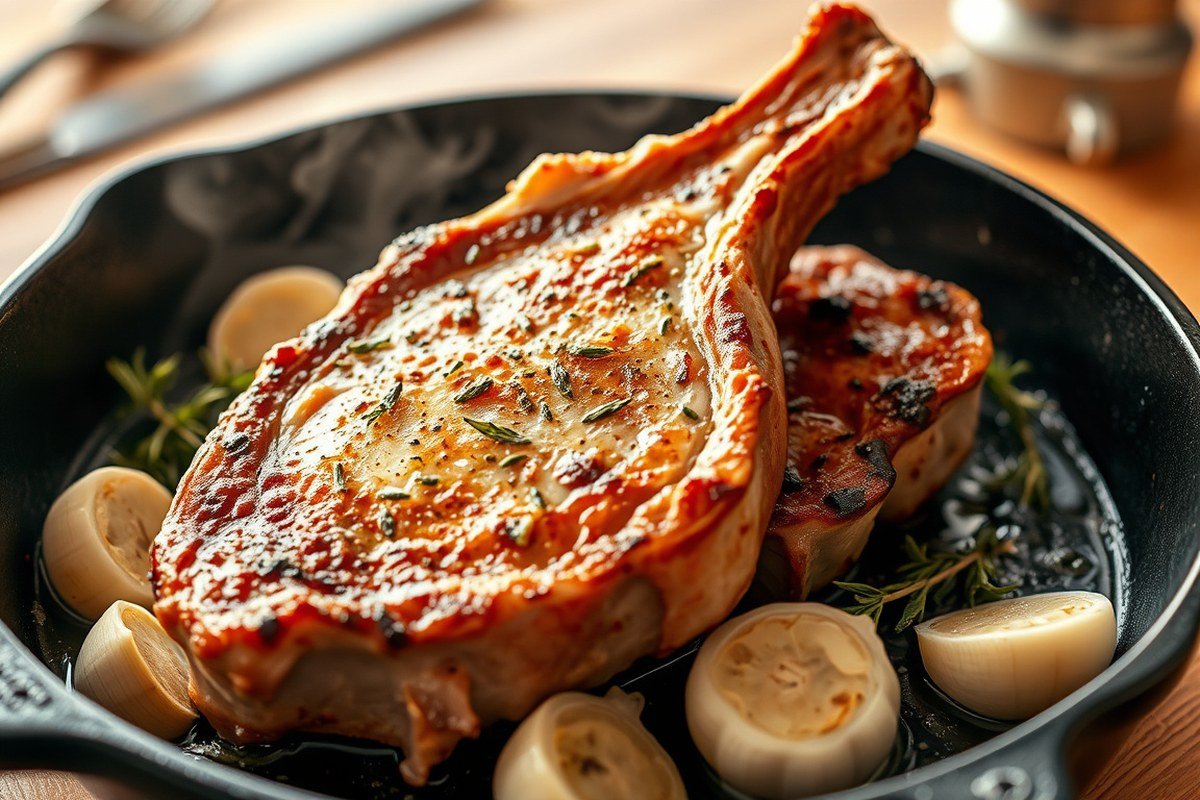
To cook bone in pork chops perfectly, start with thick-cut chops about 1 to 1.5 inches thick and cook them to an internal temperature of 145°F. Use a combination of searing on the stove and baking in a 425°F oven for 18-25 minutes to achieve a juicy center with a golden crust. Rest the chops for at least 3 minutes before serving to retain moisture.
This advice suits home cooks aiming for flavorful, tender pork chops without guesswork. You’ll gain clear timing, seasoning, and cooking method tips that make every bone-in pork chop turn out right.
Key Takeaways
- Choose bone-in pork chops about 1 to 1.5 inches thick for even cooking and better flavor.
- Season or brine chops 30-60 minutes before cooking to improve moisture and taste.
- Sear pork chops in a hot pan 1-2 minutes per side to develop a brown crust before baking.
- Bake chops at 425°F for 18-25 minutes, checking for 145°F internal temperature with a thermometer.
- Flip chops halfway through baking and finish cooking to ensure even heat and doneness.
- Remove chops at 140°F and rest for at least 3 minutes; they’ll reach 145°F while resting.
How to Cook Bone-In Pork Chops to Perfection
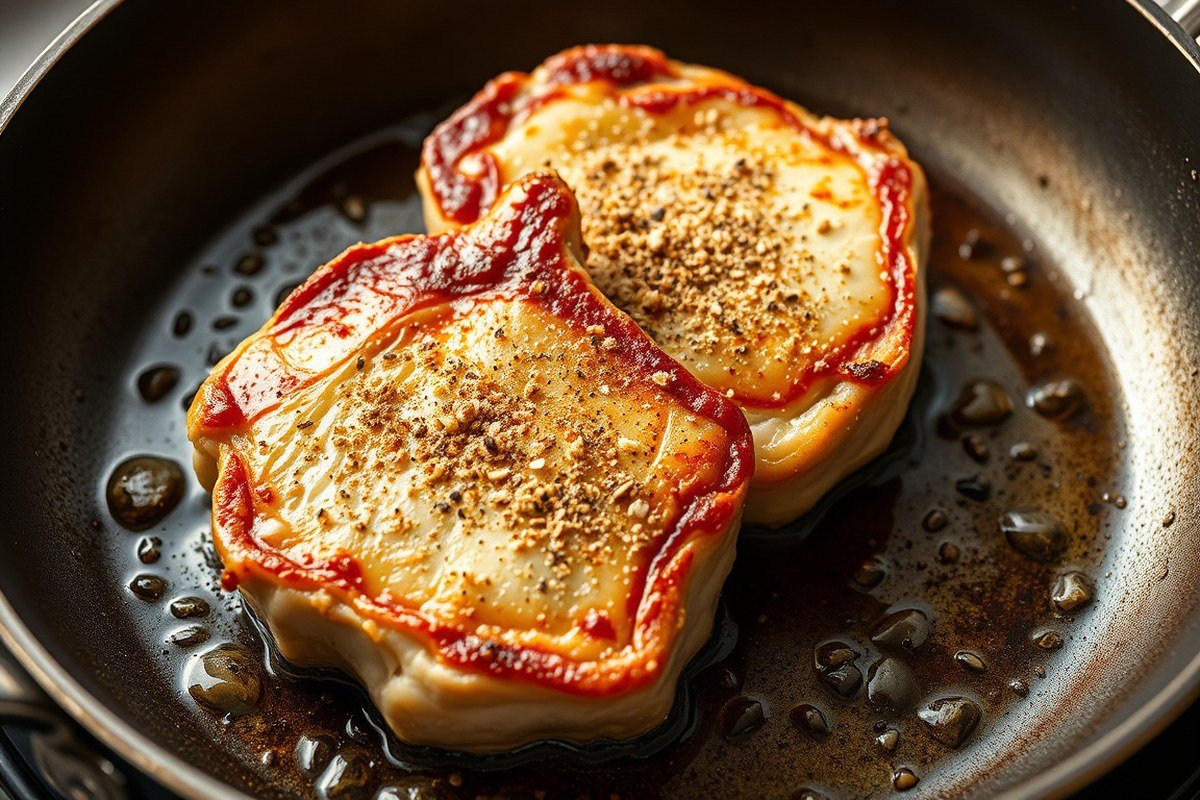
Cooking bone-in pork chops perfectly involves hitting the right internal temperature and timing your steps carefully. The USDA recommends cooking pork chops to 145°F and then letting them rest for at least 3 minutes to ensure safety and juiciness. Searing the chops before baking them at around 425°F helps create a flavorful crust while keeping the inside tender.
You’ll want to start with bone-in pork chops at least 1 inch thick for the best balance of juiciness and cooking time. Searing takes about 3-4 minutes per side on medium-high heat to get good caramelization. After searing, transfer the chops to a preheated 425°F oven and bake them until the internal temperature reaches the 145°F target. The bone slows heat penetration slightly, so use an instant-read thermometer inserted into the meat near but not touching the bone to check doneness.
- Bring chops to room temperature: Take the pork chops out of the refrigerator and let them rest at room temperature for 10-20 minutes before cooking. This helps them cook evenly.
- Preheat your oven: Set your oven to 425°F. This temperature produces nicely caramelized edges without overcooking the interior.
- Sear the pork chops: Heat a heavy skillet on medium-high heat with a tablespoon of oil. Place the chops in the pan and sear for 3-4 minutes until golden brown on one side.
- Flip and sear the other side: Turn the chops and cook another 3-4 minutes until the other side is browned.
- Bake the pork chops: Transfer the skillet or move the chops to a baking dish and place them in the oven. Bake for about 8-10 minutes per ½ inch thickness. For 1-inch thick chops, bake approximately 18-20 minutes.
- Check internal temperature: Use an instant-read thermometer to measure the temperature at the thickest part, away from the bone. The pork chops should read 140°F before removing them from the oven, then rest to reach 145°F.
- Let the pork chops rest: Remove the chops from heat and let them rest for at least 3 minutes. This resting time allows the juices to redistribute and reach the safe final temperature.
| Thickness | Bake Time at 425°F | Sear Time (per side) | Internal Temp (°F) | Rest Time |
|---|---|---|---|---|
| ½ inch | 8-10 minutes | 3-4 minutes | 145°F (final) | 3 minutes |
| 1 inch | 18-20 minutes | 3-4 minutes | 145°F (final) | 3 minutes |
| 1.5 inches | 25 minutes | 3-4 minutes | 145°F (final) | 3 minutes |
Skipping the searing step can lead to less flavorful pork chops without a crust, but you can still bake them fully if you prefer. Cooking times may vary depending on your oven and chop thickness, so always rely on the internal temperature for safety and doneness. Resting the chops after cooking is essential to keep them juicy and tender.
Choosing the Right Bone-In Pork Chop Cut

For the best balance of flavor, juiciness, and cooking control, bone-in pork chops that are between 1 and 1.5 inches thick work best. Thicker chops retain moisture better because the bone helps distribute heat evenly and adds flavor during cooking. Chops thinner than 1 inch tend to dry out quickly and cook unevenly, while those thicker than 1.5 inches need a longer cook time to reach the safe internal temperature of 145°F without burning the exterior.
Leaving the fat trim on your bone-in pork chops is usually a good idea. The fat slowly renders during cooking, adding moisture and flavor. If you trim all the fat, the chop can become dry and less flavorful, especially as the fat insulates the meat near the bone.
| Thickness | Ideal Cooking Time | Flavor and Juiciness | Best Use Case |
|---|---|---|---|
| 1 inch | 6 to 10 minutes (per side varies by method) | Good balance of juiciness and manageable cooking time | Quick searing or pan-frying |
| 1.25 inches | Just under 25 minutes total | Excellent moisture retention, richer flavor from bone | Grilling or oven finishing |
| 1.5 inches | Around 25 minutes total | Maximum juiciness and flavor, requires careful monitoring | Baking, roasting, or slow cooking |
| Less than 1 inch | 4 to 6 minutes total | Less juicy, prone to drying out | Quick cooking only, riskier for dryness |
Exact cook times depend on thickness because thicker chops need longer to reach the safe internal temperature without overcooking the outer edges. The bone acts like a heat sink, distributing heat and slowing down the cooking near it, so the meat stays juicier than boneless chops cooked for the same time. Bringing pork chops to room temperature by removing them from the fridge 30 minutes before cooking helps avoid a cold center and improves even cooking.
Tip: Always use an instant-read thermometer to check that the thickest part of the chop near the bone reaches at least 145°F for safe and juicy results.
Best Seasoning and Brining Techniques for Flavor
Brining bone-in pork chops before seasoning helps keep them juicy and tender, especially for lean, thicker cuts. A simple dry rub that balances salt, herbs, and pepper improve their natural flavor without overpowering it. Aim to brine for about 30 minutes to 2 hours for the best balance of moisture retention and taste.
Brine Recipe and Timing
Brining works by allowing the pork chops to absorb water and salt, which improves moisture retention during cooking. Especially with high-heat methods like grilling or broiling, brining helps prevent dryness. Use a basic brine of water, kosher salt, and optionally sugar and aromatics for flavor. To brine bone-in pork chops:
- Mix 4 cups of cold water with 1/4 cup kosher salt and 2 tablespoons sugar until fully dissolved.
- Add aromatics such as crushed garlic cloves, fresh herbs (rosemary or thyme), or black peppercorns if desired.
- Submerge 4 bone-in pork chops (1 to 1.5 inches thick) fully in the brine using a container or resealable plastic bag.
- Refrigerate the pork chops in the brine for 30 minutes to 2 hours. Avoid longer times to prevent over-salting and a mushy texture.
- Remove the chops from the brine and pat them dry thoroughly with paper towels to ensure proper browning.
Shorter brine times (30, 60 minutes) suit quicker cooking methods and thinner chops, while up to 2 hours works best for very thick chops or grilling. Avoid brining more than 4 hours to protect texture.
Dry Rub and Marinade Options
A well-balanced dry rub adds savory notes and improve crust formation during cooking. For bone-in pork chops, a simple mix of salt, black pepper, garlic powder, and fresh herbs delivers excellent flavor without requiring long marinating time. You can make a dry rub by combining:
- 1 teaspoon kosher salt
- 1/2 teaspoon freshly ground black pepper
- 1 tablespoon minced garlic or garlic powder
- 2 tablespoons chopped fresh rosemary and thyme or 1 tablespoon dried herbs
For extra richness, rub in 2 tablespoons of extra-virgin olive oil before applying the seasoning evenly on both sides. After seasoning, let the chops rest at room temperature for 20 to 30 minutes before cooking to allow the flavors to penetrate.
If you prefer a marinade, combine olive oil, minced garlic, chopped fresh rosemary, thyme, and lemon juice. Marinate the pork chops in the fridge for 1 to 2 hours, then pat dry before cooking.
Seasoning Tips for Bone-In Chops
Patting the pork chops dry is essential for a good sear and crust. Always do this right before seasoning to remove excess moisture. Using kosher salt instead of table salt helps control seasoning better due to coarser grain size.
Apply your dry rub evenly over both sides and around the edges. Let the chops sit on a rack or plate uncovered in the fridge for 30 minutes to 2 hours to dry out the surface. This step improves browning during cooking and locks in flavor.
For extra moisture during cooking, you can cover the chops loosely with foil to create a small steam pocket. This keeps the chop juicier inside while preserving a brown crust outside, especially for chops around a half-inch thick.
Searing vs. Baking: Which Method Suits Your Pork Chops?
You don’t always need to sear bone-in pork chops first, but choosing to sear or bake depends on the texture and flavor you want. Searing adds a flavorful crust and helps lock in juices before finishing the chops in the oven or on the grill. Baking alone is simpler and hands-off but results in a softer outside without that crust.
Advantages of Searing
Searing bone-in pork chops involves cooking them quickly over high heat, usually in a cast-iron skillet, for about 2 to 3 minutes per side. This creates a golden-brown crust that adds texture and a deeper flavor through the Maillard reaction. The crust also helps seal in moisture, reducing the chance of dry pork. Searing is ideal if you want a contrast between a crispy exterior and juicy interior.
Using a cast-iron pan is recommended because it retains heat well and can go from stovetop to oven. After searing, you flip the chops and either finish cooking on the stovetop or transfer to a preheated oven, usually at 400°F, to ensure even cooking without burning the crust. The process takes a bit more attention and time but offers a richer taste and better mouthfeel.
Oven-Baking Alone
Baking bone-in pork chops directly in the oven is the easiest hands-off method. You simply season the chops and place them on a baking sheet or oven-safe pan, cooking at around 375°F to 400°F for 20 to 30 minutes depending on thickness. This method gently cooks the meat throughout, producing tender chops without the crust searing creates.
Baking alone is great for beginners or when you want minimal cleanup because it doesn’t require flipping or watching a hot pan. The drawback is it lacks the caramelized flavor and texture of seared chops and can sometimes produce a softer, less interesting exterior. Resting the chops after baking for about 5 to 10 minutes helps redistribute juices and retain moisture.
Combining Both Methods
The sear-roasting method combines the best of both worlds: flavor from searing and even cooking from baking. Start by heating a cast-iron skillet until very hot, then sear each side of the chop for about 3 minutes until golden brown. Flip once more, then move the skillet into a preheated 400°F oven to finish cooking the chops through.
This approach is especially good for thick bone-in chops, roughly 1 to 1.5 inches thick. The sear locks in flavor and juices, while the oven cooks the inside gently and evenly. After removing from the oven, let the chops rest for 3 to 5 minutes before serving to maximize juiciness. This method takes more effort but offers superior taste and texture.
Grilling Bone-In Chops
Grilling is another popular method that naturally sears the pork chops while imparting smoky flavors from the open flame. Preheat the grill to medium-high, about 400°F to 450°F, and cook the chops for roughly 4 to 6 minutes per side depending on thickness. Avoid moving the chops too much to develop grill marks and crust.
Grilling requires attention to avoid flare-ups or overcooking, but it lets you cook outdoors without heating your kitchen. The smoky flavor and slightly charred exterior from the grill create an appealing taste and texture different from stovetop searing or oven baking. Rest chops a few minutes before serving to keep them juicy.
| Method | Typical Temperature | Time per Side | Key Benefit | Considerations |
|---|---|---|---|---|
| Searing | Very hot pan (~400°F) | 2-3 minutes | Golden crust, flavor boost | Needs cast-iron skillet, hands-on |
| Baking | 375°F-400°F oven | 10-15 minutes per side or 20-30 total | Hands-off, tender pork | No crust, less flavor contrast |
| Sear then Bake | 400°F oven after searing | 3 min sear + 5-10 min bake | Best flavor & even cooking | More time, uses oven & stove |
| Grilling | 400°F-450°F grill | 4-6 minutes | Smoky flavor, charred crust | Watch for flare-ups, outdoor |
Choosing the right method depends on the equipment you have, the time you’re willing to spend, and the kind of flavor and texture you prefer. Searing first adds complexity and juiciness, baking alone keeps things simple, combining both delivers a premium result, and grilling offers distinctive smoky tastes.
How to Tell When Bone-In Pork Chops Are Done
To know when bone-in pork chops are done, rely primarily on their internal temperature. The USDA recommends cooking pork to a minimum internal temperature of 145°F to ensure safety. This temperature guarantees that harmful bacteria are destroyed while keeping the pork tender and juicy. Unlike poultry that changes color dramatically when done, pork chops may still show a slight pink color at 145°F, which is safe and normal.
Use a meat thermometer designed for instant read to check doneness. Insert the probe into the thickest part of the chop, avoiding the bone since it heats differently. Wait about 10 seconds for an accurate reading before pulling the chop from the heat. Bone-in chops generally take a bit longer to cook than boneless, so start checking closer to the end of your estimated cooking time. For example, if a recipe suggests 12 minutes total, check the temperature after 10 minutes to avoid overcooking.
Visual cues alone are not reliable for bone-in pork chops. The pinkish hue can persist even at safe temperatures, and the outside browning does not guarantee doneness inside. Touch tests like pressing the chop and comparing its firmness to the fleshy part of your palm can give rough guidance but are less accurate than using a thermometer. Touch tests require some experience and differ with chop thickness and cooking method. For consistent results, temperature measurement is the safest choice.
A good rule of thumb is: once the thermometer reads 145°F, remove the pork chops from the heat and let them rest for 3 to 5 minutes. Resting allows juices to redistribute, increasing juiciness and making the meat easier to slice. During this time, the temperature can rise an additional few degrees due to residual heat, so avoid leaving the pork on the heat past 145°F to prevent overcooking and dryness.
Decision checklist: Use a clean instant-read thermometer. Insert it in the thickest part of the meat, avoiding the bone. Wait for a steady reading of 145°F or higher. Remove from heat immediately. Let rest for 3 to 5 minutes before serving. Do not rely solely on color or feel, especially if you have limited experience.
Always check the temperature near the bone but avoid placing the thermometer directly against it to ensure an accurate reading of the meat’s doneness.
Resting and Serving to Maximize Juiciness
Letting bone-in pork chops rest for about 5 to 10 minutes after cooking is essential to keep them juicy and flavorful. Resting allows the meat fibers to relax and the juices, which move toward the center during cooking, to redistribute evenly throughout the chop. Cutting into the pork chop too soon causes these juices to spill out onto the plate, leaving the meat dry and less tender.
To rest your pork chops properly, remove them from the heat source once they reach an internal temperature of 145°F, as recommended for safety. Place the chops on a warm plate or cutting board. To keep them warm, tent them loosely with aluminum foil. This traps some heat without causing the meat to steam, which can alter the texture. Avoid wrapping tightly, which can make the crust soggy.
During the resting period, the temperature of the pork chops will continue to rise by a few degrees, finishing the cooking gently without drying out. Use a kitchen timer or clock to keep track, 5 minutes is usually enough, though thicker chops benefit from up to 10 minutes of rest. Thinner chops may need only about 3 to 5 minutes since they lose heat faster.
Skipping or shortening resting time often leads to a noticeable loss of moisture, making pork chops tougher and less enjoyable to eat. The cost of resting is just a few minutes of patience but offers a more tender, juicy result. While the pork is resting, you can prepare side dishes or spoon melted butter or pan juices over the meat to improve flavor before serving.
In a busy kitchen, you can rest the chops in a preheated oven set to 140°F to keep them warm without further cooking. Another option is to place them near the stove where residual heat stays consistent. Avoid putting them directly on a hot pan or grill, as this will cause overcooking on the outside.
To sum up, rest your bone-in pork chops for at least 5 minutes after cooking by removing them from heat and covering them loosely with foil. This small step makes a noticeable difference by locking in the natural juices, making every bite moist and tender. Waiting that short time costs very little effort but greatly improves the eating experience.
Avoiding Common Mistakes That Dry Out Pork Chops
Oven-baked pork chops can become dry because heat does not evenly spread through the meat, or because they cook too long. Moisture leaves the chop when the heat is too high or the pork is thin. Knowing how the bone changes the way heat moves through the meat helps prevent overcooking. Different parts of the chop near the bone cook at different rates, so using just the clock is not always reliable.
Using a meat thermometer is a major step toward avoiding overcooking, but it’s not enough by itself. You must know the right internal temperature to aim for, 145ºF according to the USDA, and check the meat in the thickest part away from the bone. Even then, factors like resting time and oven consistency affect juiciness. The thermometer reading should be taken promptly when the pork reaches 145ºF, then you must remove the chops and let them rest to retain juices.
Uneven heat can come from placing pork chops too close to the oven’s heat source or baking uncovered without adjusting timing. Thin chops finish cooking quickly, so reduce baking time by 4 to 5 minutes compared to thicker cuts to prevent drying out. Also, pat pork chops completely dry with paper towels before cooking. Excess surface moisture steams the meat instead of searing it, which can make textures less appealing. Careful preparation and monitoring minimize the common errors that strip moisture from pork chops. Here are necessary actions to prevent dry, overcooked chops:
- Choose chops at least 1 inch thick to maintain moisture during cooking
- Pat pork chops dry before seasoning and cooking
- Use an instant-read thermometer and target exactly 145ºF in the thickest part
- Adjust baking time for thinner chops by cutting 4, 5 minutes early
- Bake uncovered but avoid placing chops too close to heating elements
- Remove chops from heat immediately when done and rest for at least 3 minutes
- Use consistent oven temperatures, ideally 350ºF to 375ºF
Following these steps helps you cook juicy bone-in pork chops. Skipping drying or misreading doneness can turn a flavorful cut dry or chewy. Using a thermometer combined with careful attention to chop thickness and baking times will give you better control and tastier results every time.
Comparing Cooking Methods for Bone-In Pork Chops
Each cooking method for bone-in pork chops offers different results in moisture retention, flavour, and texture. Baking, grilling, searing, and braising all require varying equipment and time, so choosing the right one depends on what you want in the finished dish and how much hands-on time you have.
Oven Baking Details
Baking bone-in pork chops in the oven provides even and gentle heat, making it easier to cook the chops through without drying them out. To bake, preheat your oven to 375°F. Place chops on a baking sheet or in a shallow pan and cook for 20 to 30 minutes, depending on thickness. Use a meat thermometer to reach an internal temperature of 145°F, then let rest for 3 minutes.
Baking retains moisture well because the enclosed environment reduces evaporation. It requires only basic kitchen equipment like an oven and baking pan. If you bake at temperatures too high or too long, the meat can become dry and tough, so timing matters.
Grilling Tips
Grilling bone-in pork chops imparts a smoky flavor and attractive grill marks. Use a gas or charcoal grill preheated to medium-high (about 400°F). Cook chops over direct heat for 4 to 5 minutes per side until the internal temperature hits 145°F.
Grilling cooks quickly but has a greater risk of drying the meat if left too long. Frequent flipping and using a meat thermometer reduce this risk. Grilling demands outdoor space and equipment, making it less convenient for some home cooks.
Searing and Pan Cooking
Searing bone-in pork chops in a hot skillet locks in juices by creating a crust. Heat a heavy pan with a tablespoon of oil over medium-high heat until shimmering. Sear chops for 3 to 4 minutes per side until golden brown, then reduce heat and cook an additional 5 to 8 minutes to finish through. Use a lid to keep moisture in.
This method gives a flavorful exterior but requires attention to avoid burning or undercooking. It uses easily accessible equipment like a stovetop and skillet. Moisture retention depends on timing and heat control.
Braising for Tenderness
Braising involves cooking bone-in pork chops slowly in liquid at low heat, which breaks down connective tissue and keeps meat moist. Brown chops in a pan, then add broth or sauce and simmer covered for 45 minutes to an hour at 300°F in a Dutch oven or covered pan.
This method yields very tender pork chops but takes longer and requires extra ingredients and cookware. It’s ideal for tougher cuts or when you want a richer sauce with the meat.
The table below sums up each method’s typical temperature, cook time, equipment needs, and moisture retention characteristics. Use this to match your schedule and kitchen setup to the best method for your meal.
| Cooking Method | Typical Temperature | Time Range | Equipment Needed | Moisture Retention |
|---|---|---|---|---|
| Oven Baking | 375°F (190°C) | 20, 30 minutes | Oven, baking pan | High (gentle, even heat) |
| Grilling | 400°F (204°C) | 8, 10 minutes total | Gas or charcoal grill | Moderate (risk of drying) |
| Searing and Pan Cooking | Medium-high stove heat | 10, 15 minutes | Skillet, stovetop | Moderate (depends on timing) |
| Braising | 300°F (149°C) oven or stovetop simmer | 45, 60 minutes | Covered pan or Dutch oven | Very high (slow cooking in liquid) |
Choosing between these methods means balancing your time, desired flavour, moisture, and available equipment. Oven baking is the most forgiving for beginners, while grilling adds quick smoky flavor. Pan searing offers a crispy crust and moderate juiciness, and braising ensures very tender meat but needs more time.
Practical tip: Always use a meat thermometer to avoid overcooking bone-in pork chops, keeping them juicy and safe to eat without guesswork.
Step-by-Step Action Plan for Cooking Bone-In Pork Chops
Follow these clear steps to cook juicy, flavorful bone-in pork chops every time.
- Before Cooking: Choose pork chops about 1 to 1½ inches thick for best results. Look for a fresh pink color and a good bone length to add flavor while cooking.
- 1 Hour Before Cooking: Brine your pork chops in a solution of ¼ cup salt per 4 cups water for 30 minutes to 1 hour. This keeps the meat tender and juicy.
- 15 Minutes Before Cooking: Pat the chops dry and season with your favorite spices or a simple blend of salt, pepper, and garlic powder. Dry meat sears better.
- Searing Phase: Heat a skillet over medium-high heat with a tablespoon of oil. Sear the chops 2 to 3 minutes per side until golden brown to lock in juices.
- Baking Phase: Transfer seared chops to a preheated oven at 375°F and cook for 8 to 12 minutes depending on thickness. Use a meat thermometer to reach an internal temperature of 145°F.
- Resting Phase: Remove chops from the oven and cover loosely with foil. Let them rest 5 minutes to allow juices to redistribute.
- Serving: Serve immediately after resting with preferred sides. The chops should be warm, tender, and juicy.
Frequently Asked Questions
Can You Cook Bone-In Pork Chops from Frozen?
Yes, but you should thaw them first for even cooking and better texture. Cooking from frozen can lead to uneven doneness and longer cooking times.
Is It Better to Marinate Bone-In Pork Chops Overnight?
Marinating overnight improve flavor and tenderness more effectively than a short soak. Aim for at least 4 hours, but avoid acidic marinades longer than 24 hours to prevent mushy meat.
How Do You Prevent Bone-In Pork Chops from Sticking to the Pan?
Preheat the pan and use enough oil or fat before adding chops. When the chops release easily, it’s time to flip. Avoid moving them too soon to develop a good sear.
What Side Dishes Pair Well with Bone-In Pork Chops?
Classic sides include roasted vegetables, mashed potatoes, or apple sauce, which complement the pork’s rich flavor. Pick sides that absorb or balance the chop’s juices.
Can You Use a Slow Cooker for Bone-In Pork Chops?
Yes, slow cooking yields tender pork chops but may reduce the crispiness of the exterior. Use low heat for 4-6 hours, and consider searing before slow cooking for better texture.
Should You Baste Bone-In Pork Chops While Cooking?
Basting helps keep pork chops moist, especially during pan-frying or grilling. Use pan juices or a bit of melted butter, applying every few minutes for juicier results.
Before You Go
Perfectly cooked bone-in pork chops combine the right cut, proper seasoning, precise cooking time, and resting to keep them juicy and flavorful. Start with well-brined meat and use a thermometer to avoid under- or overcooking. Your next step is to pick up good-quality bone-in pork chops and try this method today for a single-serving dinner or a family meal that everyone will enjoy.





2 Comments