How to Bake Pork Chops Perfectly Every Time: A Simple Guide
Baking pork chops involves cooking them at a moderate temperature in the oven until they reach a safe internal temperature of 145°F, ensuring they are juicy and flavorful. To get tender results, start by seasoning or marinating the pork chops, then bake uncovered for about 20-30 minutes depending on thickness.
This method helps pork chops retain moisture and develop a nice crust without the need for frying, making it a healthier option and easier cleanup. Knowing the proper baking time and temperature is key to avoid dry or overcooked meat.
This article will cover the essential steps for baking pork chops, including preparation tips, oven temperature recommendations, different seasoning ideas, and how to know when they're done. You’ll also find comparisons of various pork chop cuts to help tailor the baking process.
Preparing Pork Chops for Baking

Choosing the Right Cut of Pork Chops
Pork chops come in several cuts such as bone-in rib chops, boneless loin chops, and center-cut chops. Bone-in chops tend to have more flavor and stay moister while boneless ones cook more evenly and faster. Thickness usually ranges from ½ inch to 1 inch, affecting cooking time.
Selecting chops about ¾ to 1 inch thick provides a good balance between tenderness and ease of cooking. Thicker chops require longer baking times to reach proper doneness without drying out, so thickness plays an important role in baking strategy.
Seasoning and Marinating
Before baking, seasoning pork chops with salt, pepper, herbs, and spices enhances flavor and helps form a tasty crust. Marinades can include ingredients like olive oil, garlic, lemon juice, and soy sauce for added moisture and taste.
For best results, pat the pork chops dry before applying dry rubs or marinades, and let them rest for at least 15 minutes or up to 2 hours in the fridge. This allows flavors to penetrate without making the surface soggy.
- Dry rub with paprika, garlic powder, and thyme
- Simple marinade with olive oil, garlic, and lemon juice
- Avoid excessive salt before baking to prevent dryness
Baking Techniques and Oven Settings

Best Oven Temperature for Pork Chops
Baking pork chops at 375°F strikes a good balance, cooking the meat thoroughly while allowing enough time for a golden crust to form. Temperatures lower than 350°F tend to dry out the meat, while higher than 400°F may risk burning before the inside is fully cooked.
Using a moderately hot oven enables even cooking throughout the chop without losing moisture. Depending on thickness, chops generally need between 20 to 30 minutes at 375°F.
- Preheat oven to 375°F (190°C)
- Avoid opening the oven frequently to maintain temperature
- Use a meat thermometer to check doneness
For more on this, see our related guide: How to Cook Thick Cut Pork Chops Perfectly: Best Methods and Tips.
Baking Methods: Covered vs. Uncovered
Baking pork chops uncovered helps develop a crisp surface and browning, enhancing flavor and texture. You can place chops on a wire rack over a baking sheet to allow heat circulation and fat drainage.
Covering chops with foil traps steam and increases moisture, producing softer edges but potentially less crust. For juicier meat, start covered then finish uncovered for the last 5-10 minutes.
- Uncovered for crispy edges
- Covered for tender, steamed texture
- Combination: cover then uncover near finish
Checking for Doneness
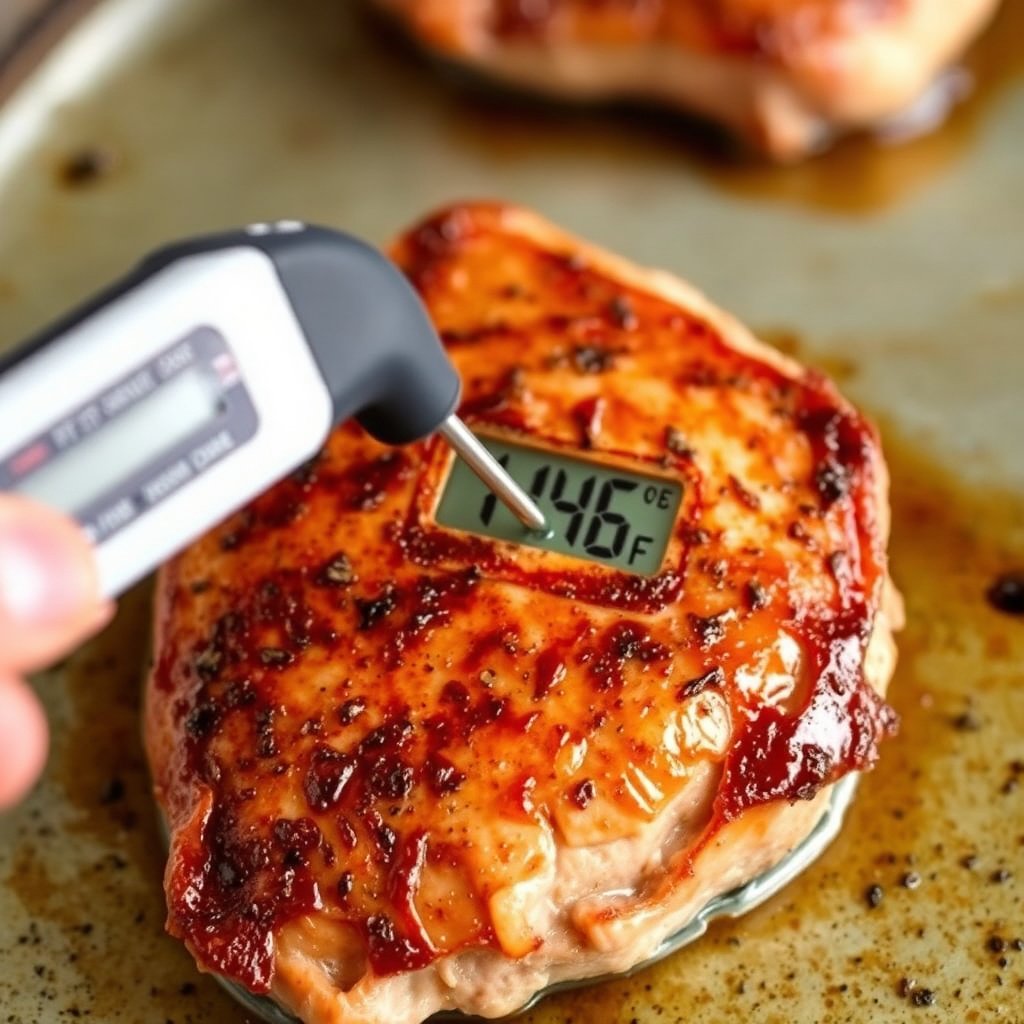
Using a Meat Thermometer
The most reliable way to check pork chop doneness is a meat thermometer. Insert it into the thickest part of the chop without touching bone. When the internal temperature reaches 145°F, remove the pork chops from the oven.
This temperature guideline aligns with USDA recommendations for safe pork consumption while keeping the meat juicy. Overcooking pork chops beyond 160°F risks dryness and toughness.
- Insert thermometer horizontally into chop center
- Remove from oven immediately at 145°F
- Let chops rest for 3-5 minutes before slicing
Visual and Texture Cues
If a thermometer isn’t available, look for firm but springy texture and absence of pink near the bone. Fully cooked pork chops will have opaque white meat juices when pierced with a fork.
Cut into one chop to test, especially if cooking multiple chops varying in thickness. Consistent color and firm, moist texture indicate doneness.
Flavor Enhancements and Serving Suggestions

Popular Seasoning Combinations
Classic pairings for baked pork chops include garlic powder, paprika, onion powder, black pepper, and rosemary. Sweet and savory glazes like honey mustard or apple cider vinegar-based sauces add complexity.
Herbs like thyme, sage, and oregano complement the natural pork flavor while spice blends can introduce warmth without overpowering. Experiment with dry rubs or finishing sauces to keep meals exciting.
- Garlic and herb rub with thyme and rosemary
- Spicy Cajun or smoked paprika rubs
- Sweet glaze with honey or maple syrup
For more on this, see our related guide: How to Cook Bone in Pork Chops Perfectly: Timings, Tips, and Methods.
Side Dishes That Pair Well
Baked pork chops go well with roasted vegetables, mashed potatoes, steamed greens, or a simple side salad. The savory richness of pork complements fresh, bright flavors and hearty starches.
Consider quick-roasted root veggies or a tangy coleslaw for contrast. Properly baked chops also pair nicely with apple sauce or cranberry relish for a traditional touch.
Troubleshooting Common Issues

Preventing Dry or Overcooked Pork Chops
Dry pork chops often result from overbaking or baking at too high a temperature. Using a meat thermometer is the best prevention. Also, letting chops rest after baking helps redistribute juices and improves moisture.
Thinner chops cook quickly and should be checked earlier. Avoid overcrowding the pan as this traps steam and prevents crusting.
- Don’t exceed recommended cooking time
- Use a thermometer rather than guessing
- Rest chops for 5 minutes before slicing
For official guidance on safe pork cooking temperatures and handling, refer to USDA pork chop cooking guidelines. pork chop cooking guidelines.
Salvaging Tough or Flavorless Chops
If chops come out tougher than expected, slicing thinly against the grain before serving can help improve tenderness. Adding sauces or gravies boosts moisture and flavor.
Next time, try marinating longer or choosing bone-in cuts for better flavor and texture. Avoid salt-heavy rubs that draw moisture out prematurely.
Pork Chop Cuts Comparison for Baking
This table highlights the differences between common pork chop cuts to guide your baking choices based on flavor, cooking time, and moisture retention.
| Cut Type | Bone-in or Boneless | Flavor Level | Recommended Thickness | Average Bake Time at 375°F |
|---|---|---|---|---|
| Rib Chop | Bone-in | High | 1 inch | 25-30 minutes |
| Loin Chop | Boneless | Medium | ¾ inch | 20-25 minutes |
| Center-cut Chop | Bone-in | High | 1 inch | 25-30 minutes |
| Sirloin Chop | Bone-in | Medium | ¾ inch | 20-25 minutes |
Frequently Asked Questions
Can I bake frozen pork chops?
Baking pork chops from frozen is possible but requires about 50% longer cooking time. Use a meat thermometer to confirm they reach 145°F internally to guarantee safety and juiciness.
Should I cover pork chops while baking?
Covering pork chops traps steam, keeping them moist but preventing browning. For a crispy crust, bake uncovered or remove foil for the last 5-10 minutes of cooking.
How do I prevent pork chops from sticking to the pan?
Coat the baking sheet or rack lightly with oil or use parchment paper. Let chops come to room temperature before baking to minimize sticking.
Is it better to marinate before or after baking pork chops?
Marinating before baking infuses flavor and moistens the chops. Marinating after doesn’t penetrate well and can leave an unappetizing surface.
What is the safe internal temperature for baked pork chops?
The USDA recommends pork chops reach a minimum internal temperature of 145°F, followed by a 3-minute rest period to ensure safety and juiciness.
Key Takeaways
- Bake pork chops at 375°F for juicy, tender results.
- Use a meat thermometer to check for 145°F doneness.
- Season or marinate before baking for enhanced flavor.
- Choose bone-in or boneless cuts based on preference.
Conclusion
Figuring out how to bake pork chops successfully comes down to balancing temperature, timing, and preparation. Paying attention to cut thickness and seasoning affects both flavor and texture significantly. Using a moderate oven temperature around 375°F allows the chops to cook evenly while staying moist. The key is stopping baking as soon as they reach an internal temperature of 145°F to prevent dryness. Resting the meat after baking locks in juices and finalizes tenderness.
For those seeking convenience, boneless loin chops bake quickly and work well for weeknight dinners, while bone-in rib or center-cut chops provide extra flavor and remain juicy longer when baked properly. Utilizing dry rubs or simple marinades transforms basic pork chops into a meal with character. When in doubt, combining practices like starting covered and finishing uncovered offers a nice balance of moisture retention and crust formation. Side dishes ranging from roasted vegetables to fresh salads round out the experience beautifully.
Next time you plan a pork chop dinner, set your oven to 375°F, season thoughtfully, and use a meat thermometer to time your bake. This straightforward approach delivers consistently delicious results without fuss. Experiment with cuts and flavors to find your favorite baking style, and enjoy every juicy, tender bite with confidence.