Your Guide to Microwave With Vented Range Hood: Choosing With Confidence
Many people struggle with finding the right microwave with a vented range hood that fits their kitchen and meets their needs. You’re not alone—choosing the perfect combo can feel overwhelming with so many options out there.
You’ll want a microwave with a vented range hood that fits your kitchen perfectly, improves air quality, and matches your style. Measure your space carefully and decide between recirculating or external venting based on your setup.
Look for quiet operation, efficient filters, and easy maintenance to keep cooking comfortable and clean.
Consider popular brands for reliability, too. Keep exploring to uncover more tips on selecting the ideal microwave vent hood to boost both function and design.
Key Takeaways
- Choose a microwave with a vented range hood that fits accurately within cabinet dimensions for seamless installation and optimal performance.
- Decide between recirculating or external ducting based on your ventilation needs, installation complexity, and maintenance preferences.
- Make sure the microwave vent hood is installed 13 to 24 inches above the cooktop to maximize smoke and odor removal efficiency.
- Look for models with efficient filters, quiet operation, and compatible airflow capacity to improve your kitchen air quality and comfort.
- Match the vent hood’s style and brand with your kitchen’s aesthetics and trusted manufacturers for durability and visual harmony.
Why Choose a Microwave With a Vented Range Hood?
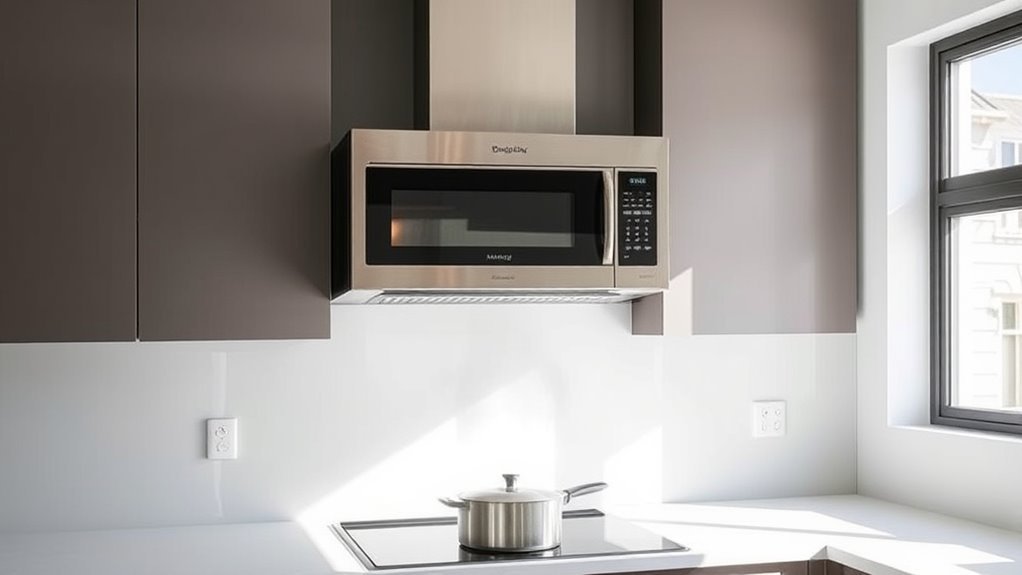
Why should you choose a microwave with a vented range hood? It combines energy efficiency with better cooking performance by effectively removing smoke, steam, and odors.
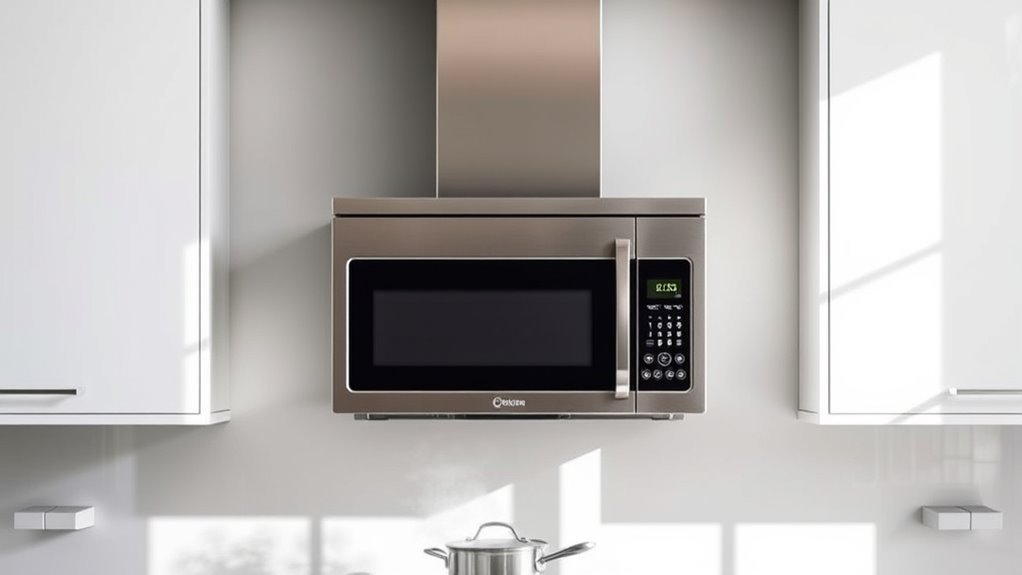
This space-saving design is perfect if you want to maximize your kitchen’s layout without losing functionality. Plus, the sleek look of a built-in vented microwave really enhances your cooking area.
Before making a decision, consider installation complexity. Some models might need professional help, while others are easier to install yourself.
Keep installation complexity in mind—some microwaves require professional help, while others are simple enough for DIY setup.
Checking user reviews can give you real-world insights into reliability and satisfaction. Conduct a feature comparison to find one that fits your cooking needs, like fan speeds and lighting options.
Don’t forget to consider brand reliability. Trusted manufacturers often offer better warranties and customer support.
Choosing the right microwave means getting a unit that’s efficient, stylish, and dependable. It’ll improve both your kitchen’s look and your cooking experience.
Measuring Your Space for a Microwave Vent Hood Combo
Before you decide on a microwave vent hood combo, it’s a good idea to measure the space where you plan to install it. Make sure to check the available cabinet space carefully so everything fits just right.
Also, don’t forget about the ventilation clearance requirements. These are really important for safety and to make sure your vent hood works efficiently.
Taking the time to get accurate measurements now will save you a lot of trouble during installation. It’s worth the extra effort to avoid any surprises later on!
Assessing Available Cabinet Space
To guarantee your microwave vent hood fits perfectly, start by measuring the width, height, and depth of the cabinet space where you plan to install it. Knowing your cabinet dimensions ensures you pick a unit that fits without forcing or leaving awkward gaps. Use a tape measure for precise numbers, and note any irregularities like trim or molding that could affect installation.
Next, think about space optimization. Consider how the microwave vent hood lines up with nearby cabinets and appliances to keep the look cohesive. If your cabinet space is tight, look for models designed with compact dimensions or adjustable features. Doing this careful assessment now can save you from costly adjustments later and help you choose a vent hood that blends seamlessly into your kitchen.
Considering Ventilation Clearance Requirements
Although cabinet dimensions are essential, you’ll also need to carefully measure the ventilation clearance requirements to confirm your microwave vent hood combo functions properly. Different ventilation types, like recirculating or ducted systems, have specific clearance guidelines you must follow.
For ducted systems, make sure there’s enough space above and behind the microwave for the ductwork to vent outside. Recirculating models require clearance for charcoal filters and air circulation within the cabinet.
Always check the manufacturer’s clearance guidelines to avoid installation issues or reduced performance. Measuring the height between the cooktop and the bottom of the microwave, plus available cabinet depth, helps you choose a model that fits comfortably while meeting ventilation needs.
Proper clearance guarantees effective airflow and prevents overheating, keeping your kitchen safe and your microwave vent hood working efficiently.
Microwave Vented Range Hood Ventilation: Recirculating vs. External
How does your microwave vented range hood handle smoke and odors? It either recirculates air through filters or vents it outside using ducting. Recirculating models pull air through charcoal or carbon filters to trap grease and odors, then release the cleaned air back into your kitchen.
Microwave vented range hoods either filter and recirculate air or vent smoke and odors outside.
They’re easier to install because they don’t need ductwork. This makes them a good choice if your kitchen layout limits venting options. But remember, the filters need regular replacement to keep them effective.
On the other hand, microwaves with external ducting vent air outside your home. This removes smoke, odors, and moisture completely. It provides stronger ventilation and better air quality.
However, installing external ducting can be more complex and costly. If you want a powerful, long-term solution and your kitchen allows it, external ducting is usually the better option for keeping your space fresh and free of lingering smells.
What Noise Levels to Expect From Different Microwave Range Hoods?
Microwave range hoods generally make noise somewhere between 40 and 70 decibels, but it really depends on the specific model. Things like how fast the fan is running, the quality of the motor, and the type of vent all play a part in how loud it gets.
Knowing what kind of noise level to expect can actually help you pick a hood that matches your kitchen’s vibe and your tolerance for sound. So, if you’re someone who likes a quiet kitchen, it’s worth paying attention to those noise specs before making a decision.
Typical Decibel Ranges
Everyone has different noise tolerance levels, but understanding typical decibel ranges can help you choose a microwave vented range hood that fits your comfort zone. Most models operate between 40 and 70 decibels, where 40 dB is roughly the sound of a quiet library and 70 dB compares to a busy restaurant.
If you prefer quieter kitchens, look for units that emphasize noise reduction features and improved sound insulation. These designs help minimize operational noise, making cooking more pleasant.
Louder models may be more powerful but can disrupt conversations or concentration. By focusing on decibel ratings and noise control technologies, you can confidently pick a microwave vented range hood that balances performance with a noise level you’re comfortable with.
Factors Affecting Noise
Understanding typical decibel ranges gives you a good starting point, but many factors can influence the actual noise levels you’ll experience from microwave vented range hoods.
One big factor is fan speed. Higher speeds tend to make more noise, while lower speeds are generally quieter. If you want a quieter kitchen, look for models with advanced noise reduction features—they can really help cut down the sound.
The design and quality of the fan motor also matter. Premium motors tend to run smoother and quieter, which makes a big difference. How the unit is installed and secured can also impact vibrations and overall noise levels.
When choosing a range hood, think about how often you’ll need high fan speeds. Prioritize models with good noise reduction technology to balance performance with a quieter kitchen environment.
Key Features That Improve Microwave Vent Hood Performance
Several key features can really boost your microwave vent hood’s performance, keeping your kitchen cleaner and more comfortable. You want a high filter efficiency to trap grease and odors effectively.
Fan capacity is important because it determines how well the hood removes smoke and steam. Look for models with flexible installation options that fit your kitchen layout.
Noise reduction is another key factor since a quieter fan makes cooking more enjoyable. Easy maintenance also matters, making cleaning and upkeep simpler.
Here’s a quick overview:
| Feature | Benefit |
|---|---|
| Filter Efficiency | Captures grease and odors |
| Fan Capacity | Removes smoke and steam quickly |
| Installation Options | Fits different kitchen layouts |
| Noise Reduction | Operates quietly |
| Easy Maintenance | Simplifies cleaning and upkeep |
Prioritize these features to get a microwave vent hood that works hard without disrupting your kitchen’s calm.
What to Know About Installing Your Microwave Vent Hood
Before you start installing your microwave vent hood, it’s a good idea to get familiar with the ventilation requirements. This will help ensure you have the right airflow and that everything works just as it should.
Next, take the time to measure the space where you plan to install the hood. You want to make sure it fits perfectly without any surprises.
Following these simple steps can help you steer clear of common installation issues and keep your kitchen running smoothly.
Ventilation Requirements Explained
When you install a microwave vent hood, it’s important to ensure proper ventilation to keep your kitchen air clean and safe. Knowing the different ventilation types is key because they impact air circulation, odor removal, and moisture control.
Most microwave vent hoods either vent air outside or recirculate it through filters. Picking the right system depends on your kitchen layout and what you need from your ventilation.
Keep these points in mind:
- Ducted ventilation moves air outdoors, providing better air quality.
- Ductless ventilation uses charcoal filters to clean and recirculate air inside.
Make sure your vent hood’s airflow capacity matches your cooking habits. This helps keep air moving effectively.
Proper ventilation prevents grease buildup and keeps your kitchen comfortable to work in.
Installation Space Considerations
Choosing the right ventilation system is just one part of the process. You also need to think about the space where you plan to install your microwave vent hood.
Start by measuring the area carefully to ensure the unit fits without crowding nearby cabinets or countertops.
Pay close attention to the mounting height. Most manufacturers recommend installing the microwave vent hood 13 to 24 inches above the cooktop for optimal performance and safety.
Next, verify if the appliance is compatible with your kitchen layout. Check whether the size and venting options match your existing ductwork or if you’ll need to make modifications.
Considering these factors early on can help you avoid costly adjustments later. This way, your microwave vent hood will work efficiently and blend seamlessly into your kitchen’s design.
How Airflow Affects Your Kitchen’s Air Quality
Although you might not always notice it, proper airflow plays a key role in keeping your kitchen’s air quality good. When you’re cooking, indoor pollutants like smoke, grease, and odors can build up quickly.
Understanding how airflow works helps you manage these contaminants better. A microwave with a vented range hood pulls out stale air and replaces it with fresh air, keeping your kitchen comfortable and healthy.
Here’s what good airflow does for your kitchen:
- Removes airborne particles and harmful gases, which can help reduce respiratory irritants.
- Prevents lingering odors that could spread to other parts of your home.
- Controls humidity levels, stopping mold and mildew from growing.
Matching Your Microwave Vent Hood Style to Your Kitchen Design
Good airflow keeps your kitchen fresh, but the look of your microwave vent hood also affects the overall feel of your space. To keep everything looking great, focus on matching appliances and coordinating colors.
Choose a vent hood that complements your cabinets, countertops, and backsplash to enhance your kitchen’s style. Whether your kitchen is modern, traditional, or rustic, pick materials and finishes that blend seamlessly with what you already have.
Material choices matter—stainless steel gives a sleek, contemporary vibe, while matte black offers an industrial feel. Make sure the vent hood fits proportionally and doesn’t disrupt the visual balance of your kitchen.
Aligning your microwave vent hood with your overall design creates a cohesive, polished look that feels intentional. This thoughtful approach boosts both function and the overall appeal of your cooking space.
Top Brands and Models of Microwaves With Vented Range Hoods
When you shop for microwaves with vented range hoods, you’ll find several top brands that combine powerful ventilation with reliable cooking performance. These models offer excellent microwave efficiency while enhancing your kitchen’s design aesthetics. Choosing the right brand means you get a unit that fits your cooking needs and complements your style.
Here are three standout options to evaluate:
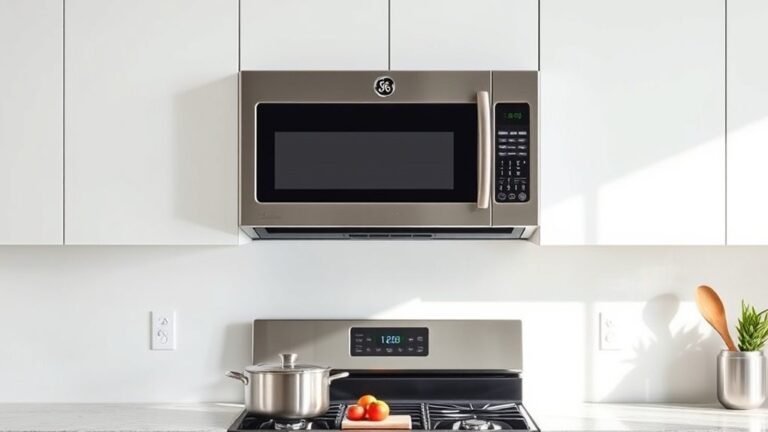
- GE Profile Series: Known for sleek design aesthetics and strong venting power, these microwaves offer customizable ventilation settings for better air quality.
- Broan-NuTone: This brand excels in efficient vent hoods paired with microwaves that deliver consistent cooking performance. It’s perfect if you prioritize microwave efficiency.
- Samsung Over-the-Range Microwaves: Samsung blends modern design aesthetics with advanced ventilation technology, ensuring your kitchen stays fresh while cooking.
Easy Maintenance Tips to Keep Your Microwave Vent Hood Efficient
Choosing a top brand for your microwave with a vented range hood sets you up for great performance, but keeping it running efficiently requires regular care. Start with filter maintenance—clean or replace filters monthly to prevent grease buildup and ensure proper airflow.
Grease removal is essential; wipe down surfaces and the fan blades regularly to avoid clogs that reduce ventilation. Don’t forget to clean the fan itself, which helps it run quieter and lasts longer.
Use installation tips like confirming proper duct length and clear pathways to maximize airflow. For a polished look, you might consider simple aesthetic upgrades such as matching vent covers or stainless steel finishes, which also make cleaning easier.
Staying consistent with these maintenance steps keeps your microwave vent hood working at its best, improves air quality in your kitchen, and extends its life. This makes your cooking experience safer and more enjoyable.
Frequently Asked Questions
Can I Use a Microwave Vent Hood Without Professional Installation?
Yes, you can do a DIY installation for a microwave vent hood if you’re comfortable with basic tools and following instructions. Just make sure you understand the venting options available—recirculating or external venting—and choose the one that fits your kitchen setup.
Properly connecting the vent is essential for performance and safety. If you’re unsure, consulting a professional is a smart move to avoid costly mistakes.
How Often Should the Vent Hood Filters Be Replaced?
Think of your vent hood filter like a sponge soaking up kitchen smoke and grease. To keep things running smoothly, replace or clean the filters every 3 to 6 months, depending on how often you cook.
If you grill or fry often, go for the shorter end of that range. Regular attention helps your microwave vent hood work efficiently, keeps your kitchen air fresh, and prevents buildup that could damage your appliance.
Are Microwaves With Vented Hoods Compatible With All Kitchen Layouts?
Microwaves with vented hoods aren’t compatible with every kitchen design. You might run into installation issues like limited wall space, ductwork access, or clearance needs.
If your kitchen layout doesn’t have the right ventilation routes, installing a vented microwave hood can be tricky. It’s important to check if you can run the duct outside easily before you buy.
Otherwise, you might need to consider alternative ventilation options or hire a professional to help with the installation.
Do Vented Microwave Hoods Consume More Electricity Than Standard Microwaves?
Vented microwave hoods don’t usually consume more electricity than standard microwaves because their main job is cooking, which uses similar power levels. The venting fan does use some extra electricity, but it’s not a big difference.
Can a Vented Microwave Hood Eliminate Cooking Odors Completely?
You might expect a vented microwave hood to erase all cooking odors, but it can’t eliminate them completely.
While it notably improves odor elimination by capturing smoke and steam, some lingering smells may still escape.
However, this doesn’t mean it’s ineffective. It boosts your cooking efficiency by clearing the air faster than a standard microwave.
Conclusion
Choosing a microwave with a vented range hood not only boosts your kitchen’s style but also significantly improves air quality by effectively removing smoke and odors.
Some folks think recirculating models work just as well, but research shows that external vents provide better airflow and quieter operation.
Take the time to measure your space carefully and focus on key features.
This way, you’ll confidently choose a model that keeps your kitchen fresh, quiet, and stylish for years to come.
Remember, a microwave with a vented range hood is a smart choice for a cleaner, more comfortable cooking environment.