What Is a Tavern? A Complete Guide to Its History, Role, and Differences
A tavern is a type of establishment that traditionally serves alcoholic drinks, simple food, and offers a relaxed atmosphere centered on community. Unlike modern bars that may focus on cocktails or pubs tied closely to specific cultural traditions, taverns often feature draft beer and live local music with a casual vibe. Understanding what is a tavern helps you appreciate its role as a social hub throughout history and today.
This explanation suits history enthusiasts, travelers, and anyone curious about social culture and hospitality’s roots. The article explores taverns’ history, typical offerings, their social and political roles, variations across regions and periods, and what you might expect during a visit to a contemporary tavern.
Key Takeaways
- Taverns date back nearly 4,000 years, with early laws regulating beer quality in ancient Babylon.
- Taverns historically served as social and political centers, acting as city councils and courts in colonies.
- A true tavern typically serves draft beer and features down-to-earth food, often accompanied by live local music.
- Unlike bars that serve cocktails, taverns focus on classic drinks like pints of beer in a relaxed, communal setting.
- Tavern atmospheres tend to favor older live bands and simple decor, making them distinct from trendy bar scenes.
- The word “tavern” appears in historic documents and songs, reflecting its longstanding cultural importance.
What Is a Tavern and How Does It Differ from Bars and Pubs?
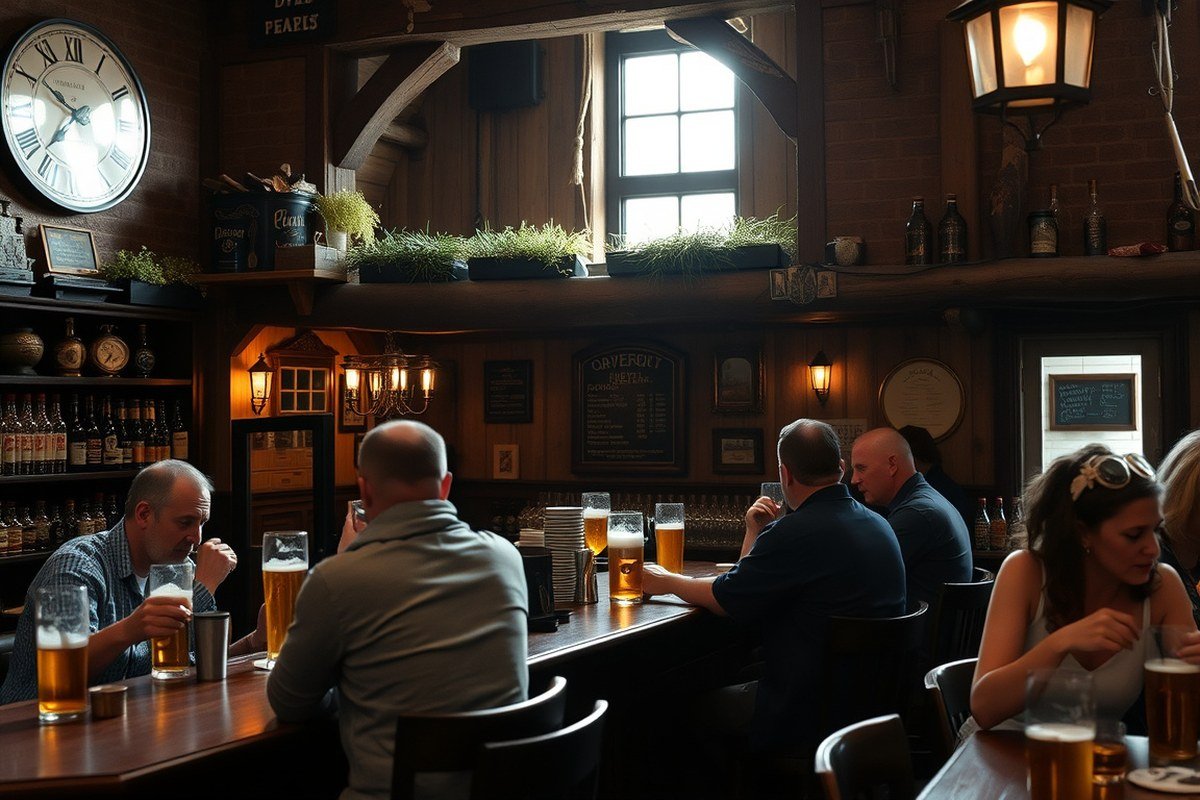
A tavern is a traditional establishment that sells alcoholic beverages, often accompanied by food, and offers a social gathering place. Originating in English from the 13th century, taverns served fixed-price meals by the 16th century and were central to community life, acting as venues for meetings, courts, and councils. Unlike bars, which focus primarily on drinks, especially spirits and cocktails, a tavern usually has a more historic or community-oriented ambiance, with lower lighting and classic wood or stone décor. Many taverns also serve a menu, setting them apart from typical bars.
The terms “pub” and “tavern” overlap a lot, especially since pubs originated in England and Ireland. A pub can often be considered a type of tavern, but a bar usually is not. This is because pubs and taverns both tend to offer food alongside drinks and have an atmosphere tied to local tradition and socializing. Bars, on the other hand, may emphasize cocktails and spirits in a modern or trendier environment. An inn is a specific type of tavern licensed to provide lodging, adding overnight guest services on top of food and drink. Here is a comparison table summarizing key differences between taverns, pubs, bars, and inns:
| Aspect | Tavern | Pub | Bar | Inn |
|---|---|---|---|---|
| Origin | English, 13th century | English/Irish traditional | General modern | Tavern with lodging license |
| Main Offerings | Alcoholic drinks + food | Alcoholic drinks + food | Primarily alcoholic drinks | Food, drink, and lodging |
| Ambiance | Traditional, low lighting, wood/stone décor | Community-focused, cozy | Modern, trendy or casual | Similar to tavern + guest rooms |
| Function | Social hub, often historic community center | Neighborhood social spot | Drinks-focused nightlife | Accommodates overnight stays |
| Examples | Fraunces Tavern (NYC), Sun Inn (1758) | Typical English “hospoda” (Czech term too) | Cocktail lounges, saloons | Boar’s Head Inn (Shakespeare) |
To decide if a place is a tavern, look first for a traditional atmosphere and a food menu alongside drinks. If it also provides rooms to stay overnight, it qualifies as an inn. A pub is essentially a tavern with an Irish or English cultural identity, and both focus more on community than a bar does. Bars usually offer a wider variety of spirits and cocktails, including drinks like Cosmopolitans, which you would rarely find in a tavern.
In practice, many taverns now operate under different names such as saloons or taprooms but maintain their historic role as a neighborhood gathering spot. Costs, ambiance, and menu variety may vary widely depending on the region, but taverns generally emphasize tradition and simple hospitality rather than modern nightlife flair.
The History and Evolution of Taverns from Ancient Times to Today
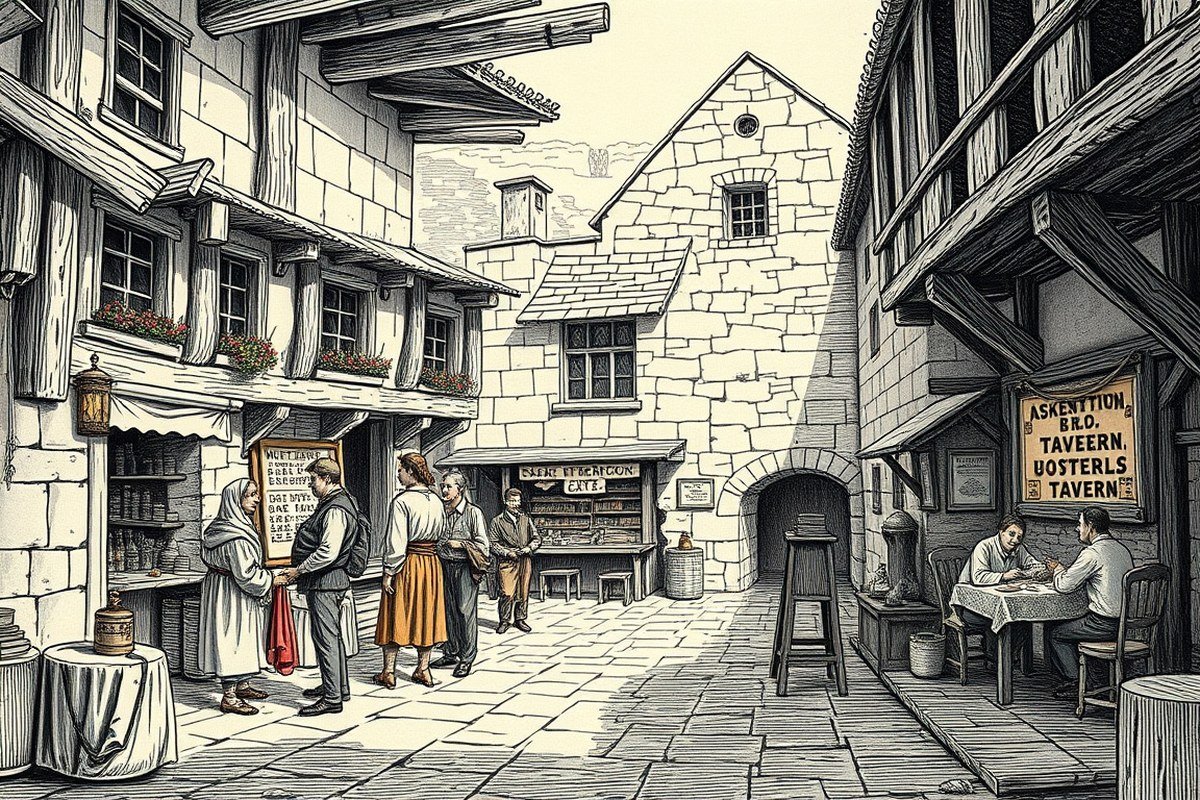
Taverns have served as social hubs for thousands of years, evolving from simple drinking spots to multifaceted community centers offering food, drink, and lodging. Their history spans from ancient civilizations through medieval Europe to Colonial America, reflecting changes in society and local laws. The journey of taverns also includes periods of decline and revival, influenced by movements like temperance and Prohibition.
Ancient and Medieval Tavern Origins
The roots of taverns can be traced back to ancient times, as early establishments offering drink and food to travelers and locals appeared in places like Ancient Babylon and Classical Greece. Archaeological finds at the Ancient Agora of Athens reveal tavern-like structures from around 500 BCE that served wine and simple meals, often functioning as meeting places. The Roman Empire expanded this concept, establishing inns and taverns along roads to serve soldiers and merchants.
During medieval England, taverns became more structured and widespread. Places such as the Mermaid Tavern in Early Modern England were not just for drinking but also centers of literary and political discussion. Taverns began offering not only ale and wine but also food and sometimes lodging. The term “ordinary” emerged during this time, referring to taverns providing set meals at fixed prices. This period established many social customs and rules regarding tavern behavior and management.
Taverns in Colonial and Revolutionary America
Taverns in Colonial America gained importance beyond food and drink. By the 1700s, they functioned as venues for public meetings, courts, postal stops, and even early political debates. American colonists modeled taverns after English “ordinaries,” using them as gathering spots for travelers and locals. Some tavern keepers hung signs outside to advertise food and drink availability, creating the earliest form of commercial branding in the colonies.
Notable examples like Fraunces Tavern in New York played key roles during the Revolutionary War era, hosting important discussions and serving as a meeting place for patriots. Besides serving roast meats, cheese, cider, and ale, many taverns also provided lodging for travelers, making them essential stops along colonial roads. The tavern connected people across different social classes and professions, fostering a shared public life.
Keep in mind that taverns weren’t just casual spots, they often shaped local politics and communities, so their role went well beyond serving food and drink.
Modern Tavern Role and Revival
The temperance movement and Prohibition in the early 20th century forced many taverns to close or adapt. Some shifted focus to food service or non-alcoholic beverages, but many couldn’t survive. After Prohibition ended in the 1930s, taverns slowly revived, especially through the 1940s and 1950s, a period often seen as the golden age of the modern American tavern. These locations combined traditional drinking with new community functions and entertainment.
Today’s taverns often emphasize history and tradition, appealing to patrons who appreciate continuity and a sense of place. Many modern taverns serve food alongside beer, wine, and spirits, continuing a practice that started centuries ago. Some still provide lodging, especially in tourist areas or historic districts. The evolution of taverns reflects broader cultural shifts and regulatory changes, blending their original roles with contemporary habits and tastes.
Typical Food, Drinks, and Atmosphere Found in Taverns
Taverns traditionally serve simple, hearty foods intended to satisfy travelers and locals alike, often focusing on dishes that are easy to prepare in large quantities. Typical fare includes roast meats, bread, cheese, salted herring, and bacon. These dishes reflect the practicality of tavern menus, which prioritize nourishment and affordability over culinary complexity. Unlike restaurants, tavern meals usually avoid elaborate preparations or exotic ingredients, making the food approachable and filling.
When it comes to drinks, taverns mainly offer beer and ale, which were historically affordable and popular beverages. Wine did appear, but beer often dominated the drink selection, especially in England and early America. Cocktails, as a category, are less common in traditional taverns; the focus leans toward draft ales, porters, and sometimes cider. This aligns with the social role of taverns as places for convivial conversation over familiar brews.
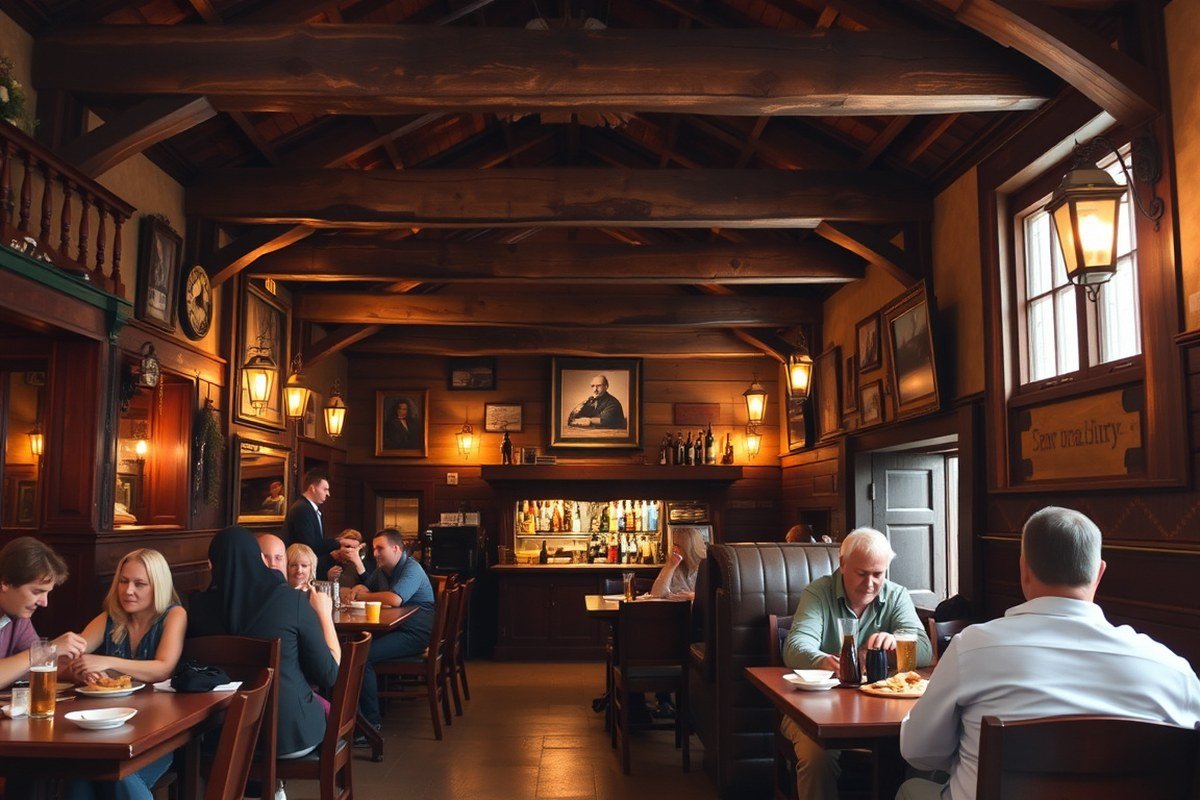
The atmosphere of a tavern is typically rustic and casual. Interiors often feature dark wood furnishings, wooden beams, and stone or brick walls. The lighting is subdued, usually coming from low-hanging fixtures or candles, contributing to a cozy ambiance. This décor supports the tavern’s function as a social hub, where guests can feel comfortable relaxing for hours. Adding to the mood, some taverns feature live folk or string band music, especially in historically preserved venues.
- Simple, hearty foods such as roast meats, bread, cheese, herring, and bacon
- Primarily beer and ale; cocktails are uncommon in traditional settings
- Rustic, dark wood interiors with low lighting
- Casual and inviting atmosphere encouraging conversation
- Some feature traditional music to improve social interaction
The emphasis on basic food and drink makes taverns distinct from pubs and restaurants. While pub menus often highlight regional specialties and restaurant menus tend to offer gourmet options, tavern menus stick to reliable, straightforward offerings. This difference matters because taverns were centers for travelers and villagers needing consistent, quick meals paired with popular drinks. Their ambiance and menu promote a communal experience rather than refined dining.
The Social and Political Role of Taverns Throughout History
Taverns have historically served as important social hubs where communities gathered to share meals, stories, and ideas. In colonial America, they were more than places to drink; they functioned as central meeting spots that hosted debates on politics, local business, and current events. This made taverns essential to shaping community life, especially since many towns lacked formal public spaces. The relaxed environment allowed artisans, workers, and local leaders to build relationships and create social networks that provided mutual support.
Politically, taverns played an influential role, particularly during the American Revolution. They became customary locations for political planning sessions and discussions about independence. Groups organizing resistance against British rule often met in taverns to debate strategy and unite supporters. This grassroots political activity made taverns key venues where ideas of freedom and governance were formulated and spread. The ability of taverns to host these meetings was supported by their central locations and the social norm permitting intense debate over food and drink.
The social interaction fostered in taverns reinforced their political significance. Heavy drinking encouraged camaraderie, breaking down social barriers and enabling open conversation among men who might not otherwise meet, artisans, tradespeople, and political activists found common ground within tavern walls. This mix of work, leisure, and political dialogue aimed to build community cohesion. While tavern culture affirmed local identity and men’s social standing, it also offered a controlled space where social rules were respected, ensuring these gatherings remained productive and engaged.
Outside political plotting, taverns also hosted business transactions and community events, blurring the line between public and private life. Locals exchanged news, forged alliances, and negotiated deals, making taverns early forms of community centers. Their role in American society was so significant that they became repositories of collective memory and cultural history. Hundreds of taverns across the colonies provided a mesh of social connections that supported the revolutionary cause and fostered a sense of belonging among settlers as communities grew.
Though the central role of taverns as political hubs diminished somewhat after the Revolution, they remained important as neighborhood gathering places. The continuity of tavern culture into modern times shows its lasting impact on social interaction and local identity. Taverns historically did more than serve drinks; they hosted the debates, friendships, business, and political activities that shaped community life and, at critical moments, the fate of nations.
How Taverns Vary by Country and Historical Period
Taverns reflect the cultures and histories of their countries through different styles, customs, and names. In the UK, taverns often overlap with pubs but have historical roots that trace back to community meeting spots. Colonial America adopted and adapted these practices, giving taverns distinct social and legal characteristics. Central and Eastern European taverns tend to emphasize local drinking traditions with long-standing customs that continue today.
Taverns in the United Kingdom
In the UK, the word tavern has historically been interchangeable with pubs, though taverns often referred more specifically to places that served food and drink to travelers and locals alike. Many taverns were licensed public houses dating back to the 16th and 17th centuries, such as the Lamb & Flag in London, which opened in 1772 and remains a classic example of traditional pub fare and atmosphere. Taverns played a community role, providing not only ale and spirits but also spaces for meetings and socializing.
Differing slightly by region, taverns in England often maintained a cozy, sometimes rustic environment with wooden beams and open fireplaces, reflecting centuries-old traditions. Hospitality customs involved serving locally brewed ales, and often offering rooms for lodging, especially before the rise of dedicated inns and hotels.
Taverns in Colonial and Modern America
American taverns inherited much from British and Dutch influences, but they quickly developed their own identity. Since English settlers brought tavern culture to Virginia in the early 1600s, taverns became central gathering points, not just for drinking but for community, politics, and business. Unlike European taverns, American legislation frequently shaped tavern operations uniquely, setting rules for licensing and alcohol sale that helped define public order.
Following Prohibition, the role of taverns in America shifted significantly, with many transforming into modern bars. Nevertheless, many towns still have taverns that serve classic fare and drinks, preserving a sense of historical tradition amid contemporary hospitality trends.
Taverns in Central and Eastern Europe
In Central and Eastern Europe, taverns often carry centuries-old customs tied to local food, drink, and social life. Countries like Germany, Poland, and the Czech Republic have taverns where regional beers, spirits, and traditional dishes form the heart of the experience. These public houses frequently serve as community hubs for conversation and cultural exchange.
The term “taverna” in Southern Europe, especially in Greek and Italian contexts, also refers to establishments that celebrate local cuisine and conviviality, extending the tavern’s role beyond drink to include rich culinary traditions. Such venues remain very common and important to social life across Southern and Eastern Europe.
| Aspect | UK | USA | Central/Eastern Europe |
|---|---|---|---|
| Typical term used | Tavern or Pub | Tavern | Tavern or Taverna (South Europe) |
| Historical origin | Licensed inns/pubs since 16th century | English/Dutch colonial taverns, 1600s onward | Public houses with centuries-old local traditions |
| Main purpose historically | Social hub, lodging, food and drink | Community gathering, politics, food and drink | Community hub with emphasis on regional cuisine/drink |
| Typical drinks served | Local ales and spirits | Ales, whiskey, classic American beers | Beers, local wines, spirits |
| Social customs | Meetings, lodging, casual conversation | Political meetings, socializing, business deals | Festivities, folk gatherings, culinary events |
| Present-day prevalence | Common as pubs, taverns less distinct | Taverns less common, bars more frequent | Widely common, culturally significant |
This comparison shows how taverns vary in name, function, and cultural importance. These differences matter because they affect how you experience a tavern visit, from the drinks offered to the social norms inside. Understanding this helps you appreciate the diversity in tavern culture worldwide.
Note that drinking laws and licensing standards vary by country and even by states or regions, so always check local rules before visiting or running a tavern.
Who Managed Taverns and What Social Rules Affected Them?
Taverns were typically owned or managed by men, often passing through family generations, but women played notable roles, especially widows or wives operating under their husbands’ licenses. Social norms restricted unaccompanied women from visiting taverns, and rules around behavior aimed to maintain order within these important community hubs. Licensing was required, usually in the man’s name, though enforcement and acceptance varied by time and place due to the tavern’s social importance.
Women as Tavern Keepers
Women frequently managed or ran taverns, especially in the English colonies and early American settlements. This role was one of the few socially acceptable ways for a woman, particularly a widow, to support herself and her family. Although licenses to operate taverns were generally issued to men, their wives or daughters often handled daily management and operations. Generations of taverns often remained family businesses, where women’s involvement was important to maintaining the establishment.
Even in the 1700s, running a tavern was considered a respectable profession for women. Their management wasn’t merely behind the scenes; they dealt with customers, kept accounts, and ensured the smooth running of the business. This involvement allowed women to hold economic power in their communities despite broader social restrictions on their independence.
Social and Legal Restrictions
Respectable women were expected not to visit taverns unaccompanied by their husbands or male family members. Society condemned public drunkenness among women more harshly than men, reflecting gender norms enforcing female decorum. However, women could exercise social influence by addressing excessive male drinking, sometimes invoking public or family pressure to limit alcohol abuse that threatened the household.
Taverns were community centers but not universally open social spaces. While some admitted women and children, especially before the mid-1800s, many maintained rules to curb rowdiness and protect reputations. Enforcement could be inconsistent because taverns fulfilled essential social roles like hosting meetings or providing news, making strict policing unpopular or ineffective. In some places, family presence was encouraged, but outside these norms, women alone were generally excluded.
Licensing and Regulation History
Licensing was required in many places to legally operate a tavern, but the regulations were often complicated and shaped by local politics and social customs. Licenses usually had to be acquired by men, even though operations might be run by their wives or daughters. These licenses controlled not only alcohol sales but also the hours of operation and the conduct expected within the tavern.
Economic incentives, such as tax collection on wine and spirits, sometimes led tavern keepers to hide or falsify sales methods to reduce liabilities. Early maps, like the 1626 map of New York showing a tavern near the East River, reflect how embedded taverns were in urban infrastructure. Over time, licensing and regulation grew stricter, and social pressures increased, contributing to taverns becoming less common under modern law in some areas.
Common Myths and Mistakes About Taverns Explained
The idea that a tavern is just a bar with a different name is a common misconception. Bars focus mainly on serving various alcoholic drinks, often including spirits, while taverns traditionally offered a broader experience including food, drinks, and social environment. Unlike bars, taverns typically served tapped beers with some licensed restrictions on alcohol types and often provided meals designed to feed large crowds efficiently rather than indulgent dining.
Another mistaken belief is that taverns served only alcohol and no food. In fact, taverns usually offered practical, filling food rather than just drinks. This contrasts with pubs, which historically leaned towards more comforting, hearty cuisine and placed a stronger emphasis on their food menus. Tavern food quality varied greatly, but meals were generally straightforward and intended to support social drinking sessions, often complemented by drinking low-alcohol beers, known as “small beer,” with around 2.8% alcohol by volume, even in the mornings.
People sometimes assume taverns were always male-only spaces. While 18th-century taverns did serve predominantly white, male, working-class clientele, social rules and class divides shifted over time and place. Women and other groups were often present in various drinking establishments but faced more restrictions historically. The tavern’s social dynamic was complex and changed with local culture and laws.
Not all historic pubs were considered taverns, although the terms overlap. Pubs focused on hospitality and comforting food, with menus offering sandwiches, pies, and cask ales, and did not provide lodging. Taverns, on the other hand, sometimes included lodging, turning them into inns if they rented rooms. The licensing system often regulated this difference significantly, as only taverns could legally rent rooms to guests.
It’s inaccurate to call every drinking establishment a tavern. A tavern is just one type of drinking place, alongside pubs, saloons, bars, and taprooms. Each has unique features and clientele. In Germany, for example, “Kneipe” roughly means pub or tavern but may lean towards a different atmosphere. Understanding these distinctions helps clarify what type of experience to expect.
- Bars focus mainly on alcohol, especially spirits and mixed drinks.
- Taverns serve practical food along with beer, often with licensed alcohol restrictions.
- Historic taverns sometimes included lodging, unlike pubs.
- Male-dominated clientele was common but not exclusive to taverns.
- Not all pubs or drinking spots are taverns; each has different traditions and rules.
Clear identification depends on context. When choosing an establishment or researching history, check if it served food as well as drinks, whether lodging was offered, and the nature of the clientele. Licenses and local laws have long influenced these distinctions, so verifying the type of license an establishment held can clarify its true identity.
What to Expect When Visiting a Tavern Today
Visiting a tavern today offers a blend of dining, drinking, and socializing that reflects its historic roots while adapting to modern tastes. You can expect a casual atmosphere that feels welcoming, often decorated with traditional or local motifs that hint at the establishment’s connection to community and history. While taverns share similarities with bars and restaurants, their key feature is that they serve as gathering places where food and drinks are both central, not just one or the other.
Typical menus in contemporary taverns usually feature comfort foods like hearty sandwiches, burgers, stews, or charcuterie boards, designed to pair well with a range of drinks. You’ll find classic beverage options such as craft beers, ales, wines, and sometimes specialty cocktails. Unlike trendy bars focused mainly on innovative drinks or brewpubs where house-brewed beer is the focus, taverns maintain a balanced menu emphasizing straightforward, familiar fare.
Many taverns host events like trivia nights, live music, or community gatherings, supporting their role as a social hub in neighborhoods or small towns. They often function as a midpoint between a restaurant and a bar; you can enjoy a full meal but also drop in for a casual drink and conversation without the bustling energy of a nightclub scene. Prices vary by location, but expect a moderate price range, usually $10 to $20 for main dishes and $5 to $8 for most drinks, similar to casual dining establishments.
- Check the tavern’s hours and event calendar before visiting, as some host special activities on specific nights
- Arrive early on weekends to secure seating, especially in popular neighborhood taverns
- Try local beers or house specialties to experience the tavern’s unique offerings
- Prepare for a relaxed dress code, taverns rarely require formal attire
- Consider splitting larger meals or sharing appetizers to sample more menu items
- Look for outdoor seating options, common in taverns during warmer months
- Respect reservation policies if the tavern accepts bookings, especially for larger groups
Reserve a table if planning to attend a live event or weekday dinner, as taverns can fill up quickly with locals.
First-time visitors should expect a pace slower than a bar or fast-casual restaurant, allowing time to enjoy both food and company. The friendly environment encourages conversations between patrons, often with regulars and newcomers mingling freely. Choosing a tavern over a purely trendy bar offers a more grounded social experience with a focus on tradition and community connection, rather than just the latest drink trends. This makes taverns ideal spots for relaxed evenings or catching up with friends over a meal and a drink in a familiar setting.
How to Experience a Tavern Visit Like a Local
Enjoying a tavern visit involves more than just grabbing a drink. Follow these steps to capture the authentic atmosphere and appreciate the cultural setting.
- Before You Go: Research local tavern customs in the area to understand any unique traditions or dress codes, ensuring a respectful visit.
- Upon Arrival: Observe the atmosphere and choose your seat, preferably where you can join in on conversations or hear traditional music if available.
- Order Your Drinks and Food: Select offerings typical to the tavern’s region or history, such as a classic ale or a traditional stew, to connect with the local culture.
- Engage Respectfully: Chat with the tavern keeper or locals to learn about the tavern’s history and current role in the community.
- Practice Tavern Etiquette: Follow any social rules, such as toasting customs or tipping norms, to show appreciation and blend in smoothly.
- Explore the Surroundings: Take note of historical decor or memorabilia and ask about them to deepen your understanding of the tavern’s legacy.
- After Your Visit: Reflect on your experience and consider sharing your story with others interested in cultural history or travel.
Frequently Asked Questions
What’s the Difference Between a Bar and a Tavern?
A tavern primarily offers food alongside drinks, while bars focus mostly on alcoholic beverages. Taverns function as social hubs with a more communal atmosphere, unlike bars that may have a livelier or nightclub vibe.
What Classifies as a Tavern?
A tavern is a drinking place that serves both food and alcoholic beverages, often acting as a community gathering spot. It’s distinct from places serving just drinks, adding a menu that supports longer social visits.
What Is the Difference Between a Tavern and a Pub?
Taverns and pubs both serve food and drinks, but pubs have a specific English or Irish heritage. Taverns can be found globally and share a broader historical role beyond this cultural origin.
Why Do They Call It a Tavern?
The word “tavern” comes from the Latin “taberna,” meaning a shed or inn. This name reflects its early role as a common gathering place serving food, drink, and lodging.
Can a Tavern Be a Bar but Not a Pub?
Yes, a tavern is a type of bar that serves food, but it may not fit the cultural definition of a pub, which is tied to British and Irish traditions.
What Is the Social Role of Taverns Historically?
Taverns served as meeting places for local government, courts, and assemblies, making them central to community life beyond just drinking.
Final Thoughts
Taverns are living pieces of cultural history where food, drink, and social traditions converge. You can gain unique insight by visiting one with an open mind and attention to local customs. Start by finding a tavern known for its preserved character and enjoy an evening that connects you with both the past and present community spirit.





3 Comments