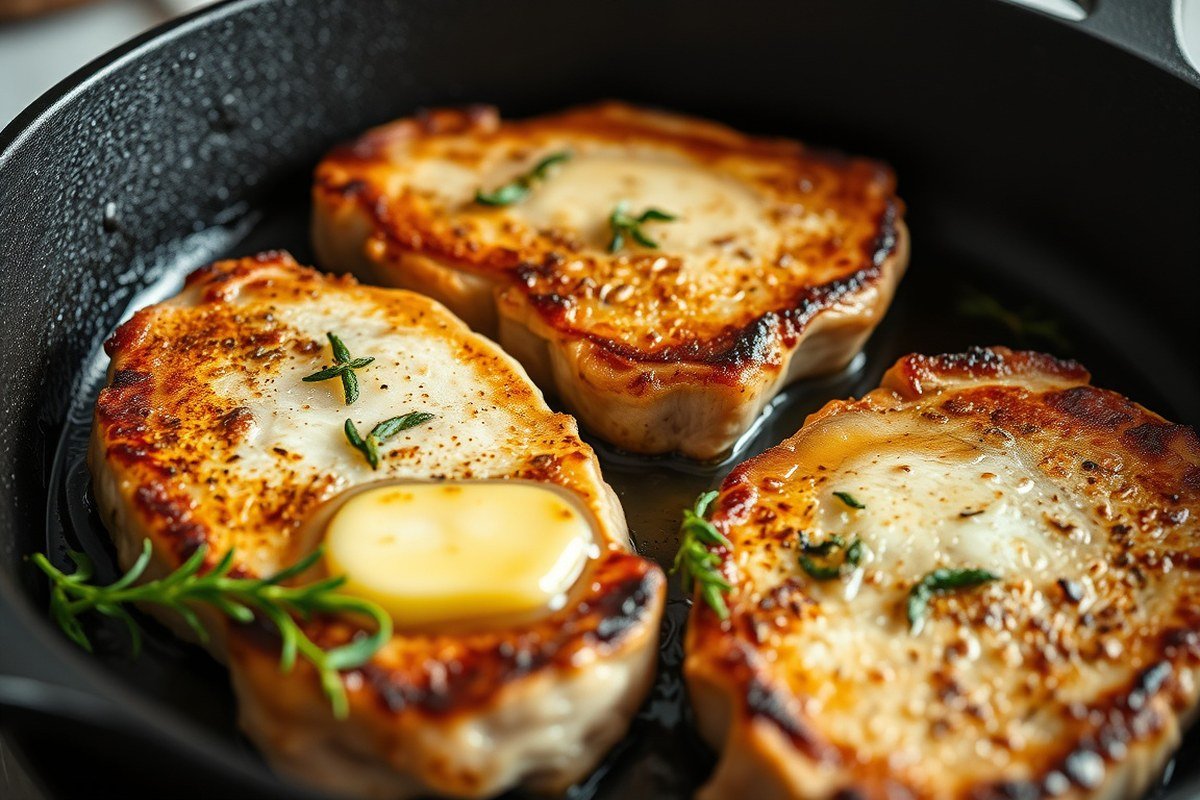
How to Cook Pork Chops in a Pan Perfectly Every Time: A Complete Guide
Cooking pork chops in a pan perfectly every time means searing them over medium-high heat to get a golden crust, then finishing them over medium-low until they reach an internal temperature of 145°F. You start by heating olive oil and butter in a pan for about five minutes before adding the chops. This method ensures the outside crisps nicely while locking in juicy flavor. Home cooks who want dependable, juicy results will find reliable timing, temperature, and technique tips throughout this article.
This guidance covers everything from choosing the right pork chops to managing heat and fat in the pan to avoid dryness. You’ll also learn how to make a quick pan sauce using the drippings, plus the best ways to rest, serve, store, and reheat your pork chops. Avoid common pan-frying mistakes to cook pork chops just right every time.
Key Takeaways
- Heat olive oil and butter together over medium heat for about five minutes before cooking pork chops.
- Sear pork chops on medium-high heat for 2, 3 minutes per side until golden brown.
- Lower heat to medium-low, cover the pan, and simmer pork chops for 4, 5 minutes to finish cooking.
- Use an instant-read thermometer to confirm pork chops reach an internal temperature of 145°F.
- Rest pork chops after cooking to retain juices and improve tenderness.
- Make a simple pan sauce by deglazing the pan with broth or wine using the pork drippings.
How to Pan Cook Pork Chops Step-by-Step
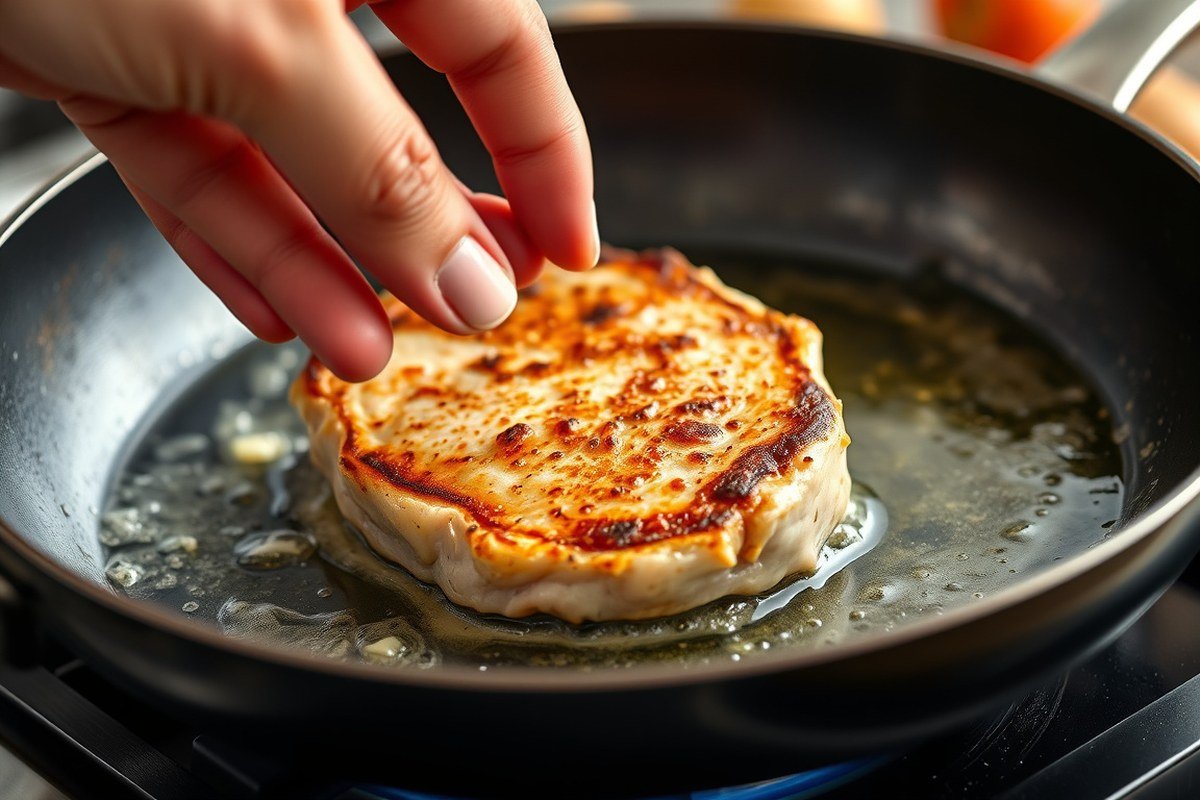
Start cooking pork chops in a pan once your oil and butter are hot enough to sizzle. Use a combination of olive oil and butter to get the pan heated properly for about 4 to 5 minutes over medium-high heat. This method prevents sticking and helps you achieve a golden brown crust. Searing the pork chops quickly over high heat locks in juices, while finishing at a lower heat cooks the meat evenly. Resting the pork chops after cooking allows the juices to redistribute, keeping the meat juicy and tender.
- Heat the pan and fat, Add about 1 tablespoon of olive oil and 1 tablespoon of butter to a large skillet. Warm over medium-high heat for 4 to 5 minutes until the butter melts and the mixture is hot but not smoking. You want the pan hot enough that the chops sizzle on contact.
- Place the pork chops in the pan, Lay the pork chops carefully in the skillet so they don’t overlap. You should hear a clear sizzle. For best even cooking, arrange any bone-in chops with the bone toward the center of the pan.
- Sear the first side, Cook the pork chops undisturbed for 2 to 3 minutes, until they develop a golden brown crust. Press lightly with a spatula to maintain good contact with the pan for even browning.
- Flip and sear the other side, Turn the chops over and cook for another 2 to 3 minutes. This initial searing on both sides creates flavor and texture before finishing the cooking through.
- Baste and finish cooking, Add an extra pat of butter to the pan. Use a spoon to baste the chops continuously while cooking for another 3 to 4 minutes on medium heat. Basting coats the chops with melted butter, adding flavor and helping them stay moist. Monitor the internal temperature using a meat thermometer. Remove the pork chops when they reach 142 to 145°F.
- Rest the pork chops, Transfer the chops to a clean plate or cutting board and cover loosely with foil. Let them rest for 5 minutes. This resting time allows carryover cooking to finish and the juices to redistribute, preventing dryness when you cut into the meat.
Choosing the Right Pork Chops and Preparing Them
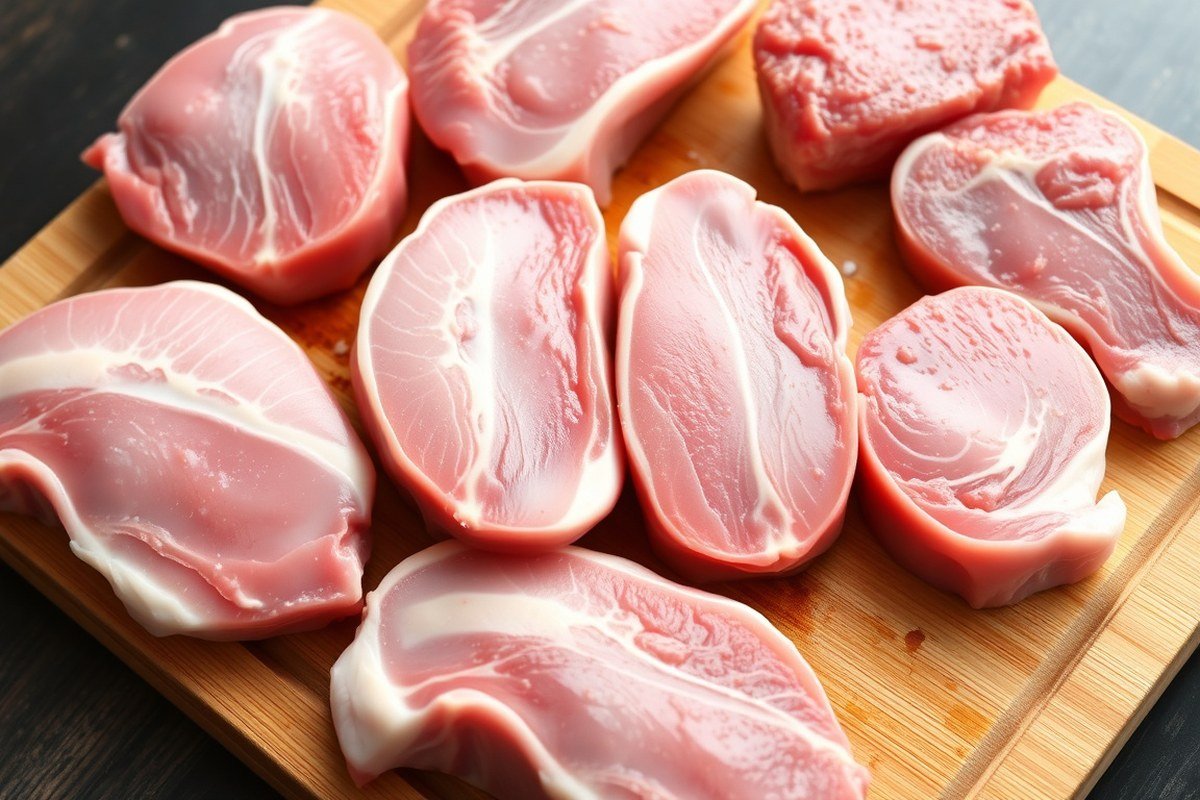
Choose pork chops that are at least 1 inch thick and either bone-in or boneless based on your texture preference. Thicker chops retain moisture better during pan frying, making your pork juicy and flavorful. Allow the chops to rest at room temperature for about 30 minutes before cooking to ensure even cooking and to dry brine the meat slightly.
Ideal Pork Chop Thickness for Pan Frying
Thick pork chops, typically 1 to 1½ inches thick, are best for pan frying since they retain moisture better and cook more evenly. Thin chops, often under ¾ inch and sometimes called breakfast pork chops, cook quickly but can dry out easily. Thick chops give you more control over the internal temperature, allowing the exterior to brown nicely while keeping the inside juicy.
For example, a 1½-inch chop takes longer to cook but develops a flavorful crust and stays tender. Thin pork chops require shorter cook times and more attention to avoid overcooking. Choose the thickness based on your available time and preferred eating experience.
Bone-In Versus Boneless Pork Chops
Bone-in pork chops tend to cook more slowly because the bone absorbs heat, helping keep the meat juicy and adding flavor. These chops often weigh 14 to 16 ounces each and are ideal if you want a richer taste and slightly longer cooking time. Boneless chops, which weigh around 12 to 14 ounces at 1½ inches thick, cook faster and provide easier slicing and serving.
For pan frying, bone-in chops offer extra moisture retention but require careful monitoring to avoid undercooked centers. Boneless chops are a good choice for quicker meals with less fuss. Both types benefit from similar preparation but adjust cooking time to account for the bone’s heat retention.
Pre-Cooking Preparations: Brining and Seasoning
Brining pork chops for a few hours or up to overnight improves moisture retention and flavor throughout the meat. A simple dry brine, sprinkling salt evenly over the chops and letting them sit uncovered at room temperature for about 30 minutes, is a convenient way to improve juiciness.
Marinating is another option and can add herbs, acidity, and spices. If you choose to marinate, do so up to 24 hours before cooking, keeping the meat refrigerated. Marinating helps tenderize and infuse flavor but can also introduce extra moisture, so pat the chops dry before cooking to ensure a good sear.
- Let pork chops sit at room temperature for 30 minutes before cooking to ensure even heat distribution.
- Use a dry brine with kosher salt for best moisture retention without diluting flavor.
- Marinate boneless chops up to 24 hours in a fridge for added flavor and tenderness.
- Pat chops dry after brining or marinating to avoid steaming in the pan.
- Season chops with fresh herbs like thyme and rosemary to complement pork’s natural flavor.
Always dry pork chops well before putting them in the pan to achieve a crisp, browned crust rather than steaming the meat.
Timing and Temperature Guidelines for Perfect Pork Chops
Cooking pork chops in a pan usually takes between 4 to 12 minutes total, depending on thickness and whether they are bone-in or boneless. The internal temperature needs to reach 145 degrees Fahrenheit for safe eating, as recommended by the USDA. Adjustments in time and temperature ensure juicy, properly cooked pork without dryness or toughness.
Cooking Times by Thickness and Bone Type
Thickness and bone presence significantly impact how long pork chops take to cook. Thinner chops require less time, while thick or bone-in chops need more heat exposure to cook through evenly.
| Chop Type | Thickness | Minutes per Side | Total Minutes |
|---|---|---|---|
| Boneless | Under 1 inch | 2 to 3.5 | 4 to 7 |
| Boneless | Over 1 inch | 4 to 6 | 8 to 12 |
| Bone-in | 1 inch | 4 to 6 | 8 to 12 |
For example, cook a boneless ¾ inch chop for about 3 minutes per side, while a 1½ inch bone-in chop may require 5 to 6 minutes per side to get fully cooked. Cooking times will vary based on your pan’s heat and chop thickness, so use these as starting points and adjust accordingly.
Internal Temperature Targets for Safe Eating
Checking internal temperature is the safest way to confirm your pork chops are done. The USDA recommends cooking pork to 145°F to eliminate harmful bacteria.
Insert an instant-read meat thermometer into the thickest part of the chop, avoiding bone. When the temperature hits 145°F, remove the pork from heat and let it rest. Resting for about 5 minutes allows the temperature to stabilize and juices to redistribute, improving tenderness and flavour.
Visual and Texture Indicators of Doneness
Besides temperature, look for visual and tactile signs to judge doneness. Cooked pork chops will have a golden-brown crust from properly applied heat. You’ll notice the meat has firmed up but still feels slightly springy when pressed.
Pork that is undercooked feels soft and very tender, while overcooked meat feels very firm or tough. Juices running clear when you press or cut into the chop can also indicate proper cooking. Use these cues along with temperature to avoid dryness or raw spots.
Choosing and Managing Heat and Fat in the Pan
Use a combination of oil and butter to pan-cook pork chops for the best results. Olive oil has a higher smoke point than butter, which helps prevent burning during the initial searing on medium-high heat, usually maintained for about 4 to 5 minutes until the pan is very hot. Butter adds flavor but burns more quickly, so mixing them balances heat resistance and taste. Start heating both together in the pan before adding the pork chops to ensure the pan reaches an ideal searing temperature.
Heat level affects both flavor and texture. Begin by searing pork chops on medium-high heat to create a golden crust, which locks in juices. Once both sides have seared, reduce the heat to medium to continue cooking the pork through without burning the surface. This step avoids overcooking the exterior while leaving the interior underdone. Use a reliable meat thermometer to check for an internal temperature of about 120°F before giving the pork chops an additional 3 to 5 minutes to finish cooking, adjusting heat as needed.
Covering the pan while cooking pork chops is usually unnecessary and might trap steam, resulting in less crispy meat. Instead, allow the pork chops to cook uncovered to maintain a sear. After cooking, remove them from the pan and cover loosely with foil for at least 5 minutes to let the juices redistribute, which improves tenderness and flavour.
Prevent sticking and burning by properly preheating the pan with oil and butter and ensuring the pork chops are dry before cooking. Pat marinated pork chops dry with paper towels to reduce moisture that causes sticking. Using a non-stick pan or well-seasoned cast iron helps, and cooking utensils made of silicone or wood will avoid scraping the pan’s surface. Avoid moving the pork chops too soon; wait for a golden crust to form before flipping. This crust naturally releases from the pan, reducing sticking risk.
Adjusting heat on the fly is important. If smoke starts coming from the pan or butter browns too fast, lower the heat to medium or medium-low before continuing the cook. For leaner pork chops, you might add a small amount of oil mid-cooking to prevent dryness and sticking. The cost of good olive oil and quality butter varies but expect to spend around $0.10 to $0.30 per serving, which is small compared to the flavor improvement. Good results look like golden-brown, caramelized edges without burnt spots, tender interior with no raw sections, and easy release from the pan surface.
How to Achieve Crispy, Juicy Pork Chops Without Drying Out
Begin by cooking pork chops over high heat to lock in moisture and create a crispy crust. The intense heat quickly caramelizes the surface, trapping juices inside for juicy, tasty meat. Choose pork chops that are about 1/4 to 1/2 inch thick, known as breakfast chops, since their thin size ensures a crispy outside without drying out the inside.
Flipping the chops properly is key. Turn them every 2 to 3 minutes instead of cooking one side fully before flipping. This frequent flipping cooks the pork evenly from both sides, allowing the crust to develop gradually and the interior to stay juicy. For instance, flip the chop after about 3 minutes, and continue alternating every 2 minutes while monitoring browning.
Basting with butter adds richness and helps maintain moisture. After the initial sear, add butter along with aromatics like shallots and thyme to the pan. Spoon the melted butter over the pork chops repeatedly for about 2 minutes. This technique not only improve flavor but also keeps the surface moist, preventing dryness as the pork finishes cooking.
Avoid common mistakes that cause dry pork chops by not overcrowding the pan. Overcrowding lowers the pan temperature, preventing a proper sear. Also, skip the temptation to poke or press the chops with a spatula, which squeezes out juices. Lastly, resist overcooking; pork chops dry out quickly if cooked past an internal temperature of 145°F. Use a meat thermometer to check doneness to ensure juicy results.
For pork chops that are thicker, reduce the heat just after searing and cook them more gently to finish without drying them out. This approach allows heat to penetrate evenly without burning the crust. Thicker chops may take an extra 3 to 5 minutes depending on size, so watch closely and flip every few minutes to build the crust and retain moisture.
Flip pork chops every 2 to 3 minutes and baste with butter during the last few minutes to lock in juices and build a flavorful crust without drying out the meat.
Making a Simple Pan Sauce from Pork Chop Drippings
Making a pan sauce from pork chop drippings adds deep flavor and richness to your meal with minimal effort. You’ll use the flavorful bits left in the pan after cooking the chops, then build a sauce by adding liquids and aromatics. The process is quick, usually taking under 10 minutes, and you can use the same pan and fat for best results.
Collecting and Deglazing the Pan
After cooking your pork chops, remove them from the pan and keep them warm. Leave the rendered fat and browned bits in the pan, as this foundation holds a lot of concentrated flavor. Deglazing means adding liquid to loosen those browned bits so they dissolve into the sauce.
Common liquids for deglazing include dry white wine, chicken broth, or apple cider, each adding a subtle acidity or sweetness that balances the pork’s richness. Use about ¼ to ½ cup depending on the pan size. Warm the liquid separately before adding it to prevent cooling the pan too much, which slows the reaction.
Adding Flavor Enhancers
With the browned bits loosened, add aromatics like minced garlic or sliced shallots to infuse the sauce with savory depth. Fresh herbs such as thyme or rosemary complement pork nicely and lift the sauce’s aroma. Adding a teaspoon of Dijon mustard or a splash (about 2 tablespoons) of heavy cream can enrich the texture and flavor further.
For extra richness, stir in 1 to 2 tablespoons of cold butter at the end of cooking, swirling it into the sauce until melted to give a glossy finish. This method, called mounting the sauce with butter, also softens acid edges and adds smoothness.
Simmering and Finishing the Sauce
Simmer the sauce gently for about 3 to 4 minutes. This allows the flavors to meld and the liquid to reduce slightly, thickening the sauce. Avoid boiling vigorously, which can cause bitterness and toughen the butter.
Once the sauce has reached your preferred thickness, return the pork chops to the pan, spoon the sauce over them, and warm together for 1 to 2 minutes. This helps the meat absorb some of the sauce flavor and ensures everything is hot for serving.
- Remove cooked pork chops and keep warm.
- Leave drippings and fat in the pan.
- Add ¼ to ½ cup warm wine, broth, or apple cider to the pan to deglaze.
- Scrape the pan bottom to loosen browned bits.
- Add minced garlic, sliced shallots, and a sprig of fresh thyme or rosemary.
- Simmer gently for 3 to 4 minutes to reduce and thicken.
- Stir in 1 to 2 tablespoons cold butter until melted for richness.
- Return pork chops to the pan; spoon sauce over and warm for 1 to 2 minutes.
Resting, Serving, and Storing Pan Fried Pork Chops
Resting pork chops after pan frying is essential to lock in their juices, making them tender and flavorful. When you remove pork chops from the heat, their juices are pushed toward the center by the heat. Resting allows these juices to redistribute throughout the meat, preventing them from spilling out the moment you cut into the chop. Aim to let the pork chops rest for 5 to 10 minutes, covering them loosely with aluminum foil to keep warm without steaming, which could soften the crust you worked hard to create.
Serving pork chops fresh from the pan and after resting gives you the best eating experience. For sides, classic pairings include mashed potatoes or roasted vegetables, both of which complement the rich pork flavor and provide balance. Applesauce is another traditional side that adds a touch of sweetness to contrast the savory taste of pork chops. For a lighter option, a crisp green salad or sautéed green beans works well. Consider freshly chopped herbs like parsley or thyme sprinkled on top just before serving to add freshness and aroma.
Storing leftover pork chops properly prevents them from drying out and keeps their flavor intact. Place cooled pork chops in an airtight container and refrigerate within two hours of cooking. They will stay good for up to 3 days in the fridge. When reheating, avoid using high heat directly on the pork, which can toughen the meat. Instead, reheat gently in a low oven (around 250°F) for 10 to 15 minutes or warm them in a skillet on low heat, covered, adding a splash of broth or water to help maintain moisture. Microwaving is fastest but risks uneven heating and dryness; cover the chops to trap steam and heat them in short bursts, checking often.
To make sure your pork chops stay juicy and delicious even when reheated, plan to use leftovers in dishes like sandwiches, salads, or pasta, where the pork’s texture and flavor blend with other moist ingredients. This approach reduces the impact of slight dryness that might occur and gives you more meal variety. Overall, resting, serving with complementary sides, and proper storage and reheating techniques will help you get the most enjoyment from every pan fried pork chop.
Common Mistakes When Pan Frying Pork Chops and How to Fix Them
Burning pork chops before they cook through usually happens when the heat is too high or the pan is overcrowded. High heat can quickly burn the outside while leaving the inside undercooked. To fix this, start cooking on medium heat and adjust as needed. Press the pork chops gently into the pan for even contact and flip them once after a few minutes. Using chops that are at least 1 inch thick helps prevent burning because thicker cuts require a longer cooking time, letting the heat penetrate more evenly.
Pork chops sticking to the pan is often caused by not using enough fat or not letting the pan or fat heat properly before adding the meat. Use enough cooking oil or butter to coat the pan lightly. Heat the fat until it shimmers but does not smoke before placing the pork chops in. Avoid moving the meat too soon; let it develop a natural crust, usually after 3 to 4 minutes, before flipping. If they still stick, check whether the pan surface is damaged or if you need to season the pan with oil first.
Overcooking pork chops can make them dry and tough. Chops cook quickly, so rely on timing and visual cues rather than guesswork. Use an instant-read thermometer to check for doneness; pork chops are safe to eat at 145°F (63°C), followed by a three-minute rest. Stop cooking as soon as they reach this temperature to avoid toughness. Thinner chops require less time, often just 3 to 4 minutes per side, while thicker chops may take 6 to 8 minutes per side. Once cooked, let them rest to allow juices to redistribute.
Dry and tough pork chops often result from skipping seasoning, cooking at too high heat, or choosing thin cuts. Salt and pepper the chops before cooking to improve flavor and help lock in moisture. Thinner pork chops tend to dry out quickly; opt for ones that are at least 1 inch thick. You can also marinate or brine chops for 30 minutes to an hour to add moisture and tenderness.
- Use medium heat to avoid burning while ensuring thorough cooking
- Preheat pan and oil until shimmering but not smoking
- Season pork chops generously before cooking
- Choose pork chops at least 1 inch thick for juicier results
- Flip chops only once to develop a good crust
- Use an instant-read thermometer to check for doneness at 145°F
- Let pork chops rest 3 to 5 minutes after cooking
Press pork chops gently into the hot pan when you add them to ensure they don’t stick and cook evenly.
Addressing these mistakes will help you pan fry pork chops that are juicy, evenly cooked, and flavorful without burning or drying out. Avoid rushing the process and pay attention to thickness, heat, and internal temperature for the best results.
Step-by-Step Action Plan for Perfect Pan-Cooked Pork Chops
Follow these simple steps to pan-cook juicy, flavorful pork chops you can serve confidently any time.
- Before you start: Choose pork chops about 1-inch thick, bone-in if possible, and pat them dry to ensure good browning.
- 10 minutes before cooking: Season chops evenly with salt and pepper; let them come to room temperature for even cooking.
- Cooking phase: Heat a mix of oil and butter in a heavy skillet over medium-high heat until shimmering but not smoking.
- First 3-4 minutes per side: Place chops in the pan without crowding; cook until a golden crust forms and chop releases easily from the pan.
- Midway through cooking: Lower the heat to medium, add a pat of butter, and baste chops for moistness and flavor.
- After flipping: Cook until internal temperature reaches 145°F using an instant-read thermometer for safety and juiciness.
- Resting phase: Remove chops and rest for 5 minutes to let juices redistribute before slicing or serving.
- Optional finishing touch: Use drippings to quickly make a pan sauce by deglazing with broth or wine, scraping browned bits for added flavor.
Frequently Asked Questions
How Long to Cook Pork Chop in a Frying Pan?
Cook pork chops for 2-3 minutes per side over medium-high heat, then cover and simmer for 4-5 minutes until reaching 145°F. Adjust time based on thickness and pan heat.
Should I Cover the Pan When Frying Pork Chops?
Yes, cover the pan during simmering after searing to help cook the pork chops evenly and keep them juicy.
What Is the Best Way to Cook Pork Chops Without Them Drying Out?
Use a mix of oil and butter, sear on high heat, then lower heat and cover while cooking to retain moisture.
Do I Put Oil in the Pan When Cooking Pork Chops?
Yes, add a small amount of oil to a hot pan before frying pork chops to prevent sticking and promote browning.
Can I Use the Same Pan for Making a Sauce After Cooking Pork Chops?
Yes, use the pork drippings in the pan to make a simple, flavorful sauce.
How Thick Should Pork Chops Be for Pan Frying?
Aim for about 1 inch thick chops to ensure even cooking without drying out.
Key Points to Remember
Perfect pan-cooked pork chops come down to choosing the right cut, managing heat carefully, and resting the meat before serving. Try the steps above during your next meal to get tender chops with a crisp crust every time. The next time you cook pork chops, focus on using an instant-read thermometer to avoid overcooking and keep your chops juicy.


One Comment