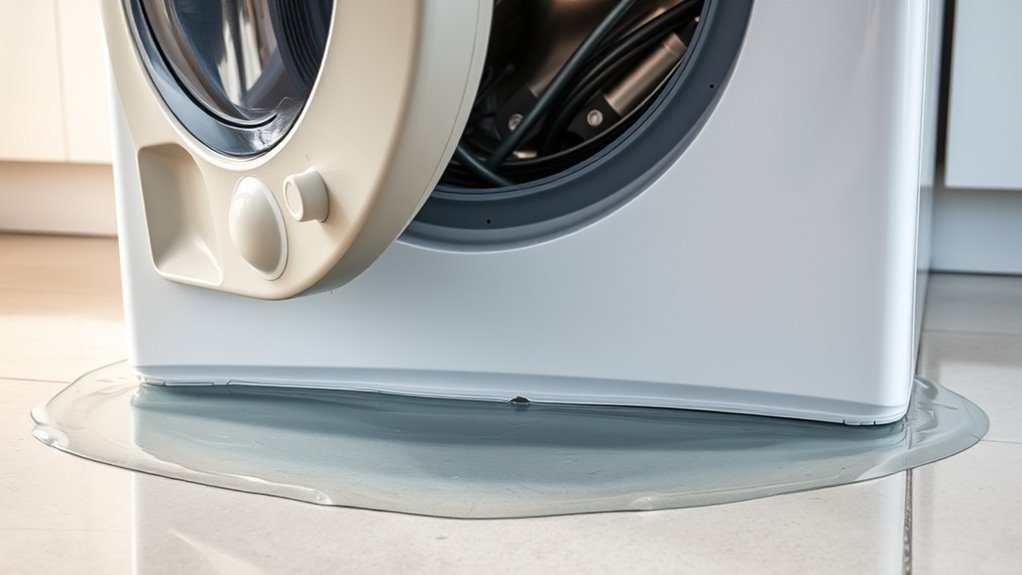
Why Is My Washer Leaking? The Complete Answer
Are you tired of dealing with a leaking washer? You’re not alone—many people struggle with this frustrating issue, and it can be confusing trying to figure out what’s wrong. The good news is, most leaks are manageable once you know where to look.
If your washer is leaking, start by checking hoses for cracks, kinks, or loose connections, as worn or damaged hoses are a common cause.
Clogs in the drain pump or hose can back up water, while faulty seals, door gaskets, or suspension parts may also let water escape.
Make sure your washer is level and not overloaded to avoid strain. If you want to uncover all causes and how to fix them, keep exploring the key inspection and maintenance steps.
Key Takeaways
- Check hoses for cracks, bulges, or loose connections because damaged hoses are a common cause of washer leaks.
- Clogged drains or pump filters can cause water to back up and leak during wash cycles.
- Faulty parts like the drain pump, tub seal, or water inlet valve often lead to leaks and need to be inspected.
- Regularly look for water pooling under or around the washer, especially after spin cycles, to catch leaks early.
- If leaks keep happening, odors develop, or you see visible damage, it’s best to call a professional to prevent further damage to your appliance or home.
How To Tell If Your Washer Is Leaking
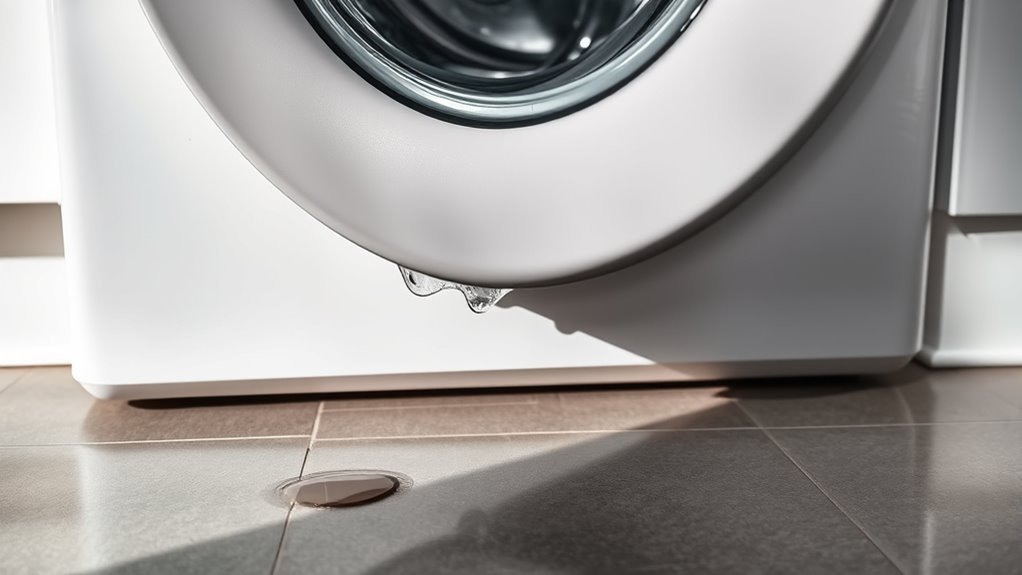
How can you tell if your washer is leaking? Start by closely inspecting the area around and beneath your machine after each use. Look for puddles, damp spots, or water stains that weren’t there before. Using water detection tools like moisture sensors or simple paper towels can help you catch leaks early.
If you notice water pooling or dripping, it’s a clear sign your washer is leaking. Regular water detection is crucial for leak prevention. You should also check your flooring and nearby walls for signs of water damage, which could indicate a hidden leak.
Pay attention to unusual sounds or vibrations during cycles, as these might point to internal issues causing leaks. Catching a leak early not only prevents costly repairs but also protects your home from water damage. Being proactive with water detection helps maintain your washer’s efficiency and safeguards your living space.
Common Washer Parts That Cause Leaks
Several washer parts commonly cause leaks, so identifying them can save you time and money. Start by checking the drain pump and drain hose first, as they often wear out or get clogged.
The water inlet valve and detergent drawer can also leak if they’re damaged or blocked. Inside, the sump assembly and tub seal are crucial for preventing leaks during cycles.
Don’t forget to check the door latch, especially on front-loaders. A faulty latch can let water escape. Suspension rods and leveling feet help keep your washer stable. If they’re loose or broken, the washer might tilt and leak.
The pressure switch controls water levels and may cause leaks if it malfunctions. Check these parts to quickly pinpoint your leak and get it fixed.
Why Worn Or Damaged Washer Hoses Leak
You might notice that worn hoses often develop cracks, bulges, or become stiff. These signs usually happen because of aging, regular water pressure, or sometimes accidental damage during installation. Recognizing what causes these issues can help you catch problems early and prevent leaks before they even start.
Common Hose Wear Signs
Three common signs can help you spot worn or damaged washer hoses before they start leaking. First, look for visible cracks or bulges on the hose surface. These weak spots often signal hose deterioration.
Second, check for any stiff or brittle areas. Hoses that don’t flex easily are more prone to breaking. Third, watch for water stains or rust around hose connections, which can indicate slow leaks or moisture buildup.
Regular hose maintenance lets you catch these signs early and prevents unexpected leaks. By inspecting hoses periodically and replacing them once wear appears, you can prevent leaks and keep your washer running smoothly.
Don’t wait for a burst hose—spotting these signs early saves you from costly water damage and repairs.
Causes Of Hose Damage
Noticing worn or damaged hoses is just the first step; understanding what causes that damage helps you prevent leaks before they start. Hose damage often comes from several common factors that you can manage with proper maintenance and timely replacement.
Some key causes of hose damage to watch for include age-related wear that weakens the material, and high water pressure stressing the connections. Abrasion from rubbing against sharp edges or surfaces can also take a toll.
Exposure to heat or sunlight can cause the material to degrade over time. Improper installation, like kinks or twists in the hose, is another common issue that can lead to damage.
How Clogged Drains Or Pumps Cause Leaks
When a washer’s drain or pump gets clogged, water can’t flow out properly, causing leaks. Debris like lint, small clothing items, or soap scum can build up in the drain hose or pump, blocking water flow.
This blockage forces water to back up inside the machine, eventually leaking out through seals or gaskets. To prevent this, regular drain maintenance is essential. You should clean the drain hose and remove any visible debris to keep water flowing smoothly.
Performing a pump inspection helps catch blockages early. Check the pump’s filter and housing for obstructions or buildup that might hinder its function. If you notice unusual noises or water pooling during cycles, it’s a sign your pump might be clogged or damaged.
How To Spot A Faulty Door Seal Or Lid Gasket Leak
If you want to spot a faulty door seal or lid gasket leak, start by inspecting the door seal itself. Look carefully for any cracks, tears, or mold buildup—that’s often the culprit behind leaks. Sometimes, the seal can get damaged or dirty over time, which makes it less effective at keeping water in.
Next, check out the lid gasket. See if it’s showing signs of wear like stiffness or gaps. If it feels hard or there are visible spaces, it might not be sealing properly anymore. Catching these issues early is a good idea because it can prevent water from escaping during your laundry cycles or other uses. Just a quick visual check can save you from bigger problems down the road!
Signs Of Door Seal Damage
A damaged door seal often causes water to leak from your washer, so catching the problem early can save you from bigger repairs. Usually, wear shows up before a full leak happens, so keep an eye out for these signs:
- Visible cracks, tears, or mold on the rubber seal
- Water pooling around the washer door after a cycle
- Musty odors indicating trapped moisture inside the seal
- Clothes getting wet outside the drum during washing
- Difficulty closing the door properly due to seal deformation
If you notice any of these, it’s time to consider a seal replacement. Fixing the seal early helps keep your washer leak-free and prevents water damage to your laundry area. Don’t wait—regularly inspect your door seal!
Inspecting Lid Gasket Wear
Noticing wear on your washer’s door seal often means it’s time to check other potential leak sources, like the lid gasket. A faulty lid gasket can let water escape during cycles, leading to leaks.
To spot issues, look for cracks, tears, or mold buildup on the gasket. Regular lid maintenance tips include wiping the gasket dry after each use and inspecting it monthly for damage.
If you find any signs of wear, consider replacing the gasket quickly to avoid water damage.
| Inspection Step | What to Look For |
|---|---|
| Visual Check | Cracks, tears, mold |
| Touch Test | Soft or brittle texture |
| Maintenance Routine | Regular cleaning and drying |
How Overloading Or Too Much Detergent Leads To Leaks
When you overload your washer or use too much detergent, it can cause excess suds and strain the machine’s components. This leads to detergent buildup, which clogs drains and seals, increasing the chances of leaks. Overloading also disrupts the load balance, making the tub move unevenly and splash water out.
Here’s how these issues cause leaks:
- Excess suds overflow through the door or lid.
- Detergent buildup damages seals and gaskets.
- Imbalanced loads shake the washer and loosen hoses.
- Water drains inefficiently, pooling inside the machine.
- Overloaded tubs create pressure that pushes water past seals.
To prevent leaks, always follow the detergent guidelines on your product and avoid stuffing too many clothes in at once. Keeping a proper load balance and avoiding excess detergent helps protect your washer from unnecessary wear and keeps it leak-free.
How To Check For Leaks During The Spin Cycle
How can you tell if your washer is leaking during the spin cycle? Start by doing a thorough inspection during the spin. Watch closely as the tub spins and check the water level before and after. If water seeps out, you’ve found your leak.
Place a dry towel under the machine to catch any drips and note where the leak might be coming from. Use this table to guide your inspection:
| Observation Point | What to Look For | Action Needed |
|---|---|---|
| Water level | Should drop after the spin starts | Normal if steady |
| Tub area | Water splashing or pooling | Indicates a seal or tub leak |
| Floor beneath washer | Wet spots or puddles | Confirms a leak during spin |
How To Inspect And Replace Leaking Washer Hoses
After spotting leaks during the spin cycle, the next step is to check the washer hoses since they’re common sources of water escape. Start by turning off the water supply and unplugging your washer for safety.
Inspect the hoses for cracks, bulges, or corrosion, especially around the connectors. Knowing the hose materials helps: rubber hoses tend to wear out faster, while braided stainless steel ones last longer and resist leaks better.
Check hoses for cracks or bulges; braided stainless steel lasts longer than rubber and resists leaks better.
Follow these steps for hose maintenance and replacement: Disconnect hoses from the washer and water supply. Lay them flat to check for weak spots or leaks.
Replace any damaged hose with a suitable material, preferably braided stainless steel. Secure new hoses tightly to prevent leaks. Turn the water back on and run a test cycle to verify no leaks.
Routine hose maintenance can prevent leaks and extend your washer’s lifespan. Keep an eye on hose conditions so you can avoid surprises.
When To Call A Pro For Washer Leak Repairs
If you spot a leak that’s tough to find or keeps coming back, it’s probably a good idea to call in a pro. They’ve got the right tools and the know-how to figure out what’s really going on quickly.
Plus, getting a professional to handle the repair can save you a lot of time and hassle. It can also help prevent any bigger problems from happening later on.
Identifying Complex Leak Issues
Though some washer leaks are easy to fix on your own, certain issues need a professional’s touch to avoid causing more damage. Complex leak problems often hide behind drainage issues or compromised seals that aren’t obvious at first.
You should call a pro if you notice persistent water pooling despite basic fixes, foul odors indicating drainage blockages, or visible damage like cracks in seals or hoses. Leaks that happen only during specific wash cycles are also a sign you need expert help.
Electrical components exposed to moisture are another red flag. Professionals have the right tools and knowledge to find tricky leaks, check seal integrity, and fix drainage problems safely. Don’t hesitate to get help when leaks seem complicated or keep happening—that’s the best way to protect your washer and your home.
Benefits Of Professional Repairs
When you face a washer leak that’s stubborn or tricky, calling a professional can save you time, money, and stress. Professionals have the expert knowledge to identify the root cause quickly, helping you avoid unnecessary part replacements.
Their experience guarantees repairs are done right the first time, which boosts cost efficiency by preventing repeated fixes. Plus, you avoid the risk of making the problem worse or damaging your machine further.
Pros also have the right tools and access to quality parts, making the whole process smoother. If your washer leak involves complex issues like internal hose damage or electrical faults, it’s best to call a pro.
In short, professional repairs protect your investment and give you peace of mind.
Tips To Prevent Washer Leaks And Water Damage
Preventing washer leaks and water damage starts with regular maintenance and addressing small issues quickly before they become big problems. By staying on top of preventive care and scheduling regular inspections, you can spot issues early and avoid costly repairs.
Check hoses and connections for cracks or loose fittings every few months to catch problems before they cause leaks. Also, clean the detergent drawer and door seals regularly to prevent buildup and damage.
Avoid overloading your washer, as this can strain seals and lead to leaks. Using a washer pan underneath can catch any unexpected drips or leaks, protecting your flooring.
Finally, make sure your washer is level to prevent water from spilling out during cycles. Keeping these tips in mind will help you maintain a leak-free washer and avoid water damage.
Frequently Asked Questions
Can Water Leaks Damage My Home’s Flooring?
Yes, water leaks can definitely damage your home’s flooring. Different materials like hardwood or laminate soak up water quickly and can warp or stain.
Even tile grout can weaken over time if exposed to leaks. To protect your floors, focus on preventing leaks by regularly checking hoses and seals.
Using a waterproof mat under your washer can also help minimize potential damage. Taking these steps keeps your flooring safe and your home dry.
How Do Different Washer Types Affect Leak Risks?
Imagine a tiny ocean bursting from your washer, flooding the floor! Front-loading washers often leak because worn door seals can let water escape during cycles.
Top-loading washers usually have issues with faulty hoses or loose connections that can gush unexpectedly. Regularly inspecting these parts is a good idea.
Each type of washer has its own weak spots, so catching problems early helps you avoid a mini indoor flood. This keeps your laundry room dry and safe.
What Are the Environmental Impacts of a Leaking Washer?
A leaking washer wastes a lot of water, which hurts water conservation efforts you care about. When your appliance leaks, you’re not just increasing your water bill but also putting extra pressure on local water supplies.
Taking care of appliance maintenance can help prevent these leaks. Fixing them quickly supports sustainability and reduces unnecessary waste.
Are Washer Leaks Covered by Home Insurance?
Sudden spills and sneaky seepage might seem covered, but home insurance rarely rescues you from washer leaks. Typically, your washer warranty handles hardware hiccups, while leak prevention depends on your maintenance efforts.
Insurance usually steps in only if leaks cause extensive water damage or mold. To stay safe, check your policy details and keep up with leak prevention tips. This way, you won’t get soaked by unexpected repair costs or denied claims.
Can a Leaking Washer Cause Electrical Hazards?
Yes, a leaking washer can cause electrical hazards because water can conduct electricity and allow it to travel through the leak. This increases the risk of electrical shorts.
If water reaches the electrical parts inside the washer, it can lead to dangerous situations like shocks or fires. To stay safe, unplug the washer right away and avoid touching it if it’s wet.
Make sure to fix leaks quickly to prevent any accidents. Following safety steps helps keep you and your home safe from electrical hazards.
Conclusion
If your washer’s acting up and leaking, don’t let it dampen your day. A little attention to worn hoses, seals, or clogs can save you from bigger water woes.
Sometimes, it’s best to call in a pro before things get soggy. With a bit of care and timely checks, you’ll keep your laundry space fresh and dry, turning that drip into a distant memory.
Remember, addressing washer leaks early helps prevent costly repairs. Keeping an eye on those common trouble spots is key to avoiding future leaks. You’ve got this!