How Much Does a Kitchen Renovation Cost? The Complete Answer
Thinking about a kitchen renovation but feeling overwhelmed by the costs? You’re not alone—many people struggle with figuring out how much their dream kitchen will actually cost.
It’s a big project, and knowing what to expect can help you plan better.
You can expect a kitchen renovation to cost anywhere from $5,000 to $50,000 or more, depending on your design choices, materials, and labor.
High-end cabinets, premium appliances, and layout changes can drive costs up, while simpler updates and smart budgeting keep expenses lower.
Factoring in labor, permits, and unforeseen issues is essential.
If you want to understand how to balance quality with cost and avoid surprises, there’s much more to investigate.
Key Takeaways
- Kitchen renovation costs can vary a lot, usually from $5,000 for simple updates to over $50,000 for high-end makeovers.
- Cabinets, countertops, and appliances take up the biggest chunk of your budget.
- Labor costs depend on the hourly rates of specialists and contractor fees, which often include permits and cleanup.
- Unexpected expenses like wiring issues or water damage mean you should set aside 10-20% of your total budget.
- Good communication with your contractors and focusing on must-have features can help you stay on budget and on schedule.
Key Factors That Affect Kitchen Renovation Costs
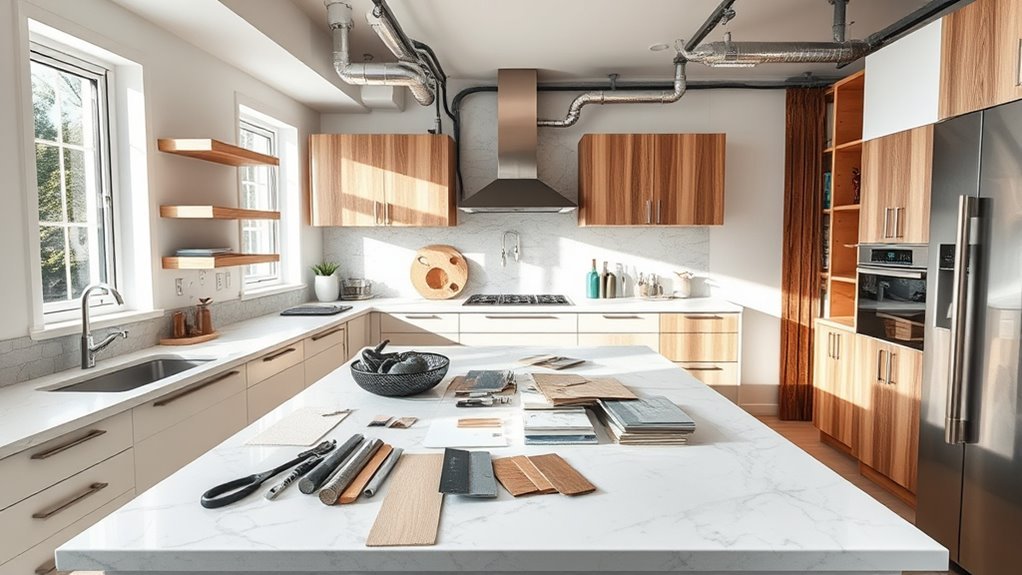
Several key factors influence how much your kitchen renovation will cost. Your design trends and style preferences directly impact expenses. Choosing modern or custom styles often raises the budget.
Material choices also play a huge role. High-end countertops or sustainable cabinetry increase costs, while basic options stay affordable. Layout considerations affect pricing too; moving plumbing or electrical systems can be pricey.
Choosing materials and adjusting layouts, like plumbing moves, significantly impact your renovation budget.
Lighting options, from simple fixtures to smart systems, add variable costs. Sustainability practices might require upfront investment but can save money in the long run.
Renovation timelines and project scope influence labor expenses. Shorter timelines or extensive renovations typically cost more. Financing options matter too, as how you fund your project can affect cash flow and decisions.
Finally, contractor selection is vital. Experienced professionals might charge more but often guarantee quality work and help prevent costly mistakes. By weighing these factors carefully, you can keep your kitchen renovation on track financially without sacrificing your vision.
How Much Will Your Kitchen Renovation Cost?
Wondering how much your kitchen renovation will set you back? The answer mainly depends on your chosen styles and how quickly you want the project done.
Modern, minimalist designs might cost less because they have simpler layouts, while custom or luxury styles often need a bigger budget. Your renovation timeline also plays a big role. Shorter schedules can raise labor costs since contractors might work overtime, while longer timelines could increase expenses with ongoing material storage or temporary kitchen setups.
Start by defining your style preferences and your desired timeline. Keep in mind that unexpected delays or design changes can impact both your schedule and your budget. Planning carefully and communicating clearly with your contractor will help you stay on track.
In the end, your kitchen renovation cost reflects your style choices and how efficiently the work proceeds. A well-thought-out plan is key to managing expenses and making your dream kitchen a reality.
Estimating Costs for Cabinets, Counters & Appliances
Three key components, cabinets, countertops, and appliances, often make up the largest part of your kitchen renovation budget. When estimating costs, start by looking at cabinet styles and materials, including custom options and eco-friendly choices that match your design and lifestyle.
Countertop materials vary a lot, from budget-friendly laminates to luxurious quartz or granite, each affecting your overall spend. For appliances, consider trusted brands that balance quality and price, and remember to include installation costs to avoid surprises.
Keep renovation timelines in mind because longer projects can impact financing options and overall expenses. To stay within budget, prioritize your must-haves and explore financing options for home renovations.
Typical Labor Costs You’ll Encounter in a Kitchen Remodel
When you’re planning a kitchen remodel, it’s a good idea to get familiar with the typical labor costs you’ll come across. These usually cover the hourly rates for various specialists such as plumbers, electricians, and carpenters.
Knowing what these rates look like can really help you plan your budget more effectively and steer clear of any unexpected expenses along the way.
Common Contractor Fees
Contractor fees usually make up a big part of your kitchen renovation budget, covering the labor needed to bring your design to life. Knowing common contractor fees helps you plan better and go into negotiations with confidence. Always ask for detailed fee breakdowns so you can see where your money is going.
Here are some typical contractor fees you’ll come across:
- Project management fees for overseeing schedules and subcontractors
- Labor costs for carpentry, plumbing, and electrical work
- Permit and inspection fees to ensure everything meets code
- Cleanup and waste disposal to keep your site safe and tidy
Knowing these fees upfront helps you avoid surprises and negotiate better terms, keeping your remodel on budget and on track.
Hourly Rates Breakdown
Understanding the hourly rates for various tradespeople is essential when budgeting for your kitchen remodel. Different specialists like plumbers, electricians, and carpenters charge varying rates based on experience and location.
An hourly wage comparison helps you identify who fits your budget best. For example, electricians often charge between $50 to $100 per hour, while carpenters may range from $40 to $80.
Keep in mind that contractor pricing strategies can greatly impact costs. Some contractors bill hourly, while others use flat fees or markups on materials.
Knowing these details upfront lets you negotiate better and avoid surprises. By understanding typical labor costs and how contractors price their work, you can plan your renovation budget more accurately and confidently.
Kitchen Renovation Costs: Basic, Mid-Range, and High-End Projects
When you’re thinking about renovating your kitchen, the costs can really vary based on what you want to do. For example, a basic renovation usually just covers the essentials—think fresh paint, new hardware, and maybe some updated appliances. It’s a simple way to give your kitchen a fresh look without breaking the bank.
If you’re looking to add a bit more style and functionality, mid-range projects are the way to go. These might include new countertops, better lighting, or upgraded cabinetry—things that make your kitchen more comfortable and visually appealing, but still at a reasonable price.
Now, if you’re dreaming big and want that high-end feel, be prepared for a higher price tag. High-end renovations involve premium materials, custom features, and often more intricate design work. It’s all about creating a luxurious, personalized space that really stands out.
Basic Kitchen Renovation Costs
A basic kitchen renovation usually costs between $5,000 and $15,000, depending on your space size and the materials you pick. When planning, focus on improving the layout and choosing affordable, durable materials to keep costs down.
Here are some key areas to consider:
- Cabinets: Refacing or repainting existing cabinets can save money compared to fully replacing them.
- Countertops: Choose laminate or butcher block for stylish, budget-friendly surfaces.
- Flooring: Vinyl or tile offers durability without a high price tag.
- Fixtures and appliances: Update faucets and go for energy-efficient, entry-level appliances.
Mid-Range Kitchen Upgrades
Though basic renovations cover essential updates, mid-range kitchen upgrades let you improve both style and functionality without breaking the bank. You can reconfigure your kitchen layout to enhance workflow and maximize space, making cooking and entertaining more enjoyable.
This might involve moving appliances or adding an island to improve traffic flow. Upgrading your appliance selection to energy-efficient models with modern features can boost your kitchen’s performance and appeal.
Mid-range projects typically include better-quality cabinetry, upgraded countertops, and improved lighting, all of which contribute to a more polished look. By focusing on these upgrades, you’ll create a kitchen that’s both attractive and practical, increasing your home’s value without the high costs of luxury renovations.
High-End Kitchen Expenses
High-end kitchen renovations often involve several sophisticated upgrades that transform your space into a chef’s dream and a showpiece for your home. When you choose luxury finishes, custom cabinetry, and designer appliances, costs go up, but so does the value.
Expect to invest in premium countertops made from quartz, marble, or granite for durability and style. Upscale fixtures and advanced technology, like smart faucets and integrated lighting systems, also add to the cost.
Gourmet layouts that optimize flow and functionality, tailored to your cooking habits, are key. High-end materials throughout, including hardwood floors and bespoke backsplashes, complete the look.
These elements come together to create a kitchen that’s not only beautiful but highly functional, reflecting your taste and lifestyle with every detail.
How to Budget for Unexpected Kitchen Renovation Expenses
Because kitchen renovations often uncover hidden issues, you should set aside extra funds to cover unexpected expenses. These unexpected costs can include anything from outdated wiring to water damage behind walls.
To avoid financial stress, plan for at least 10-20% of your total budget to be reserved specifically for these surprises. When you encounter unexpected costs, make budget adjustments promptly to prevent overspending.
Track all expenses carefully and prioritize essential fixes over cosmetic upgrades if money gets tight. Communicate regularly with your contractor to stay informed about potential issues early on.
Which Kitchen Renovation Projects Offer the Best ROI?
Which kitchen renovation projects give you the most bang for your buck? Focusing on improvements that boost resale value while blending modern and timeless styles is key. Here are four projects that deliver great ROI:
- Cabinetry Choices. Upgrade to durable, stylish cabinets using eco-friendly materials. They completely change your kitchen’s look and attract buyers.
- Layout Optimization. Reconfigure the space to improve flow and functionality. A smart layout makes the kitchen more user-friendly and catches buyers’ eyes.
- Energy Efficiency. Install energy-efficient appliances and lighting. This lowers utility bills and appeals to eco-conscious buyers.
- Smart Technology. Add smart features like automated lighting or smart faucets. These modern touches boost convenience and resale value.
How to Save Money Without Sacrificing Kitchen Quality
While renovating your kitchen, you can save money by focusing on key upgrades and choosing quality materials wisely. Prioritize areas that matter most for both looks and function, like cabinets and countertops.
Instead of expensive natural stone, consider budget-friendly options like laminate or engineered stone. Smart shopping is crucial—compare prices online, look for seasonal sales, and consider gently used fixtures or appliances to stretch your budget.
Don’t forget to invest in durable finishes and hardware. These small choices improve longevity and help you save on future repairs. Stick to your plan to avoid costly changes during the project.
When Should You Hire a Pro vs. DIY to Control Renovation Costs?
How do you decide whether to hire a professional or handle your kitchen renovation yourself? It really comes down to balancing your DIY skills with professional expertise. Start by thinking about how complex the project is and your comfort level with the work.
Next, consider how much time you can commit and whether safety or permits are involved. Here’s a quick guide:
- Project Complexity & Design Challenges: If your renovation involves structural changes, plumbing, or electrical work, it’s best to hire a pro.
- Skill Level & Safety Concerns: If you’re unsure of your skills or uncomfortable with tools, hiring a professional ensures quality and safety.
- Time Investment: Doing it yourself might save money, but it can take longer. If you’re short on time, professionals can get it done faster.
- Cost Benefit Analysis: Weigh potential savings against risks like mistakes or delays. Sometimes paying a little more upfront saves you costly fixes later.
Use this checklist to help decide: if the job needs precise work or permits, pros are worth it. For simpler tasks, your DIY skills can keep costs in check.
Planning Your Kitchen Renovation Budget: Tips for Success
Before you dive into your kitchen renovation, it’s a good idea to set a realistic budget. This way, you can avoid any surprises along the way. Think about what really matters most—focusing on the upgrades that will make the biggest difference in how you use your kitchen daily. By prioritizing these key areas, you’ll be able to make smarter choices without going overboard on spending.
Setting Realistic Budget Goals
Where should you begin when setting a realistic budget for your kitchen renovation? Start by using effective budgeting techniques combined with consistent expense tracking to keep your finances under control. Here’s how to set achievable goals:
- Honestly assess your total available funds before planning.
- Research average costs for materials and labor in your area.
- Allocate a contingency fund, around 10-15%, for unexpected expenses.
- Use budgeting apps or spreadsheets to monitor your spending in real time.
Prioritizing Renovation Expenses
Although it’s tempting to upgrade every feature at once, prioritizing your renovation expenses guarantees you focus on what truly matters. Start by identifying must-haves versus nice-to-haves, then allocate your budget accordingly.
Effective cost allocation assures you invest where it counts most, like durable cabinetry or efficient appliances, while trimming less critical costs. Keep a detailed expense tracking system to monitor your spending throughout the project.
This helps prevent overspending and allows you to adjust priorities if unexpected costs arise. By staying organized and focused, you’ll maximize your renovation budget without sacrificing quality.
Frequently Asked Questions
How Long Does a Typical Kitchen Renovation Take to Complete?
A typical kitchen renovation usually takes about 6 to 12 weeks to complete, depending on the project’s scope and your budget considerations. You’ll want to factor in renovation timelines carefully, as unexpected delays can happen.
Planning ahead helps keep everything on track so you don’t go over budget or face extended disruption. Staying organized and working with reliable contractors will make the process smoother and quicker for you.
What Permits Are Needed for a Kitchen Renovation?
Getting the right permits for your kitchen renovation is like assembling a puzzle—you need all the pieces to fit.
You’ll likely need building permits for any structural changes. Electrical permits are necessary if you’re rewiring, and plumbing permits are required for water line updates.
Kitchen zoning regulations also come into play, making sure your renovation meets local codes.
Check with your city’s building department to identify exactly which permits are needed before you start.
How Do I Choose the Right Kitchen Layout?
You choose the right kitchen layout by focusing on open concept designs that promote flow and social interaction. Think about creating functional zones like cooking, prep, and cleaning areas that make your daily tasks easier.
Consider the kitchen triangle between the sink, stove, and fridge to minimize movement. Match the layout to your space and lifestyle, whether it’s a galley, L-shape, or island setup.
Make sure your kitchen feels spacious and efficient so it works perfectly for you.
What Are the Latest Kitchen Design Trends?
You’ll love the latest kitchen design trends that focus on modern materials like quartz countertops and matte-finish cabinets.
Sustainable designs are gaining popularity, so consider recycled wood or energy-efficient appliances to reduce your footprint.
Open shelving, two-tone cabinetry, and bold backsplashes are also in style.
How Can I Increase Kitchen Storage Effectively?
You can boost your kitchen storage effectively by focusing on shelf organization and cabinet solutions. Did you know that 60% of homeowners wish they had added more storage during renovations?
Use adjustable shelves to make the most of vertical space, and install pull-out cabinet organizers to keep items within easy reach. Adding hooks inside cabinet doors or using stackable bins also makes a big difference.
These simple changes will make your kitchen feel more spacious and help keep everything neatly in place.
Conclusion
Renovating your kitchen can feel like steering through a maze, but with the right budget and plan, you’ll find your way to a beautiful space.
Understanding costs—from cabinets to labor—helps you stay on track and avoid surprises.
Knowing when to DIY or hire pros can save you money without sacrificing quality.
Smart choices today will pay off tomorrow, transforming your kitchen into the heart of your home.
A well-planned kitchen renovation cost is an investment in both style and value, making your space welcoming and functional.