How to Clean Kitchen Sink Drain Smell: A Step-by-Step Guide
Dealing with a smelly kitchen sink drain is a common frustration many people face. If you’re tired of unpleasant odors lingering every time you use your sink, you’re not alone.
Luckily, there are simple ways to freshen things up and keep your drain smelling clean.
To clean your kitchen sink drain smell, start by removing debris and scrubbing the strainer and garbage disposal. Pour half a cup of baking soda followed by a cup of vinegar down the drain, letting it fizz for 10-15 minutes before flushing with hot water.
You can also use boiling water, lemon juice, or enzyme cleaners to tackle odors naturally.
Maintain freshness by rinsing daily and checking plumbing for issues.
Keep going for more effective tips and prevention tricks.
Key Takeaways
- Remove and scrub the sink strainer and garbage disposal with hot water, ice, and coarse salt to eliminate debris and odors.
- Pour half a cup of baking soda and one cup of white vinegar into the drain. Let it fizz for 10-15 minutes, then flush with hot water.
- Use boiling water or a mix of baking soda and lemon juice regularly to dissolve grease and neutralize odors naturally.
- Maintain daily cleaning by rinsing drains with hot water, using a strainer, and wiping the sink to prevent odor buildup.
- Inspect plumbing for leaks or blockages. Flush pipes with baking soda and vinegar, and use enzyme cleaners weekly for lasting freshness.
Why Your Kitchen Sink Drain Smells Bad
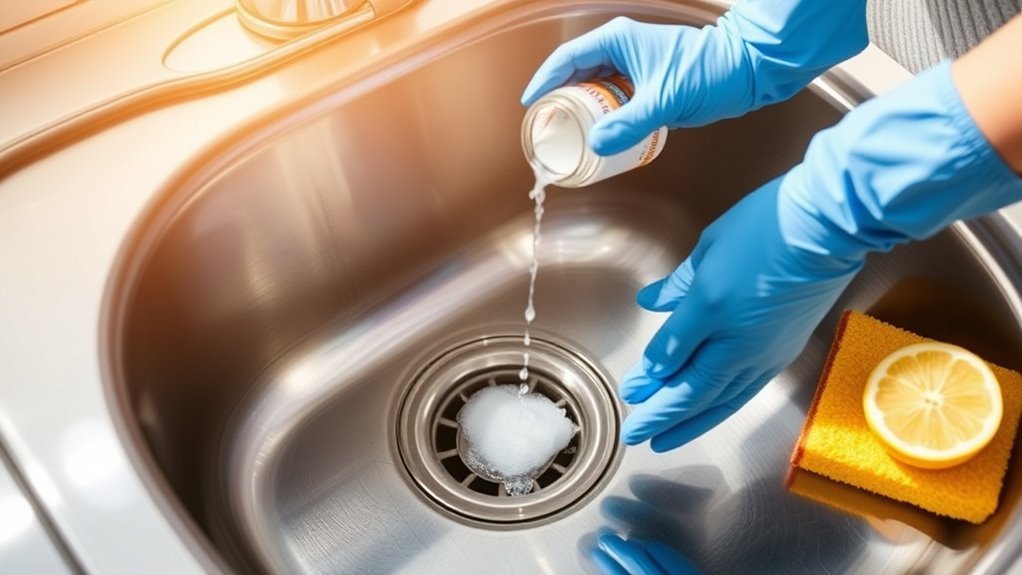
If you’ve noticed a foul smell coming from your kitchen sink drain, it’s usually because food particles, grease, and bacteria have built up inside the pipes. When food residue sticks to the walls of your drain, it creates the perfect environment for bacteria to thrive.
These bacteria break down the leftover food, releasing foul-smelling gases as a byproduct. Over time, this buildup gets thicker, making the odor more persistent and harder to get rid of.
Bacteria digest leftover food, producing foul gases that worsen as buildup thickens and odors become harder to eliminate.
Plus, grease and oil from cooking can solidify and trap food residue, making the problem worse. If you don’t clean your drain regularly, it can develop a strong, unpleasant smell that spreads throughout your kitchen.
Understanding that drain bacteria and trapped food residue cause these odors helps you target your cleaning efforts. Keeping your drain clear of this buildup is key to maintaining a fresh-smelling kitchen.
How to Prepare Your Kitchen Sink for Cleaning
First things first, clear out the area around your sink so you have plenty of space to work comfortably. It’s always easier to clean when there’s nothing cluttering the surface.
Next, grab all the cleaning supplies you’ll need—things like baking soda, vinegar, a scrub brush, and maybe some lemon if you like a fresh scent. Having everything handy makes the process smoother and quicker.
And don’t forget to remove any visible debris or leftover food from the sink. Taking care of that first helps ensure you get a deep, thorough clean and that nothing gets in the way of freshening up your drain.
Clear Sink Area
Start by removing everything from around your sink to create a clear workspace. Clearing clutter makes it easier to clean and helps you spot hidden grime or buildup that might cause odors.
Take this chance to organize your sink area—think about rearranging items for better access and tidiness. A neat sink supports a more efficient cleaning routine and reduces leftover residue that can smell.
Wipe down the countertop, faucet, and sink edges to remove surface dirt and prevent cross-contamination. Keeping this space clear sets the stage for a thorough drain cleaning and keeps your kitchen fresher longer.
Gather Cleaning Supplies
Gathering the right cleaning supplies guarantees you tackle kitchen sink drain odors effectively and efficiently. Start by assembling essential cleaning tools like a scrub brush, rubber gloves, a bucket, and a sponge. These basics help you reach and clean the drain thoroughly.
Next, consider eco-friendly options such as baking soda, white vinegar, and lemon juice. These natural ingredients break down grime and neutralize odors without harsh chemicals. If you prefer, you can also use environmentally safe drain cleaners labeled as biodegradable.
Avoid using abrasive tools that might damage your sink’s surface. Having all your supplies ready before you begin will streamline the cleaning process and ensure you handle odors safely and sustainably. Now, you’re set to move on to removing visible debris.
Remove Visible Debris
Before diving into scrubbing, remove any visible debris from your kitchen sink drain to prevent clogs and make cleaning more effective. Debris like food scraps, grease buildup, and soap residue are common culprits.
Start by checking the drain opening and use gloves to pick out larger pieces manually. For smaller particles, a pair of tweezers or a drain brush works well.
You can also use a wet cloth to wipe away grease and grime around the drain edges. Just be careful not to push debris further down the drain—that only makes blockages worse.
These removal steps help you clear out the stubborn debris before applying cleaning solutions. Taking this step improves your sink’s cleanliness and helps eliminate unpleasant smells caused by trapped organic matter.
How to Clean the Sink Strainer and Garbage Disposal
Although the sink strainer and garbage disposal work hard to keep your kitchen running smoothly, they can trap food particles and odors that cause unpleasant smells. For effective sink strainer maintenance, start by removing the strainer and rinsing it under hot water to wash away debris. Use a small brush or old toothbrush to scrub away any stuck-on residue. Regular cleaning prevents buildup that leads to odors.
When it comes to garbage disposal cleaning, first confirm the unit is turned off. Then, pour a handful of ice cubes and coarse salt into the disposal and run cold water while turning it on briefly. This action scrubs the blades and removes trapped particles. Finally, rinse the disposal with hot water to flush out loosened debris. Performing these steps regularly keeps your sink strainer and garbage disposal fresh, reducing drain smells and maintaining kitchen hygiene.
How to Use Baking Soda and Vinegar to Freshen Your Kitchen Sink Drain
After cleaning your sink strainer and garbage disposal, tackling the drain itself can help eliminate lingering odors. Using baking soda and vinegar is a simple yet effective way to clean your drain and get rid of smells.
Here’s how to do it:
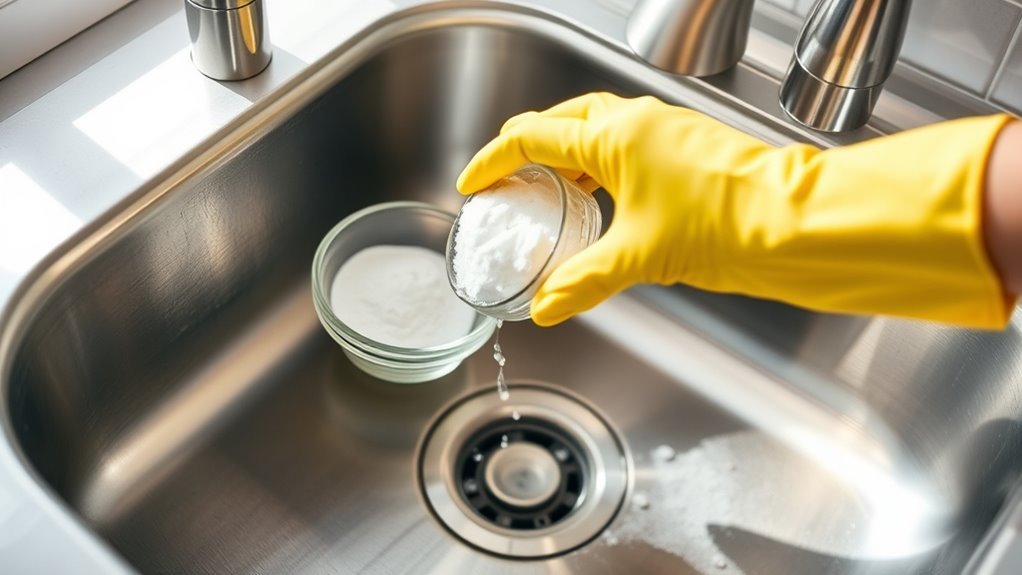
- Sprinkle baking soda: Pour about half a cup of baking soda directly into the drain. It helps absorb odors and breaks down grime.
- Add vinegar: Slowly pour one cup of white vinegar down the drain. The reaction with baking soda will fizz, loosening buildup and neutralizing smells.
- Wait and rinse: Let the fizzing work for 10-15 minutes. Then, flush the drain with hot water to wash away debris and refresh your sink.
This natural combo tackles odors and cleans your drain without harsh chemicals. Repeat this trick weekly to keep your kitchen sink smelling fresh and clean.
How to Remove Sink Drain Odors With Simple DIY Methods
When your kitchen sink drain starts to emit unpleasant odors, you can tackle the problem with simple DIY methods using common household items. Start by pouring boiling water down the drain to dissolve grease and debris that cause the smell.
Next, mix lemon juice and baking soda—pour baking soda first, then lemon juice—to neutralize odors naturally. Let it sit for 10 minutes before flushing with hot water.
Pour baking soda, then lemon juice to naturally neutralize odors—wait 10 minutes before rinsing with hot water.
Another great trick is grinding citrus peels in the garbage disposal. This freshens the drain and helps prevent sink odors.
Regular maintenance tips include cleaning your drain trap once a month and avoiding pouring grease or food scraps down the drain. These simple steps prevent buildup that causes odors.
How to Use Enzyme Cleaners for Kitchen Sink Drain Smells
Enzyme cleaners are really great because they naturally break down the organic stuff that’s causing that unpleasant smell in your sink drain. It’s like giving your drain a little spa treatment! Just follow the instructions on the bottle for the best results, and make sure to let it sit overnight.
With a bit of patience, you’ll notice your sink smelling fresh and clean—no harsh chemicals needed. It’s a simple, effective way to keep things smelling nice and fresh in your kitchen.
Benefits of Enzyme Cleaners
Although kitchen sink drains can trap stubborn odors, enzyme cleaners tackle the problem at its source by breaking down organic buildup. Their enzyme action targets the root cause and provides effective odor elimination without harsh chemicals.
When you use enzyme cleaners, you’ll notice these key benefits:
- Long-lasting freshness. Unlike maskers, enzyme cleaners keep working to prevent new odors by digesting residues.
- Eco-friendly cleaning. They rely on natural enzymes, making them safe for your plumbing and the environment.
- Reduced maintenance. Regular use helps keep drains clear, minimizing clogs and the need for intense cleanings.
Application Tips and Tricks
Enzyme cleaners offer powerful benefits, but getting the best results depends on how you apply them. First, make sure your sink drain is free of standing water so the enzymes can reach grime and buildup effectively.
Pour the cleaner directly into the drain and avoid rinsing immediately. Give it several hours or overnight to work.
For ongoing sink odor prevention, use enzyme cleaners regularly based on your cleaning schedule. Usually, once a week is enough for busy kitchens.
If odors stick around, increase applications to twice a week. Also, keep the drain warm and moist because enzymes thrive in these conditions.
Finally, avoid mixing enzyme cleaners with harsh chemicals, which can deactivate them. Following these tips helps you keep your kitchen sink drain fresh and clean.
How to Safely Flush Your Kitchen Sink Drain With Hot Water and Bleach
Flushing your kitchen sink drain with hot water and bleach can effectively eliminate stubborn odors and kill bacteria. To do this safely and support your drain maintenance and odor prevention efforts, follow these simple steps:
Flush your kitchen sink with hot water and bleach to eliminate odors and kill bacteria safely.
- Prepare the area: Open windows or turn on a fan to keep good ventilation. Put on gloves to protect your skin from bleach.
- Flush with hot water: Boil about a liter of water and pour it slowly down the drain. This helps loosen grime and warms the pipes.
- Add bleach carefully: Mix 1/4 cup of bleach with a gallon of warm water. Pour it down the drain and let it sit for 10 minutes. Finish by flushing with hot water again to clear away residue.
This method helps kill odor-causing bacteria safely while keeping your drain clean. Avoid mixing bleach with other cleaners and always follow safety guidelines to protect yourself and your plumbing.
How to Prevent Kitchen Sink Drain Odors With Regular Maintenance
To keep your kitchen sink smelling fresh, it’s a good idea to get into the habit of cleaning it daily and flushing the drain with hot water. It’s a simple step that really makes a difference in keeping odors at bay.
You can also try using natural deodorizers like baking soda and vinegar. Just sprinkle some baking soda down the drain, followed by a splash of vinegar, and let it fizz for a few minutes before rinsing with hot water. It’s a great way to neutralize smells without resorting to harsh chemicals.
If you make these little routines part of your regular cleaning, you’ll notice that nasty odors won’t build up over time. It’s all about consistency and keeping things fresh!
Daily Cleaning Habits
Keeping your kitchen sink drain fresh starts with simple daily cleaning habits. By adding small daily routines, you can really prevent odors and keep unpleasant smells away.
Here’s what you can do every day:
- Rinse the drain with hot water after each use to wash away food particles and grease.
- Wipe down the sink and surrounding areas to remove any residue that might cause odors.
- Use a strainer to catch food scraps and empty it regularly so nothing sits in the drain.
Sticking to these routines makes a big difference in preventing buildup that causes smells. You don’t need fancy products—just consistent care to keep your sink clean and fresh.
Use Natural Deodorizers
Anyone can freshen up their kitchen sink drain naturally with simple, natural deodorizers. These ingredients not only neutralize odors but also help absorb them, keeping your drain smelling fresh without harsh chemicals. Regular use of natural deodorizers can prevent buildup that causes bad smells.
Here are some easy natural deodorizer options you can try:
| Natural Ingredient | Odor Absorption Benefit |
|---|---|
| Baking Soda | Neutralizes acidic and basic odors |
| Lemon Juice | Adds a fresh citrus scent and breaks down grease |
| White Vinegar | Kills bacteria and removes odors |
| Coffee Grounds | Absorbs strong odors naturally |
| Salt | Helps eliminate moisture and odor-causing residues |
Add these to your routine to keep your kitchen sink drain clean and odor-free naturally.
Regular Drain Flushing
Flushing your kitchen sink drain at least once a week helps prevent odors and buildup before they start. This simple step is key to effective drain maintenance and odor prevention. Here’s how to keep your drain fresh:
- Run hot water for 2-3 minutes. This melts grease and flushes away debris.
- Add a cup of white vinegar, let it sit for 10 minutes, then flush with hot water. Vinegar naturally breaks down residue causing smells.
- Use baking soda once a week before flushing to neutralize acids and clean your drain’s interior.
How to Check and Fix Plumbing Issues Causing Sink Drain Smells
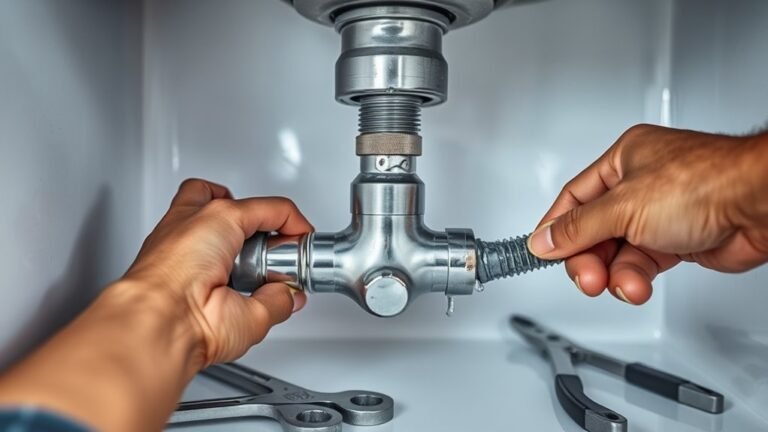
One common cause of sink drain smells is a plumbing issue that you can often fix yourself. Start by inspecting the plumbing under the sink. Look for leaks, cracks, or loose connections in the pipes, since these can cause odors.
Check the P-trap—the curved pipe under your sink—to make sure it holds water. This water blocks sewer gases from escaping. If it’s dry or clogged, smells can come through. Tighten any loose fittings and replace damaged parts if needed.
Next, look at the vent pipes on your roof or walls. Make sure they aren’t blocked. A blocked vent can lead to poor drainage and bad odors. If the smells persist, try flushing the drain with baking soda and vinegar to clear out buildup inside the pipes.
Daily Habits to Keep Your Kitchen Sink Smelling Fresh
Keeping your plumbing in good shape helps reduce odors, but maintaining a fresh-smelling kitchen sink also depends on simple daily habits. Practicing consistent sink odor prevention through daily cleaning can make a big difference. Here are three easy habits to keep your kitchen sink smelling fresh:
- Rinse thoroughly after use. Always flush your sink with hot water after washing dishes to clear away food particles that cause odors.
- Clean the drain daily. Use a mixture of baking soda and vinegar to break down buildup. Let it sit for a few minutes, then flush with hot water to keep the drain clear and odor-free.
- Empty and clean the sink strainer. Food scraps trapped in the strainer can produce bad smells. Empty it daily and rinse well to prevent buildup.
These simple steps combine daily cleaning with effective sink odor prevention, helping you maintain a fresh kitchen environment effortlessly.
Frequently Asked Questions
Can Kitchen Sink Drain Smells Indicate a Health Hazard?
Yes, kitchen sink drain smells can indicate a drain health issue. When you notice persistent odors, it often points to bacteria buildup, trapped food particles, or mold growth—all common odor sources that can affect your home’s hygiene.
Ignoring these smells might lead to more serious problems like clogged drains or even harmful bacteria spreading. You should address these odors promptly to maintain good drain health and keep your kitchen safe and fresh.
Are Commercial Chemical Drain Cleaners Safe for Kitchen Sinks?
You shouldn’t rely heavily on commercial chemical drain cleaners for your kitchen sink. Their harsh ingredients, like lye or sulfuric acid, can damage pipes and harm the environment.
Instead, try alternative cleaning methods like baking soda and vinegar or enzyme-based cleaners. These options are gentler, safer for your plumbing, and still effective at tackling odors without the risks of strong chemicals.
How Often Should Professional Plumbing Inspections Be Scheduled?
You should schedule professional plumbing inspections at least once a year to keep your drain maintenance on track. Regular checkups help catch issues early, preventing bad smells and costly repairs.
If you notice persistent odors or slow drains, consider increasing inspections to twice a year. Staying proactive with your plumbing helps ensure your kitchen sink drains stay clean, fresh, and fully functional without surprises.
Can Certain Foods Contribute to Persistent Sink Drain Odors?
Yes, certain food scraps can definitely contribute to persistent sink drain odors. When bits of food get trapped in your drain, they start to decompose and create unpleasant smells.
To prevent this, you should be careful about what you let go down the drain and practice regular drain maintenance. Clearing out food scraps promptly and using natural cleaners helps keep your drain fresh and odor-free, making your kitchen a more pleasant space.
Does Water Hardness Affect the Effectiveness of Cleaning Methods?
Yes, water hardness can affect how well your cleaning methods work. Hard water has minerals that make soap less effective, so it’s harder to break down grease and grime in your drain.
Using water softening techniques can help improve your results by stopping mineral buildup. Consider installing a water softener or using cleaning products made for hard water.
This helps keep your sink smelling fresh and your drain flowing smoothly.
Conclusion
So, who knew your kitchen sink drain could turn into a tiny smell factory? But now that you’ve tackled the stinky culprit with baking soda, vinegar, and a bit of elbow grease, you’re basically a drain-cleaning pro.
Just remember, keeping it fresh isn’t a one-time miracle. It’s a daily habit. Otherwise, you might find yourself starring in the next episode of “When Kitchen Drains Attack.”
Lucky for you, prevention’s way easier than fighting bad smells. Regular cleaning and some simple tips can keep your sink smelling fresh and clean.