How to Use a Meat Thermometer for Steak to Get Perfect Doneness Every Time
Using a meat thermometer for steak is the most reliable way to achieve your preferred level of doneness and ensure food safety. By inserting the probe into the thickest part of the steak and monitoring the temperature closely, you can avoid guesswork and overcooking. This tool gives you an immediate and accurate temperature reading, which directly corresponds to how rare or well-done your steak will be.
Many home cooks struggle with timing steaks perfectly, often resulting in steaks that are either undercooked or dry. A meat thermometer removes uncertainty by letting you hit the exact internal temperature recommended for rare, medium-rare, medium, or well-done steaks. This is especially important for thicker cuts where the outside cooks faster than the inside. Additionally, it helps maintain food safety by confirming the steak reaches safe temperatures.
This article will guide you through selecting and using a meat thermometer for steak, explain recommended temperature ranges for various doneness levels, troubleshoot common problems, and offer tips on caring for your thermometer. You’ll also find comparisons of different types of thermometers and answers to frequently asked questions.
Understanding Meat Thermometers for Steak

Types of Meat Thermometers
There are mainly three types of meat thermometers used for steak: instant-read, probe (leave-in), and wireless Bluetooth models. Instant-read thermometers provide quick temperature readings and are inserted only when checking doneness. Leave-in probe thermometers stay in the steak throughout cooking, sending data to an external display or app.
Choosing the right type depends on your cooking method and preferences. Instant-read thermometers are versatile for pan-searing or grilling, while leave-in probes excel in low and slow methods like sous vide or oven roasting. Wireless thermometers add convenience but usually cost more.
How a Meat Thermometer Works
Meat thermometers measure the internal temperature by detecting heat transfer inside the steak. The metal probe or sensor tip wires carry electrical signals to a display, converting temperature exposure into readable numbers. This direct measurement helps avoid guesswork based on steak appearance or cooking time.
Accuracy depends on proper probe placement—typically inserted into the thickest part of the steak, avoiding bone or fat. The sensor must reach the center to reflect the steak’s core temperature, which determines doneness.
How to Use a Meat Thermometer for Steak
Inserting the Thermometer Correctly
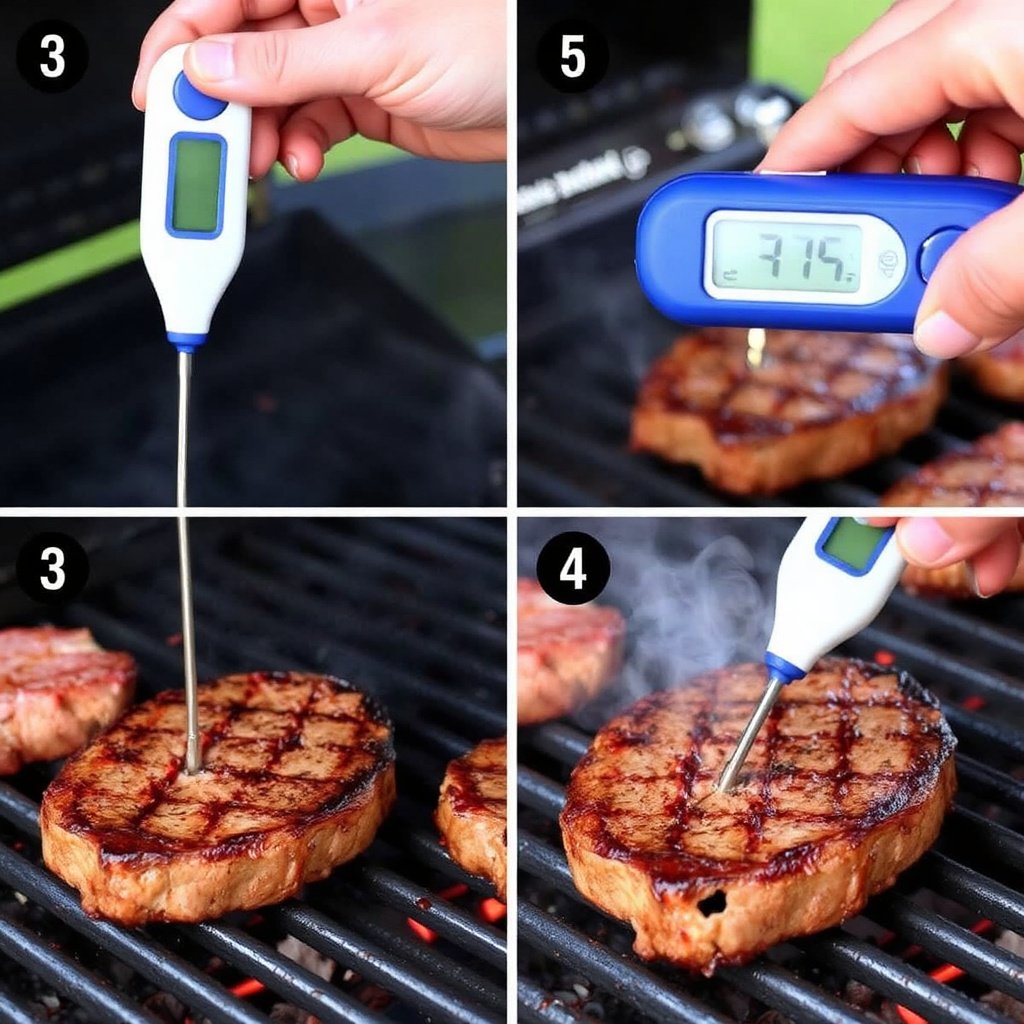
Locate the thickest part of the steak, usually the center, and push the thermometer probe horizontally into it. Avoid touching bones or fat as they heat differently and may give inaccurate readings. Insert the probe about halfway through the steak's thickness for the best core temperature measure.
Hold the steak steady and make sure the thermometer’s sensing tip is completely embedded. This ensures the reading reflects the internal temperature rather than surface heat. If your thermometer has a digital display, wait a few seconds for the temperature to stabilize before reading.
For more on this, see our related guide: What Is a Medium Well Steak? Precise Guide to Cooking It Perfectly.
Checking Doneness with Temperature Guidelines
Steak doneness corresponds to specific internal temperature ranges: 120-125°F for rare, 130-135°F for medium-rare, 140-145°F for medium, 150-155°F for medium-well, and 160°F+ for well-done. Remove the steak from heat once it reaches your target temperature and allow it to rest for several minutes; the temperature will rise slightly during resting.
Using a meat thermometer for steak takes the guesswork out of cooking. By following these guidelines, you can tailor your steak precisely to your taste, avoiding overcooked or undercooked results.
- Rare: 120-125°F (49-52°C)
- Medium-rare: 130-135°F (54-57°C)
- Medium: 140-145°F (60-63°C)
- Medium-well: 150-155°F (66-68°C)
- Well-done: 160°F+ (71°C+)
Using a Meat Thermometer for Different Steak Cooking Methods

Grilling and Pan-Searing
When grilling or pan-searing, steaks cook fast with intense heat. Use an instant-read meat thermometer to check temperature quickly by inserting the probe near the center after flipping the steak. Checking regularly helps prevent overcooking, especially for thick cuts.
Time your checks between cooking intervals—avoid leaving the grill or pan open too long to retain heat. Carrying a thermometer during these methods gives control over final doneness without sacrificing juiciness.
Oven Roasting and Sous Vide
With oven roasting or sous vide, temperature rises more evenly and slowly. Leave-in probe thermometers are ideal here, as they monitor steak temperature continuously without opening the oven or water bath.
This method allows you to set a precise target temperature and get alerts when reached, making it almost foolproof to achieve your exact desired doneness.
Tips for Maintaining and Calibrating Your Meat Thermometer

Cleaning and Storing the Thermometer
After each use, clean the thermometer probe with warm soapy water and sanitize it to avoid cross-contamination. Avoid submerging digital parts unless rated waterproof. Store your thermometer in a protective case to prevent damage to the probe tip.
Proper cleaning and storage extend the life of your meat thermometer and keep it sanitary for every steak cooked.
For more on this, see our related guide: How to Rest a Steak Perfectly: Proven Times, Tips & Common Mistakes.
Calibrating for Accurate Temperature Readings
Check your thermometer's accuracy at least once a month by calibrating it in an ice water bath. Insert the probe into ice water and verify that the reading is at 32°F (0°C). Adjust the thermometer if possible, or make a mental note of any consistent offset.
Regular calibration ensures that your steak doneness measurements are precise, preventing overcooked or unsafe steaks.
Common Mistakes to Avoid When Using a Meat Thermometer for Steak

Avoiding Improper Probe Placement
A frequent error is inserting the thermometer probe too close to bone, fat, or the edge of the steak. These areas conduct heat differently and give false readings that can lead to overcooking or undercooking.
Always insert the probe into the thickest, meatiest part to get a true internal temperature. Avoid touching the grill, pan, or cooking surface with the probe tip during measurement.
For further reading on meat thermometers and their history, visit the detailed article about meat thermometers on Wikipedia. meat thermometers on Wikipedia.
Not Allowing for Resting Temperature Rise
Steak continues to cook slightly after removal from heat—a phenomenon known as carryover cooking. Ignoring this can result in steaks that are overdone once rested.
Remove the steak a few degrees below your target temperature (about 5°F less) and let it rest for 5 to 10 minutes. This provides juicy, perfectly cooked steak every time.
Comparison of Different Meat Thermometer Types for Steak
Here’s a comparison of popular meat thermometer categories highlighting their features, advantages, and ideal uses for steak cooking.
| Thermometer Type | Speed of Reading | Ease of Use | Ideal Cooking Method | Price Range |
|---|---|---|---|---|
| Instant-Read | 5-10 seconds | Very easy, handheld | Grilling, pan-searing | $15-$40 |
| Leave-In Probe | Continuous readout | Moderate, requires setup | Oven roasting, sous vide | $30-$70 |
| Wireless Bluetooth | Real-time alerts | Easy with smartphone | All types, especially slow cook | $50-$150 |
| Dial Oven-Safe | Slower (minutes) | Simple mechanical | Oven cooking | $10-$25 |
Frequently Asked Questions
Can I use a meat thermometer for thin steaks?
Thin steaks cook quickly and can be tricky to measure accurately. Use an instant-read thermometer and insert the probe sideways near the center, but be careful not to go through the meat as it may touch the pan or grill.
Is it safe to leave a thermometer probe in the steak while grilling?
Only leave-in probe thermometers designed for continuous use in high heat can stay in steaks on the grill. Instant-read thermometers should be inserted only briefly to prevent damage.
How do I know when to remove the steak from the heat?
Remove the steak when the thermometer reads 5°F (3°C) below your target doneness temperature to allow for carryover cooking during resting.
What if my meat thermometer reading seems inaccurate?
Recalibrate your thermometer regularly using an ice water test. Also, avoid touching bone or fat with the probe tip, and ensure the probe is inserted into the thickest part of the steak.
Are wireless meat thermometers reliable for steak cooking?
Wireless thermometers offer convenience and timely alerts. When properly calibrated and used within their temperature limits, they provide reliable results for all steak cooking methods.
Key Takeaways
- Insert the thermometer probe into the thickest part of the steak, avoiding bone or fat.
- Use internal temperature guidelines to check steak doneness precisely.
- Choose a meat thermometer type that suits your cooking style for best results.
- Allow steak to rest after cooking, as its temperature will rise slightly.
Conclusion
Using a meat thermometer for steak simplifies cooking by eliminating guesswork and providing immediate, accurate internal temperature readings. Focusing on proper probe placement and adhering to temperature guidelines gives you control over doneness and food safety. This approach works regardless of your cooking method, making steak preparation consistent and enjoyable.
For fast methods like grilling or searing, an instant-read meat thermometer offers quick checks and precise results. When roasting or using sous vide, leave-in probe thermometers ensure hands-off monitoring with continuous data. Wireless thermometers enhance convenience for all methods with alerts you can monitor remotely. Calibrating your thermometer regularly and practicing correct insertion techniques will maintain accuracy and longevity.
Whether you prefer rare or well-done steaks, following these practices with a meat thermometer helps you cook steak exactly to your liking. Start by investing in a reliable thermometer, keep it clean and calibrated, and apply the temperature guidelines provided. This straightforward approach will give you juicy, flavorful steak cooked just right, every time.