How Tall Are Kitchen Counters? The Complete Answer
Are you tired of kitchen counters that just don’t feel right? Many people struggle with choosing the right height, leading to discomfort during food prep and cooking.
You’re not alone in wanting a space that’s both functional and comfortable.
How Tall Are Kitchen Counters? The Complete Answer
Kitchen counters are typically 36 inches tall, designed to match your wrist height for comfort and to reduce strain during food prep. This height helps maintain good posture and lowers the risk of back and wrist pain.
Different tasks might need varied heights—like lower sinks or higher baking areas—for better ergonomics.
You can even customize counter heights to suit your family’s needs and style.
Keep exploring to find the perfect balance between comfort, function, and design.
Key Takeaways
- Standard kitchen counters are usually around 36 inches tall, which matches the average wrist height for comfortable working.
- Counter heights can change depending on what you’re doing—prep areas might be lower, baking spots higher, and cleaning zones often lower.
- Custom heights are great for comfort, especially if you’re shorter or taller than average—you can have counters that suit your needs.
- Some counters are adjustable, so you can switch between sitting and standing while cooking, making things more ergonomic.
- The right counter height not only looks good but also helps with posture and makes cooking more comfortable over the long haul.
What Is the Standard Height for Kitchen Counters?
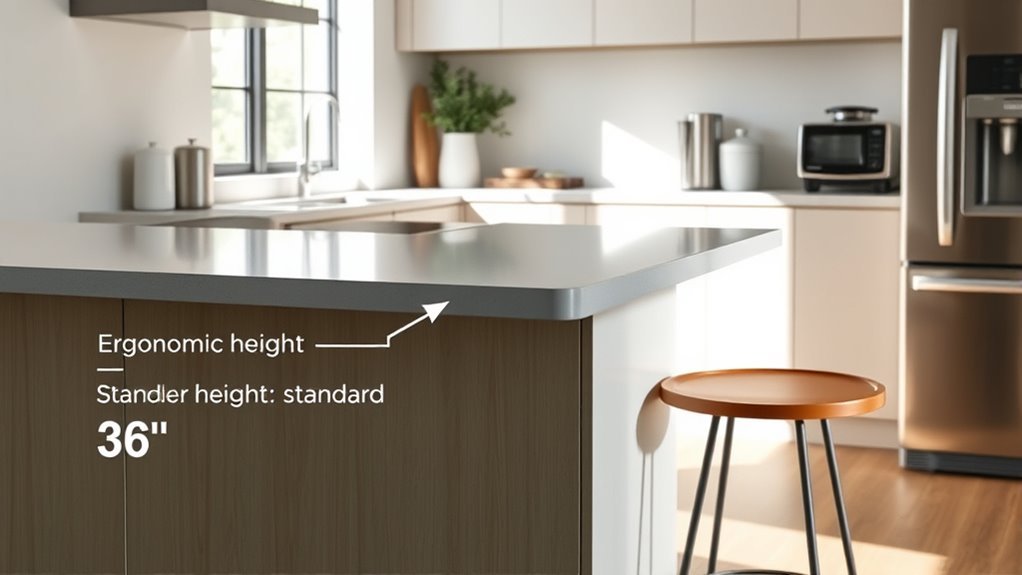
While kitchen counter heights can vary, the standard height is usually 36 inches from the floor. This height works well for most people, making food prep and other tasks comfortable.
This 36-inch measurement strikes a good balance between usability and comfort during everyday kitchen activities. It suits a wide range of tasks without causing strain.
Ergonomic factors are key to why this height is so common. Counters set at 36 inches match the average person’s wrist height, helping reduce back pain or discomfort from bending or reaching.
Ergonomic design at 36 inches helps align counters with wrist height, easing strain and discomfort.
Of course, personal needs matter. Taller folks might prefer a higher counter, while shorter users may choose something lower. Considering these factors helps you pick the best height for your kitchen.
Why Does Kitchen Counter Height Matter for Comfort?
Choosing the right kitchen counter height directly impacts your comfort during food prep and other tasks. When your counters match your height, you put less strain on your back, shoulders, and wrists. Good ergonomics means your body stays in a natural position, helping prevent fatigue and discomfort over time.
If counters are too tall or too short, you might find yourself hunching or reaching awkwardly. This can lead to aches and make cooking less efficient. Everyone’s height and cooking style are different, so your preferences matter a lot.
Some people prefer a slightly higher counter for chopping, while others want a lower surface to roll dough easily. Thinking about what works best for you makes your kitchen more inviting and functional. Paying attention to counter height helps you enjoy cooking and stay comfortable while doing it.
How Kitchen Counter Height Varies by Task
Because different kitchen tasks require different movements, counter height can vary to suit each activity better. When setting up your kitchen, you’ll notice that prep stations often benefit from slightly lower counters, making chopping and slicing more comfortable without straining your shoulders.
Cooking tasks like stirring pots or sautéing work best at standard counter heights, where you can maintain good posture and control over your cookware. If you enjoy baking, dedicated baking zones might have higher counters to make kneading dough and rolling out pastries easier on your back.
Cleaning surfaces usually have standard heights but are sometimes lower for easier access to sinks. For food presentation, you might want a taller counter or island where you can arrange dishes stylishly and serve guests.
Tailoring counter heights to meal prep activities helps you stay comfortable and efficient, reducing fatigue and improving your overall kitchen experience.
Common Variations in Kitchen Counter Heights
You’ll notice that most kitchen counters are typically around 36 inches tall, but that’s not set in stone. Depending on what works best for you, the height can vary. Some kitchens even come with adjustable counters, so you can tweak the height to make cooking and prepping more comfortable. Getting familiar with these common variations can really help you pick the perfect counter height for your space and daily comfort.
Standard Height Measurements
Most kitchen counters measure between 34 and 36 inches in height, a range designed to suit the average person’s comfort while cooking or preparing food. This standard counter height supports good kitchen ergonomics, helping you avoid strain on your back and shoulders during meal prep.
While 36 inches is common, some counters might be slightly lower or higher, depending on your kitchen’s design or your personal needs. If you’re taller or shorter than average, these small variations can affect how comfortable your workspace feels.
When planning your kitchen, keep counter height in mind to match your ergonomic needs. Getting the right height helps you work efficiently without discomfort, making your kitchen a more enjoyable place to spend time.
Adjustable Counter Options
How can adjustable counters transform your kitchen experience? By offering adjustable heights, these counters adapt perfectly to your needs, whether you’re chopping veggies or rolling dough. You won’t have to strain your back or bend awkwardly because the surface adjusts to you.
Versatile designs mean you can switch between sitting and standing positions, making meal prep more comfortable and efficient. These counters work well in multi-user kitchens, accommodating different heights easily.
Plus, they add a modern, functional touch to your space. Investing in adjustable counter options guarantees your kitchen remains ergonomic and user-friendly, no matter who’s cooking.
If you want flexibility and comfort, adjustable heights provide a smart, practical solution that fits your lifestyle.
How to Measure Your Ideal Kitchen Counter Height
Want to figure out the perfect height for your kitchen counter? It’s pretty simple—just measure from the floor up to your wrist when your arm is hanging relaxed at your side. That way, you’ll get a good idea of what feels comfortable for you when you’re chopping, mixing, or just hanging out in the kitchen.
Keep in mind, choosing the right height isn’t just about comfort—it can also help reduce strain on your back and shoulders. So, taking a quick measurement now can make your time in the kitchen way more enjoyable and less tiring.
Measuring Counter Height Basics
Finding the perfect kitchen counter height starts with knowing how to measure your workspace accurately. First, gather essential tools like a tape measure, level, and a pencil.
Stand at your kitchen workspace as you measure to replicate your natural posture. Use measuring techniques that involve checking from the floor to the top surface of the counter, ensuring you get an exact height in inches or centimeters.
Double-check your measurements with a level to confirm the surface is even. Remember to measure multiple spots along the counter since heights can vary slightly.
Accurate measuring forms the foundation for customizing your kitchen counters to fit your needs perfectly, making your cooking and prep time much more comfortable and efficient.
Considering User Comfort
Although standard counter heights work for many kitchens, your comfort depends on customizing the height to fit your body. To get the best comfort, measure from the floor up to your wrist when your arm is bent at a 90-degree angle.
This measurement helps create an ergonomic design that reduces strain during food prep and cooking. Use the table below to find your ideal counter height based on your wrist height:
| Wrist Height (inches) | Recommended Counter Height (inches) |
|---|---|
| 30 | 36 |
| 32 | 38 |
| 34 | 40 |
| 36 | 42 |
| 38 | 44 |
Adjusting your counter height this way ensures your kitchen is comfortable and efficient.
ADA Guidelines for Accessible Kitchen Counter Heights
When designing a kitchen that everyone can use comfortably, you should follow the ADA guidelines for accessible counter heights. These standards help ensure your kitchen is usable by people with disabilities, giving them independence and ease of use.
The ADA recommends keeping kitchen counters no higher than 34 inches. This height allows wheelchair users to access the counters comfortably without strain.
To make counters more accessible, remember to provide a clear knee space underneath. This space should be at least 27 inches high, 30 inches wide, and 19 inches deep.
Make sure the counter surface is smooth and free of obstructions, so it’s easy to work on. Also, consider using lever-style or touch-activated faucets for easier operation.
Customizing Kitchen Counter Heights for Your Family
Since every family member has different needs and heights, customizing your kitchen counter heights can make cooking and cleaning much more comfortable for everyone. Counter customization allows you to tailor surfaces so that shorter family members aren’t straining to reach, while taller individuals avoid bending over.
Think about how each person uses the kitchen—whether it’s food prep, baking, or washing dishes—to decide the ideal height for different work zones. You might even consider adjustable or varied counter heights in your layout to accommodate multiple users.
Addressing family needs through thoughtful counter customization not only boosts efficiency but also reduces fatigue and discomfort during daily tasks. Before finalizing, measure everyone’s elbow height and consider ergonomic principles to create counters that suit your household perfectly.
How Counter Heights Shape Your Kitchen’s Look and Feel
Your kitchen counter height isn’t just about comfort — it also plays a big role in how your entire kitchen looks and feels. Picking the right height can really tie the space together, making it look balanced and inviting. Plus, it can make your daily tasks way easier on your body, so you’re not straining or feeling uncomfortable while cooking or prepping.
When you choose the perfect counter height, it helps set the overall vibe of your kitchen. Whether you want a cozy, traditional feel or a sleek, modern look, the height can make a big difference. So, it’s worth thinking about how it affects both style and practicality — after all, a beautiful kitchen should also be a comfortable one!
Visual Impact Of Heights
Although counter heights might seem like a minor detail, they really help define your kitchen’s style and comfort. The balance of your space depends a lot on choosing the right height proportions. If counters are too tall or too short, it can throw off the flow and make things feel awkward.
Think about these points to make your kitchen look great:
- Match counter height with cabinets and appliances for a unified look
- Mix different heights to add dimension and interest without clutter
- Keep counter height in line with your ceiling height to keep the space feeling open and proportional
Ergonomics And Comfort
When you spend a lot of time in the kitchen, counter height directly impacts your comfort and efficiency. Picking the right height helps your workflow flow smoothly and reduces strain on your back and wrists.
Standard counters are usually 36 inches tall, but adjusting this based on your preferences can make a big difference. If you’re taller, a slightly higher counter might suit you better; if you’re shorter, a lower surface can prevent discomfort.
Ergonomics also affect how your kitchen looks and feels. Well-fitted counters invite you to work longer without getting tired.
Ultimately, matching counter height to your body and cooking habits boosts both comfort and productivity. This makes your kitchen a more enjoyable and functional space.
Best Materials for Kitchen Counters at Various Heights
Choosing the right material for kitchen counters depends largely on the height you prefer, as some surfaces perform better at certain levels. When exploring counter material options, evaluate height compatibility to guarantee durability and ease of use. Taller counters may need tougher surfaces to withstand more pressure.
Selecting kitchen counter materials should consider height for optimal durability and user comfort.
Here are three materials to consider based on your preferred counter height:
- Quartz: Great for standard and taller counters because it’s hard and low-maintenance.
- Butcher Block: Works well with lower counters, offering comfort during long prep sessions.
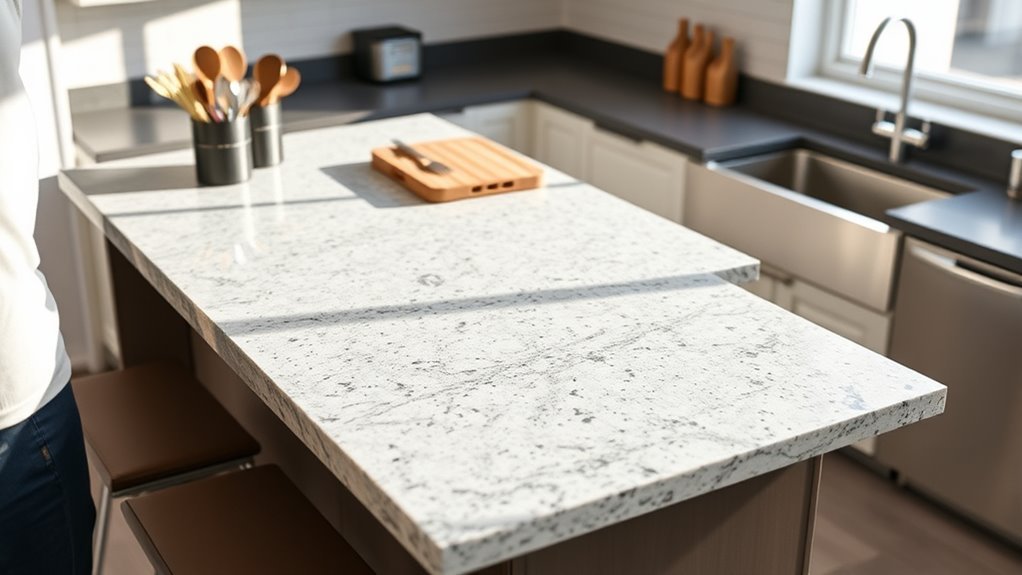
- Granite: Suitable for most heights, but since it’s heavy, it’s best on counters with solid support.
Pros and Cons of Taller vs. Shorter Kitchen Counters
If you spend a lot of time in the kitchen, the height of your counters can really impact your comfort and efficiency. Taller counters offer benefits like less back strain and better posture, especially if you’re tall. But they can make tasks like chopping less comfortable if you’re shorter.
On the flip side, shorter counters might feel more accessible. However, they can cause you to hunch over, which might lead to discomfort during long cooking sessions.
Here’s a quick comparison:
| Feature | Taller Counters | Shorter Counters |
|---|---|---|
| Ergonomics | Better for tall users | Less ideal for tall users |
| Task Comfort | Can be awkward for shorter users | Easier for shorter users |
| Space Efficiency | May limit access to upper cabinets | Better access to cabinets |
Think about these pros and cons to find the counter height that works best for your kitchen routine.
Frequently Asked Questions
How Do Kitchen Counter Heights Affect Appliance Installation?
Kitchen counter heights directly impact appliance installation by affecting how well appliances fit and work with your space. If your counters are too high or low, appliances like dishwashers and ovens might not sit properly or align with your workflow.
You also want the height to match your body to prevent strain during use. When counters are the right height, installing appliances becomes easier and more efficient.
Adjusting your counter height can make a big difference in keeping your kitchen comfortable and functional.
What Is the Impact of Counter Height on Kitchen Storage Options?
Your counter height directly impacts storage accessibility by affecting how easily you can reach items in cabinets and drawers. An ergonomic design makes it simpler to access your storage with less effort.
Adjusting counter heights helps minimize bending or stretching, making it more user-friendly. When counters are too high or low, reaching storage can become awkward or uncomfortable.
This can limit your efficiency in the kitchen. Choosing the right height ensures your storage works smoothly with your daily tasks and makes everything more convenient.
Are There Regional Differences in Kitchen Counter Height Standards?
Think of kitchen counters as the stage where your cooking dance happens. Regional variations set different rhythms. Yes, you’ll find differences in counter heights depending on where you are.
These variations are shaped by local preferences, ergonomic standards, and cultural habits. In some areas, counters are taller or shorter to match average body heights or cooking styles.
How Does Counter Height Influence Kitchen Lighting Placement?
Counter height directly impacts your counter lighting placement because you’ll need to adjust fixtures to avoid shadows and glare. When you change the height of your counters, it’s a good idea to reposition pendant lights or under-cabinet lighting to keep the illumination even.
If your counters are taller, you’ll want lights that are higher or angled differently. By thinking about lighting along with height changes, you can make sure your workspace stays well-lit and comfortable for cooking and prep tasks.
Can Kitchen Counter Height Affect Resale Value of a Home?
Yes, kitchen counter height can affect your home’s resale value. Resale trends show that buyers often prefer standard heights, around 36 inches, because they’re more comfortable and functional for most people.
If your counters are too tall or too low, it might turn off potential buyers who want a kitchen that feels practical and inviting. So, aligning with buyer preferences can boost your home’s appeal and resale potential.
Conclusion
Now that you know the standard heights and why they matter, think about how changing your kitchen counter height could impact your daily comfort and style.
Are you ready to customize a counter that fits your specific needs perfectly? Whether you prefer it taller or shorter, the right height can totally transform your cooking experience and your kitchen’s vibe.
Don’t settle for less. Find the ideal balance that makes meal prep easier and more enjoyable. Your perfect kitchen, with the right counter height, is waiting!